













The VA disability rating system determines the monthly compensation paid to veterans who were injured or developed medical conditions as a result of their military service.
The levels are calculated based on the severity of the condition and expressed as a percentage. The higher the percentage, the more impact a disability has on a veteran’s quality of life and the greater the compensation.
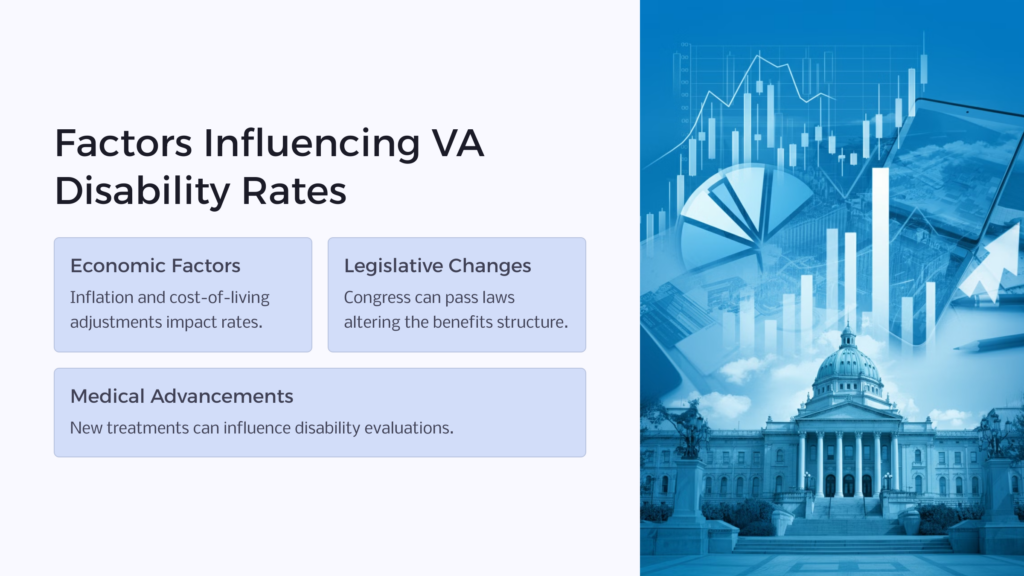
Aside from the percentage of disability, there are other factors that determine the amount of money a disabled vet will receive each month. Some of these include:
- Economic Factors: Things like Inflation and cost-of-living adjustments (COLA) are the main economic drivers that affect the rates. As the cost of living increases, so do the disability rates, to ensure veterans can maintain their standard of living.
- Legislative Changes: Congress can pass laws that change the benefits structure, either increasing or decreasing the rates.
- Medical Advancements: Improvements in medical treatments can influence how disabilities are evaluated, potentially leading to changes in rating percentages.
Historically, VA disability rates have seen incremental increases aligning with inflation and cost-of-living adjustments. For example, in the past decade, rates have typically risen by 1-3% annually. This trend reflects the ongoing need to adjust benefits to keep pace with the economic realities faced by veterans.
VA Disability Rates for 2026
Social Security has announced the COLA for 2026 is 2.8%.
Below are the monthly rates for each percentage category based on a 2.8% cost of living increase for a single veteran:
- 10% Disabled: $180.25
- 20% Disabled: $356.32
- 30% Disabled: $551.93
- 40% Disabled: $795.06
- 50% Disabled: $1,131.79
- 60% Disabled: $1,433.62
- 70% Disabled: $1,806.69
- 80% Disabled: $2,100.10
- 90% Disabled: $2,360.00
- 100% Disabled: $3,934.74
As a reminder, rates can change depending on the veteran’s situation. Other benefits may be available, and dependents will also have an impact on the monthly amount a veteran will receive. Make sure to look at the VA site or speak to a Veterans Service Officer to make sure you are receiving the correct amount.
Factors Influencing 2026 Rates
Economic
The biggest factor in payment rates is the current economic trends. Higher inflation rates mean less spending power. By increasing the disability rates, vets can offset its impact on their lives.
Inflation rates are directly related to cost-of-living adjustments (COLA). These are applied to most government payment programs like Social Security, Social Security Disability, and the VA disability benefits program.
Political
New policies and reforms can impact veterans’ benefits. For example, changes in how disabilities are defined can lead to changes in compensation rates, and advocacy groups can push for changes in policies that impact Veterans Affairs.
Technological
Technology is advancing every day, and with this advancement comes new ways to treat diseases and injuries. For example, a new type of prosthetic can make an amputee more mobile and independent so he or she could lead a more normal life, This could impact their disability rating.
Other advancements in medicine could lead to better outcomes. New pharmaceuticals, treatment plans, and surgical techniques are all things that can impact the compensation a vet could receive from the VA disability program.
Societal Trends
The growing number of veterans requiring disability compensation will likely influence rates. As more veterans enter the system, there may be increased advocacy for higher rates to ensure adequate support.
Also, changes in overall health trends among veterans, such as rising rates of mental health conditions, will affect disability rates. Improved standards of care and greater recognition of certain conditions may lead to higher compensation levels.
Potential Impact on Veterans
The increase in VA disability rates for 2026 has significant financial implications for veterans. Higher rates will provide greater financial stability, allowing veterans to cover living expenses, medical costs, and other necessities.
Higher compensation can also allow for more opportunities for rehabilitation and greater independence. It can make essential services more affordable for veterans. These include such things as home modifications, personal care, and specialized equipment.
Having a stable income each month that a veteran can count on is also a benefit for them. It makes financial planning easier and provides peace of mind.
Ways to Maximize VA Disability Benefits
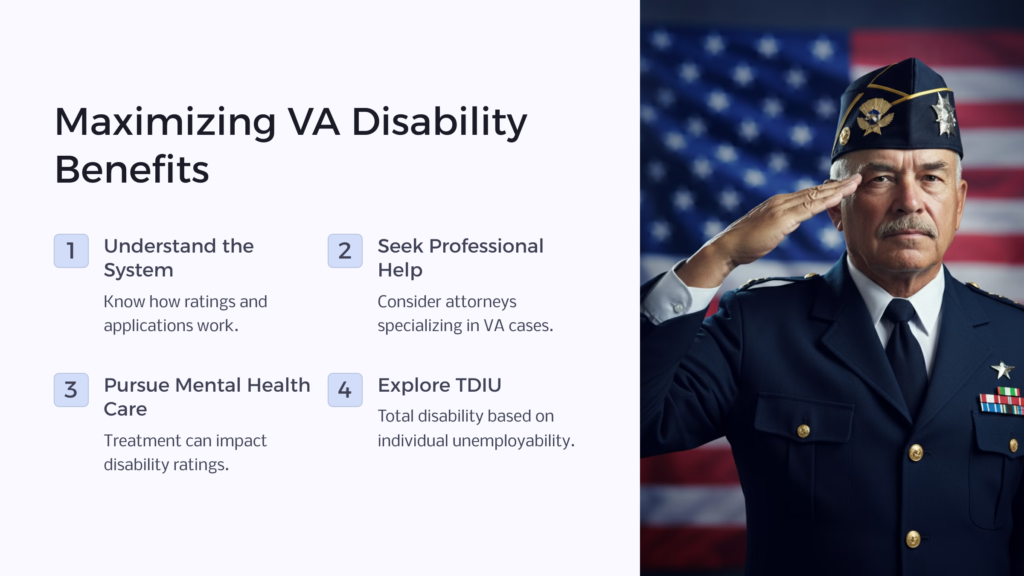
For veterans making use of VA disability benefits, it’s important to know how to get every dollar you are eligible for and that means knowing how the system works. Each diagnosed illness or injury has a rating and that’s your first place to start. From the application to the appeals process to the re-evaluation options, knowing how the system works can help you maximize your benefits.
If you still need more help, find a reputable and knowledgeable attorney or representative who specializes in VA disability cases. They can help you navigate the often complex process of obtaining all the benefits you deserve.
Another avenue of care that is thankfully opening up for veterans is mental health care. Pursuing this treatment for these disorders can impact the patient’s disability rating percentage.
If you or a vet you know is unable to work, you need to file for total disability, the process is a little different, and here again, an experienced lawyer might be helpful. The actual term is total disability based on individual unemployability (TDIU). This can allow you to claim compensation at the 100% level even if your disability rating is less than that.
Conclusion
VA disability benefits are often a lifeline for military personnel who have been injured or gotten sick as a result of their service to our country. To make sure you get the maximum benefits be sure you understand what the different rating levels mean and how to determine which level is right for your situation. These benefits can give vets financial stability and independence so they can take care of their families and live their best lives.
At Benefits.com, we aim to point you in the right direction towards all the benefits available to you. Take our free eligibility quiz today to get started!
 Benefits.com Advisors
With expertise spanning local, state, and federal benefit programs, our team is dedicated to guiding individuals towards the perfect program tailored to their unique circumstances.
Rise to the top with Peak Benefits!
Join our Peak Benefits Newsletter for the latest news, resources, and offers on all things government benefits.