














Total disability based on individual unemployability (TDIU) allows veterans to receive compensation at the 100% VA disability rate when service-connected conditions prevent them from maintaining substantially gainful employment. What makes TDIU special is that veterans do not need a 100% schedular rating to qualify. Instead, the Department of Veterans Affairs (VA) looks at a range of things, including disability ratings, work limitations, income levels, and medical evidence, to determine eligibility for VA unemployability benefits.
If you are wondering what would help you qualify for 100% pay, here is what you need to know about TDIU and how it works.
What Is TDIU and How Does It Work?
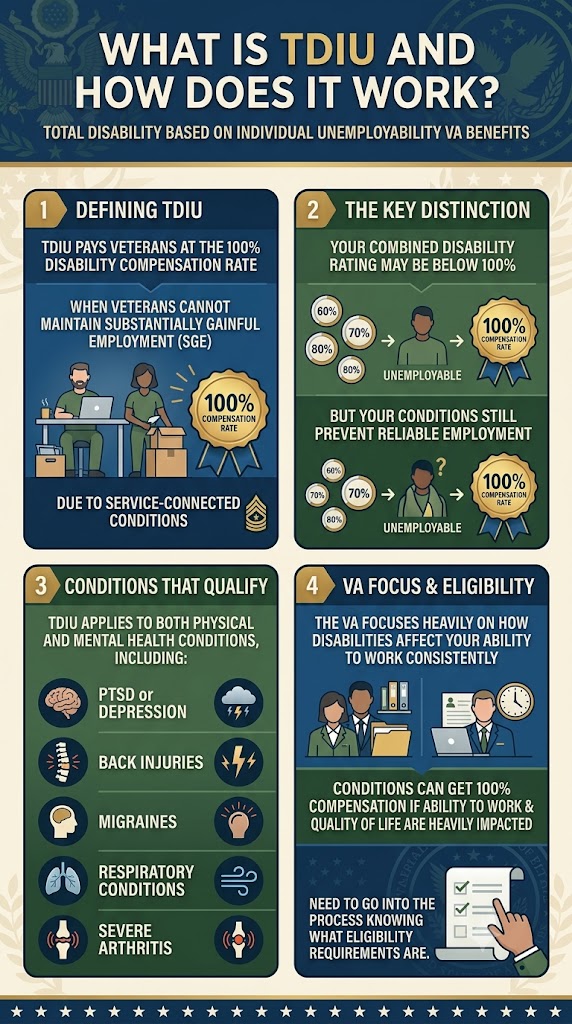
TDIU VA benefits pay veterans at the 100% disability compensation rate when they cannot maintain substantially gainful employment due to service-connected conditions. The key distinction is that your combined disability rating may be below 100%, but your conditions still prevent reliable employment.
TDIU applies to both physical and mental health conditions, including:
- PTSD or depression
- Back injuries
- Migraines
- Respiratory conditions
- Severe arthritis
The VA focuses heavily on how disabilities affect your ability to work consistently. A condition that may not typically receive a 100% rating can get 100% compensation if your ability to work and maintain quality of life is heavily impacted. That said, you need to go into the process knowing what the eligibility requirements are.
TDIU Eligibility Requirements Explained
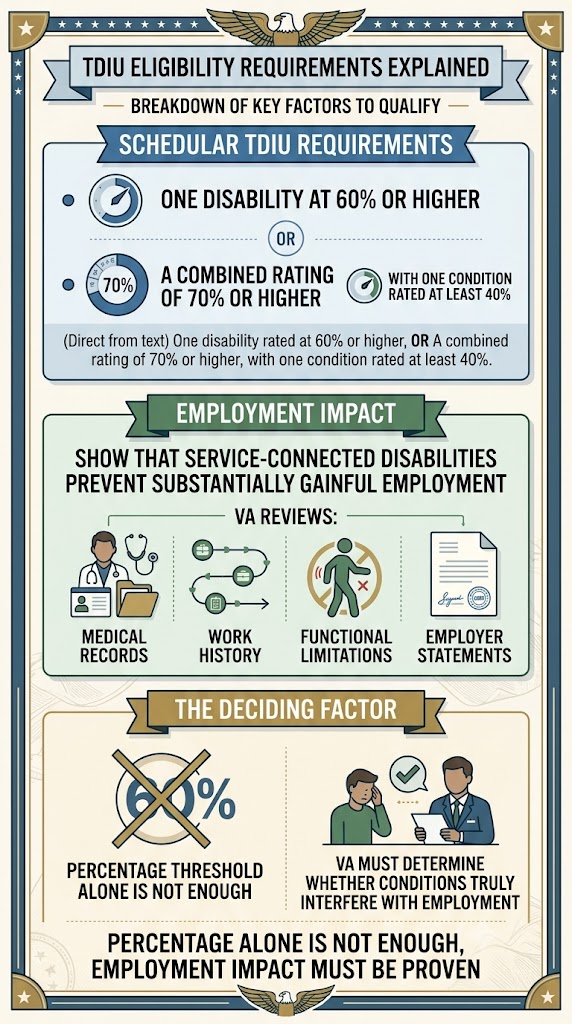
To meet TDIU requirements, veterans generally must qualify under one of two categories. You may meet the schedular TDIU requirements and have a profound impact on your ability to maintain employment. Below is a breakdown of how each of these requirements works.
Schedular TDIU Requirements
For schedular TDIU, you must have:
- One disability rated at 60% or higher, OR
- A combined rating of 70% or higher, with one condition rated at least 40%
Employment Impact
The second requirement is to display an impact on your employment. You must show that service-connected disabilities prevent substantially gainful employment. The VA reviews medical records, work history, functional limitations, and employer statements.
Meeting the percentage threshold alone is not enough. The VA must determine whether your conditions truly interfere with employment. That is truly the deciding factor when it comes to TDIU.
VA Schedular vs Extraschedular TDIU
There are two main ways veterans qualify for VA IU benefits. Schedular TDIU is the most common path and follows the rating thresholds above.
Extraschedular TDIU, on the other hand, is for veterans who do not meet percentage requirements but may still qualify if their disabilities create exceptional work limitations. Under extraschedular review, the VA examines the severity of symptoms, unique occupational impairment, and your employment history. This allows some veterans with lower combined ratings to still receive 100% VA disability unemployability compensation.
Income Limits and Employment Rules for TDIU
One of the biggest misconceptions about TDIU is that veterans cannot work at all. In reality, there are income limits and specific permitted work situations that are allowed.
TDIU Income Limits
Veterans generally cannot earn above the federal poverty threshold through substantially gainful employment for TDIU. However, exceptions may apply for marginal employment, sheltered work environments, and family businesses with accommodations.
Permitted Work Situations
The VA may still approve TDIU if:
- Employment is inconsistent
- Income remains below poverty guidelines
- Special accommodations are required due to disabilities
Before you return to any kind of work, it is important to look into the TDIU income limits and what you can and cannot do. The VA will take away benefits if you go over the income limits or your work situation isn’t something that they would permit.
How to Apply for TDIU Benefits
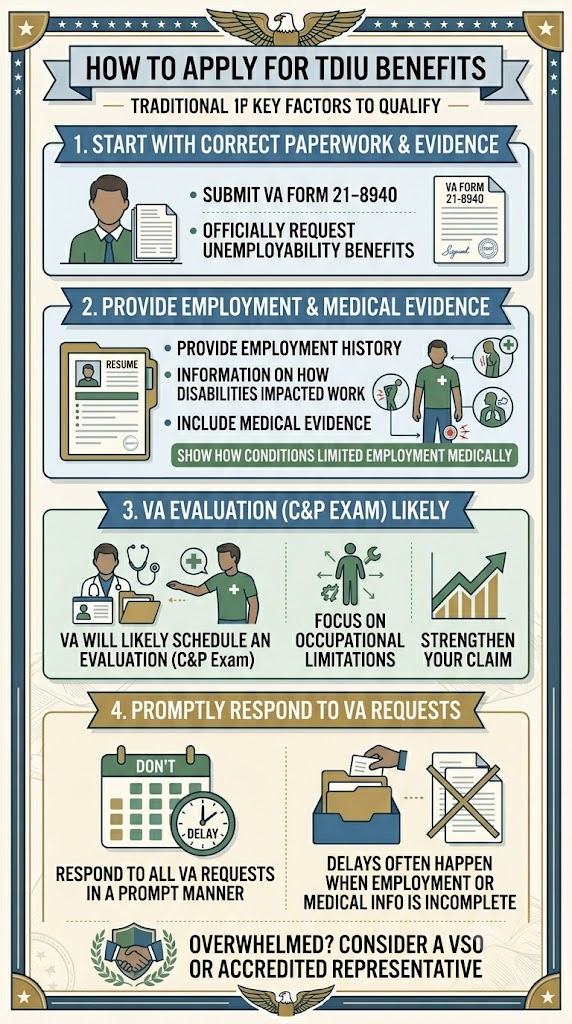
If you believe you qualify, the VA unemployability application process starts with the correct paperwork and evidence. You’ll want to submit a VA Form 21-8940, which officially requests unemployability benefits.
Once you’ve done that, be prepared to provide employment history and information about how your disabilities impacted your work. Also, include medical evidence with your submission. Being able to show how your conditions limited your employment medically is crucial.
Next, the VA will likely schedule an evaluation, or a C&P exam. This eval will focus on occupational limitations and ultimately help you strengthen your claim.
Finally, respond to all of the requests from the VA in a prompt manner. Delays often happen when employment or medical information is incomplete.
If you are feeling overwhelmed by approaching the process on your own, many veterans benefit from working with a VSO or accredited representative during this process.
What TDIU Looks Like in Real Life
Image Ryan, a former Army mechanic. At first, he had a combined 70% disability rating for PTSD and back injuries. Although he did not have a 100% schedular rating, chronic pain and severe anxiety made it impossible to maintain steady employment. After filing VA Form 21-8940 and submitting medical evidence from his doctors, the VA approved his TDIU claim. He now receives compensation at the 100% disability rate. As you can see, taking the steps to file could make all the difference in the world. It did for Ryan.
FAQs About TDIU
Approaching a submission for TDIU might feel overwhelming, but it doesn’t have to be. Here are some of the most commonly asked questions so that you can go into the process with all of the information you need.
- What is TDIU? TDIU stands for total disability based on individual unemployability and pays veterans at the 100% rate if service-connected disabilities prevent employment.
- Do I need a 100% rating to qualify for TDIU? No. Veterans with lower combined ratings may still qualify.
- What are the basic TDIU requirements? Typically, one disability at 60% or a combined 70% rating with one condition at 40%, plus the inability to maintain substantially gainful employment.
- Can I work while receiving TDIU? Possibly, but income and employment restrictions apply.
- What form is used to apply for TDIU? VA Form 21-8940.
- What is the difference between TDIU vs 100% rating? Both pay the same compensation rate, but TDIU is based on unemployability rather than total schedular percentages.
- Can mental health conditions qualify for TDIU? Yes. PTSD, depression, and anxiety are among the most common qualifying conditions.
Tamila’s Take
One of the biggest misunderstandings among veterans is the belief that if they don’t have a 100% schedular rating, they don’t deserve or qualify for 100% compensation. It’s a story that’s all too common. Veterans whose PTSD, chronic pain, migraines, or mobility issues made it nearly impossible to hold steady employment, yet they kept pushing themselves past their limits because they felt guilty asking for help. The reality is that TDIU exists for veterans whose service-connected conditions may not technically add up to 100% on paper but still make reliable work unrealistic in real life. A lot of veterans also struggle emotionally after leaving the workforce because employment is tied so closely to identity, independence, and purpose. Veterans need to understand that applying for TDIU is not “giving up.” It’s recognizing the true impact their service-connected conditions have had on their ability to earn a living and support themselves.
Understanding Your Right to 100% Compensation Through TDIU
TDIU can be life-changing for veterans whose service-connected conditions make steady employment impossible, even if their combined disability rating is less than 100%. Many veterans incorrectly assume they do not qualify because they are still capable of doing small tasks occasionally or because they do not have a total schedular rating, but the VA looks closely at whether you can maintain substantially gainful employment consistently over time. Strong medical evidence, detailed work history, and clear documentation of your limitations can make a major difference in the outcome of a TDIU claim. Veterans who are struggling to work because of PTSD, chronic pain, respiratory conditions, or other service-connected disabilities should know that these benefits exist to provide financial stability and support when employment is no longer realistic. If you believe your disabilities are preventing you from maintaining reliable work, visit AllVeteran.com today to begin a free medical evidence screening and learn whether you may qualify for TDIU benefits.
 Benefits.com Advisors
With expertise spanning local, state, and federal benefit programs, our team is dedicated to guiding individuals towards the perfect program tailored to their unique circumstances.
Rise to the top with Peak Benefits!
Join our Peak Benefits Newsletter for the latest news, resources, and offers on all things government benefits.