















The unemployment process varies slightly depending on the state, but generally follows a similar pattern:
1. Eligibility Determination:
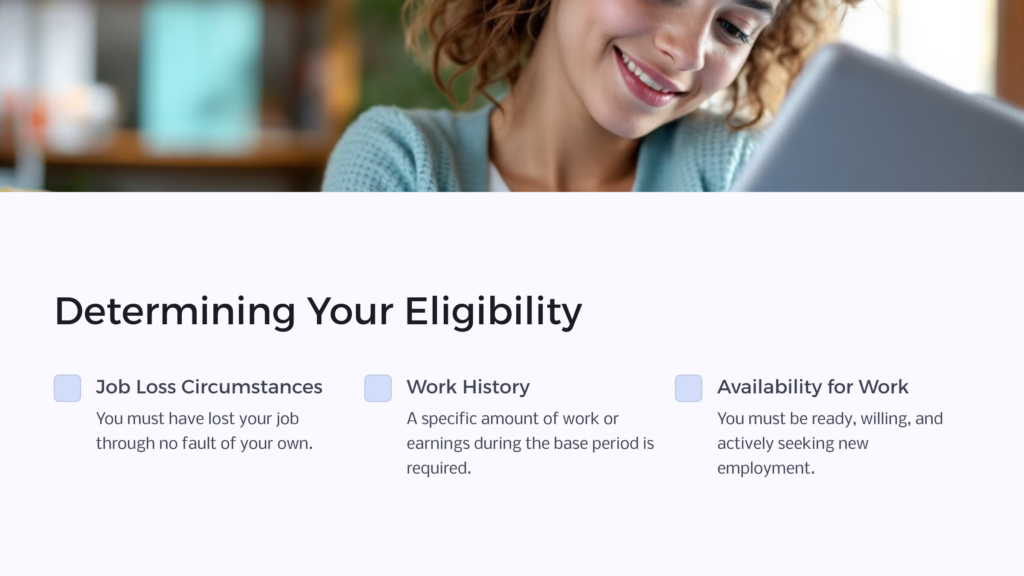
- Job Loss: In most states, you must generally be unemployed through no fault of your own. However, some individuals who voluntarily leave their jobs for legally recognized reasons may still qualify.
- Work History: You usually need to have worked a certain amount of time or earned a specific amount of money during a base period, typically the last 4 or 5 completed calendar quarters before filing.
- Availability for Work: You must be ready, willing, able and available to work and actively seeking employment.
2. Filing a Claim:

- Where to File: Claims are typically filed online, though some states also allow filing by phone or through workforce offices.
- Information Needed: You’ll need personal information (such as your Social Security number, address, and contact information), details about your most recent employment (employer’s name and address, and your employment dates), and possibly information about previous employers.
3. Processing the Claim:
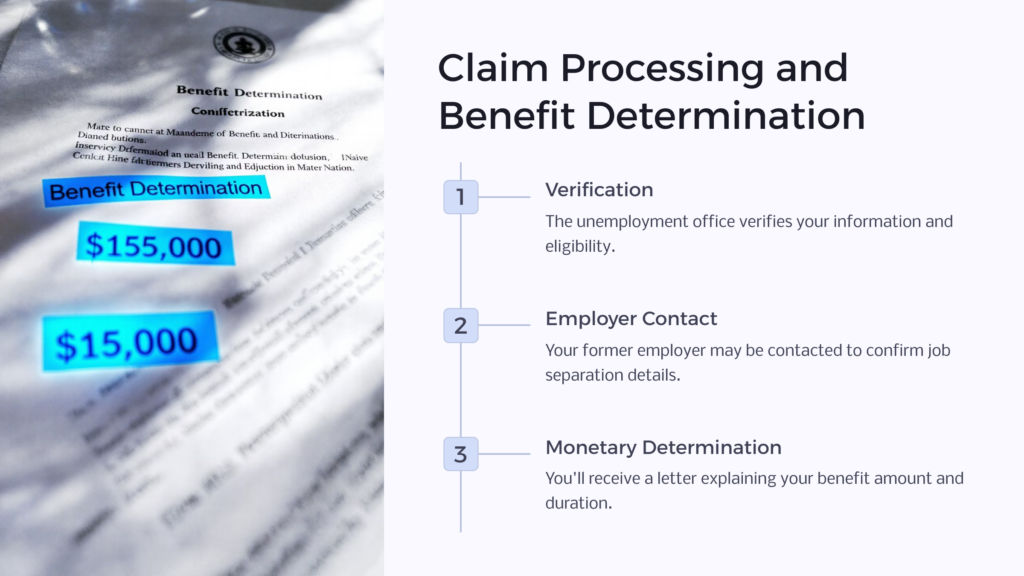
- Verification: The unemployment office will verify the information you provided and determine your eligibility. They may contact your former employer to confirm the reason for your separation from your job.
- Monetary Determination: If eligible, you’ll receive a monetary determination letter that explains your weekly benefit amount, the duration of your benefits, and the maximum benefit amount you can receive.
4. Weekly Certification:
- Filing Weekly or Bi-weekly: To continue receiving benefits, you must file a claim each week or every two weeks (depending on the jurisdiction) to certify that you remain unemployed, able to work, and actively seeking employment.
- Job Search Requirements: You may need to provide evidence of your job search, such as a list of employers contacted.
5. Receiving Benefits:
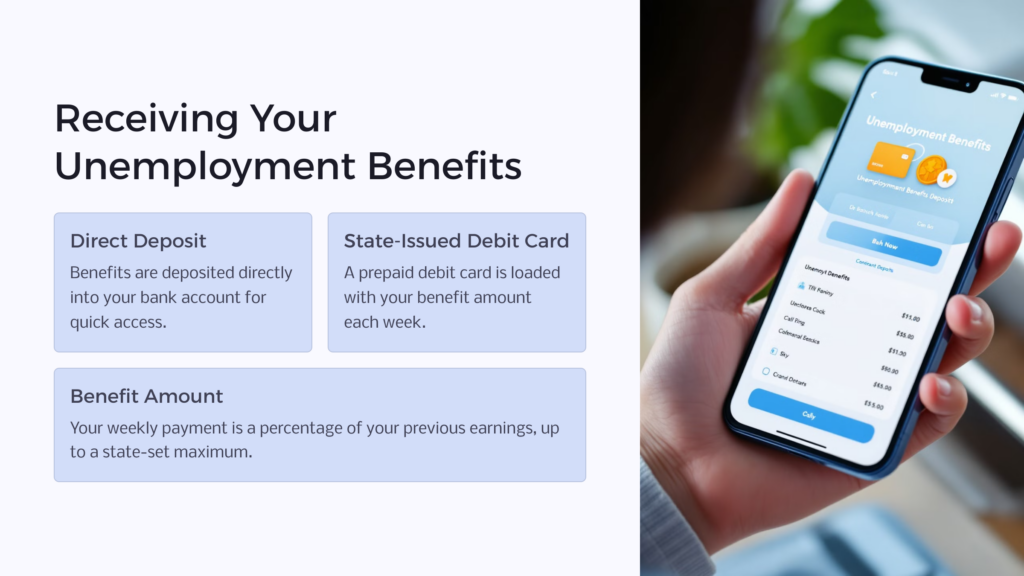
- Payment Method: Benefits are usually paid via direct deposit to your bank account or via a state-issued debit card.
- Benefit Amount: The amount you receive is typically a percentage of your prior earnings, up to a state-set maximum.
6. Reemployment Services:
- Job Training and Assistance: Many unemployment offices provide reemployment services, such as job search assistance, resume workshops, and training programs to help you find new employment.
7. Appeals Process:
- Disputes: If your claim is denied or you disagree with the amount of benefits awarded, you have the right to appeal. The appeal process usually involves a hearing where you can present your case. Appeal deadlines are often short, so it is important to respond promptly.
8. End of Benefits:
- Exhaustion of Benefits: Benefit durations vary significantly by state and economic conditions. Some states provide fewer than 26 weeks of benefits.
- Finding Employment: Once you find new employment, you must report this to the unemployment office, and your benefits will cease.
The unemployment process aims to provide temporary financial assistance to workers who have lost their jobs while they search for new employment. It’s designed as a safety net during periods of unemployment.
 Benefits.com Advisors
With expertise spanning local, state, and federal benefit programs, our team is dedicated to guiding individuals towards the perfect program tailored to their unique circumstances.
Rise to the top with Peak Benefits!
Join our Peak Benefits Newsletter for the latest news, resources, and offers on all things government benefits.