






We are privately owned and not affiliated or endorsed by any government agency.

Take the Benefits Quiz

Causeway

Definition

A causeway, in military operations, refers to a man-made road or pathway constructed over water or marshy terrain for the purpose of facilitating troop and vehicle movement. Causeways often include bridges, culverts, or other structures to form a stable and continuous path. They provide a strategic advantage by enabling efficient movement and accessibility during military missions and logistics.

Key Takeaways

  1. Causeway is a term used to describe a raised road or path, typically built across wet, marshy, or low-lying areas to enable the movement of troops and military equipment.
  2. In military operations, causeways can be critical strategic points, providing access to otherwise difficult or impassable terrain, and allowing for efficient troop movement, supply transportation, and evacuation if necessary.
  3. During wars and conflicts, seizing control of key causeways can gain a tactical advantage over the enemy, making them important objectives in battle planning. Defending causeways may also be as crucial as securing other strategic assets, like bridges or forts.

Importance

The term “causeway” holds significant importance in military operations as it refers to a constructed route or pathway that aids in the efficient movement of troops, vehicles, and equipment across challenging terrains, such as water bodies or marshy areas.

By providing a stable and accessible passage, causeways enhance the mobility and logistical capabilities of military forces, enabling them to deploy and maneuver more rapidly and effectively.

This ultimately strengthens their strategic and tactical advantages during times of conflict, while also serving to mitigate challenges posed by environmental or geographical factors.

In summary, causeways play a critical role in supporting and expediting military actions, making them an essential component in the planning and execution of various operations.

Explanation

A causeway, in military operations, serves as a vital strategic asset for the movement and deployment of troops, equipment, and vehicles across challenging terrains. These structures, often created by engineering units, are integral in enhancing a military force’s mobility and maneuverability in scenarios where water bodies or swampy landscapes pose significant logistical challenges.

By providing a stable access route, a causeway maintains the operational tempo and connects various military installations, logistical hubs, and key defenses. Furthermore, establishing or securing a causeway ensures uninterrupted supply lines, enabling rapid reinforcement or evacuation of forces when faced with unexpected battlefield conditions.

Additionally, causeways act as impromptu bridges and force multipliers for military forces, particularly during amphibious or riverine operations wherein rapid and secure transit of troops and equipment is paramount. Implementing causeways in coordination with other military assets, such as constructing pontoon bridges for crossing rivers, provides a tactical advantage by offering multiple entry points and deterring enemy attempts to choke off a military force’s mobility.

Fundamentally, the purpose of a causeway extends beyond mere transportation infrastructure, as it can be a significant factor in determining the outcome of military campaigns, having a direct impact on the ability to outmaneuver enemy positions and secure strategic objectives.

Examples of Causeway

A “causeway” in a military context usually refers to a temporary bridge-like structure or elevated roadway built over obstacles during operations to facilitate rapid movement of troops, vehicles, and equipment. Here are three real-world examples involving the use of causeways during military operations:

Operation Overlord (D-Day): During the Allied invasion of Normandy in World War II, the Mulberry Harbours were created to allow for the quick offloading of supplies and soldiers onto the beaches. A causeway system called the Whale Roadway was a key component of the Mulberry Harbours, enabling vehicles and troops to cross over the beach and quickly move inland from the landing crafts.

Battle of Chosin Reservoir: In the Korean War, during the winter of 1950, American and allied UN forces faced a massive assault by Chinese forces surrounding the Chosin Reservoir. As the UN forces conducted a fighting withdrawal, they relied on a causeway referred to as the ” MSR (Main Supply Route) X-RAY” to cross the frozen Funchilin Pass and move troops, equipment, and wounded personnel to safety.

Iraq War (2003): In the early days of the invasion of Iraq by U.S. and coalition forces, a key objective was to secure the vital bridges and causeways around the city of Nasiriyah. The Saddam Canal Causeway to the north of the city was one such strategic location, both for crossing the Euphrates River and for providing a critical supply route for the advancing forward units of the coalition forces.

FAQ: Causeway Military Operations

What is the purpose of causeway military operations?

Causeway military operations primarily provide rapid and efficient bridging solutions and transportation of personnel, equipment, and vehicles over water obstacles during combat deployment or disaster relief efforts. They serve as temporary floating bridges or platforms, enabling the smooth flow of traffic and operations.

What types of causeway systems are used in military operations?

There are several types of causeway systems utilized in military operations, including the Floating Causeway (FC), Causeway Ferry (CF), Roll-on/Roll-off Discharge Facility (RRDF), and Improved Ribbon Bridge (IRB). These systems vary in size, weight capacity, and modularity, allowing them to accommodate different requirements and needs in various operational scenarios.

What are the advantages of using causeways in military operations?

Causeways offer several advantages in military operations, such as:
1. Rapid deployment, assembly, and dismantling which allows for quick responses to changing conditions.
2. Modularity, allowing for flexibility in configuration to accommodate various operational needs and requirements.
3. Improved mobility and access for troops, vehicles, and equipment across water obstacles, allowing for faster and more efficient transit.
4. Enhanced logistical capabilities, facilitating the movement of critical supplies, equipment, and personnel to the battlefield or disaster areas.

Which military organizations use causeway systems?

Causeway systems are used by various military organizations worldwide, including the United States Army, Navy, and Marine Corps. Other countries, such as the United Kingdom, have also developed and deployed their own causeway systems for use in military operations and disaster relief efforts.

Are causeways solely limited to military operations?

While causeways are predominantly used in military operations, they can also be employed for civilian purposes, primarily in disaster relief. Causeways can provide emergency transportation and access routes over water-impeded areas in the aftermath of natural disasters, such as floods and hurricanes, ensuring rescue efforts and essential supplies reach the affected populations.

Related Military Operation Terms

  • Disability Compensation
  • Education and Training Assistance
  • Home Loan Guarantee Program
  • Veterans Health Care
  • Veterans Pension

Sources for More Information

Benefits.com Advisors

With expertise spanning local, state, and federal benefit programs, our team is dedicated to guiding individuals towards the perfect program tailored to their unique circumstances.

Rise to the top with Peak Benefits!

Join our Peak Benefits Newsletter for the latest news, resources, and offers on all things government benefits.

Related Articles

Causeway launching area

Definition

A causeway launching area is a designated location near a shoreline where military amphibious crafts or vehicles are launched to perform specific missions or tasks. These areas are carefully chosen to ensure optimal conditions for the operation, such as water depth, accessibility, and navigational challenges. These launching sites play a critical role during amphibious operations by providing efficient and safe deployment of troops and equipment from ships to the shore.

Key Takeaways

  1. A causeway launching area refers to a strategic location designed to launch military operations, particularly amphibious assaults, where temporary or permanent bridges are constructed to enable the transportation of troops, equipment, and supplies across bodies of water.
  2. Causeway systems are a crucial part of military engineering, allowing military forces to establish and maintain effective logistical support and mobility during operations. They provide an essential connection between land and ocean, ensuring smooth and efficient transport.
  3. These causeway launching areas have been used in numerous historical and contemporary military operations, such as the Normandy landings during World War II and more recent operations in the Middle East. Their significance in facilitating troop deployment and maneuverability cannot be understated, as they allow for rapid and effective responses during warfare situations.

Importance

The term “Causeway launching area” is significant in military operations because it refers to a strategically located zone where causeway systems, such as floating bridges and modular platforms, are assembled and launched to provide logistical support, primarily in amphibious operations.

These causeway systems ensure the efficient and timely movement of troops, vehicles, equipment, and supplies across water bodies or challenging terrains, thereby enhancing the operational capabilities of the military forces.

In addition, a well-established causeway launching area contributes to the overall success of the mission by facilitating rapid deployment and reducing vulnerability to enemy attacks.

Explanation

Causeway launching area serves a critical purpose in military operations by providing amphibious support during the final stages of landing missions, particularly in coastal regions. This innovative solution was developed to facilitate the smooth transition of military forces and equipment onto shorelines that are inaccessible due to either environmental challenges or obstacles created by the adversary.

Causeway launching areas come in a variety of forms, including modular causeways, motorized floating platforms, and semi-submersible ships, all of which are designed to maintain the operational tempo of an offensive strategy while maximizing tactical advantages. In addition to expediting the deployment of personnel and material, causeway launching areas serve as a strategic platform for various integrated logistics support services, such as refueling, resupply, and vehicle maintenance, during the critical hours and days of military campaigns.

Given the dynamic nature of modern warfare, causeway launching areas allow for increased operational flexibility and adaptability, enabling military commanders to bypass problematic littoral terrain, adjust to the ebb and flow of combat operations, and ultimately gain the upper hand in a contested environment. In summary, causeway launching areas are indispensable elements of a joint military force’s amphibious capability, designed to overcome physical impediments and ensure the rapid and secure delivery of essential assets to the conflict zone.

Examples of Causeway launching area

Operation Mulberry (D-Day, 1944) – A significant example of utilizing causeway launching areas took place during the prelude to the Normandy landings. The Allied forces created artificial harbors called Mulberries to aid in transporting troops, equipment, and supplies to the landing beaches. These harbors served as causeway launching areas, enabling the successful amphibious invasion and maintaining a steady flow of resources to the troops.

Operation Just Cause (1989) – The invasion of Panama by the United States involved the use of causeway launching areas as a means of deploying troops and equipment. US military set up a temporary headquarters on a causeway extending from the coast of Panama, allowing them to quickly send forces, equipment, and supplies inland to achieve their military objectives.

Operation Saif Sareea II (2001) – This large-scale exercise conducted by the British Armed Forces in Oman featured a variety of military assets, including a causeway launching area to enhance amphibious landings and logistics. The British Royal Engineers constructed a temporary causeway that acted as a launching area for vehicles and equipment. This allowed the British forces to quickly and efficiently land equipment and conduct the exercise.

FAQ Section: Causeway Launching Area

What is a Causeway Launching Area?

A Causeway Launching Area is a designated location along a shoreline where military forces assemble, organize, and launch causeway systems as part of amphibious operations. These areas are designed to support the rapid deployment of troops and equipment from ships to shore.

What is the purpose of a Causeway Launching Area?

The main purpose of a Causeway Launching Area is to facilitate the smooth and efficient transfer of personnel, vehicles, and supplies from military ships to the shore during amphibious operations. This allows military forces to quickly establish a beachhead and gain control of the shoreline area to support further operations inland.

How does a Causeway Launching Area work?

A Causeway Launching Area typically consists of a well-maintained shoreline with sufficient space to accommodate multiple causeway systems. These systems, including floating causeways and modular causeways, act as bridges between transport vessels and the shore, enabling the rapid transfer of troops, vehicles, and supplies. Once established, the Causeway Launching Area can serve as the primary route for troops and equipment from ship to shore, bypassing any obstacles that would otherwise hinder their progress.

What types of causeway systems are used in a Causeway Launching Area?

There are several different types of causeway systems that can be employed in a Causeway Launching Area, including floating causeways, modular causeways, and roll-on/roll-off discharge facilities. These systems are designed to handle a variety of cargo, from infantry vehicles and main battle tanks to shipping containers filled with supplies. The specific type of causeway system used depends on the requirements of the mission and the capabilities of the supporting military forces.

Why are Causeway Launching Areas important for modern military operations?

Causeway Launching Areas have become an essential component of modern military operations due to their ability to support the rapid deployment of forces and supplies in an amphibious scenario. By facilitating the swift transfer of troops and equipment from ship to shore, Causeway Launching Areas enable military forces to quickly establish a foothold on enemy territory and gain control of the situation. Furthermore, these areas can be adapted and scaled as needed to meet the specific requirements of a mission, making them a versatile and powerful asset for military planners.

Related Military Operation Terms

  • Veterans Affairs (VA) benefits
  • Amphibious operations support
  • Military bridge construction
  • Temporary docking facilities
  • Logistics over-the-shore (LOTS) operations

Sources for More Information

Benefits.com Advisors

With expertise spanning local, state, and federal benefit programs, our team is dedicated to guiding individuals towards the perfect program tailored to their unique circumstances.

Rise to the top with Peak Benefits!

Join our Peak Benefits Newsletter for the latest news, resources, and offers on all things government benefits.

Related Articles

C-day

Definition

C-Day, or “Commencement Day,” is a military term used in operational planning to denote the beginning of a major operation or campaign. It is a specific day on which a deployment or mobilization of forces takes place, intended to achieve particular objectives. The term is often used in conjunction with other time-related terms such as D-Day and H-Hour to facilitate the synchronization and coordination of events within a military operation.

Key Takeaways

  1. C-day refers to the unspecified day when a military operation begins, calling for the execution of crucial tasks and logistical coordination.
  2. It is used in strategic planning, allowing military forces to adjust deployment and mobilization schedules without revealing the actual start date of the operation.
  3. C-day is one of several military time references, such as D-day (start of a specific operation) and H-hour (specific hour an operation begins), that serve to ensure precise and efficient communication within the military.

Importance

C-day, or Commencement Day, is a crucial term in military operations as it signifies the planned start date of a significant combat campaign or a large-scale military operation.

This day is of great importance because it serves as a reference point from which all subsequent timings and activities are orchestrated.

Armed forces use it to coordinate and synchronize their efforts effectively, ensuring that resources, personnel, and logistics are optimally organized.

Ultimately, C-day allows military units to execute strategic missions more efficiently, thereby increasing the chances of a successful outcome and reducing the potential risks to personnel involved in the operation.

Explanation

C-day, or Commencement day, is a significant term in military operations as it refers to the day on which a specific military operation or campaign officially commences. This term assists military personnel in coordinating various logistical, tactical, and strategic aspects of a mission, as it sets the timeline for achieving specific objectives.

By designating a precise start date, military forces can synchronize their efforts, ensure they are optimally prepared, and establish a clear framework for measuring progress. C-day serves as an anchor for the entire operation, enabling military planners to determine the allocation of required resources, personnel, and equipment in a timely manner.

Moreover, C-day plays a vital role in ensuring efficient communication and collaboration among different branches and units within the military. By having a predetermined commencement day, all parties involved can align their respective plans and strategies, which ultimately reduces confusion and bolsters overall mission effectiveness.

The purpose of establishing a C-day also helps maintain operational security, as it allows for the proper dissemination of critical information within the forces while minimizing the risk of leaks or enemy interception. In summary, C-day serves as a crucial element for both planning and executing military operations, securing a smooth coordination process and enhancing the likelihood of mission success by streamlining the steps required to reach the desired objectives.

Examples of C-day

C-Day, or Commencement Day, is a term used in military operations to indicate the day when a specific operation or campaign begins. Here are three real-world examples related to C-Day:Operation Desert Storm (1991): C-Day for Operation Desert Storm, which was part of the Gulf War, was January 17,

This operation marked the beginning of a decisive military campaign led by the United States and a coalition of 34 nations to push Iraqi forces out of Kuwait. During this operation, the coalition launched a massive air assault followed by a ground offensive to liberate Kuwait.Operation Enduring Freedom (2001): C-Day for Operation Enduring Freedom was October 7,

This operation commenced the U.S. military’s campaign against the Taliban regime in Afghanistan and those responsible for the September 11 terrorist attacks in the United States. The operation aimed to dismantle the Al-Qaeda terrorist network and remove the Taliban government from power.Operation Iraqi Freedom (2003): C-Day for Operation Iraqi Freedom was March 20,

This operation was initiated by the United States and coalition forces to remove Iraqi leader Saddam Hussein from power and to disarm his alleged weapons of mass destruction. The operation resulted in the swift fall of the Saddam regime and the eventual capture and execution of Saddam Hussein.

FAQs on C-Day Military Operations

What is C-Day?

C-Day, short for “Commencement Day,” refers to the designated starting point of a military operation, when the operation commences.

What is the significance of C-Day?

The significance of C-Day lies in the efficient coordination of military resources, personnel, and logistical support. This well-defined start time allows military forces to effectively execute and complete specific mission objectives.

How is C-Day different from D-Day and H-Hour?

While C-Day refers to the start of an operation, D-Day and H-Hour represent further time markers in military planning. D-Day is the day on which an operation begins, and H-Hour is the specific hour operations commence. All these markers help military planners develop a detailed and coherent timeline for complex operations.

How do military forces determine a C-Day?

The determination of a C-Day depends on several factors, including intelligence gathering, environmental conditions, logistical preparedness, and the overall strategic goals of a mission. Military commanders and planners collaborate to establish an optimal C-Day that maximizes the likelihood of a successful operation.

Are there any well-known C-Day operations?

While C-Day operations are planned with regularity, specific operations are difficult to pinpoint given the sensitive nature of military information. However, it’s worth noting that C-Day operations have played essential roles in many significant conflicts, such as the Normandy landings during World War II and operations in the Persian Gulf War.

Related Military Operation Terms

  • Compensation Effective Date
  • Disability Ratings
  • Service-Connected Disability
  • Benefit Payments
  • Veterans Affairs Appeal Process

Sources for More Information

Benefits.com Advisors

With expertise spanning local, state, and federal benefit programs, our team is dedicated to guiding individuals towards the perfect program tailored to their unique circumstances.

Rise to the top with Peak Benefits!

Join our Peak Benefits Newsletter for the latest news, resources, and offers on all things government benefits.

Related Articles

Cell

Definition

In military operations, a cell refers to a small, specialized team or group functioning within a larger unit or organization. These cells possess specific expertise or are assigned particular responsibilities to support mission objectives. They can operate independently or in collaboration with other cells, ensuring efficient and targeted execution of tasks.

Key Takeaways

  1. A military cell is a small, specialized unit often used for covert or clandestine operations, intelligence gathering, or special missions. These units are typically autonomous and designed to operate with minimal supervision.
  2. Cells often rely on organization and communication methods that protect their members from detection, such as using secret codes, secure communication channels, or isolated networks to share information and coordinate activities. This can make them difficult for adversaries to identify and counteract, and provides resilience against infiltration or disruption.
  3. Cells can be organized in a number of ways, from simple hierarchies with a single leader and a few operatives, to more complex networks with multiple cells connected through intermediaries or decentralized structures. This flexibility allows military cells to adapt to the specific needs of their mission and to the constraints or threats they face.

Importance

The term “Cell” is significant in military operations because it refers to a small, specialized group of individuals within a larger unit who are assigned specific tasks or responsibilities.

This organizational structure allows for greater efficiency, flexibility, and communication amongst team members while enabling the cohesive execution of complex missions.

The formation of cells, focusing on specific skills, tactics, or intelligence functions, leads to more streamlined and effective operations, ultimately contributing to the success of the overall mission.

Additionally, cells can maintain operational security more effectively by compartmentalizing information and sharing it only with relevant parties on a need-to-know basis.

Explanation

In military operations, the term “cell” refers to a specialized unit or team within a larger organization that is responsible for carrying out particular tasks. The purpose of a cell is to ensure that specific functions are executed efficiently and effectively by experts in the respective domain. Each cell operates in sync with other cells to achieve overall mission success.

By compartmentalizing responsibilities, a military organization can achieve greater levels of coordination and control while maintaining operational security. This efficient delegation of tasks allows higher-ranking officers to focus on strategic planning and decision-making without getting entangled in micromanagement. Cells are also essential as they enable centralized command and decentralized execution.

Various types of cells exist, including intelligence, logistics, communications, and special operations cells. Each cell has its own level of expertise, resources, and tools to accomplish their designated tasks. For example, an intelligence cell would focus on collecting, analyzing, and disseminating information on the enemy’s capabilities and intentions, while a logistics cell would ensure that troops are supplied with necessary equipment, food, and ammunition.

By working together, cells help create a cohesive and streamlined military operation that can effectively adapt to the complex and dynamic challenges of warfare.

Examples of Cell

Joint Special Operations Command (JSOC) Cell: The JSOC is a component command of the United States Special Operations Command (USSOCOM) and functions as a specialized cell within the larger military structure. JSOC’s primary responsibility is to study, plan, and execute joint special operations for various tasks, such as counter-terrorism and direct action missions. Notable units within the JSOC cell include the U.S. Navy SEAL Team Six and the U.S. Army’s Delta Force.

Human Intelligence (HUMINT) Cell: This is a specific military term for a unit within intelligence organizations that focuses on collecting information from human sources. HUMINT cells are responsible for managing and conducting operations involving espionage, interrogations, and debriefings. The members of a HUMINT cell may include field intelligence officers, interrogators, source handlers, and analysts, who work together to provide actionable intelligence for military operations.

Cyber Warfare Cell: As modern warfare evolves, cyber warfare cells have become more prevalent within military organisations worldwide. These specialized cells are responsible for conducting offensive and defensive cyber operations against adversaries. Their missions may involve defending critical infrastructure, monitoring enemy communications, and launching cyber attacks to disrupt enemy systems. For example, the United States Cyber Command (USCYBERCOM) is a unified combatant command with the responsibility of coordinating cyber warfare capabilities across all branches of the U.S. military.

FAQ – Military Operations

What are military operations?

Military operations are the activities and tasks conducted by armed forces during peacetime and war, which are focused on achieving specific objectives. These operations can range from training exercises and humanitarian missions to full-scale combat operations.

What are the types of military operations?

There are various types of military operations, including combat operations, non-combat operations, stability operations, and humanitarian operations. Each type of operation has different goals and activities, depending on the mission objectives and the level of conflict or crisis involved.

What is the role of the military during peacekeeping operations?

During peacekeeping operations, the military often serves as a neutral party aiming to maintain or establish peace between conflicting groups or nations. Their role may include monitoring ceasefires, overseeing disarmament processes, and providing security for humanitarian relief efforts.

How do military operations change during times of war?

During times of war, the focus of military operations shifts from peacetime activities to combating enemy forces and achieving strategic objectives. This includes conducting offensive and defensive operations, gathering intelligence on enemy movements, and supporting allied forces in their efforts to defeat the opposing force.

What role do civilian agencies and NGOs play in military operations?

Civilian agencies and non-governmental organizations (NGOs) play a crucial role in supporting military operations, particularly during non-combat and humanitarian missions. They may work closely with military forces to coordinate the delivery of aid, address infrastructure needs, and provide support for displaced populations, among other tasks.

Related Military Operation Terms

  • Disability Compensation
  • Educational Assistance
  • Vocational Rehabilitation
  • Home Loan Guaranty
  • Health Care and Medical Benefits

Sources for More Information

Benefits.com Advisors

With expertise spanning local, state, and federal benefit programs, our team is dedicated to guiding individuals towards the perfect program tailored to their unique circumstances.

Rise to the top with Peak Benefits!

Join our Peak Benefits Newsletter for the latest news, resources, and offers on all things government benefits.

Related Articles

Center

Definition

In military operations, the term “center” refers to the central part of a battle formation or deployment. It plays a crucial role in maintaining coordination and communication among various units, ensuring a cohesive strategy during conflicts. The center often holds key positions, allowing the military force to engage enemies, secure resources, and facilitate control over the entire operation.

Key Takeaways

  1. Center in military operations refers to the middle part of a formation or the area of primary focus in a strategic plan, making it crucial for maintaining balance and coordination among different units.
  2. A center in military operations often holds key roles in both offensive and defensive strategies, serving as a base for launching attacks, providing support, and absorbing enemy advances when necessary.
  3. Maintaining a strong and well-protected center is essential in ensuring the success and overall effectiveness of a military operation, as it helps to prevent enemy penetration and disruption of communication and supply lines.

Importance

The term “Center” in military operations is important as it refers to the core section of a formation or the area of responsibility in both strategic and tactical deployments.

This central position serves as the foundation and support structure for flanks, allowing the commanding officer to retain flexibility, overview and control of the entire force.

Furthermore, maintaining a strong center enhances defense, as it aids in better communication, supply chain management, and reinforcement efforts.

Additionally, the center’s robustness, in terms of situational awareness and authority, helps to withstand enemy assaults, coordinate counterattacks, and implement strategic plans, thereby increasing the chances of achieving victory in military campaigns.

Explanation

The term “center” in military operations serves a crucial purpose in organizing and coordinating the efforts of the armed forces during a conflict. The primary objective of the center is to form a stable, central point from which resources, information, and commands can be established and distributed.

This central role allows for more efficient execution of strategic decisions, as well as maintaining overall control and oversight of the entire operation. The center plays a pivotal role in ensuring the success of the mission by providing effective communication and command infrastructure to mitigate risks, adapt to situational changes, and outmaneuver the enemy forces.

In terms of tactical applications, the center functions as the anchor of the frontline and helps in shaping the overall formation of the battle plan. Typically manned by a substantial portion of the total military force, the center is tasked with both defense and offense, preventing enemy breakthroughs and supporting flanking maneuvers.

Additionally, the center acts as a hub for logistics and supply lines, ensuring that all necessary provisions are distributed effectively to all units, thereby maintaining combat readiness. By serving as a robust, centralized location for command and control, as well as a critical player in carrying out the operation’s objectives, the center is an indispensable component of any successful military undertaking.

Examples of Center

Operation Desert Storm (1991): The Coalition forces, led by the United States, relied on a well-defined center of gravity – the rapid application of overwhelming air and ground power – to achieve victory in a short time. The air campaign focused on crippling the Iraqi command and control infrastructure, while the land campaign focused on systematically dismantling Iraq’s elite forces. By concentrating resources and tactical operations in the center, the Coalition forces managed to secure a quick and decisive victory.

Battle of Stalingrad (1942-1943): In this conflict, the city of Stalingrad was the center of gravity for the German and Soviet forces. Throughout the battle, both sides fought fiercely for control of the city, as capturing the center would significantly weaken the opponent’s defensive or offensive capabilities. The Soviet Union ultimately emerged victorious, partially due to its successful defense of the city center, which led to the encirclement and eventual surrender of the German 6th Army.

D-Day Invasion (Operation Overlord, 1944): In this operation, the Allies sought to establish a foothold in Normandy by capturing five key beaches, which would serve as the center of their operations throughout the campaign. By establishing a solid center at these beachheads, the Allies opened up supply lines, established communication facilities, and used them as a foundation for their eventual push into German-occupied France. The successful creation of this center was critical to the subsequent success in liberating Western Europe.

FAQ – Military Operations Center

What is a Military Operations Center?

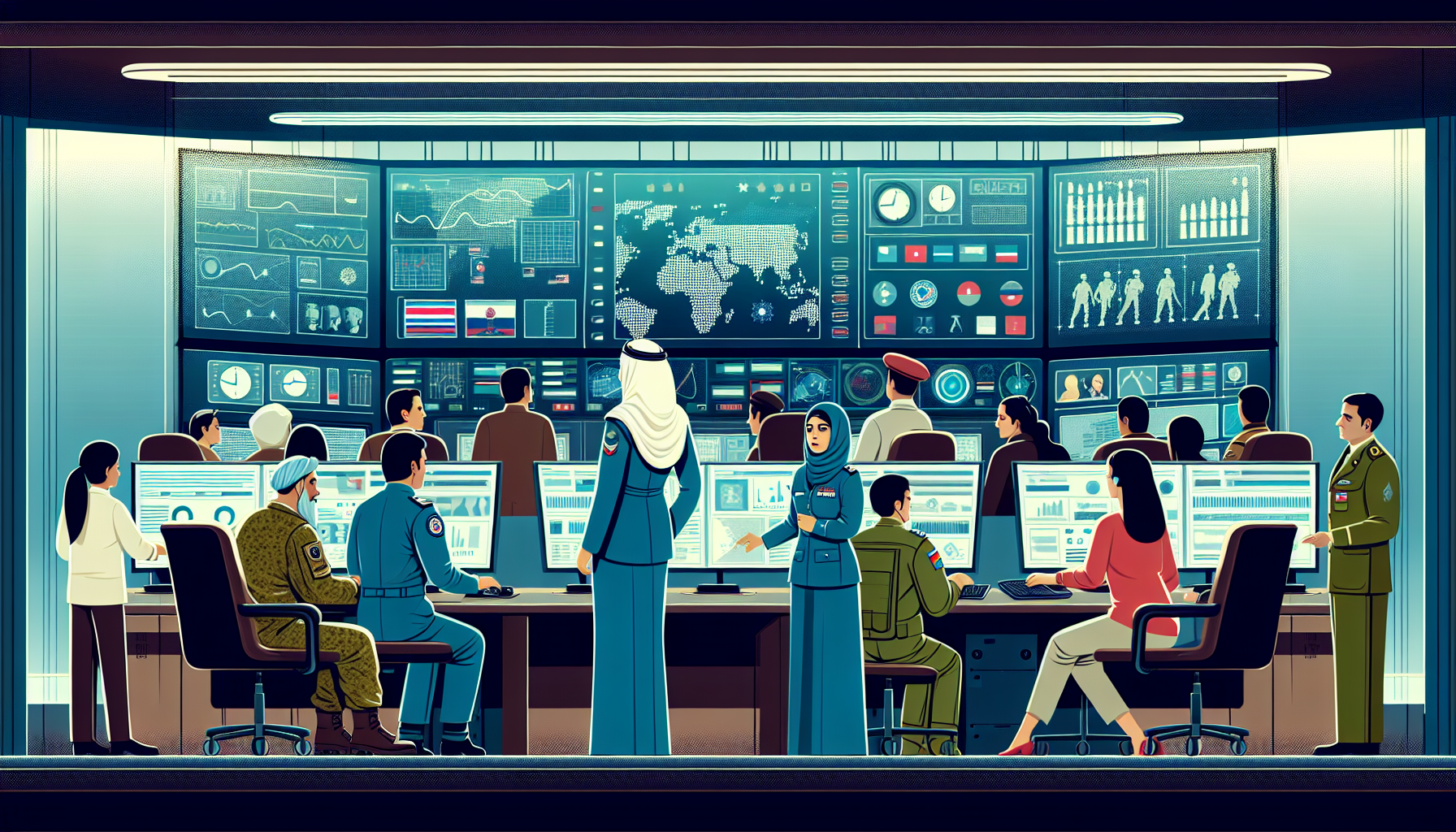
A Military Operations Center (MOC) is a command and control facility used by military organizations to plan, monitor, and execute military operations. It serves as the main hub for coordinating communication and decision-making among various units and personnel.

What are the primary functions of a Military Operations Center?

The primary functions of a Military Operations Center include gathering and processing information, planning and coordinating operations, and providing leadership with situational awareness in order to make informed decisions. Additionally, MOCs ensure clear and efficient communication among all military units involved in an operation.

How do Military Operations Centers improve military decision-making?

Military Operations Centers improve decision-making by providing a centralized location for data and information gathering, processing, and analysis. This allows decision-makers to have real-time, accurate situational awareness, which is crucial when planning and executing operations. By using modern technology and communication systems, MOCs ensure timely and efficient information sharing, enabling rapid responses to changing circumstances.

What types of personnel staff a Military Operations Center?

A variety of military personnel can be found working in an MOC, including intelligence officers, planners, logistics experts, and communications specialists. These personnel work together to analyze information, develop operational plans, and monitor ongoing operations to ensure their successful execution.

What technology and equipment are used in a Military Operations Center?

A wide range of technology and equipment is utilized in a Military Operations Center, including communication systems, computers, displays, and software for data analysis and visualization. MOCs often have secure video and audio conferencing capabilities, allowing for real-time collaboration between various personnel and units. Additionally, MOCs typically employ advanced computer systems that help to process, analyze, and visualize large amounts of complex data, providing decision-makers with comprehensive situational awareness.

Related Military Operation Terms

  • Veterans Health Administration (VHA)
  • Veterans Benefits Administration (VBA)
  • VA Regional Office (VARO)
  • Veterans Service Center (VSC)
  • Veterans Crisis Line (VCL)

Sources for More Information

Benefits.com Advisors

With expertise spanning local, state, and federal benefit programs, our team is dedicated to guiding individuals towards the perfect program tailored to their unique circumstances.

Rise to the top with Peak Benefits!

Join our Peak Benefits Newsletter for the latest news, resources, and offers on all things government benefits.

Related Articles

Center of gravity (COG)

Definition

In military operations, the term “Center of Gravity (COG)” refers to the key element or source of power, both physical and moral, that contributes to an entity’s ability to achieve its objectives or maintain its strength. The identification and targeting of an opponent’s COG is essential for effectively weakening their capabilities and enhancing one’s own chances for success. The COG can vary from strategic decision-making centers to essential resources and logistical support structures, depending on the context of the conflict.

Key Takeaways

  1. Center of gravity (COG) is a key concept in military strategy, referring to the source of an adversary’s power, strength, or capability that enables them to maintain the will and resources to fight.
  2. Identifying and targeting an enemy’s COG is essential for planning effective military operations, as it allows commanders to focus their efforts on weakening the adversary’s most critical elements, ultimately leading to victory.
  3. COGs can vary greatly in nature, ranging from physical assets such as key infrastructure or elite military units, to intangible factors such as communication networks, political alliances, or public morale.

Importance

The military operations term “Center of Gravity (COG)” is important because it refers to the focal point or critical element that possesses unique capabilities, characteristics, or influence in shaping an adversary’s military actions or overall campaign.

Identifying the COG allows military strategists to focus their efforts and resources on targeting and neutralizing these critical elements, thus increasing the likelihood of achieving their mission objectives.

Moreover, understanding the COG contributes to effective planning, decision-making, and resource allocation in military campaigns, enabling military forces to address various risks, minimize collateral damage, and ultimately secure decisive victories with maximum efficiency.

Explanation

The center of gravity (COG) is a critical concept in military operations that helps strategists and military commanders to identify and focus their efforts on the most decisive and influential elements of an opponent’s overall force structure. In essence, the purpose of identifying the center of gravity lies in concentrating efforts to exploit an enemy’s operational, tactical, and strategic vulnerabilities.

By recognizing and targeting this focal point, military forces can more effectively disrupt, weaken, and ultimately defeat the adversary, ultimately achieving their overarching strategic objectives. When analyzing an opponent’s military capabilities, the center of gravity represents an essential component that can influence the outcome of the conflict.

The identification and targeting of the enemy COG is valuable in guiding military action and resources by providing a comprehensive approach for the campaign. Primarily, determining the COG allows for the consolidation of efforts and resources, ensuring that military strategy is better aligned and enabling the execution of successful operations.

In practice, identification of a COG can help commanders prioritize targets, allocate resources, and shape the operational environment to their advantage. By understanding and applying the concept of the center of gravity, military leaders are better able to anticipate and exploit an enemy’s weaknesses, ultimately tipping the balance in their favor and enhancing the potential for success in the theater of operations.

Examples of Center of gravity (COG)

The concept of the Center of Gravity (COG) in military operations signifies a critical aspect or capability of a force that, if targeted or weakened, can lead to their defeat or an imbalance in their operational effectiveness. Here are three real-world examples:

Operation Desert Storm (1991): In the 1991 Gulf War, the Iraqi military’s COG was its command and control, as well as its air defense system. The United States-led coalition forces concentrated their attacks on these features, rapidly neutralizing Iraq’s ability to coordinate and effectively respond to coalition air and ground operations. Subsequently, this played a crucial role in the decisive victory in favor of the coalition forces within just a few weeks.

Battle of Stalingrad (1942-1943): During World War II, Adolf Hitler considered Stalingrad to be the COG of the Soviet Union’s war effort. He believed that by capturing the city, he could cut off the flow of supplies between the northern and southern fronts, thereby undermining the Soviet Union’s ability to wage war. The protracted battle, however, led to significant resource drainage and depletion in the German military’s strength, ultimately turning the tide in favor of the Soviet Union.

D-Day Invasion – Operation Overlord (1944): Before the D-Day invasion, the Allied forces identified the German military’s COG as their Atlantic Wall defensive system along the coast of Northern France. The Allies meticulously designed the invasion to weaken this defense line with a combination of deception, airborne drops, and amphibious assaults. Once the German defenses were breached and weakened, the invasion force was able to advance further inland, setting the stage for the eventual Allied victory in Western Europe.

Center of Gravity FAQ

What is Center of Gravity (COG) in military operations?

The Center of Gravity (COG) is a warfighting concept that identifies the critical aspects of an adversary or friendly force that, when exploited or defended, have the greatest impact on the outcome of military operations. It is typically a source of strength or power that provides a decisive advantage.

Why is identifying the COG important in military planning?

Identifying the COG is crucial in military planning as it assists commanders in focusing their efforts and resources on what is most vital to achieving their objectives. By effectively targeting the adversary’s COG or protecting one’s own COG, a military force can better anticipate challenges, exploit weaknesses, and build upon strengths.

How can commanders determine the Center of Gravity in a specific operation?

Determining the COG requires thorough analysis of various factors in the operational environment. Commanders must assess the characteristics and capabilities of the adversary and friendly forces, understand their objectives, and examine the critical aspects that contribute to their success or failure. This analysis can involve examining logistics, command structure, and population support among other factors.

Can the Center of Gravity change during an operation?

Yes, the COG can change during an operation when the conditions in the operational environment or the balance of forces shift, resulting in new critical vulnerabilities or strengths. Commanders must continuously analyze the situation, adapt to these changes, and modify their plans to adjust the focus of their efforts.

What role does the Center of Gravity play in the Joint Operational Planning Process (JOPP)?

The COG analysis is an integral part of the JOPP as it informs the development of the commander’s operational approach, objectives, and priorities. It helps planners identify decisive points in the operation and allows them to direct and synchronize resources effectively to achieve the desired end state.

Related Military Operation Terms

  • Disability Compensation
  • Education and Training
  • Home Loans and Housing
  • Healthcare Services
  • Veteran Employment and Support

Sources for More Information

  • Joint Chiefs of Staff: The official website of the Joint Chiefs of Staff provides comprehensive information on various military concepts, including the Center of Gravity (COG).
  • Federation of American Scientists: This reputable organization offers extensive resources on military operations and strategy, including information about the Center of Gravity (COG).
  • U.S. Army: The official website of the United States Army contains a wealth of information on military tactics and strategies, including the concept of the Center of Gravity (COG).
  • RAND Corporation: As a global policy think tank, RAND Corporation has conducted research and analysis on a variety of military topics, which can be a valuable source when looking for information on the Center of Gravity (COG) concept.

Benefits.com Advisors

With expertise spanning local, state, and federal benefit programs, our team is dedicated to guiding individuals towards the perfect program tailored to their unique circumstances.

Rise to the top with Peak Benefits!

Join our Peak Benefits Newsletter for the latest news, resources, and offers on all things government benefits.

Related Articles

Centigray

Definition

Centigray (cGy) is a unit of measurement for absorbed radiation dose used in medical and military operations. One centigray is equal to one hundredth (0.01) of a gray, which is the SI unit for absorbed dose. It helps in quantifying the amount of ionizing radiation absorbed by any material, including the human body, during activities like radiation therapy or nuclear incidents.

Key Takeaways

  1. Centigray, also known as Rad, is a unit of absorbed radiation dose used to quantify the ionizing radiation absorbed by various materials, particularly in military applications.
  2. Centigray is primarily used in the context of nuclear warfare and radiation protection to measure the exposure of military personnel, equipment, and infrastructure to ionizing radiation.
  3. One centigray (cGy) is equivalent to one rad, or 0.01 Gray (Gy), which is the standard SI unit for absorbed radiation dose. It represents the deposition of 0.01 joule of energy per kilogram of the irradiated material.

Importance

Centigray (cGy) is important in military operations because it represents a unit for measuring radiation exposure, which is crucial for understanding the potential impact of radiation on human health and equipment in nuclear warfare and radiological incidents.

Accurate estimation of Centigray levels allows military personnel to make informed decisions about hazard mitigation, protective measures, and potential evacuations in situations involving radiation risks.

By closely monitoring Centigray levels, the military can ensure the safety and effectiveness of its personnel, minimize damage to essential resources, and can plan and execute mission-critical tasks more efficiently in the context of radiological emergencies.

Explanation

Centigray is a crucial term in the context of military operations, particularly when dealing with nuclear warfare and its potential consequences. Understanding and utilizing this term effectively can be vital to the decision-making process of military personnel and the assessment of potential exposure to radiation. The primary purpose of the centigray concept is to provide a standardized measure of the absorbed dose of ionizing radiation.

This allows for efficient and accurate evaluation of the severity of a radiation exposure event, making it an essential metric for planning for and responding to the collateral effects of nuclear weaponry. In practical application, centigray helps military operations evaluate the potential risk to human life and military assets. This quantitative value serves as a basis for determining the appropriate safety measures and medical interventions required in the immediate aftermath of a nuclear event.

By estimating the absorbed dose in centigrays, it enables a comprehensive assessment of the impact zone, and the potential short and long-term health consequences for exposed individuals. Factoring in these considerations is critical in guiding subsequent decisions, including evacuation orders, resource allocation, and mitigating the wider implications of a nuclear event. In summary, centigray is a valuable tool in managing the complex aspects of military operations involving nuclear components.

Examples of Centigray

Centigray (cGy) is a unit of absorbed radiation dose commonly used in radiation or nuclear-related studies; it is not explicitly a military operations term. However, understanding radiation dose is essential for military planning, strategy, and training. Here are three real-world examples related to military radiation exposure:

Atomic bombings of Hiroshima and Nagasaki – In August 1945, towards the end of World War II, the United States dropped atomic bombs on the Japanese cities of Hiroshima and Nagasaki. The initial radiation exposure was estimated to exceed 1,000,000 cGy near ground zero, causing fatal damage to those nearby. The bombings led to acute radiation syndrome among many survivors.

Nuclear testing – From 1945 to 1992, the U.S. conducted over 1,000 nuclear tests. These tests exposed military personnel involved in monitoring and executing the tests to varying levels of radiation. The doses depended on factors such as distance from the test site and the type of testing (underground vs. atmospheric). In some cases, military personnel may have been accidentally exposed to higher-than-anticipated centigray doses.

Nuclear-powered naval vessels – Modern militaries operate nuclear-powered submarines and aircraft carriers, which are powered by onboard nuclear reactors using the principles of nuclear fission. Radiation shielding is an important part of the design of these vessels to minimize radiation exposure to the crew. The maintenance and operation of these vessels require personnel to understand the basics of radiation protection and safety, including managing radiation doses in centigrays to ensure they are within acceptable limits.In all these examples, understanding the concept of centigray is vital to evaluate the potential effects of radiation on military personnel and develop strategies to protect them.

FAQ – Centigray

What is Centigray?

Centigray (cGy) is a unit of radiation dose measurement in the International System of Units (SI), specifically used for measuring ionizing radiation levels. It is commonly used in the context of military operations and radiation protection to determine the potential biological impact of exposure to ionizing radiation sources.

How is Centigray related to other units of radiation measurement?

1 Centigray (cGy) is equal to 1 Rad (radiation absorbed dose), which is a non-SI unit. Additionally, 1 Gray (Gy) is equal to 100 Centigray. Centigray is commonly used in radiation therapy and measurements while Gray is used for higher doses and stronger radiation sources.

What is the significance of Centigray in military operations?

In military operations, Centigray is an important measurement to assess the potential exposure of troops or equipment to ionizing radiation. Radioactive sources can include nuclear weapon detonations, depleted uranium munitions, radiography sources, and contaminated environments. Understanding the exposure enables the military to make informed decisions about personnel safety, protective measures, and the overall effectiveness of operations.

How can the exposure to radiation be minimized during military operations?

During military operations, the three basic principles followed to minimize radiation exposure are time, distance, and shielding. Limiting exposure time, maximizing the distance from the radiation source, and using shield materials (such as lead or concrete) can significantly reduce the risk of radiation exposure.

What are the potential health effects of radiation exposure?

Exposure to ionizing radiation can lead to both short-term and long-term health effects. Short-term effects range from mild symptoms like skin reddening, nausea, and fatigue to severe symptoms, like burns, radiation sickness, or even death. Long-term exposure increases the risk of developing disorders like cancer, genetic mutations, and long-term damage to the immune system.

Related Military Operation Terms

  • Radiation therapy
  • Ionizing radiation
  • Dose measurement
  • Radiation damage
  • Radiobiology

Sources for More Information

Benefits.com Advisors

With expertise spanning local, state, and federal benefit programs, our team is dedicated to guiding individuals towards the perfect program tailored to their unique circumstances.

Rise to the top with Peak Benefits!

Join our Peak Benefits Newsletter for the latest news, resources, and offers on all things government benefits.

Related Articles

Central control officer (CCO)

Definition

The Central Control Officer (CCO) is a key individual in military operations, responsible for coordinating and managing communication, resources, and tactical planning within a command center or headquarters. Their primary role is to maintain situational awareness, relay critical information between units, and ensure smooth functioning amongst diverse military groups. CCOs are essential for effective decision-making and successful execution of military strategies and plans.

Key Takeaways

  1. The Central Control Officer (CCO) is responsible for coordinating and managing the activities of a military operation, ensuring that all units are functioning smoothly and effectively.
  2. CCOs act as a central communication hub, conveying orders and information between different levels of command and various operational units, maintaining a clear and organized flow of communication.
  3. Central Control Officers play a crucial role in maintaining situational awareness, which allows for rapid decision-making and efficient allocation of resources to respond to changing conditions on the battlefield.

Importance

The Central Control Officer (CCO) is a crucial figure in military operations due to their primary responsibility in coordinating and managing resources, information, and communication.

As the nerve center of command and control systems, the CCO ensures the effective implementation of military plans and missions by facilitating the flow of information between various units, branches, and leaders.

By maintaining a comprehensive understanding of the operational environment and keeping decision-makers informed, the CCO contributes to the efficiency and success of military strategies.

Their role in managing resources and personnel also minimizes potential conflicts and misunderstandings, ultimately allowing for a more cohesive and agile military force.

Explanation

The Central Control Officer (CCO) serves a crucial role in military operations, ensuring the seamless coordination and management of various aspects of a mission. As the title suggests, the primary purpose of a CCO is to maintain centralized control within a given operation. In doing so, the CCO oversees the integration and synchronization of essential processes, such as communication, logistics, and intelligence, which ultimately contribute to the execution of a successful mission.

Given their position of authority, the CCO serves as the focal point for the decision-making process, guiding their team to overcome any challenges and adapt to changes in mission objectives or circumstances. By streamlining the flow of information, resources, and directives, a Central Control Officer effectively manages the various components involved in complex military undertakings. They are responsible for liaising with different units and individual members, ensuring the operation adheres to established protocols, timelines, and tactical guidelines.

In the event of unforeseen developments, a CCO must adapt and sustain the operational tempo by making critical decisions, accurately prioritizing resources, and allocating personnel. The comprehensive overview the Central Control Officer maintains enables them to identify potential risks and vulnerabilities, mitigating any potential negative impacts on the success of the mission. In essence, the CCO’s main objective is to enhance the coordination and efficiency of a military operation, maximizing the likelihood of achieving mission goals with minimal complications.

Examples of Central control officer (CCO)

Air Traffic Control Officers: In both civilian and military aviation, Air Traffic Control Officers (ATCOs) can be viewed as Central Control Officers. They are responsible for directing the movement of aircraft on the ground and in the air within their designated airspace. They issue instructions to pilots concerning altitude, speed, course, and other essential information for safe air navigation. ATCOs act as a central point of control to ensure smooth, safe, and efficient operations in a highly controlled and coordinated manner.

NATO’s Allied Rapid Reaction Corps (ARRC): In tactical operations, NATO relies on its Allied Rapid Reaction Corps (ARRC) to respond quickly and effectively to international crises. The role of Central Control Officer in this context is filled by the Commanding Officer (CO) and his or her subordinate commanders, who coordinate and control a wide range of combat, support, and logistical units engaged in military operations. The CO has the authority to make critical decisions on the organization and employment of available forces, ensuring that they collaborate in an optimum way to achieve mission objectives.

Naval Carrier Strike Group (CSG) Commanders: Within a United States Navy Carrier Strike Group, the CSG Commander serves as the Central Control Officer. The CSG Commander has overall command and control of all assets within the group, including the aircraft carriers, surface warfare and logistics ships, and accompanying aircraft squadrons. By synchronizing operations between naval and air units and coordinating intelligence, surveillance, and reconnaissance, the CSG Commander ensures the successful planning and execution of naval missions while maintaining command, control, and communication capabilities among all assets in the CSG. This centralization of command helps maintain the cohesion and overall effectiveness of the Carrier Strike Group during various types of military operations and deployments.

FAQ – Central Control Officer (CCO)

What is the role of a Central Control Officer (CCO)?

A Central Control Officer (CCO) is responsible for monitoring and managing the overall communication, coordination, and control of military operations. They work closely with other officers to ensure that objectives, missions, and tasks are achieved in an efficient and timely manner.

What are the main responsibilities of a CCO?

The main responsibilities of a CCO include coordinating communication between different units, managing resources, ensuring personnel and equipment readiness, and reporting mission status to higher-ranking officers.

What qualifications does a CCO typically need to possess?

A CCO typically needs a strong background in military operations, proven leadership skills, and experience with communication and control systems. They usually hold a high-level security clearance, and may have a background in tactical or strategic operations planning.

How does the CCO ensure smooth communication between units during military operations?

The CCO ensures smooth communication between units by establishing clear lines of communication, using appropriate communication equipment and technology, and developing effective procedures for information sharing. They also troubleshoot any communication issues that may arise during missions and ensure that appropriate backup systems are in place.

Why is the CCO’s role essential in military operations?

The CCO’s role is essential in military operations because their skills and expertise in managing communication, resources, and personnel contribute to the overall success of missions. They ensure that vital information is effectively communicated, plans are executed, and any problems are quickly resolved to maintain operational efficiency and capability.

Related Military Operation Terms

  • Disability compensation
  • Education and training benefits
  • VA pension programs
  • Veterans healthcare services
  • Claims processing and appeals

Sources for More Information

Benefits.com Advisors

With expertise spanning local, state, and federal benefit programs, our team is dedicated to guiding individuals towards the perfect program tailored to their unique circumstances.

Rise to the top with Peak Benefits!

Join our Peak Benefits Newsletter for the latest news, resources, and offers on all things government benefits.

Related Articles

Centralized control

Definition

Centralized control in military operations refers to the consolidation of decision-making authority and coordination of resources at a higher level of command. This approach enables efficient planning and execution of complex operations across a larger force. It fosters a unified strategy and ensures that all actions contribute to the overall objectives, while maintaining adaptability during rapidly changing situations.

Key Takeaways

  1. Centralized control refers to a unified command structure within military operations, where planning, decision-making, and execution are coordinated from a central authority.
  2. This approach ensures a consistent strategy, efficient allocation of resources, and clear communication throughout the chain of command, leading to more effective and cohesive operations.
  3. However, centralized control can limit the flexibility and adaptability of individual units on the battlefield, as they may not have the authority or ability to respond quickly to changing conditions or emerging threats without approval from their central command.

Importance

Centralized control is a critical aspect of military operations as it allows for efficient and effective decision-making, resource allocation, and mission execution.

By consolidating authority and command under a central figure or group, military forces can achieve better coordination, maintain a unified strategic direction, and react quickly to changing situations on the battlefield.

This streamlined approach helps to minimize confusion and potential miscommunication by ensuring that all units and personnel can act in concert towards a common objective, while at the same time, providing the flexibility needed to adapt to unexpected developments.

Ultimately, centralized control enables militaries to capitalize on their assets and expertise, facilitating the successful accomplishment of their goals and the safeguarding of their national and international interests.

Explanation

Centralized control in military operations refers to the consolidation of decision-making authority and strategic planning at a higher level in the military hierarchy. The primary purpose of implementing centralized control is to ensure a cohesive approach while executing missions, by unifying the efforts of different units and allowing for a clear and efficient flow of information between them and the command center.

In this model, top-level commanders have a comprehensive view of the operational requirements, available resources, and the overarching strategic goals of a mission, allowing for efficient coordination and allocation of assets and resources. One of the critical aspects of centralized control is establishing effective communication and dissemination of information, ensuring that the directives from the central command reach the lower echelon units promptly and vice versa.

This harmonized approach allows for the flexible and adaptable use of military forces to meet desired objectives while reducing redundant efforts. Additionally, by implementing a single decision-making authority, the military can better address challenges and adapt quickly to rapidly changing scenarios even in complex and multifaceted operations.

In essence, centralized control aims to maximize military capabilities, optimize resource allocation, and facilitate consistent strategic direction across the entire spectrum of military operations.

Examples of Centralized control

Centralized control in military operations refers to the concept where the decision-making authority and strategic planning are concentrated in a central command structure. Here are three real-world examples:

Operation Overlord (D-Day) – June 1944: The planning and execution of the Allied invasion of Normandy in World War II was a prime example of centralized control. The Supreme Headquarters of the Allied Expeditionary Forces (SHAEF), led by General Dwight D. Eisenhower, oversaw the operation. The central command structured the organization, planning, and coordination of all resources to ensure a massive, well-executed invasion, which ultimately led to the liberation of Western Europe from Nazi control.

Operation Desert Storm – January-February 1991: During the Gulf War, the U.S. Central Command (CENTCOM) under General Norman Schwarzkopf’s leadership, played a critical role in maintaining centralized control over the multinational military campaigns against Iraq. The command structure enabled efficient communication and coordination among different branches of the military, as well as the various coalition forces involved in the operation. This centralized control allowed for a swift and decisive victory over the Iraqi forces.

The Israeli Defense Forces (IDF) – ongoing: The IDF operates under a centralized control structure, with the Chief of General Staff as the highest-ranking officer, responsible for the overall strategic planning, organization, and operations across the various branches of the military. This centralized control has enabled the IDF to respond rapidly and effectively to a wide range of threats, such as terrorist attacks, rocket fire, and enemy infiltrations. The coordinated and unified actions of different forces under a centralized command have been a significant factor in the IDF’s success in defending the country.

“`html

FAQ: Centralized Control in Military Operations

What is centralized control in military operations?

Centralized control in military operations refers to the process where a single authority makes most of the important decisions related to planning, execution, and management of military resources. This approach is designed to ensure that strategic objectives are effectively met while maintaining strict oversight and coordination among all elements of the force.

What are the advantages of centralized control?

There are several advantages of centralized control in military operations, including: improved decision-making, greater efficiency, clearer lines of authority, and better coordination. By consolidating decision-making power, a single commander can make more informed decisions that align with larger strategic objectives. Centralized control also simplifies the command structure, reducing the potential for confusion and communication breakdowns among different units.

What are the disadvantages of centralized control?

Some disadvantages of centralized control in military operations include: possible delays in decision-making, limited adaptability and flexibility, and the risk of overburdening the central authority. By concentrating power in a central authority, decisions may not be made as quickly, especially when information must travel between command levels. Additionally, centralized control can be less effective in rapidly changing or complex situations, as it may not be as adaptable to unforeseen challenges.

How can centralized control be balanced with decentralization?

A balanced approach to centralized control and decentralization can be achieved by implementing a doctrine known as “mission command.” This approach provides direction and guidance at the highest levels but grants the commanders in the field the autonomy to carry out their missions based on the specific context and unique challenges faced during an operation. This balance empowers units to make decisions and adapt to changing situations while maintaining overall coordination and alignment with higher-level strategic objectives.

What is an example of centralized control in military history?

An example of centralized control in military history is the German General Staff system that emerged in the 19th century. This system centralized decision-making and planning at the highest levels, allowing for rapid and efficient mobilization of resources and synchronization of various military elements. While the General Staff system had clear benefits in terms of organization and efficiency, it was criticized for being too rigid and inflexible when faced with the fluid dynamics of modern warfare.

“`

This is the HTML formatted FAQ section for Centralized Control in Military Operations. Be sure to insert this code into your existing HTML page.

Related Military Operation Terms

  • Standardized Processes
  • Unified Resource Allocation
  • 9li>Centralized Decision Making

  • Streamlined Communication Channels
  • Performance Monitoring and Evaluation

Sources for More Information

Benefits.com Advisors

With expertise spanning local, state, and federal benefit programs, our team is dedicated to guiding individuals towards the perfect program tailored to their unique circumstances.

Rise to the top with Peak Benefits!

Join our Peak Benefits Newsletter for the latest news, resources, and offers on all things government benefits.

Related Articles

Chaff

Definition

Chaff refers to a radar countermeasure employed by military aircraft, ships, and other defense systems. It consists of small, thin pieces of aluminum or metallized glass fibers that, when released, form a cloud-like cluster in the air. This cluster confuses or distracts enemy radar systems by creating false targets, making it harder for them to track and engage the actual military asset.

Key Takeaways

  1. Chaff is a radar countermeasure technique used by military aircraft and ships to confuse and distract enemy radar systems.
  2. It consists of small, reflective, metallic fibers that are ejected into the air, creating a cloud of false targets that disperses radar signals and makes it difficult for the enemy to track the actual target.
  3. Chaff has been used since World War II and remains an essential component of modern military tactics in electronic warfare for defense and protection purposes.

Importance

The term “Chaff” is important in military operations as it refers to a radar countermeasure technique used to protect aircraft, ships, and other military assets from radar-guided threats like missiles and enemy surveillance.

Chaff is composed of small, reflective metallic fibers, which, when released into the air, create a dense cloud of false radar signatures.

These false targets effectively confuse enemy radars, making it difficult for them to lock onto the intended target.

By undermining the detection and targeting capabilities of the adversary, chaff significantly enhances the survivability and effectiveness of military missions, especially in high-threat environments.

Explanation

Chaff serves a critical purpose in military operations as a radar countermeasure, designed to disrupt and confuse enemy radar systems. This defensive technology plays a significant role in protecting aircraft, ships, and other military assets by reducing their chances of being accurately detected and targeted by adversaries.

When deployed, chaff creates a virtual ‘cloud’ of small, thin, metallic fibers that reflect radar signals, generating a larger and more dispersed return on the enemy’s radar screen. As a result, the true location, trajectory, and intentions of the protected unit become obscured, allowing it to evade or counteract potential threats more effectively.

Chaff’s value in modern warfare is not only limited to aircraft and naval vessels but has also found usage in land-based military operations. In addition to safeguarding assets themselves, chaff can be utilized to create a diversion, making enemy forces concentrate their attention and resources on a false target.

The unpredictable nature of the chaff cloud also makes it difficult for the adversary to distinguish between genuine and altered radar returns, further increasing the strategic advantage for the chaff-deploying units. Thus, this relatively simple technological marvel has proven to be a vital component in ensuring force survivability, maintaining tactical flexibility, and enhancing overall combat effectiveness across multiple domains in the ever-evolving landscape of military operations.

Examples of Chaff

Chaff refers to a radar countermeasure method used by the military, in which small, reflective pieces of metal, typically aluminum or metallized glass, are dispersed in the air to create a false radar signature and deceive enemy radar systems. Here are three real-world examples of Chaff usage:

World War II: Chaff, also known as “Window” during this time, was first used by the British Royal Air Force (RAF) during various bombing missions in

The technique helped to confuse German radar operators and increase the survivability of British aircraft during aerial battles. The Germans also developed a similar technique called “Düppel.”

Vietnam War: During the Vietnam War, the United States military used chaff to deceive and disrupt enemy radar installations. In numerous instances, chaff was dropped over North Vietnamese target areas to protect U.S. aircraft from radar-guided surface-to-air missiles and anti-aircraft artillery.

Gulf War (1990-1991): In Operation Desert Storm, chaff played an essential role in protecting coalition aircraft from Iraqi radar-guided missile systems. The U.S. and allied forces released chaff to create false targets and confuse enemy systems, reducing the effectiveness of Iraqi air defenses and contributing to the successful air campaign.

FAQ on Chaff

1. What is chaff in military operations?

Chaff is a radar countermeasure technique used in military operations. It involves dispersing small, lightweight, metallic strips in the air to confuse and overwhelm enemy radar systems, thus making it harder for the adversary to detect and track friendly aircraft or other vehicles.

2. How does chaff work?

Chaff works by reflecting the radar signals emitted by the enemy’s radar system. The presence of multiple chaff clouds in the air creates false radar echoes, making it difficult for the enemy to differentiate between the actual aircraft and the chaff. This confusion helps protect friendly aircraft from being targeted or detected by the adversary.

3. When was chaff first used?

Chaff, originally known as Window, was first developed and used by British forces during World War II. It was successfully deployed in 1943 during the strategic bombing campaign against Germany to protect the Allied bombers from the German radar-guided anti-aircraft artillery and night fighters.

4. What is chaff made of?

Chaff is typically made of thin, lightweight aluminum or metallized glass fiber strips. The strips are designed to be radar-reflective, and their lengths correspond to specific radar wavelengths to enhance their effectiveness in creating false echoes and overwhelming enemy radar systems.

5. Is chaff harmful to the environment?

Chaff is generally considered to have minimal impact on the environment, as the materials used are non-toxic and break down over time. However, concerns have been raised about the potential accumulation of chaff in ecosystems, particularly in military training areas where large quantities of chaff may be used regularly. The Department of Defense (DoD) has conducted various studies to assess the environmental impact and continues to monitor and minimize any potential risks.

6. Are there alternatives to chaff?

Yes, there are alternatives to chaff, such as electronic warfare techniques and stealth technology. Electronic warfare aims to jam, deceive, or disrupt enemy radar systems through the use of electronic signals, while stealth technology is designed to make aircraft and vehicles difficult to detect by reducing their radar and infrared signatures. However, chaff remains a valuable and cost-effective countermeasure in military operations.

Related Military Operation Terms

  • Disability Compensation
  • Education and Training Benefits
  • Veterans Health Care
  • Vocational Rehabilitation and Employment Services
  • GI Bill

Sources for More Information

Benefits.com Advisors

With expertise spanning local, state, and federal benefit programs, our team is dedicated to guiding individuals towards the perfect program tailored to their unique circumstances.

Rise to the top with Peak Benefits!

Join our Peak Benefits Newsletter for the latest news, resources, and offers on all things government benefits.

Related Articles

x