














Being approved for Social Security Disability Insurance (SSDI) benefits is a significant milestone. After months or even years of gathering medical evidence, attending evaluations, and waiting for a decision, you finally receive the approval letter. But approval is not the end of your responsibility.
Reporting Requirements
Receiving SSDI benefits comes with important responsibilities, and one of the most crucial is meeting the Social Security Administration’s (SSA) reporting requirements. As a beneficiary, you are required to report changes in your income, living situation, and other circumstances that could affect your eligibility or the amount of your benefits. Staying informed about your reporting responsibilities helps protect your benefits and keeps you in good standing with the SSA.
How to Report Changes
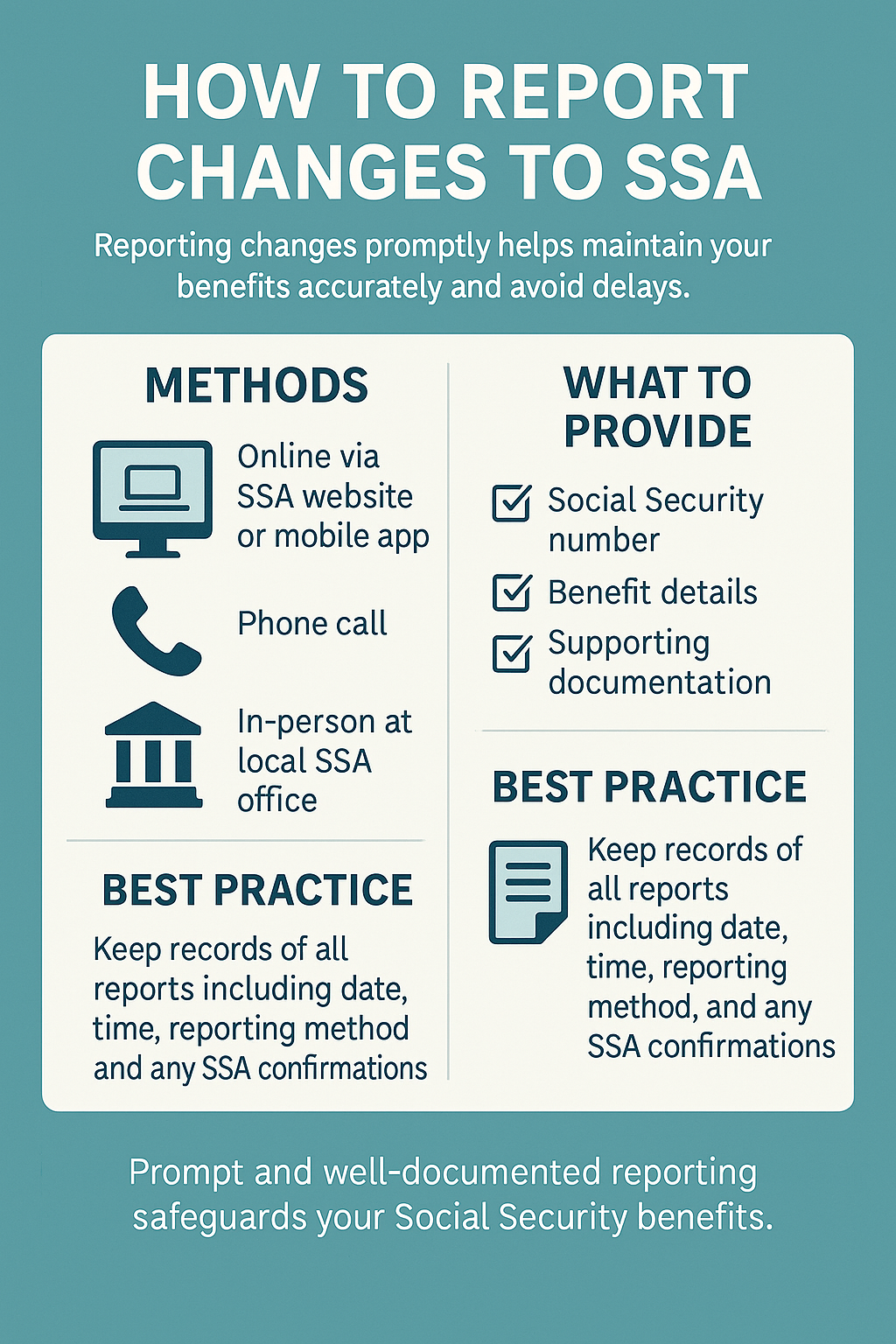
Reporting changes to the Social Security Administration is straightforward, with several options available to suit your needs. You can submit updates online through the SSA’s official website or mobile app, call the SSA directly by phone, or visit your local SSA office in person. Be prepared to provide your Social Security number, details about your benefits, and any relevant documentation that supports the change. It’s a good practice to keep a record of every change you report, including the date, time, and method of reporting, as well as any confirmation or correspondence from the SSA. This documentation can help resolve any issues that may arise and ensures you have proof that you fulfilled your reporting responsibilities.
Types of Changes You Must Report
As an SSDI beneficiary, you are required to report a variety of changes to the SSA to ensure your benefits remain accurate. These include changes in earned income, such as wages, salaries, and tips from employment, as well as unearned income like Social Security benefits, pensions, or interest. If your living situation changes—such as moving, changes in household members, or changes in who pays your living expenses—you must notify the SSA. Other important changes to report include updates to your medical condition, any changes in your work activity (like starting or stopping a job, changes in pay rate, or hours worked), and changes in marital status. If you have a representative payee managing your SSDI benefits, they are responsible for reporting these changes on your behalf. Promptly reporting all relevant changes helps maintain your eligibility and ensures you receive the correct benefit amount.
Not reporting changes to the SSA can have serious consequences. If you fail to report changes in your situation, you may receive more benefits than you are eligible for, resulting in an overpayment that you will be required to repay. Not reporting could also lead to underpayments, which can impact your monthly income and living expenses. In some cases, ongoing failure to report changes can result in the suspension or termination of your SSDI benefits altogether. To avoid these issues, it is essential to report changes promptly and accurately, ensuring your benefits reflect your current situation and you remain in compliance with SSA rules.
Social Security Disability Reporting Requirements
The following changes must be reported:
- Starting or stopping a job
- Changes in wages, hours, or duties
- Self-employment: Including freelance work, consulting, gig economy jobs, or running a small business
- Medical improvement or recovery
- Marriage, divorce, or changes in dependents status (age, school enrollment, marriage, etc.)
- Moving to a new address or changing direct deposit
- Leaving the U.S. for more than 30 consecutive days
SSDI Income Reporting Rules
SSDI recipients can work in some circumstances, but income limits apply. In 2025:
- The SGA limit is $1,620 per month for non-blind individuals
- The SGA limit is $2,700 per month for blind individuals These amounts are gross income before taxes, not take-home pay.
Even if you are in a Trial Work Period (TWP) — which allows you to test your ability to work for nine months — you still must report your earnings. SSA uses your income to track TWP months and determine when you may move into the Extended Period of Eligibility (EPE).
Earnings to report include:
- Wages, salaries, tips
- Self-employment income
- Bonuses, overtime, or commissions
- Payments for contract or gig work
Disability Benefits Continuing Eligibility
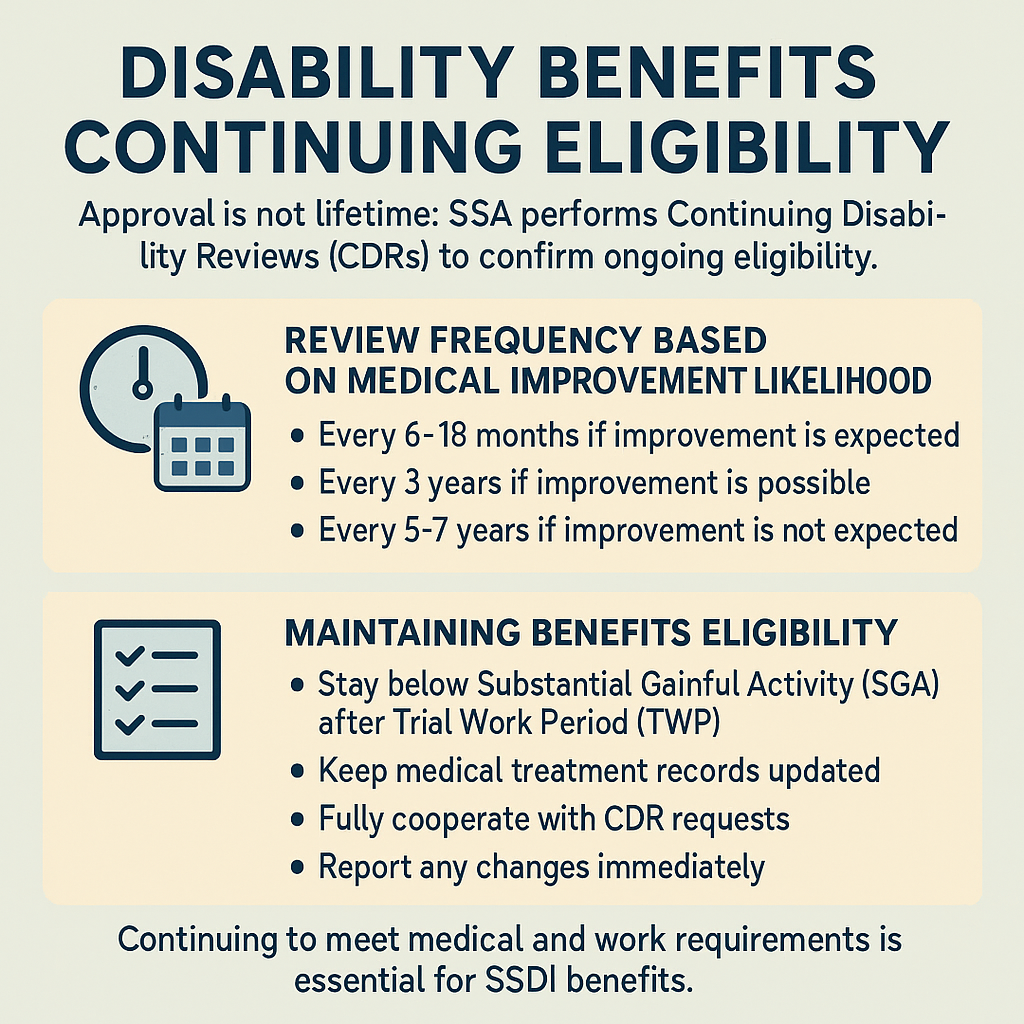
Approval does not mean lifetime benefits without review. SSA conducts Continuing Disability Reviews (CDRs) to verify you still meet the medical and work requirements. These reviews are generally scheduled based on the likelihood of medical improvement, and usually occur:
- Every 6–18 months if improvement is expected
- Every 3 years if improvement is possible
- Every 5–7 years if improvement is not expected
To maintain eligibility:
- Stay below SGA after your TWP ends
- Keep medical treatment records current
- Cooperate fully with CDR requests
- Report changes immediately
You must continue to meet the requirements to qualify for SSDI benefits.
Avoid SSDI Overpayment
An overpayment happens when SSA pays more than you are entitled to receive. Unreported changes can result in you receiving more money than you should, leading to an overpayment that you will have to pay back.
Common Mistakes That Can Lead to SSDI Overpayments
Avoid these preventable errors:
- Delaying reporting until SSA requests information
- Assuming part-time work doesn’t count — it does
- Failing to track gross income instead of take-home pay
- Not reporting bonuses, tips, or commissions
- Thinking self-employment is exempt — it’s not
- Ignoring medical improvements because you “don’t feel ready to work”
- Not updating your address and missing important SSA letters
- Misunderstanding the Trial Work Period — reporting is still required
Social Security Disability Compliance
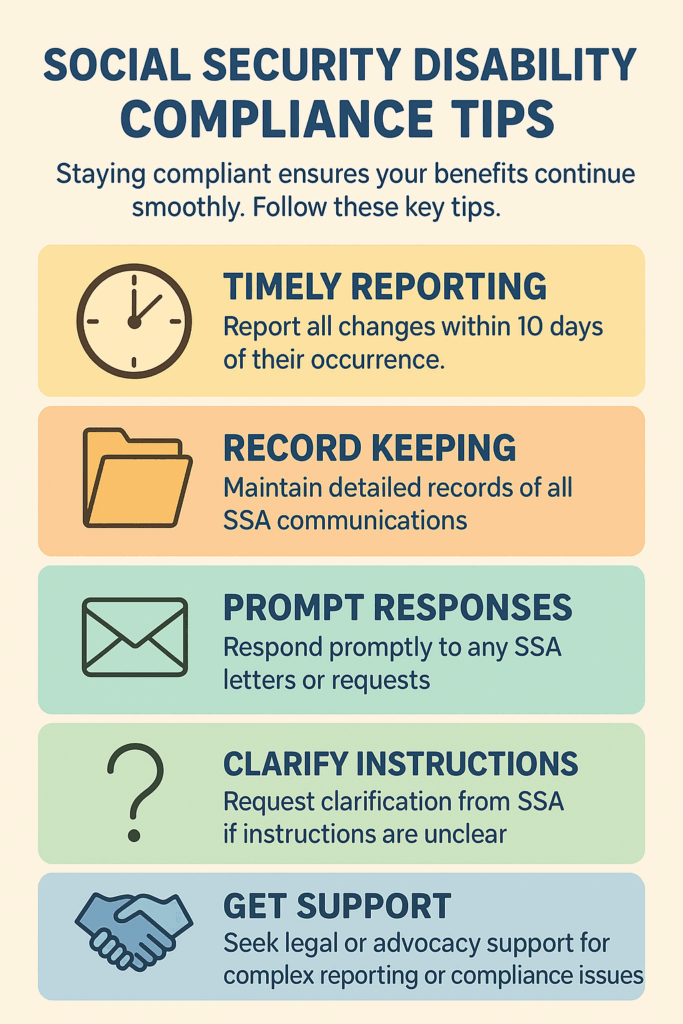
Remember, to stay compliant:
- Report all changes within 10 days of the month they occur
- Keep detailed records of communications with SSA
- Respond quickly to any SSA letter or request
- Ask SSA to explain anything unclear before acting
If you need help with complex reporting or compliance issues, consider seeking legal or advocacy services for additional support.
Conclusion
Approval for SSDI benefits is not a “set it and forget it” situation. It’s an ongoing process that requires your participation. By promptly reporting work, income, medical, and personal changes, you:
- Protect your benefits
- Avoid overpayments and penalties
- Stay in compliance with federal rules
When in doubt — report it. This simple habit will safeguard the benefits you worked hard to secure.
At Benefits.com, we aim to point you in the right direction towards all the benefits available to you. Take our free eligibility quiz today to get started!
 Benefits.com Advisors
With expertise spanning local, state, and federal benefit programs, our team is dedicated to guiding individuals towards the perfect program tailored to their unique circumstances.
Rise to the top with Peak Benefits!
Join our Peak Benefits Newsletter for the latest news, resources, and offers on all things government benefits.