














If you receive Social Security Disability Insurance (SSDI) or Supplemental Security Income (SSI), you may be required to have a representative payee. In cases where people are found incapable of managing their own benefits, a representative payee is appointed by the Social Security Administration (SSA) to manage your disability benefits when you cannot do so yourself.
The primary goal of the SSDI representative payee program is to protect beneficiaries who are unable to manage their funds because of age, illness, or disability. While many people manage their own benefits, a payee is necessary when someone is incapable of handling their own benefits. This safeguard ensures your monthly benefits are spent on necessities such as housing, food, clothing, medical care, and personal expenses.
Importantly, a representative payee manages only your Social Security or SSI benefits — not other income or assets. This is to protect people who cannot manage their own benefits.
What Is the Representative Payee Program?
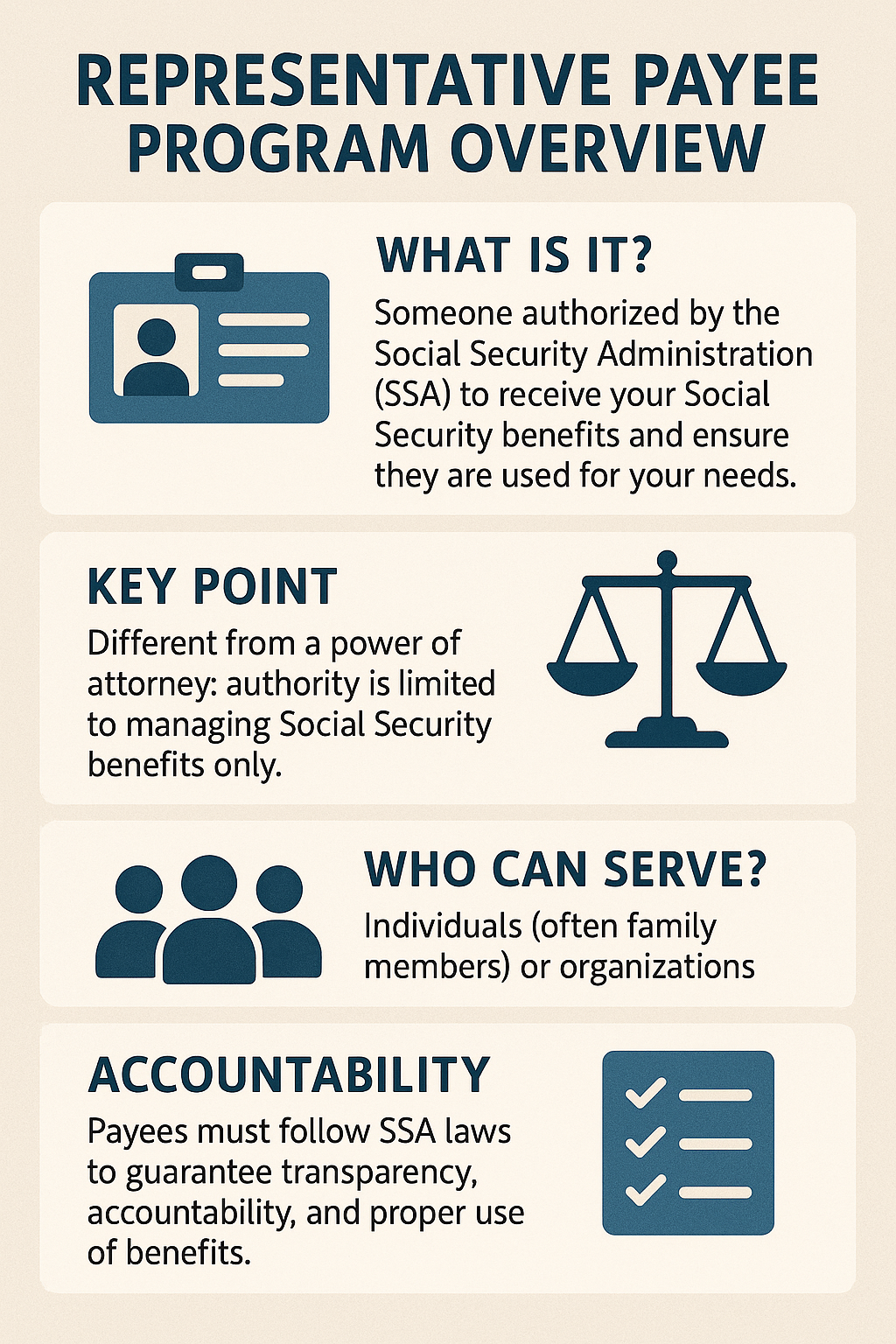
In the simplest terms, a representative payee is someone authorized by the Social Security Administration, often a family member, to receive your Social Security payments on your behalf and to ensure that the money is used for your needs.
This is not the same as granting someone power of attorney. A power of attorney may cover many types of legal and financial matters, but a representative payee’s authority is limited strictly to managing your Social Security benefits.
Individuals or organizations may be appointed to serve as representative payees. Regardless of who serves in the role, representative payees are bound by Social Security law designed to ensure transparency, accountability, and proper use of benefits.
Social Security Representative Payee Rules
Social Security representative payee rules outline strict duties, including:
- Prioritizing current needs – Benefits must first be used for the beneficiary’s housing, utilities, food, clothing, and medical needs.
- Saving unused funds – Any leftover money must be deposited into an interest-bearing account or invested in U.S. savings bonds titled in the beneficiary’s name.
- Keeping records – Payees must maintain receipts, bank statements, and a detailed spending log.
- Annual accounting report – Payees must file an annual accounting report with SSA detailing how funds were spent and saved.
- Reporting changes – Payees must inform SSA about significant changes, including living arrangements, work activity, other income, or changes in medical condition.
- Preventing misuse – Payees must protect the beneficiary from financial abuse and avoid any conflicts of interest.
Immediate action is required if there are signs of neglect, exploitation, or delayed payments to ensure the beneficiary’s safety and compliance with SSA requirements.
Violations of these rules can result in removal as payee, repayment of misused funds, and possible criminal prosecution.
When Is a Representative Payee Required?
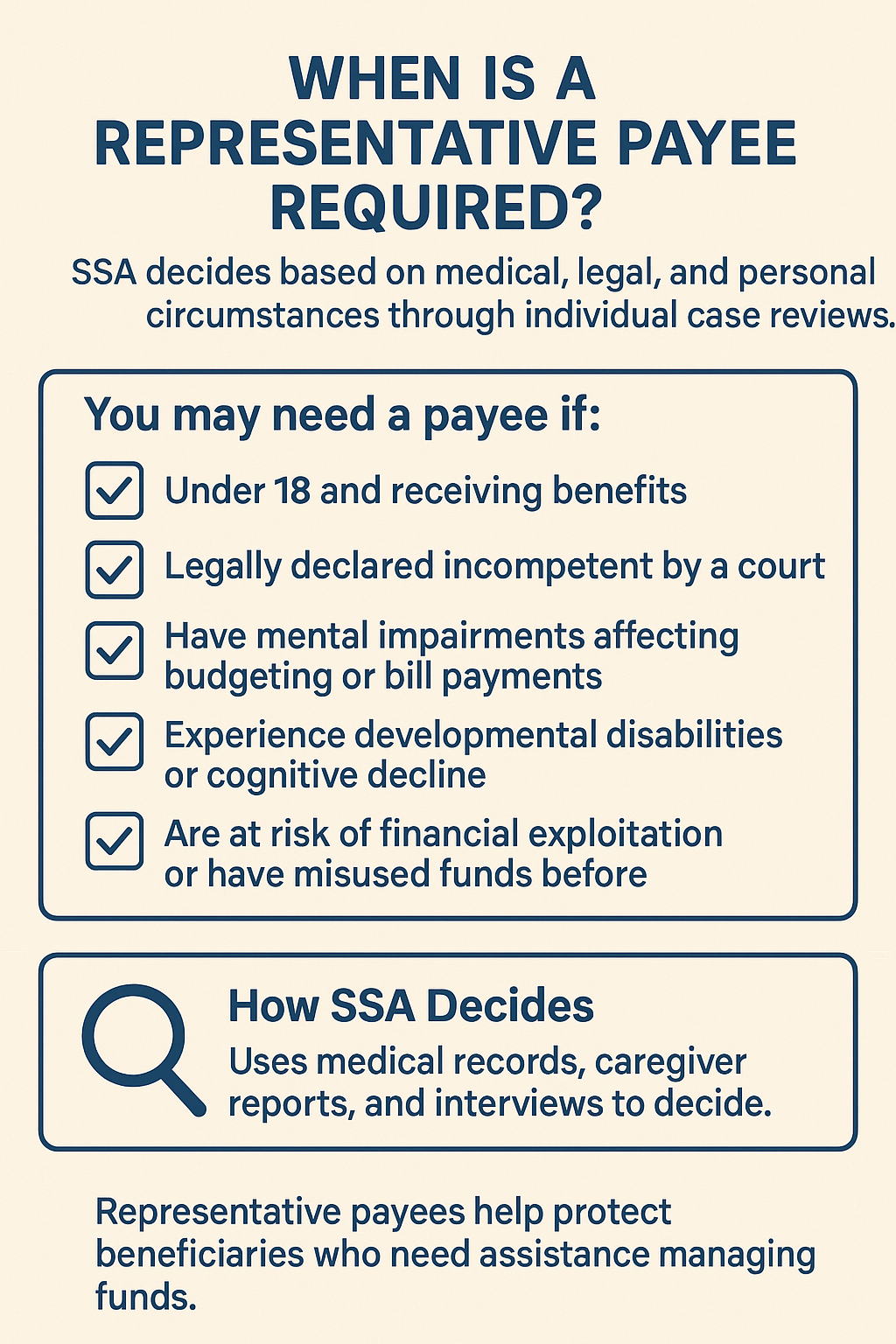
SSA decides when a payee is necessary based on medical, legal, or personal circumstances. SSA reviews cases individually to determine if a payee is needed. You might need a payee if:
- You are under age 18 and receiving benefits.
- You have been declared legally incompetent by a court.
- You are an individual who has a mental impairment affecting your ability to budget or remember to pay bills.
- You have a developmental disability or cognitive decline.
- You are at risk for financial exploitation or have a history of misusing funds.
SSA makes this determination using medical records, reports from caregivers or social workers, and sometimes interviews.
SSDI Payee Responsibilities
Serving as a SSDI payee is a position of trust. A payee’s role is to help the beneficiary manage their benefits effectively. Responsibilities include:
- Meeting basic needs first – Rent or mortgage, utilities, and food take priority.
- Ensuring medical needs are met – Paying for prescriptions, insurance premiums, and co-pays.
- Providing for personal care – Clothing, hygiene items, and other essentials.
- Saving for the future – Setting aside funds for emergencies or large purchases like medical equipment.
- Keeping funds separate – The beneficiary’s money must never be mixed with the payee’s personal funds.
- Maintaining communication – Whenever possible, include the beneficiary in decisions about spending and saving.
These duties require organization, honesty, and consistent attention to detail.
How to Become a Representative Payee
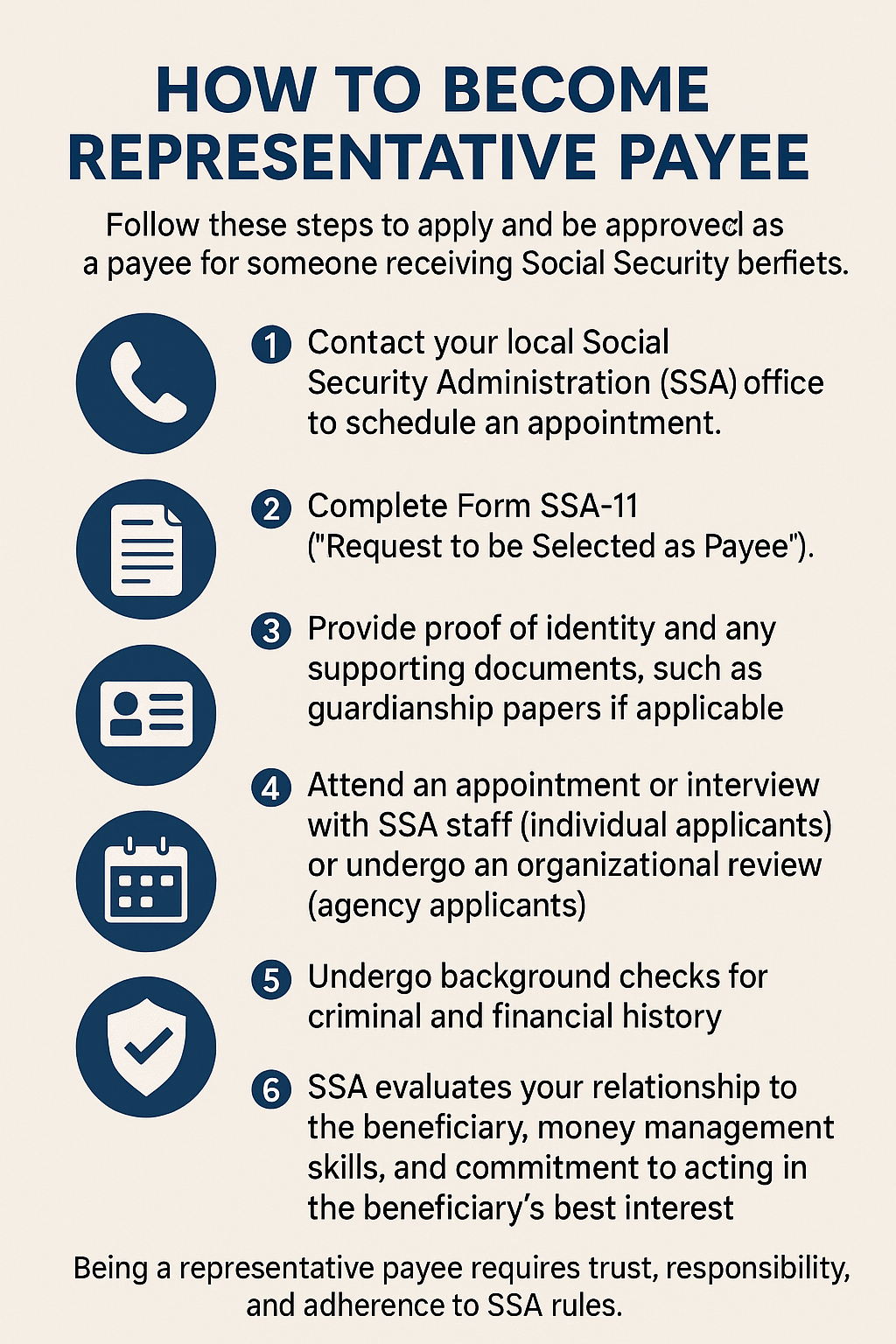
The representative payee application process starts when you contact your local SSA office to schedule an appointment. Steps include:
- Completing Form SSA-11 (“Request to be Selected as Payee”).
- Providing proof of identity and supporting documents such as guardianship papers if applicable.
- Scheduling and participating in an appointment or interview with SSA staff (for individuals) or undergoing an organizational review (for agencies).
- Background checks for criminal or financial history.
SSA will consider your relationship to the beneficiary, your ability to manage money, and your willingness to act in the beneficiary’s best interest.
Who Can Be a Representative Payee?
SSA prefers to appoint someone who knows the beneficiary personally, such as:
- A spouse, parent, or adult child.
- Another close relative or friend.
- A legal guardian or conservator.
- A nonprofit or social service agency.
- A qualified organizational payee.
SSA allows beneficiaries to designate up to three people as potential representative payees, helping ensure that a suitable individual is available if needed.
However, SSA will not appoint individuals with disqualifying criminal convictions, a record of misusing funds, or anyone not meeting qualifications to fulfill the role.
If no personal connection is available, SSA may assign an organization experienced in providing payee services.
Managing SSDI Benefits for Someone Else
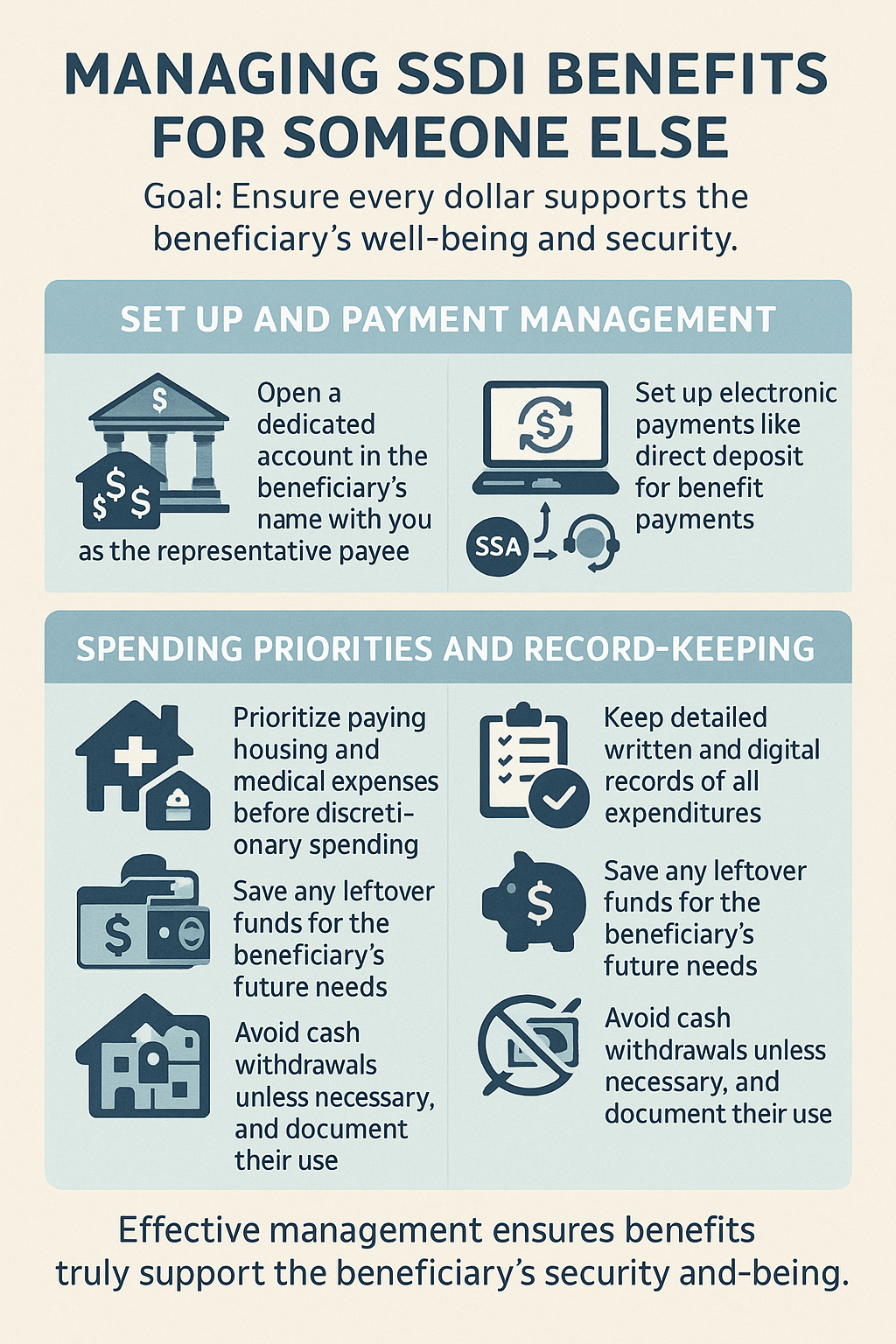
If you are managing SSDI benefits for someone else, it’s essential to handle the money with transparency and care. Best practices include:
- Opening a dedicated account in the beneficiary’s name, with you listed as the representative payee, and setting up electronic payment methods such as direct deposit for benefit payments.
- Paying for housing and medical expenses before discretionary spending.
- Keeping written and digital records of all expenditures.
- Saving any excess funds for the beneficiary’s future needs.
- Avoiding cash withdrawals unless absolutely necessary, and documenting their use.
There are several ways to set up electronic payments for SSDI benefits, including using online Social Security accounts, contacting your financial institution to request direct deposit, or calling Social Security customer service for assistance.
The goal is to ensure that every dollar of the beneficiary’s SSDI benefits contributes to their well-being and security.
SSDI Benefits and Mental Capacity
One of the most common reasons for appointing a payee is limited mental capacity. This does not always mean a person cannot make any decisions — rather, SSA must determine whether they can consistently manage their money.
SSA reviews:
– Medical evidence from doctors or mental health providers.
– Statements from caregivers or social workers.
– Observations from SSA employees who meet with the beneficiary.
A beneficiary can challenge SSA’s determination if they believe they are capable of managing their benefits.
Appealing a Payee Decision
If SSA assigns you a representative payee and you disagree, you have the right to appeal.
Steps include:
1. Requesting reconsideration in writing within 60 days.
2. Submitting medical or other evidence proving you can handle your finances.
3. Requesting a hearing before an administrative law judge if your reconsideration is denied.
Similarly, if you are dissatisfied with your current payee, you can request that SSA appoint someone else.
Why This Role Matters
Being a representative payee is not just about paying bills — it’s about protecting a vulnerable person’s financial stability. For many beneficiaries, SSDI or SSI is their only source of income. A reliable payee ensures these funds go toward housing, food, health care, and other essentials, improving the beneficiary’s quality of life.
Final Thoughts
The representative payee for SSDI program is an essential safeguard for beneficiaries who cannot manage their benefits alone. Whether you are serving as a payee or considering applying for one, understanding the responsibilities, rules, and rights is crucial.
If you need more information, the SSA’s official Representative Payee Program page (https://www.ssa.gov/payee/) is an excellent starting point. Many of the informational materials and resources on the SSA website were developed with government funding to assist beneficiaries and payees. You can also consult advocacy organizations for guidance on appealing a payee decision or reporting misuse.
At Benefits.com, we are here to help you navigate the process and receive the benefits you deserve. Begin today by taking our free eligibility quiz.
 Benefits.com Advisors
With expertise spanning local, state, and federal benefit programs, our team is dedicated to guiding individuals towards the perfect program tailored to their unique circumstances.
Rise to the top with Peak Benefits!
Join our Peak Benefits Newsletter for the latest news, resources, and offers on all things government benefits.