














Understanding Legal Compensation for Veterans
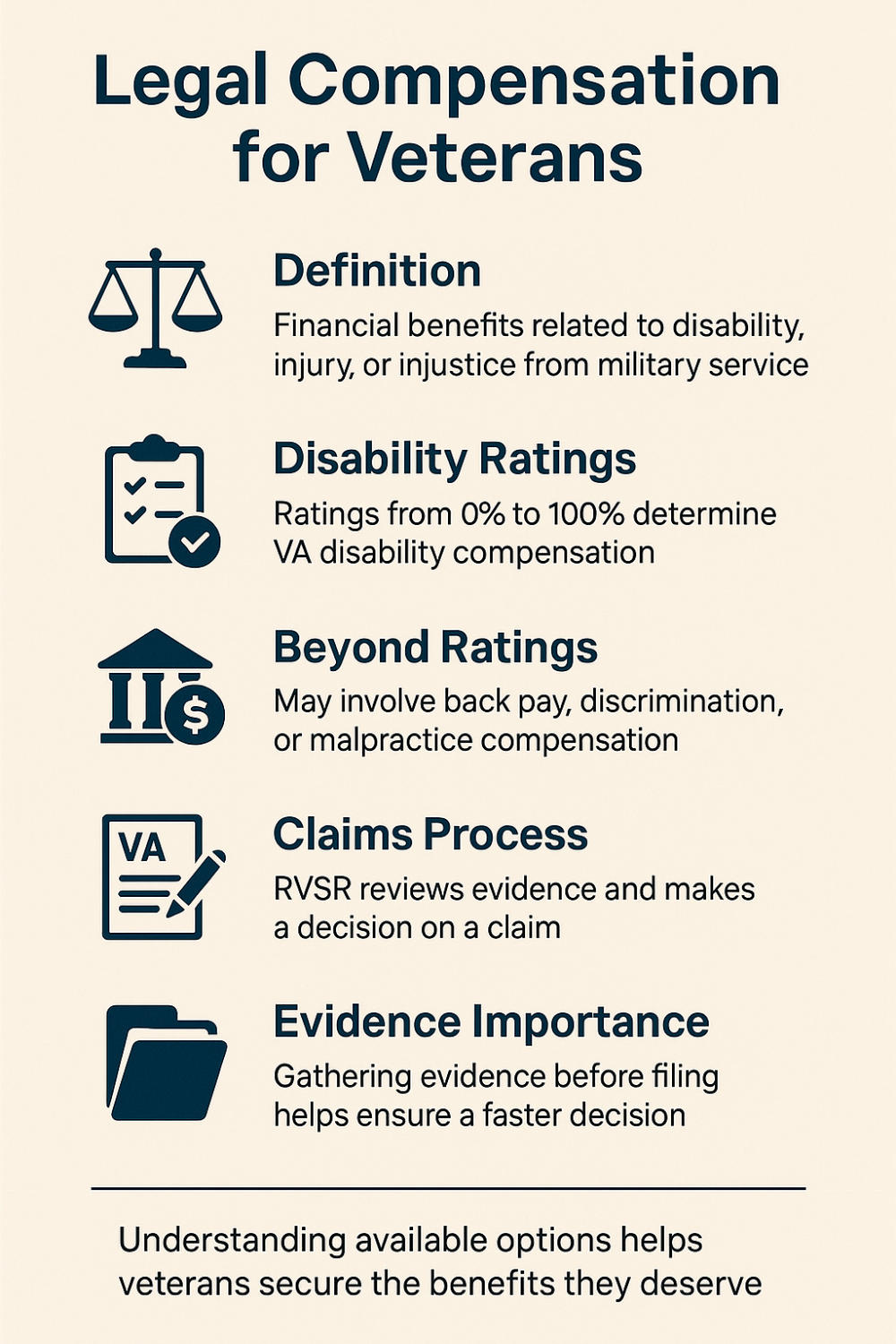
Legal compensation encompasses financial benefits and legal remedies available to those who have served in the United States Armed Forces and experienced disability, injury, or injustice due to their service. The goal of these programs is to ensure that veterans receive the care, support, and acknowledgment they have earned.
Disability compensation is a primary benefit for veterans whose disabilities are directly linked to their military service. Disabilities incurred or aggravated during active military service are grounds for service-connected disability compensation. VA compensation refers to financial support provided by the VA to veterans with service related disabilities incurred during active duty service.
The VA assigns disability ratings ranging from 0 to 100% in 10% increments to determine the level of compensation for each veteran’s condition. Disability compensation is given based on the VA disability rating the veteran receives.
While most veterans are familiar with the concept of VA disability benefits, legal compensation extends beyond a disability rating. Veterans disability compensation is a form of service-related disability benefit awarded to eligible former service members. It can include back pay for denied claims, compensation for discrimination in employment, or even damages for malpractice in VA medical facilities. A Rating Veteran Service Representative (RVSR) makes a decision on a VA disability benefits claim after reviewing all evidence.
Gathering all relevant evidence is crucial before filing a claim to ensure a faster decision. The VA notification letter is an important document used to verify a veteran’s eligibility and claim status during this process. Knowing the full range of available options, including VA benefits, is essential for veterans to secure the benefits they rightfully deserve.
Common Types of Compensation Veterans Can Pursue
Veterans may qualify for several forms of compensation depending on the nature of their service-connected condition, legal standing, and post-service circumstances. Veterans from all branches of the military, including the Air Force, Army, Navy, Marine Corps, and Coast Guard, are eligible for these benefits.
To obtain VA disability compensation, you must submit an application along with supporting evidence such as medical and service records. Veterans may apply for VA disability compensation online or by phone, mail, or fax using VA Form 21-526EZ.
VA Disability Compensation
VA disability benefits provide a monthly tax-free payment to disabled veterans based on the VA’s process of rating disabilities. The basic monthly rate and compensation rates vary depending on the severity of the illness or injury, whether the veteran has a dependent child or spouse, and if the condition is a chronic illness, existing condition, or includes mental health conditions.
Dependency and Indemnity Compensation (DIC)
DIC is for family members of a military service member whose death resulted from a service-related condition or occurred while on active duty. Surviving spouses with special circumstances, such as remarriage or age, may qualify for additional benefits. A surviving spouse who remarries on or after December 16, 2003, and after reaching age 55, is still eligible to continue receiving DIC.
Special Monthly Compensation (SMC)
SMC includes additional benefits for disabled veterans with special circumstances, such as severe disabilities or the need for aid and attendance, which may qualify them for higher compensation. Special Monthly Compensation (SMC) is a tax-free supplementary benefit available to veterans, their spouses, surviving spouses, and parents.
Vocational Rehabilitation and Employment (VR&E)
VR&E offers education and job training for reemployment. The application process for these benefits can be complex and may require documentation of an existing condition, chronic illness, or mental health conditions resulting from illness or injury during service.
Individual Unemployability (IU)
IU benefits compensate veterans at the 100% rate if they are unable to maintain substantially gainful employment due to service-connected conditions.
Other benefits may be available to family members, including educational assistance and healthcare. Veterans and their families may also be eligible for Social Security disability benefits, such as SSDI and SSI. These programs can interact with VA benefits, and understanding both together is important for maximizing available support.
When to Seek Legal Help for Your Disability Compensation
Although the VA encourages veterans to file claims independently, navigating the system can be complex and time-consuming. Many veterans disability lawyers offer a free consultation to discuss the application process and potential appeals. Veterans should consider legal assistance when their claim is denied, underrated, or involves disputes over service connection, effective dates, or medical errors.
Submitting an “Intent to File” (ITF) form (VA Form 21-0966) reserves a potential effective date for benefits for up to one year.
The Role of VA-Accredited Attorneys and Claims Agents
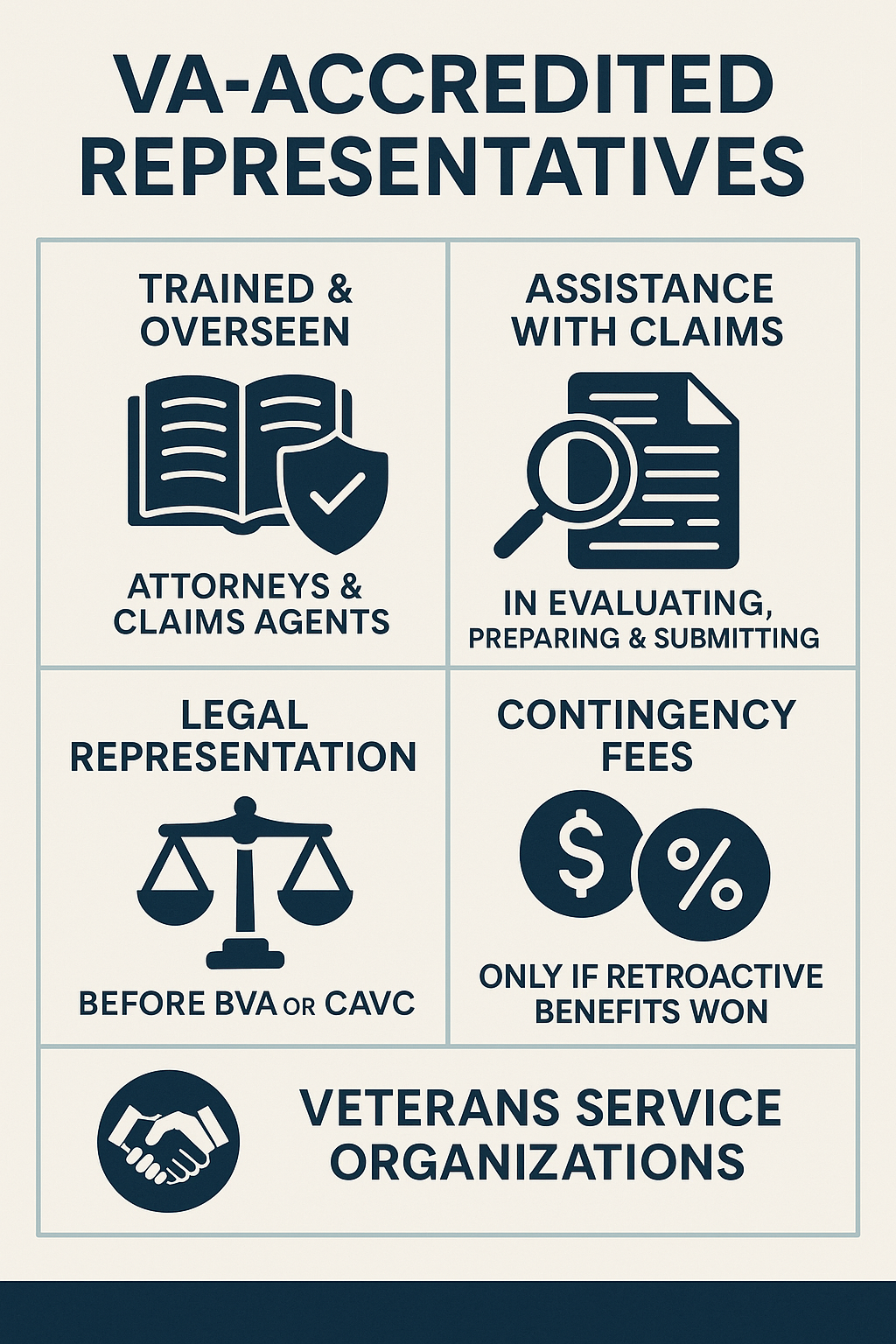
VA-accredited attorneys and claims agents are authorized by the Department of Veterans Affairs to assist with benefit claims. They undergo specialized training and are subject to federal oversight, ensuring ethical and competent representation.
They evaluate eligibility, prepare and submit claims, identify rating errors, represent clients before the BVA or CAVC, and provide related legal advice. Accredited Veterans Service Organizations (VSOs), such as the American Legion or Disabled American Veterans (DAV), can provide free expert assistance in preparing and submitting claims.
Most work on a contingency basis, collecting fees only if the veteran wins retroactive benefits. SSDI and VA disability compensations are not affected by each other, so you may be eligible to receive both.
How to Appeal a Denied VA Claim
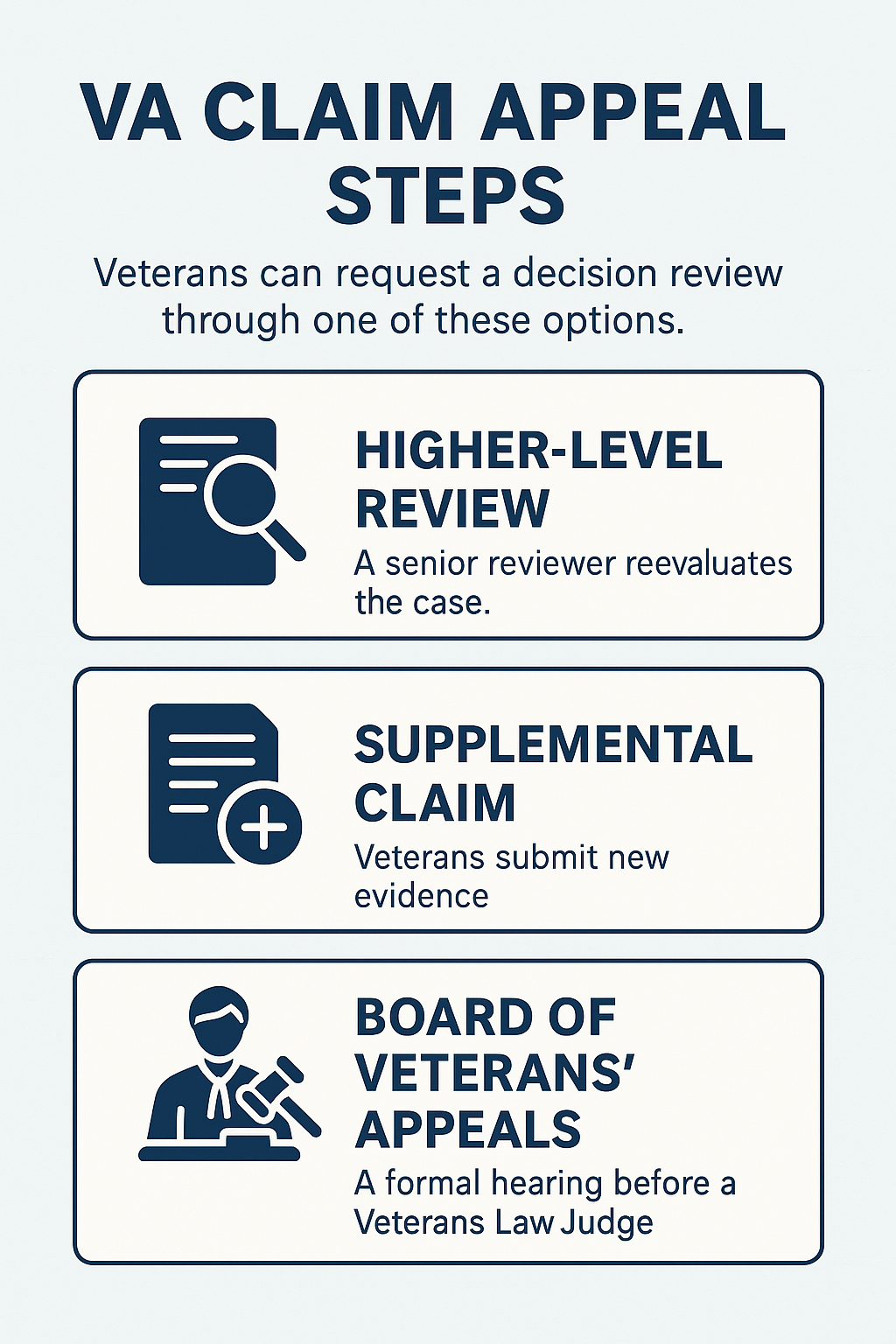
Denied claims are unfortunately common, often due to missing evidence or administrative errors. Veterans have several appeal options under the VA Appeals Modernization Act (AMA): Veterans can request a decision review through a Supplemental Claim, a Higher-Level Review, or a Board Appeal if they disagree with the VA’s decision.
- Higher-Level Review (HLR) – A senior reviewer reevaluates the case.
- Supplemental Claim – Veterans submit new evidence.
- Board of Veterans’ Appeals (BVA) – A formal hearing before a Veterans Law Judge.
Tips for success include obtaining independent medical opinions, meeting all deadlines, and maintaining thorough documentation. Understanding the effective date of your claim is crucial, as it determines when benefits begin and can impact the amount of retroactive compensation.
Other Legal Avenues: Employment, Discrimination, and Injury Cases
Legal compensation for veterans can also involve employment discrimination, medical malpractice, or civil injury claims. Under USERRA and ADA, veterans are protected against job discrimination and entitled to workplace accommodations. Federal law establishes the standards for employment protections and eligibility for workplace accommodations for veterans.
Conclusion
Securing legal compensation for veterans requires persistence, evidence, and professional guidance. With the help of a veterans’ rights lawyer or accredited claims agent, veterans can ensure their service is honored through proper compensation and respect.
At Benefits.com, we aim to point you in the right direction towards all the benefits available to you. Take our free eligibility quiz today to get started!
 Benefits.com Advisors
With expertise spanning local, state, and federal benefit programs, our team is dedicated to guiding individuals towards the perfect program tailored to their unique circumstances.
Rise to the top with Peak Benefits!
Join our Peak Benefits Newsletter for the latest news, resources, and offers on all things government benefits.