













The Supplemental Nutrition Assistance Program (SNAP), commonly known as food stamps, continues to be a critical lifeline for millions of low-income individuals and families across the United States.
The federal government provides food assistance through SNAP to support food insecure families. The SNAP program helps over 42 million Americans buy groceries, making it a vital resource for reducing hunger and supporting low-income households.
What You Need to Know About SNAP Benefits 2026
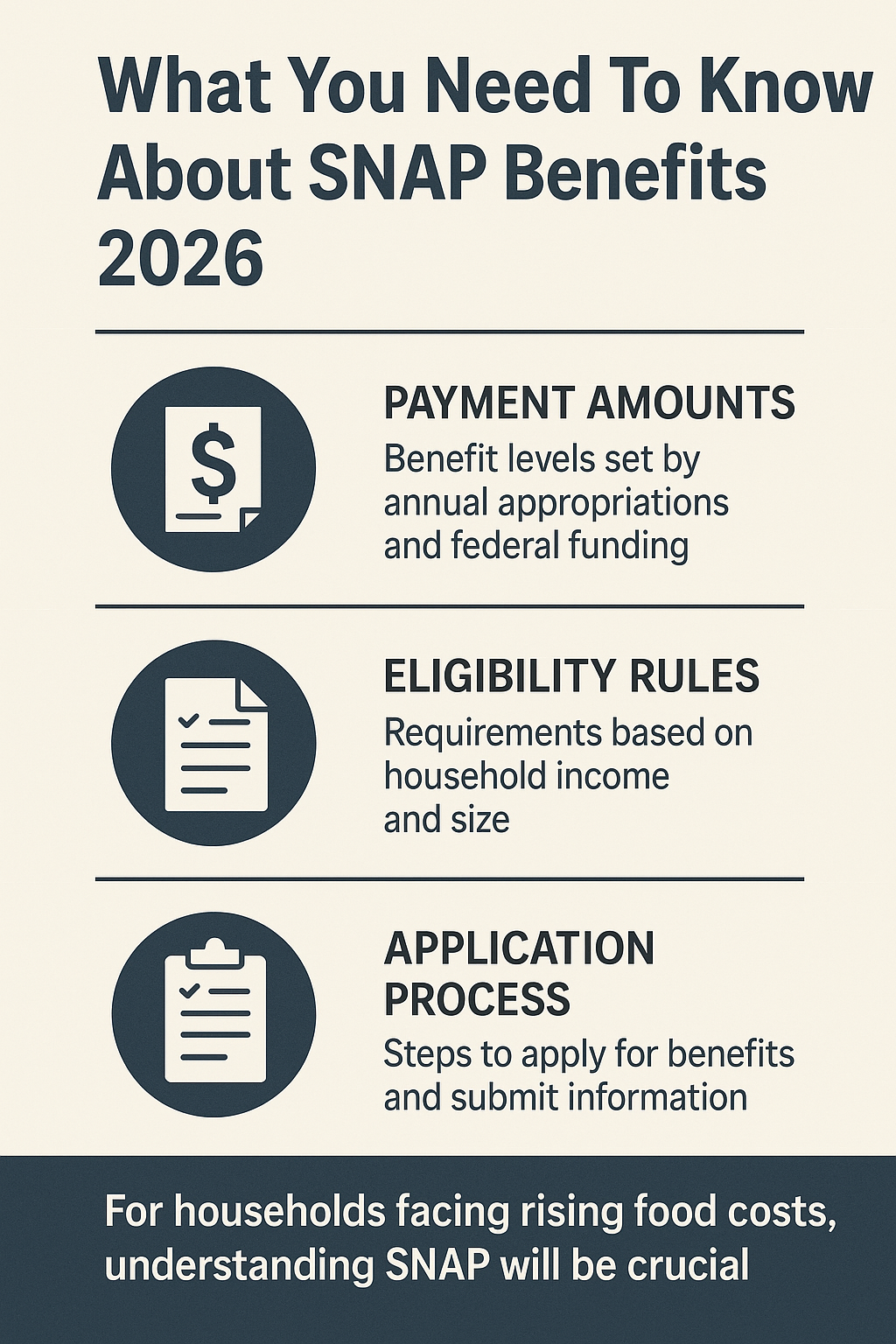
As we approach 2026, updates to SNAP benefits are expected to reflect changes in the economy, cost of living, and federal policy priorities. SNAP benefits are determined by annual appropriations and federal funding, which are set each fiscal year as part of the federal budget process.
For households struggling with rising food costs, understanding SNAP benefits— including payment amounts, eligibility rules, and the application process — is essential to maintaining food security and stability.
Eligibility Requirements for SNAP Recipients in 2026
Eligibility for SNAP in 2026 will continue to be based on household income, size, and certain expense deductions. However, the income limits and asset thresholds are updated annually to reflect inflation and cost-of-living adjustments.
Eligible participants include new applicants, families with children, and other vulnerable groups, as determined by the administering agency. The agency is responsible for evaluating eligibility and ensuring that all qualified individuals have access to benefits.
Typical eligibility factors include:
- Gross income limit: Generally at or below 130% of the federal poverty level (FPL).
- Net income limit: After allowable deductions, net income must be at or below 100% of the FPL.
- Resource limit: Certain households must have countable assets under $2,750 (or $4,250 if a member is elderly or disabled).
- Work requirements: Able-bodied adults without dependents (ABAWDs) must meet federal work or training requirements unless exempt.
- Maximum income thresholds and asset limits for SNAP were adjusted for fiscal year 2026, with asset limits remaining at $3,000 for most households.
Applicants must complete an official form provided by the agency to determine eligibility.
For official limits, refer to the USDA’s FY 2026 income eligibility standards.
SNAP Payment Amounts: How Much You Can Receive
The SNAP payment amounts 2026 — also known as benefit allotments — are expected to rise modestly due to Cost-of-Living Adjustments (COLA). The USDA adjusts these amounts annually to ensure purchasing power keeps up with inflation. Monthly SNAP amounts will increase by an estimated 2.7%, aligning with the Social Security Cost-of-Living Adjustment (COLA), starting October 1, 2025.
Monthly benefits are funded through annual appropriations, but in cases of insufficient funds, contingency funds may be used to supplement regular monthly benefits to ensure uninterrupted payments.
However, the USDA confirmed that no SNAP benefits will be issued on November 1 due to the government shutdown. SNAP benefits are allocated monthly, meaning benefits for October were issued as usual, despite the government shutdown.
As of October 2025 (the start of FY 2026):
- Maximum monthly allotment for a household of one is projected to increase from $291 to approximately $301.
- A four-person household may receive up to $973, depending on state and household circumstances.
- Alaska, Hawaii, Guam, and the U.S. Virgin Islands have higher allotments due to local cost-of-living differences.
If appropriated funds are insufficient to cover regular benefits, the contingency fund may be used to ensure payments continue for eligible households. However, the USDA stated that states cannot pay for SNAP benefits upfront and be reimbursed during the shutdown, further complicating the distribution of benefits during funding gaps.
The official FY 2026 SNAP allotment chart can be found on the USDA website.
How to Apply for SNAP Benefits in 2026
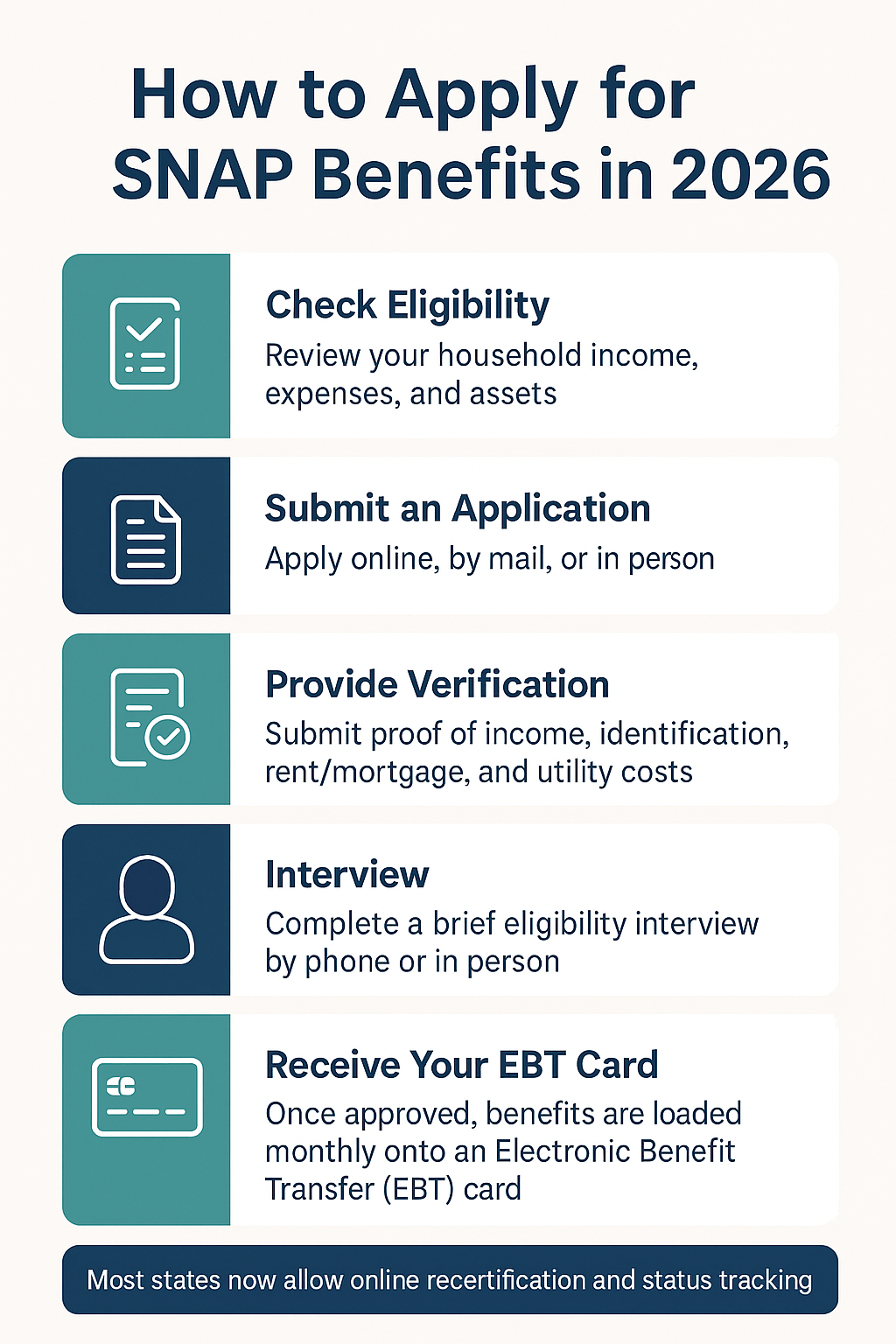
Applying for SNAP benefits in 2026 will remain a straightforward but state-specific process. While the federal SNAP program sets national guidelines, applications are administered by each state agency.
- Check eligibility: Review your household income, expenses, and assets.
- Submit an application: Apply online via your state’s SNAP portal, by mail, or in person at a local SNAP office. Applicants must complete an official form provided by the agency as part of the application process.
- Provide verification: Submit proof of income, identification, rent/mortgage, and utility costs.
- Interview: Complete a brief eligibility interview by phone or in person.
- Receive your EBT card: Once approved, benefits are loaded monthly onto an Electronic Benefit Transfer (EBT) card.
Most states now allow online recertification and status tracking, making it easier to manage benefits digitally. If you’re unsure how to apply, visit your state’s SNAP website or call the local Department of Human Services office.
Any changes to the application process will be communicated by the agency and will remain in effect until further notice.
Important Program Updates and Changes for 2026
The 2026 SNAP program changes will reflect evolving federal policies aimed at improving accessibility, nutrition quality, and administrative efficiency.
- Increased benefit levels tied to the Thrifty Food Plan (TFP) revisions, ensuring benefits better match real-world food costs.
- Expanded access for college students and older adults through revised eligibility exemptions.
- Pilot programs for healthier food incentives, such as bonus benefits for purchasing fruits and vegetables.
- Continued modernization of EBT technology, with select states piloting mobile wallet compatibility and enhanced fraud protection.
- Potential federal legislation in the 119th Congress (such as Senate Bill 561) proposing further reforms to streamline benefit distribution and improve program integrity.
- Under the Healthy SNAP Act of 2025, certain foods, such as soda and candy, may be designated as ineligible for purchase with SNAP benefits.
The Consolidated Appropriations Act and other appropriations bills determine the funding for SNAP and related programs. Administrations have made decisions during past government shutdowns about the use of contingency funds and reserves to maintain regular benefits.
The United States Department of Agriculture may issue official measures to ensure food benefits and WIC benefits continue, and emergency aid may be provided to support food-insecure families. The impact of these changes is difficult to measure due to the cancellation of some USDA reports.
State-by-State SNAP Variations
While SNAP is federally funded, states have flexibility in setting certain policies — leading to variations in benefit amounts, income deductions, and processing times. State budgets and available funds can directly impact program operations, including the ability to use contingency funds or money to support SNAP benefits during funding gaps.
Despite possessing contingency funds, the USDA claimed that those funds could not be used to support SNAP benefits for fiscal year 2026 due to a lack of appropriations. USDA’s guidance documents have indicated that contingency funds were available for SNAP benefits during previous funding lapses, ensuring continuity of assistance.
SNAP relies on cooperation between state agencies and the federal government to distribute benefits.
- California and New York typically provide higher benefit levels due to higher living costs.
- Texas and Florida may have stricter work-requirement enforcement for ABAWDs.
- Rural states often provide more generous vehicle or shelter deductions to reflect household needs.
Always check your state guidelines for the most accurate and localized information.
Tips for Maximizing Your SNAP Benefits

Getting the most out of your food stamp benefits 2026 involves both budgeting and awareness of available support resources. Consider these strategies:
- Track spending with your EBT account app or online portal.
- Shop smart: Use weekly store flyers, bulk discounts, and coupons where allowed.
- Use farmers markets: Many accept EBT and offer “Double Up Food Bucks” or similar programs that match SNAP spending on fresh produce.
- Maintain eligibility: Report changes in income or household composition promptly to avoid interruptions.
- Seek community support: Local food banks and cooperative programs often supplement SNAP benefits with additional groceries.
Most people who rely on SNAP use these benefits to help provide meals for their families, especially during times of crisis. SNAP recipients have been advised to use food banks and other subsidized meal programs amid the funding lapse.
Education and community aid are essential for supporting participants, helping them understand their options and maximize their benefits.
Conclusion
The SNAP benefits 2026 program continues to adapt to economic realities and the needs of low-income Americans. With projected increases in payment amounts, updated eligibility limits, and technology-driven improvements in application and access, the coming year should bring meaningful enhancements for millions of households nationwide.
For the most current details, always refer to official USDA updates and your state’s Department of Social Services website.
At Benefits.com, we are here to help you navigate the process and receive the benefits you deserve. Begin today by taking our free eligibility quiz.
 Benefits.com Advisors
With expertise spanning local, state, and federal benefit programs, our team is dedicated to guiding individuals towards the perfect program tailored to their unique circumstances.
Rise to the top with Peak Benefits!
Join our Peak Benefits Newsletter for the latest news, resources, and offers on all things government benefits.