














The Military Financial Literacy Act was proposed March 24, 2026. It aims to enhance the financial well-being of service members and their families by providing comprehensive education and resources. Enacted to address common financial challenges faced by the military community, such as debt, predatory lending, and inadequate retirement planning, the act mandates financial readiness training at various career stages. Strengthening individualized financial education and counseling can help build stability, reduce stress, and improve outcomes for service members both in and out of uniform.
By fostering greater financial literacy, the act seeks to equip military personnel with the knowledge and skills necessary to make informed financial decisions, secure their financial future, and alleviate stress, ultimately contributing to military readiness and overall quality of life.
Why This Update
This bill was only just introduced in March, 2026. We want to keep track of it’s progress and it’s effect on veterans.
What is the Military Financial Literacy Act?
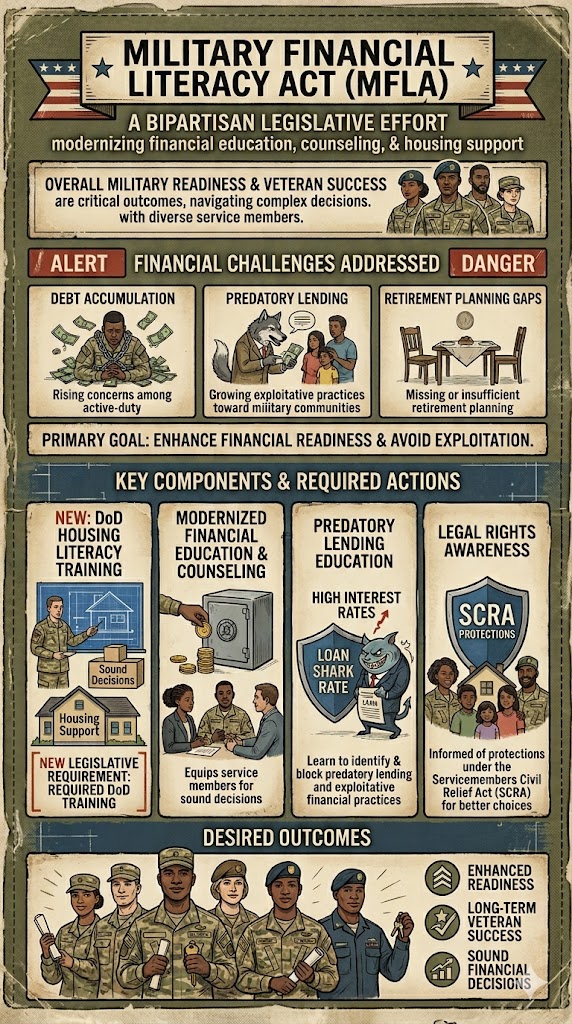
The Military Financial Literacy Act is a bipartisan legislative effort designed to modernize and expand financial education, counseling, and housing support for U.S. service members. Financial education is a critical component of overall military readiness and long-term veteran success, as it helps service members and their families navigate complex financial decisions throughout their careers.
The act represents a legislative effort to address financial challenges that service members and their families may experience. The initiative originated from growing concerns about debt accumulation, predatory lending approaches toward military communities, and gaps in retirement planning among active-duty personnel. The primary goal is to enhance financial readiness across all branches of service while supporting service members in avoiding exploitative financial practices.
The Department of Defense (DoD) is currently not required to provide service members with housing literacy training, but the new legislation will require the DoD to implement such training. The act focuses on educating service members about predatory lending and their legal rights, including protections under the Servicemembers Civil Relief Act (SCRA). These efforts are designed to ensure that service members are informed of their legal rights and are better equipped to make sound financial and housing decisions.
Benefits for Service Members and Veterans
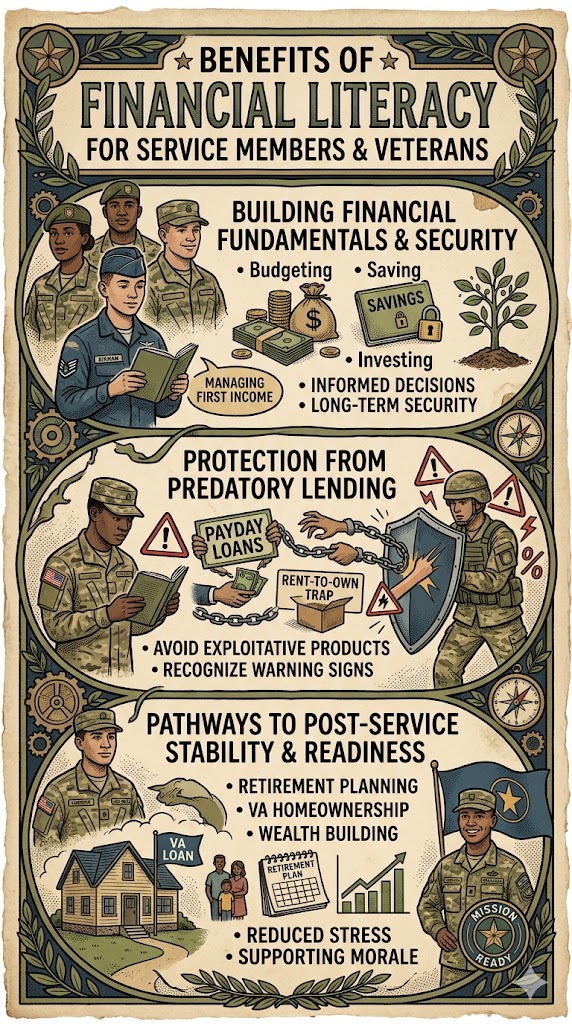
Financial literacy education may help service members make more informed decisions about their money, which could reduce the likelihood of challenging financial situations. Knowledge about budgeting, saving, and investing creates a foundation for working toward long-term financial security. This education may be particularly valuable for young service members who could be managing significant income for the first time.
Protection from predatory lending practices is a key focus of comprehensive financial education. Military communities have often been approached by payday lenders, rent-to-own schemes, and other exploitative financial products. Understanding these risks and knowing the warning signs may help service members recognize and avoid costly financial situations.
Training on retirement planning, homeownership through VA loans, and wealth building creates pathways that could support financial stability after service. Reduced financial stress may support morale and mission readiness, as service members who feel financially secure can focus more effectively on their duties.
Resources and Implementation
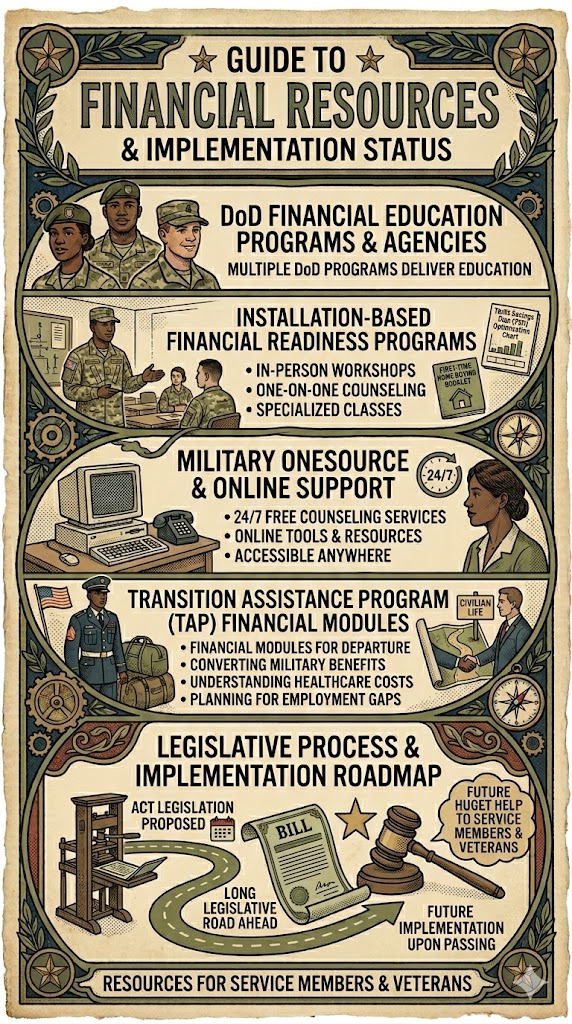
Multiple DoD programs and agencies deliver financial education to military families. Military OneSource provides free financial counseling services, online tools, and educational resources accessible 24/7. Financial readiness programs at military installations offer in-person workshops, one-on-one counseling sessions, and specialized classes on topics ranging from first-time home buying to Thrift Savings Plan (TSP) optimization.
The Transition Assistance Program (TAP) incorporates financial literacy modules specifically designed for service members preparing to leave active duty. These modules address transition challenges such as converting military benefits to civilian equivalents, understanding healthcare cost changes, and planning for potential employment gaps.
As the act was just proposed, there is a long way to go in the legislative process before the act will be implemented, but once it does take effect, it will be a huge help to service members and veterans.
Example Scenario
If you are a service member approaching separation, you might find yourself navigating complex financial decisions regarding your retirement savings, VA home loan benefits, and potential new employment.
Under the military financial literacy act, you would have access to personalized financial advice from credentialed counselors, who provide expert guidance on budgeting, predatory lending, and housing decisions related to permanent change of station orders. Through the financial literacy training mandated by the act, you could learn how to roll over your Thrift Savings Plan (TSP) responsibly, understand your post-service healthcare costs, and create a realistic budget for civilian life, helping you transition smoothly and securely.
Frequently Asked Questions
What is the primary goal of the Military Financial Literacy Act?
Its primary goal is to improve the financial readiness and well-being of service members and their families by providing comprehensive financial education and resources.
Who benefits from the Military Financial Literacy Act?
Active-duty service members, National Guard and Reserve members, their spouses, and in many cases, veterans benefit from the programs and education offered under the act.
What types of financial topics are covered in the training?
Training typically covers budgeting, credit management, debt reduction, saving, investing, retirement planning, insurance, and protection against financial scams.
How can service members access financial counseling?
Service members can access free financial counseling through resources like Military OneSource, installation financial readiness programs, and the Transition Assistance Program (TAP).
Is financial literacy training mandatory for all service members?
Yes, the act mandates financial literacy training at various key career milestones, including entry into service, before deployment, and upon separation or retirement.
Does the act help protect service members from predatory lenders?
Yes, a key aspect of the act is to educate service members on avoiding predatory lending practices and understanding their rights, often complementing the Military Lending Act (MLA).
What is the long-term impact of the act on military families?
The long-term impact includes increased financial stability, reduced debt, better preparation for retirement, and overall improved quality of life for military families.
Impact and Outlook
Ongoing logistical challenges include reaching all service members effectively, particularly those in remote assignments or deployed locations. The mobile nature of military life requires programs that can adapt to frequent relocations and varying family circumstances.
As financial products and services become more complex, education programs must keep pace to remain relevant and effective. This includes the ongoing need to expand credentialed counseling and provide expert guidance, ensuring that service members and veterans receive specialized, up-to-date support tailored to their unique situations.
Continuous education remains important for a military population that experiences frequent transitions and changing financial needs. Accessibility through multiple channels—online platforms, mobile apps, in-person counseling, and peer support networks—helps ensure that service members can access support when and where they may need it most.
 Benefits.com Advisors
With expertise spanning local, state, and federal benefit programs, our team is dedicated to guiding individuals towards the perfect program tailored to their unique circumstances.
Rise to the top with Peak Benefits!
Join our Peak Benefits Newsletter for the latest news, resources, and offers on all things government benefits.