















Disability benefits are a vital resource for individuals who are unable to work due to a mental or physical health condition. For veterans, these benefits can provide essential financial support and access to care, especially when facing challenges related to mental health.
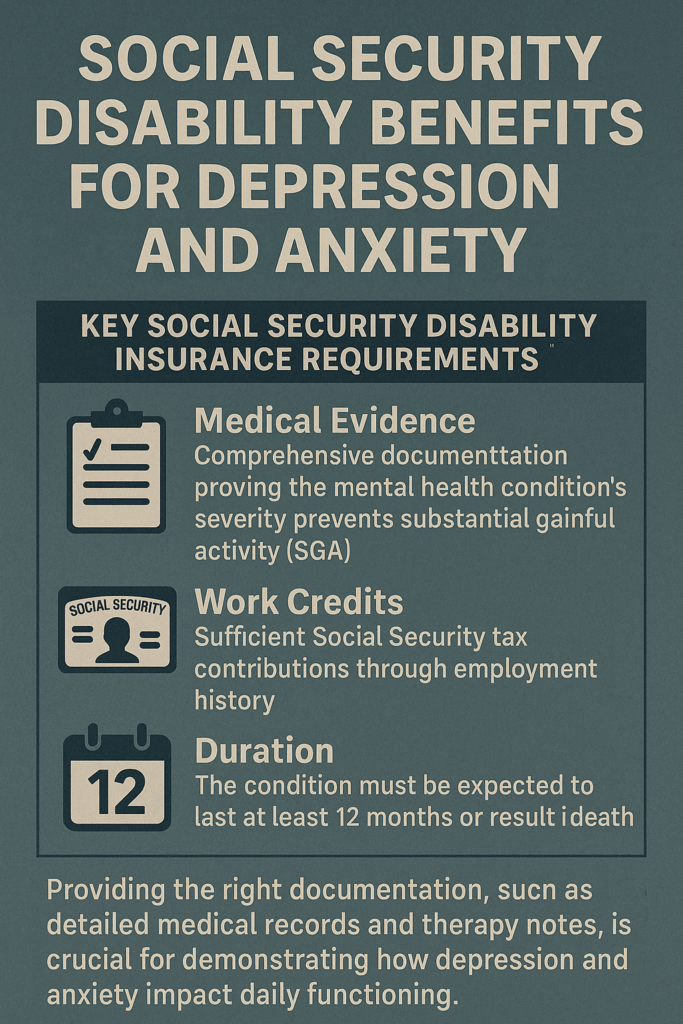
Key Social Security Disability Insurance Requirements
To qualify for SSDI benefits for depression and anxiety, veterans must satisfy three fundamental requirements:
- Medical Evidence: Comprehensive documentation, including consistent medical evidence, proving the mental health condition’s severity prevents substantial gainful activity (SGA)
- Work Credits: Sufficient Social Security tax contributions through employment history
- Duration: The condition must be expected to last at least 12 months or result in death
Providing the right documentation, such as detailed medical records and therapy notes, is crucial for demonstrating how depression and anxiety impact daily functioning.
Understanding Depression and Anxiety in Veterans
Depression and anxiety are among the most common mental health conditions affecting veterans, often as a result of experiences during military service, exposure to traumatic events, or ongoing issues like chronic pain. These mental health conditions can manifest in a variety of ways, including persistent feelings of sadness or hopelessness, difficulty concentrating, and anxiety symptoms such as panic attacks and sleep disturbances.
For many veterans, these symptoms can significantly impact daily life, making it difficult to perform occupational tasks, maintain relationships, or even manage basic self-care. Social and occupational impairment caused by depression and anxiety can lead to challenges in holding a job or engaging in everyday activities.
SSDI Criteria for Depression and Anxiety
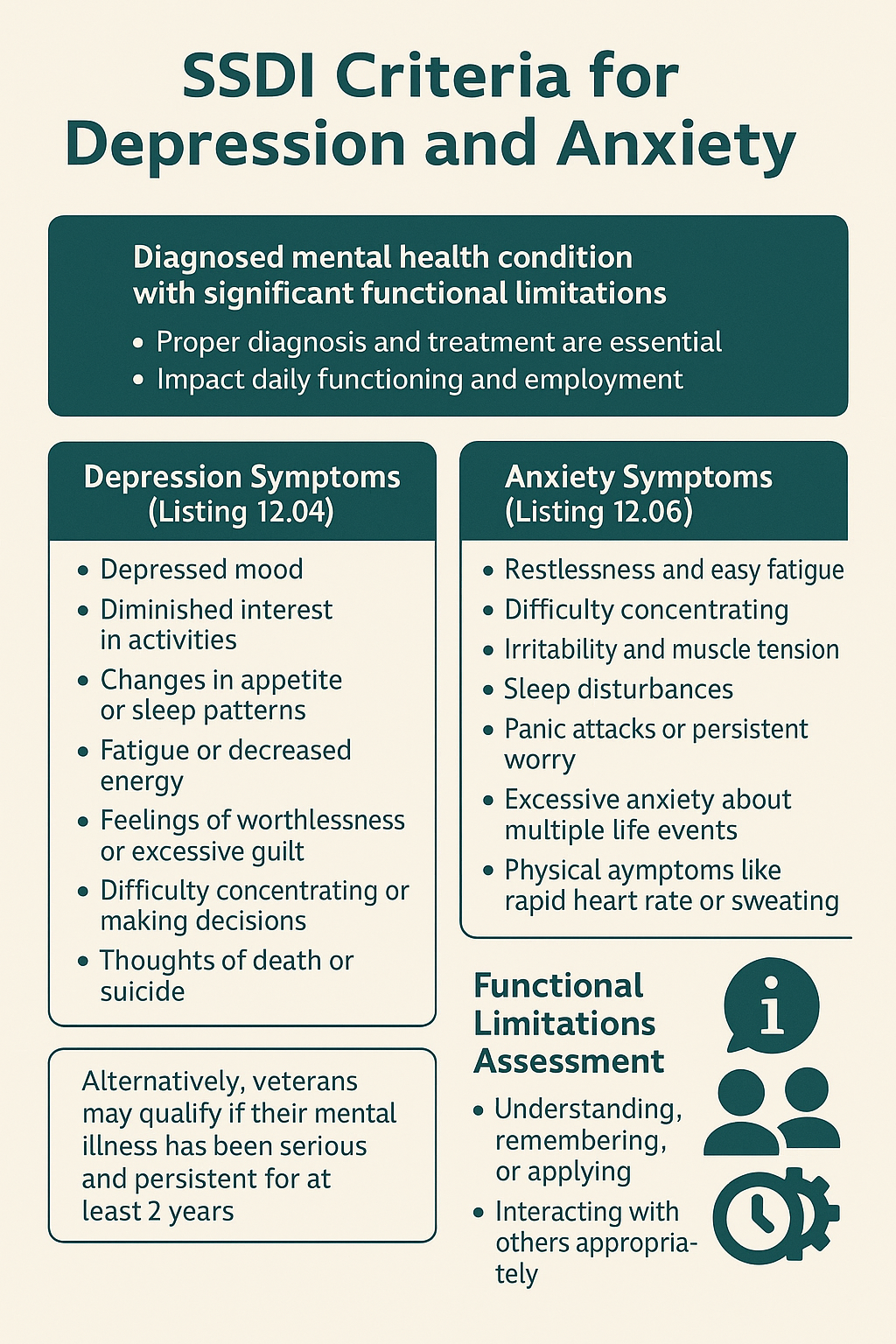
The SSA’s Blue Book outlines specific criteria for mental disorders. Veterans must demonstrate both a diagnosed mental health condition with a current diagnosis from a qualified professional and significant functional limitations.
Depression and anxiety are among the most frequently claimed conditions. Anxiety and depression often occur together as common mental health conditions, and proper diagnosis and treatment are essential due to their impact on daily functioning and employment.
Depression Symptoms (Listing 12.04)
For a depressive disorder (including major depressive disorder and mood disorder), veterans typically need to exhibit at least five of these symptoms:
- Depressed mood
- Diminished interest in activities
- Changes in appetite or sleep patterns
- Fatigue or decreased energy
- Feelings of worthlessness or excessive guilt
- Difficulty concentrating or making decisions
- Thoughts of death or suicide
Anxiety Symptoms (Listing 12.06)
An anxiety disorder requires documentation of symptoms such as:
- Restlessness and easy fatigue
- Difficulty concentrating
- Irritability and muscle tension
- Sleep disturbances
- Panic attacks or persistent worry
- Excessive anxiety about multiple life events
- Physical symptoms like rapid heart rate, sweating, and muscle tension
Functional Limitations Assessment
Beyond symptoms, veterans must demonstrate severe limitations in at least one, or marked limitations in two, of these four areas, with particular attention to occupational and social impairment as a key factor in disability evaluations:
- Understanding, remembering, or applying information
- Interacting with others appropriately
- Concentrating, persisting, or maintaining pace
- Adapting or managing oneself
Alternatively, veterans may qualify if their mental illness has been serious and persistent for at least two years, requiring ongoing medical treatment and limiting adaptation to changes.
VA Disability vs. SSDI: Critical Differences
Key Distinctions
Purpose: VA disability compensates for service-connected conditions, while SSDI replaces lost earnings due to total disability from any cause.
Disability Definition: The VA uses a percentage-based disability rating system (0%-100%), while SSDI operates on an “all-or-nothing” basis—you’re either totally disabled or not disabled.
Work History Requirements: SSDI requires sufficient work credits, while VA benefits don’t depend on civilian employment history.
Impact on Benefits: VA benefits generally don’t reduce SSDI payments, but they can affect Supplemental Security Income (SSI) eligibility.
Important Note on VA Ratings
A 100% VA disability rating or Total Disability Individual Unemployability (TDIU) does not guarantee SSDI approval. While the SSA must consider VA determinations, they’re not binding. Veterans must still prove their conditions meet SSDI’s specific criteria.
Expedited Processing for Veterans
The SSA offers expedited processing for certain veterans:
- Military Casualty/Wounded Warrior cases: Service members injured on or after October 1, 2001
- 100% Permanent and Total VA disability: Veterans with this rating receive faster processing
Remember, expedited processing means faster review, not guaranteed approval—veterans must still meet all eligibility requirements.
Service Connection for Mental Health Conditions
To receive VA disability benefits for a mental health condition, veterans must establish a service connection, meaning they need to show that their condition is linked to their military service.
This process requires comprehensive medical evidence, such as records documenting the onset and progression of the mental health condition, statements from fellow service members who witnessed symptoms during service, and expert opinions from mental health professionals.
The VA uses a disability rating system to assess the severity of symptoms, with higher ratings reflecting more severe symptoms and greater occupational impairment.
C&P Exam for Mental Health Conditions
A Compensation and Pension (C&P) exam is a key part of the VA disability claims process for mental health conditions. During this exam, a mental health professional will review your medical history, discuss your symptoms, and assess how your mental health condition affects your daily life and ability to work. The C&P exam provides the VA with essential medical evidence needed to determine your disability rating and eligibility for monthly payments and healthcare services.
It’s important to be open and honest during the exam, sharing details about your symptoms, any challenges you face in daily functioning, and the impact on your occupational and social life. If you have questions or concerns about the process, don’t hesitate to ask the examiner for clarification.
Building a Strong SSDI Case
Successfully obtaining SSDI benefits for depression and anxiety requires strategic preparation and comprehensive documentation.
1. Gather Complete Medical Evidence
Thorough medical documentation forms the foundation of any successful SSDI claim. Veterans should collect records from all healthcare providers, both VA and non-VA sources.
Essential Documentation Includes:
- Complete psychiatric and therapy notes (not just summaries)
- VA disability ratings and evaluations
- Medication records and treatment history
- Hospitalization records for mental health treatment
- Documentation of suicide attempts or severe episodes
Important note: Maintain consistent treatment! Regular appointments demonstrate ongoing severity and create continuous documentation.
2. Document Daily Life Impact
The SSA needs clear evidence of how depression and anxiety affect daily functioning and prevent work capacity.
Personal Documentation Strategies:
- Write detailed statements describing daily struggles
- Keep journals documenting symptom episodes, frequency, and intensity
- Note how symptoms interfere with basic activities like sleep, hygiene, and social interaction
- Record panic attacks, severe depressive episodes, or other disabling symptoms
Third-Party Statements: Obtain letters from family members, friends, or former employers describing observed changes in behavior, reliability, concentration, or stress management abilities.
Employment Records:
- Attendance records showing missed work
- Disciplinary actions related to performance
- Termination letters citing mental health-related issues
- Supervisor statements about work difficulties
3. Obtain Professional Residual Functional Capacity (RFC) Assessments
The RFC assessment is arguably the most important document for mental health SSDI claims. This form, completed by treating psychiatrists or psychologists, directly addresses work-related functional limitations.
Effective RFC Components:
- Specific cognitive limitations (memory problems, concentration difficulties, impaired decision-making)
- Emotional regulation challenges (severe anxiety, panic attacks, mood instability)
- Clear explanations of why the condition prevents sustaining full-time employment
- Detailed connection between symptoms and specific work-related limitations
Non-VA Medical Opinions: Many experts recommend supplementing VA records with opinions from non-VA mental health providers who may be more familiar with SSA requirements and willing to complete detailed RFC forms.
4. Address Common Denial Reasons
- Insufficient Medical Evidence: Ensure records clearly document condition severity through regular, consistent treatment notes over extended periods.
- Treatment Gaps: Have providers document reasons for inconsistent treatment, such as financial hardship, symptom severity preventing attendance, or medication side effects.
- Perceived Work Capacity: Use all collected evidence to overwhelmingly demonstrate inability to maintain regular employment, even in simple, low-stress positions.
- Substance Abuse Issues: If drug or alcohol use appears in medical records, demonstrate that depression/anxiety would remain disabling without substance abuse, or that substance abuse results from service-connected mental health conditions.
The SSDI Application and Appeals Process
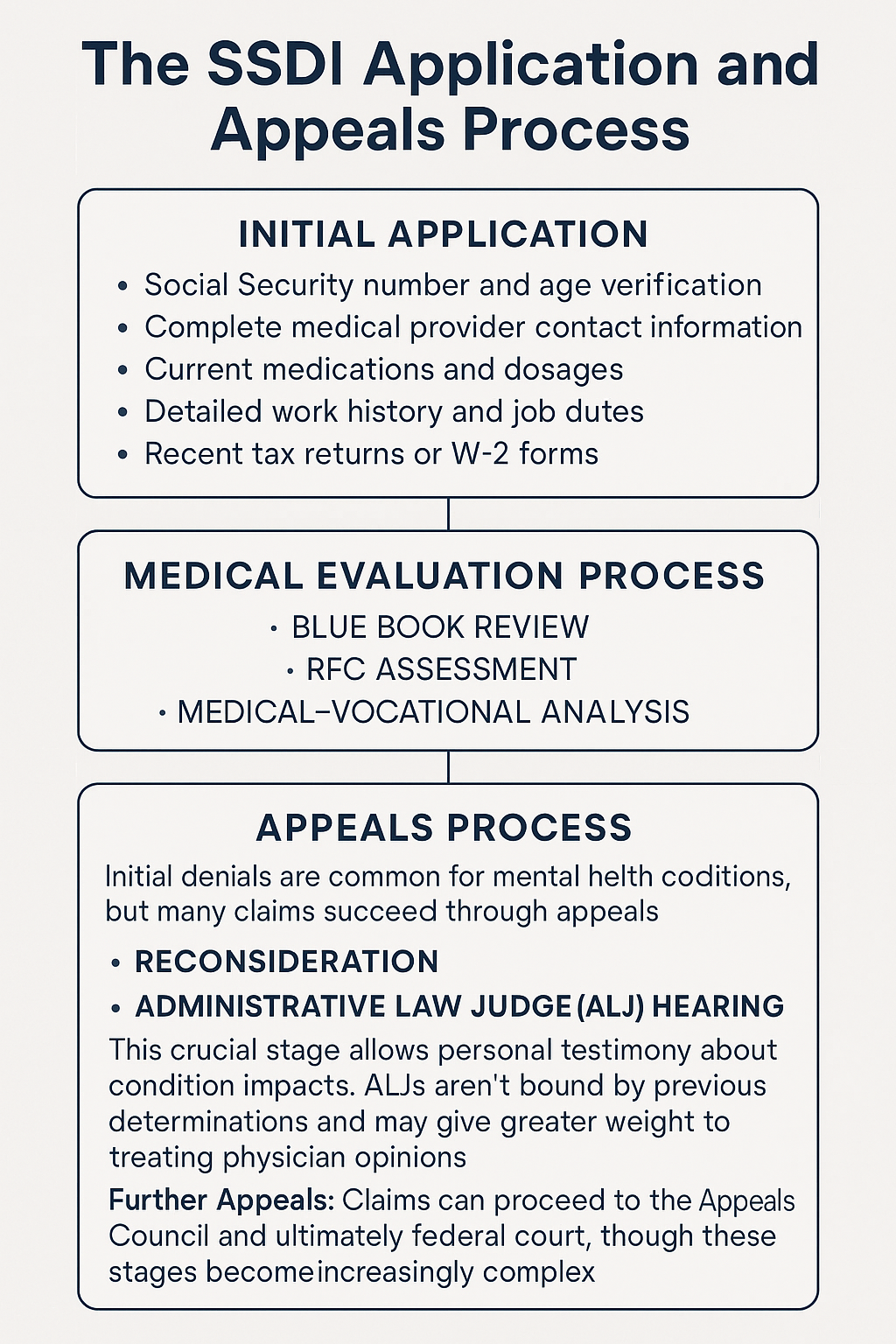
Initial Application
Veterans can apply online, by phone, or at local Social Security offices. Required information includes:
- Social Security number and age verification
- Complete medical provider contact information
- Current medications and dosages
- Detailed work history and job duties
- Recent tax returns or W-2 forms
Medical Evaluation Process
- Blue Book Review
- RFC Assessment
- Medical-Vocational Analysis
Appeals Process
Initial denials are common for mental health conditions, but many claims succeed through appeals.
Reconsideration: Veterans have 60 days to request reconsideration with a different examiner reviewing the case with any new evidence.
Administrative Law Judge (ALJ) Hearing: This crucial stage allows personal testimony about condition impacts. ALJs aren’t bound by previous determinations and may give greater weight to treating physician opinions.
Further Appeals: Claims can proceed to the Appeals Council and ultimately federal court, though these stages become increasingly complex.
Conclusion
Veterans can obtain SSDI benefits for depression and anxiety, but success requires building meticulously documented cases demonstrating how these conditions prevent substantial gainful activity. Understanding that VA disability and SSDI are distinct programs is crucial—VA ratings don’t guarantee SSDI approval.
By gathering comprehensive medical evidence from all sources, documenting daily functional limitations, obtaining strong professional assessments, and effectively navigating the application and appeals process, veterans significantly improve their chances of securing deserved SSDI benefits.
At Benefits.com, we aim to point you in the right direction towards all the benefits available to you. Take our free eligibility quiz today to get started!
 Benefits.com Advisors
With expertise spanning local, state, and federal benefit programs, our team is dedicated to guiding individuals towards the perfect program tailored to their unique circumstances.
Rise to the top with Peak Benefits!
Join our Peak Benefits Newsletter for the latest news, resources, and offers on all things government benefits.