












Veterans are frequently targeted by sophisticated scams due to factors like access to benefits, frequent moves, and possessing sensitive personal information. Scammers often impersonate government agencies like the VA or legitimate charities, using tactics such as phishing emails, imposter calls, and fraudulent investment or loan offers.
Veterans face elevated fraud risk due to the complexity of VA benefits and the frustration that can lead them to seek help from unaccredited sources. Scams targeting veterans can impose emotional stress and legal jeopardy for those who unknowingly participate in fraudulent claims.
Common schemes include identity theft, fake rental listings, and appeals for donations to non-existent veteran causes. To protect yourself, always verify unsolicited requests, never share sensitive information with unverified sources, and use strong online security practices. Promptly report any suspected scams to relevant authorities like the FTC or the VA to help prevent further incidents.
Why This Update
Scams are becoming more common and harder to spot. This update aims to help protect veterans and their families from scams by raising awareness of the unique risks they face.
Why Veterans Are Often Targeted by Scammers
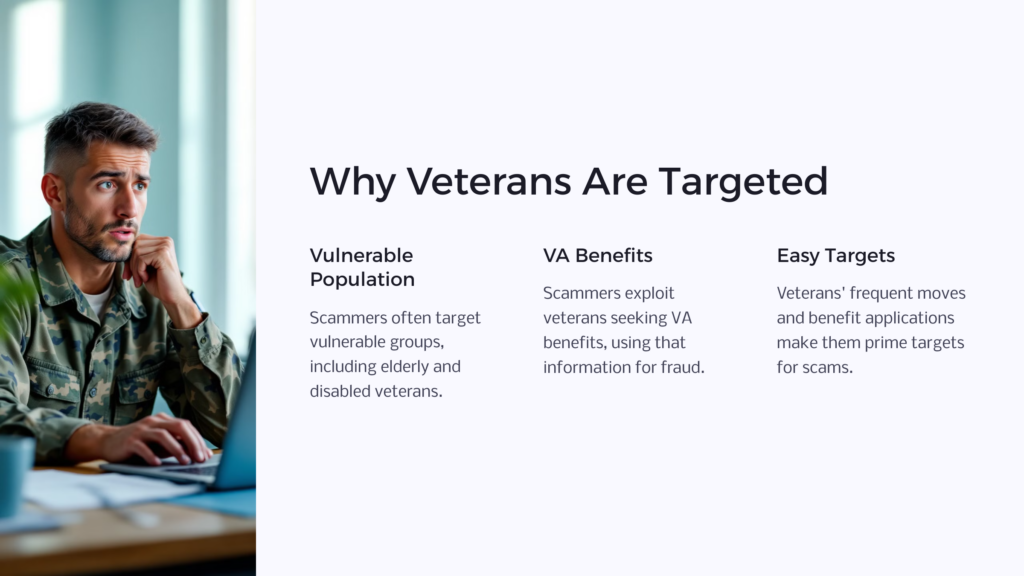
Scammers specifically target veterans for several reasons.
The pursuit of VA benefits, housing, or employment creates natural opportunities for fraudulent offers and impersonations that may appear legitimate on the surface. Military veterans and military members are especially vulnerable due to their service background, which scammers exploit through impersonation and deceptive schemes.
Frequent moves common in military life can make you more susceptible to rental and identity-related scams, particularly during transitions between duty stations or into civilian life.
Older veterans and family members may face especially high risk, as scammers sometimes view them as more trusting of official-sounding communications. The combination of these factors creates circumstances that make the veteran community a frequent target for complex fraud attempts.
Common Scams Targeting Veterans
Identity Theft & Phishing:
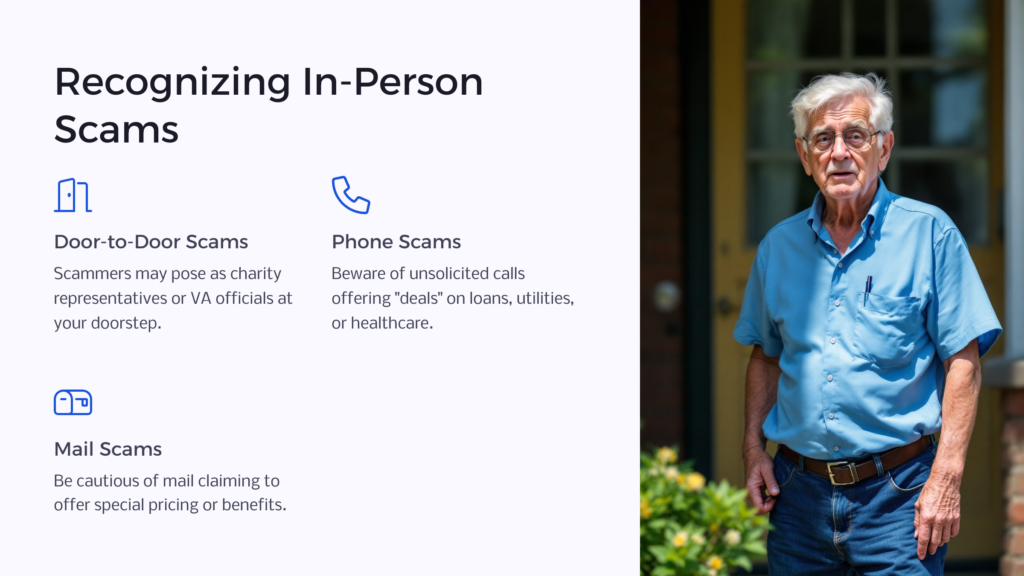
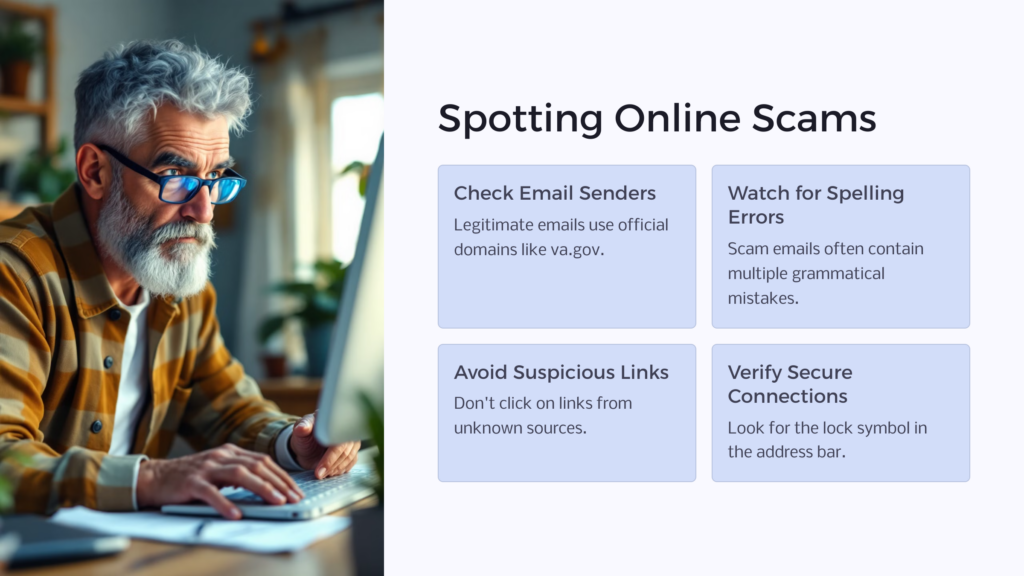
Scammers attempt to steal your personal data, including Social Security numbers, bank account information, and other personal identifiable information through fake emails, texts, or websites that impersonate official organizations like the VA.
Phishing refers to fraudulent attempts to obtain sensitive information by disguising communications as trustworthy sources. These communications often look remarkably authentic, complete with official logos and formatting. Scammers may also offer fake government grants or programs specifically targeted at veterans to collect personal information. They may charge veterans for access to military records, which are typically free to obtain.
Imposter Scams:
Scammers pretend to be from government agencies, charities, or even romantic interests to obtain money or information fraudulently. They may claim to be VA officials, accredited representatives, or claims agents offering help with disability benefits or other claims, or representatives from veteran organizations requesting money or donations.
Employment Scams:
Employment scams often target veterans by posing as legitimate employers or recruiters. Scammers create fake job application processes, requesting sensitive information such as bank account information and personal identifiable information, and may even ask for money for fake background checks or training materials.
Financial Fraud:
This includes fake loan offers targeting VA loans or refinancing, investment schemes promising unrealistically high returns. Scammers may also offer promising higher disability ratings, expedited claims processing times, or higher returns on pension payments in exchange for upfront or high fees.
Rental & Housing Scams:
Deceptive listings for homes or apartments requiring upfront payments and personal details are often targeting veterans who are relocating for new jobs. Con artists may also solicit veterans with offers to refinance VA loans, often involving hidden and unnecessary fees.
Pension Poaching:
Pension poaching is a persistent scam where predators unlawfully charge veterans high or unnecessary fees for assistance with VA pension programs.
Fake Charities:
Fake charities often use patriotic branding and symbols to mislead donors into believing they are supporting legitimate veteran causes, especially around Veterans Day and other patriotic holidays.
If something sounds too good to be true, it probably is, and veterans should be cautious of unrealistic offers.
How to Recognize the Red Flags of a Potential Scam
There are some warning signs of scams targeting veterans:
Unsolicited Contact: Watch for unexpected calls, emails, or messages, especially if they demand immediate action or personal information. Legitimate organizations rarely initiate contact this way without a prior relationship or request from you. Be vigilant for suspicious activity and always confirm the accreditation of anyone offering assistance with benefits.
Pressure Tactics: Scammers often create urgency, threatening penalties or promising exclusive limited-time deals to rush your decision before you can think clearly or verify their claims.
Requests for Unusual Payment Methods: Demands for gift cards, wire transfers, or cryptocurrency are strong indicators of fraud, as these payment methods are nearly impossible to trace or reverse. No legitimate government agency or established business will require payment through these methods.
Too-Good-To-Be-True Offers: Approach with caution any promises of guaranteed high returns, unrealistically low interest rates, or benefits requiring payment to unlock. If an offer sounds too good to be true, it may be a scam.
Protecting Your Personal and Financial Information
Never share sensitive data including your Social Security Number, bank account details, banking information, or VA login credentials with unverified callers or through suspicious links. Even if the contact appears legitimate, take time to verify independently before providing any information. This is part of protecting your personal and financial information.
Verify the legitimacy of any organization or individual contacting you by calling official numbers you obtain independently, not numbers provided by the caller. Safeguard physical documents containing personal information in a secure location and shred unneeded papers to prevent unauthorized access to discarded documents.
Watch for door-to-door solicitations—the VA will not send representatives to your home asking for money or signing you up for benefits. Regularly monitor your credit reports and financial statements for any unauthorized activity.
Online Safety Best Practices for Veterans
Use strong, unique passwords for all online accounts and enable multi-factor authentication whenever possible.
Ensure websites are secure by looking for “https://“ and a padlock symbol in the address bar before entering personal or payment information. Avoid saving login credentials on public or shared devices, and always log out of accounts after use.
Keep your software, operating system, and antivirus programs updated to protect against the latest cyber threats. These updates often include important security updates that address newly discovered vulnerabilities.
Reporting Scams and Seeking Assistance
If you suspect identity theft or fraud, immediately contact your bank, credit card companies, and the three major credit bureaus to place fraud alerts on your accounts. Fraud alerts notify creditors to verify your identity before opening new accounts in your name. Quick action may help prevent further unauthorized charges.
Report veteran-targeted scams to the Federal Trade Commission (FTC) at ReportFraud.ftc.gov. For internet-related scams, file a complaint with the FBI’s Internet Crime Complaint Center (IC3). Veterans can also report fraud incidents using VA form 10-0500 and send it to OCCProgramIntegrityTeam@va.gov.
Veterans should only use VA accredited attorneys, claims agents, and Veterans Service Organization representatives when filing for benefits to avoid scams.
If you believe a representative acted unlawfully or unethically while assisting you in filing a VA benefits claim, file a report at VSAFE.gov or call 833-38V-SAFE.
Contact the VA directly if someone impersonates a VA official or offers fraudulent VA benefits—they have resources that can help investigate these specific crimes.
Example Scenario
If you receive an unsolicited email claiming to be from the Department of Veterans Affairs (VA) and asking you to click a link to update your direct deposit information for new benefits, proceed carefully. One veteran recently prevented a potential financial loss by recognizing the email’s slightly off sender address and the urgent tone.
Instead of clicking, they independently navigated to the official VA website to check for updates, confirming the email was a phishing attempt.
Frequently Asked Questions
Is the VA sending me text messages or emails asking for my bank details?
The VA generally does not request sensitive personal or financial information like bank details via unsolicited emails or text messages. If you receive such a request, it’s likely a scam. Always verify by contacting the VA directly through official channels.
How can I verify if a veterans’ charity is legitimate?
You can verify the legitimacy of a veterans’ charity by checking with organizations like the BBB Wise Giving Alliance, Charity Navigator, or GuideStar. Be wary of charities that pressure you to donate immediately or use vague language about how donations are used.
What is the ‘More Than a Number’ program?
The ‘More Than a Number’ program is a VA initiative designed to help veterans prevent and recover from identity theft. It offers resources and guidance to protect personal information and navigate the aftermath of a data breach or identity compromise.
Are veterans more susceptible to identity theft than others?
Veterans can be more susceptible to identity theft due to their service records containing valuable personal information and their frequent interactions with various government and benefit-related entities. Scammers often target this vulnerability.
Where should I report a suspected scam targeting veterans?
You should report suspected scams to the Federal Trade Commission (FTC) at ReportFraud.ftc.gov. For internet-related crimes, also file a report with the FBI’s Internet Crime Complaint Center (IC3). If it involves VA impersonation, contact the VA directly.
Can I get help if I’ve already fallen victim to a scam?
Yes, if you’ve been affected by a scam, immediately contact your bank and credit card companies to report fraudulent activity. File a report with the FTC and, if money was lost, with local law enforcement. Resources like the VA and consumer protection agencies can also offer guidance.
 Benefits.com Advisors
With expertise spanning local, state, and federal benefit programs, our team is dedicated to guiding individuals towards the perfect program tailored to their unique circumstances.
Rise to the top with Peak Benefits!
Join our Peak Benefits Newsletter for the latest news, resources, and offers on all things government benefits.