














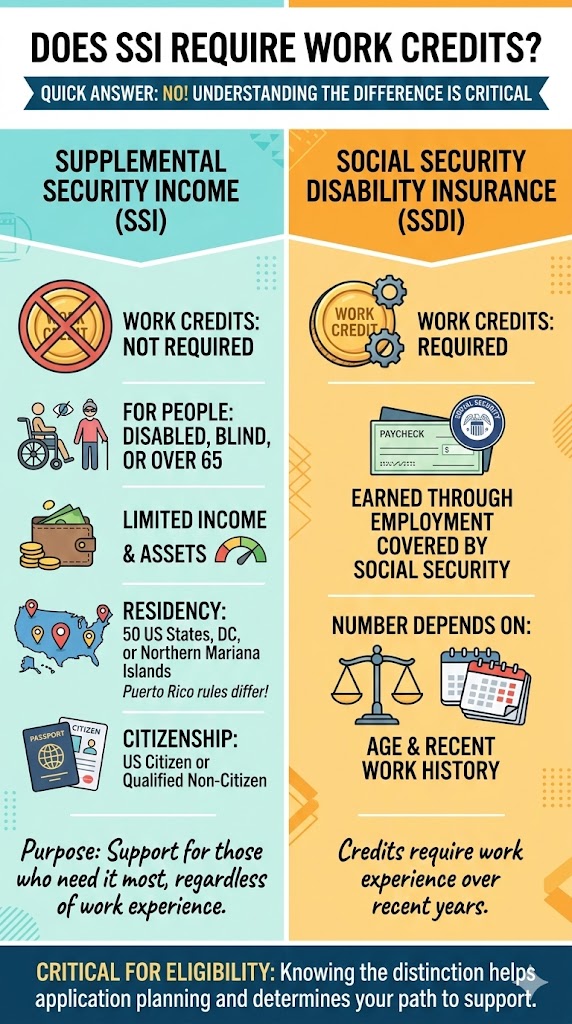
Quick Answer – So, you’re trying to figure out how SSI work credits work. Well, here’s the thing: Supplemental Security Income, or SSI for short, doesn’t actually require work credits. It’s a program designed for people who are disabled, blind, or over 65 and have limited income and assets. To be eligible, you need to live in one of the 50 US states, the District of Columbia, or the Northern Mariana Islands – Puerto Rico has its own program with different rules. You also need to be a US citizen or a qualified non-citizen to apply. The idea behind SSI is to provide support to those who need it most, without requiring them to have a certain amount of work experience.
Social Security Disability Insurance (SSDI) does require work credits earned through employment covered by Social Security. The number of credits depends on age and recent work history. Understanding the difference between SSI and SSDI is critical when determining eligibility and planning your application.
Why This Update (March 2026)
Social Security is still a vital support system for many Americans as of March 2026. The rules about benefits, income limits, and credits can be confusing, so we update the information regularly to make sure it’s accurate and easy to understand. This includes explaining the work history requirements for Supplemental Security Income (SSI) and the standards for eligibility, which are often misunderstood. By doing this, we hope to clear up common misconceptions and provide a clearer picture of how these programs work.
Michelle’s Take
A lot of people think they can’t get SSI if they’ve never had a job, but that’s not true. SSI is actually meant to help people who are vulnerable and may not have been able to work. It’s good to know the difference between SSI and SSDI, especially when it comes to work credits. This can save you from a lot of stress and make sure you get the benefits you’re eligible for. SSI is designed for people who don’t have a work history, so they can still get the support they need. On the other hand, SSDI is for people who have worked and paid into the system, but can’t work anymore due to a disability. Understanding how these two programs work can make a big difference in getting the help you need.
Do You Need Work Credits to Qualify for SSI?
So, you’re wondering if you need work credits to get SSI. The short answer is no, you don’t need them. SSI is different from other benefits because it’s paid for by general taxes, not the taxes taken from your paycheck. This means that whether or not you’ve worked and paid into the system doesn’t matter. To get SSI, you need to meet certain requirements. You must be disabled, blind, or at least 65 years old. You also can’t have much money or own many things. And, of course, you need to live in the United States. Many people who get SSI haven’t worked much or at all. That’s okay – SSI is meant to help people who need it, no matter what their work history is.
SSI vs. SSDI: Understanding the Key Differences
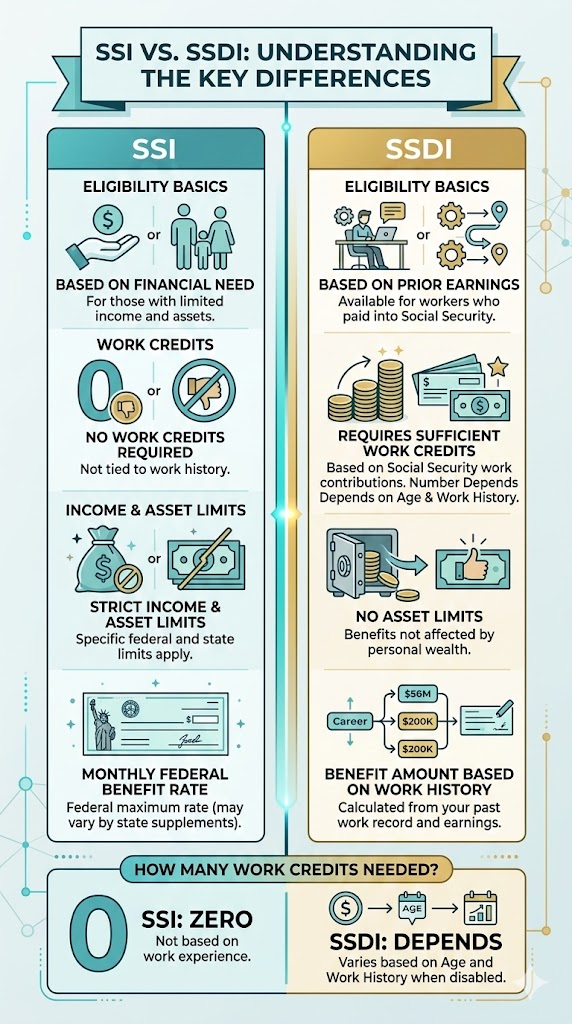
SSI:
– No work credits required
– Based on financial need
– Strict income and asset limits
– Monthly federal benefit rate (may vary by state)
SSDI:
– Requires sufficient work credits
– Based on prior earnings
– No asset limits
– Benefit amount based on work history
When asking, “How many work credits for SSDI?” the answer depends on age and work history. But when asking about work credits needed for SSI, the number is zero.
Who Can Qualify for SSI Without a Work History?
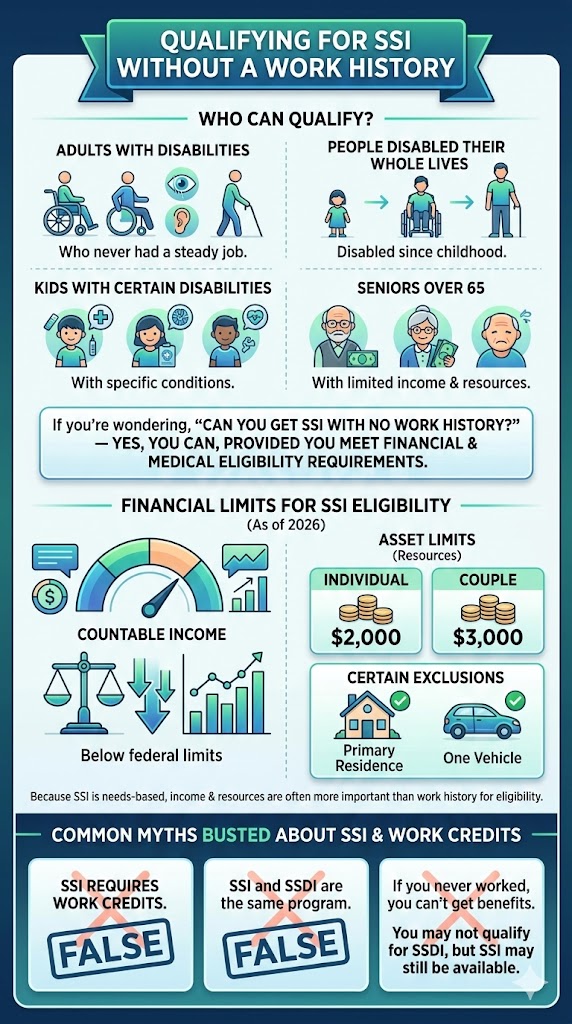
People who can get help include adults with disabilities who never had a steady job, those who have been disabled their whole lives, kids with certain disabilities, and seniors over 65 who don’t have a lot of money.
If you’re wondering, “Can you get SSI with no work history?” — yes, you can, provided you meet financial and medical eligibility requirements.
Income and Asset Limits for SSI Eligibility
As of 2026, key SSI eligibility requirements include countable income below federal limits, assets under $2,000 for individuals, assets under $3,000 for couples, and certain exclusions (primary residence, one vehicle, etc.).
Because SSI is needs-based, income and resources are often more important than work history when determining eligibility.
Common Myths About SSI and Work Credits
Myth: SSI requires work credits.
False.
Myth: SSI and SSDI are the same program.
False.
Myth: If you never worked, you can’t get benefits.
You may not qualify for SSDI, but SSI may still be available.
Example Scenario
Maria is 32 and has a lifelong neurological condition that prevents her from maintaining full-time employment. She worked briefly but never earned enough work credits for SSDI. However, because she meets medical disability standards and her income and assets fall below SSI limits, she qualifies for SSI benefits.
Frequently Asked Questions
Does SSI require work credits? No.
How many work credits are needed for SSI? Zero.
How many work credits for SSDI? Most adults need 40 credits, including 20 earned in the last 10 years, though younger workers may need fewer.
Can you get SSI with no work history? Yes, if you meet disability and financial eligibility requirements.
What are the SSI income and asset limits? Generally, $2,000 in assets for individuals and $3,000 for couples, with specific exclusions.
What is the difference between SSI vs SSDI work credits? SSI does not use work credits. SSDI eligibility depends on earned work credits.
 Benefits.com Advisors
With expertise spanning local, state, and federal benefit programs, our team is dedicated to guiding individuals towards the perfect program tailored to their unique circumstances.
Rise to the top with Peak Benefits!
Join our Peak Benefits Newsletter for the latest news, resources, and offers on all things government benefits.