














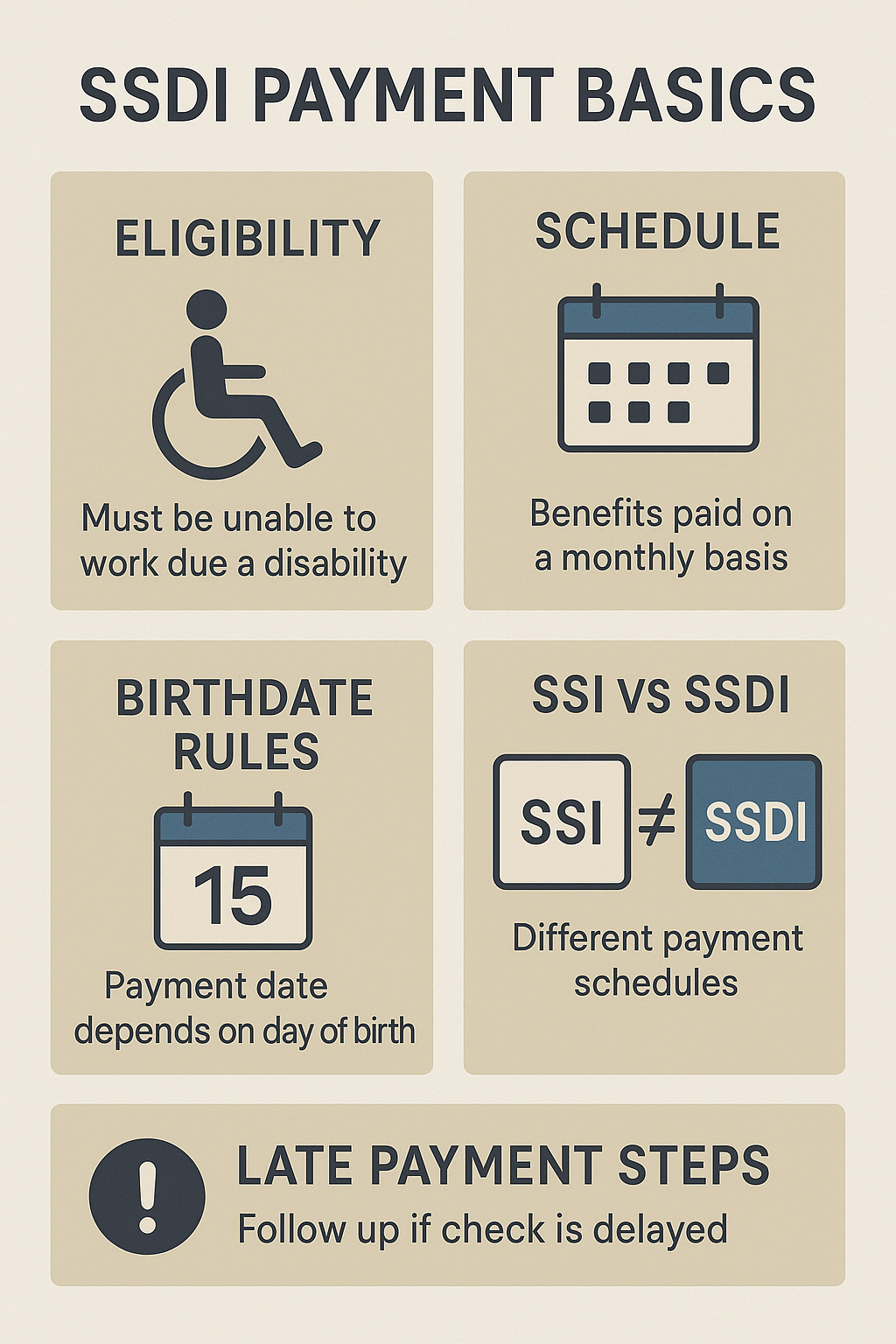
Social Security Disability Insurance (SSDI) and Supplemental Security Income (SSI) are types of disability benefits provided by the Social Security Administration. SSDI is for individuals who are disabled and unable to work, and eligibility is determined by the Social Security Administration.
To become eligible for SSDI benefits, applicants must have a medical condition recognized as a disability by the Social Security Administration. Additionally, applicants must demonstrate that their disability has rendered them unable to work for at least one continuous calendar year.
The Social Security Administration (SSA) generally issues SSDI payments on a regular monthly schedule, but the exact deposit date depends primarily on your birth date and sometimes on when you first became eligible and began receiving benefits.
For millions of Americans who rely on Social Security Disability Insurance, knowing when benefits are deposited each month is essential for managing budgets, paying bills, and maintaining financial stability.
Here, we’ll explain exactly what day SSDI deposits checks, how birthdays affect payment dates, the difference between SSDI and SSI schedules, and what to do if your payment is late, reassuring you that you deserve the income you receive through SSDI if you qualify.
When Do SSDI Benefits Deposit Each Month?
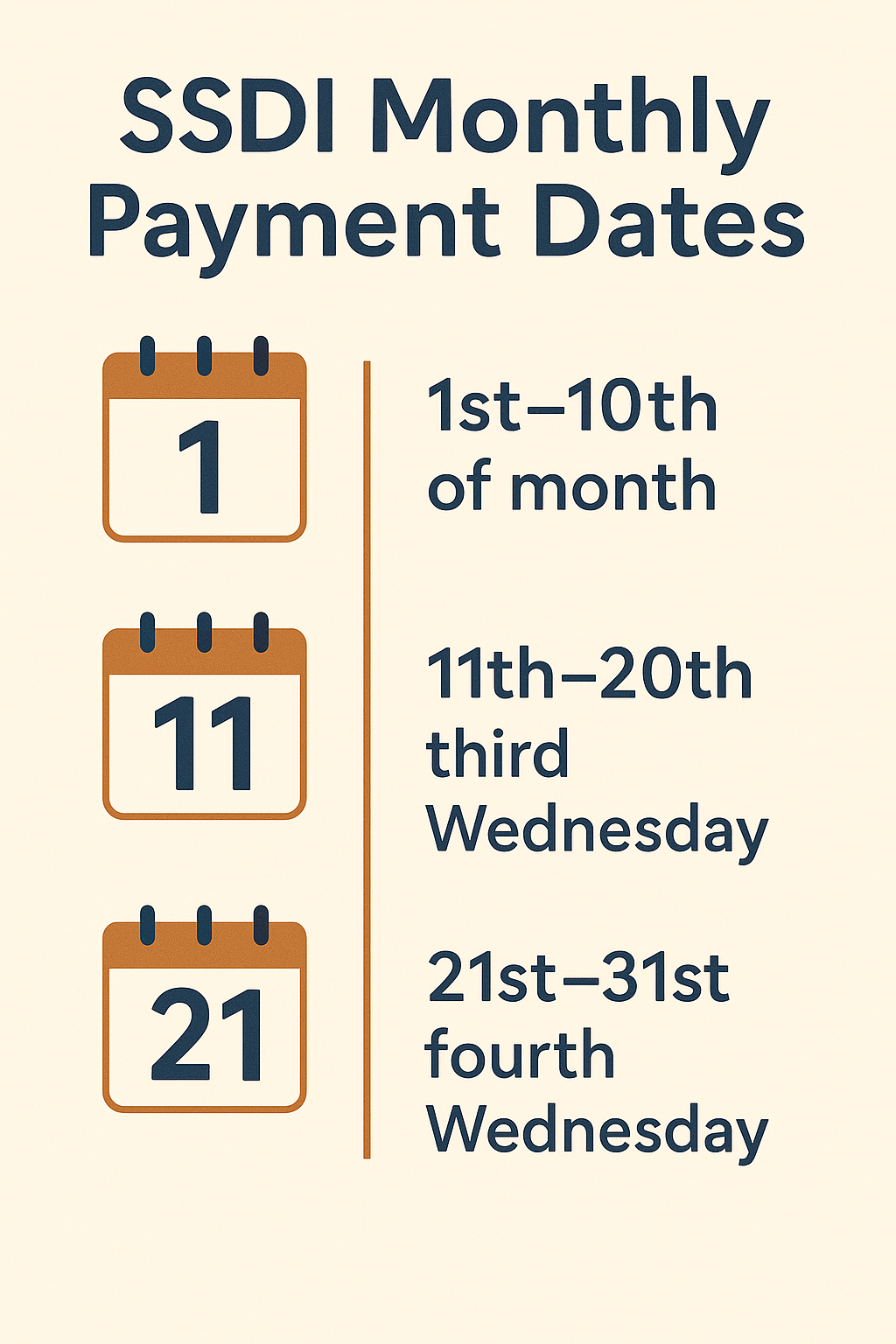
SSDI benefit payments are generally made on the second, third, or fourth Wednesday of each calendar month. The SSA transitioned to this staggered SSDI payment schedule in 1997 to spread out workload and ensure efficient processing of monthly benefits.
Which Wednesday you receive your benefit payment depends on when your birthday falls within the month. 1st–10th of month: second Wednesday, 11th–20th: third Wednesday, and 21st–31st: fourth Wednesday.
For example, if your birthday falls on the 15th, you would receive your payment on the third Wednesday.
SSDI checks are deposited according to this schedule, so beneficiaries can anticipate when their monthly payments will arrive. SSDI payments are generally not disrupted by federal holidays since most payment dates fall on Wednesdays. If the scheduled payment date does fall on a holiday, the benefit payment is made on the last regular business day before.
How Your Birthday Determines Your Scheduled Payment Date
Your date of birth and birth month play the most critical roles in deciding when you receive your monthly SSDI disability benefits. The Social Security Administration uses your birth date to determine when applicants receive disability benefits each month.
Payments are distributed based on your birth date range. If you started receiving SSDI disability benefits after 1997, your birthday will determine the date you receive your payment.
However, if you received disability benefits before 1997, your SSDI payment date will be on the third day of the month. This method ensures a steady distribution of deposits throughout the month and helps prevent delays.
However, beneficiaries who have been receiving SSDI since before May 1997, or those who also receive SSI, may follow a different schedule.
Exceptions: Holidays, Weekends, and Special Cases
If your scheduled payment date falls on a federal holiday or weekend, the SSA issues the payment on the last regular business day before the holiday or weekend.
Funds are typically available by midnight on the scheduled date, though the exact time may depend on your bank’s posting process. Some banks post direct deposits immediately, while others may take up to 24 hours. If your payment does not arrive by the expected date, you should contact the SSA for assistance.
SSDI vs. SSI Deposit Schedules
SSDI and Supplemental Security Income (SSI) are both administered by the SSA as Social Security benefits, but their payment schedules differ. Both are types of disability benefits, but they serve different groups and have distinct eligibility requirements.
SSDI benefit payments are based on your birthday, while SSI benefits are issued on the first day of each month.
What to Do If Your SSDI Check Is Late
If your SSDI payment is late, wait at least three business days before taking action. SSDI checks are typically deposited on a regular schedule, so if your payment is delayed, it is important to confirm the expected deposit date.
Verify your direct deposit details, and check your bank account for the deposit. Most funds are deposited electronically, but some may be issued via Direct Express debit card or as a check mailed to you. If you receive your check by mail and it has not arrived, wait a few days after the check is mailed before contacting the SSA.
If your funds have not arrived after a few days, contact the SSA. You can reach them at 1-800-772-1213 or via their website.
Tips for Managing Monthly SSDI Payments
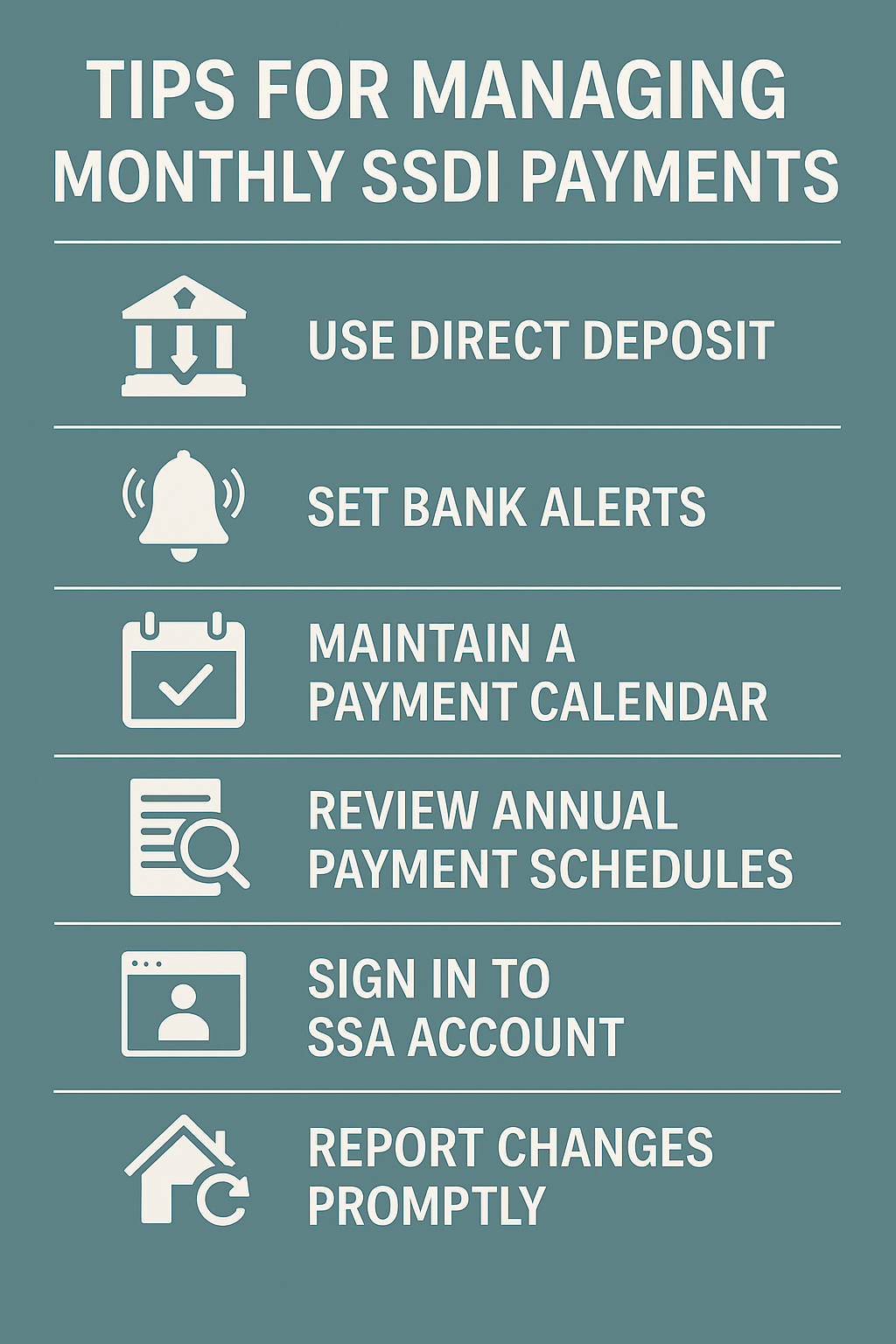
Use direct deposit for faster, secure delivery and to help you plan around deposit dates. Set bank alerts, maintain a payment calendar, and review annual SSDI payment schedules. The most accurate way to confirm your specific payment date is to sign in to your account on the Social Security Administration website.
Understanding the payment schedule allows you to manage your money more effectively and maximize the benefit of timely payments. Report any changes to your bank or address promptly to prevent delays.
Conclusion
Understanding what day SSDI deposits checks allows beneficiaries to manage their finances effectively. Your birth date determines your payment day, and SSA’s schedule ensures predictable, timely deposits.
At Benefits.com, we aim to point you in the right direction towards all the benefits available to you. Take our free eligibility quiz today to get started!
 Benefits.com Advisors
With expertise spanning local, state, and federal benefit programs, our team is dedicated to guiding individuals towards the perfect program tailored to their unique circumstances.
Rise to the top with Peak Benefits!
Join our Peak Benefits Newsletter for the latest news, resources, and offers on all things government benefits.