














What’s Changing in September 2025
The U.S. Department of the Treasury has announced that SSDI paper checks will end on September 30, 2025. This change is the result of an executive order from the federal government to modernize federal benefits distribution. From that date forward, all Social Security Disability Insurance (SSDI) beneficiaries must receive their payments electronically. This means switching to either direct deposit into a bank or credit union account or enrolling in the Direct Express® debit card program.
Federal benefit payments, including SSDI, will be issued electronically through various electronic payment options. Beneficiaries can enroll in these electronic payment options, including direct deposit or the Direct Express card, through the Social Security Administration.
Why the Treasury Is Ending Paper Social Security Checks
The move to electronic payments isn’t new. Since 2013, most federal beneficiaries have already been transitioning from paper checks to electronic payment methods.
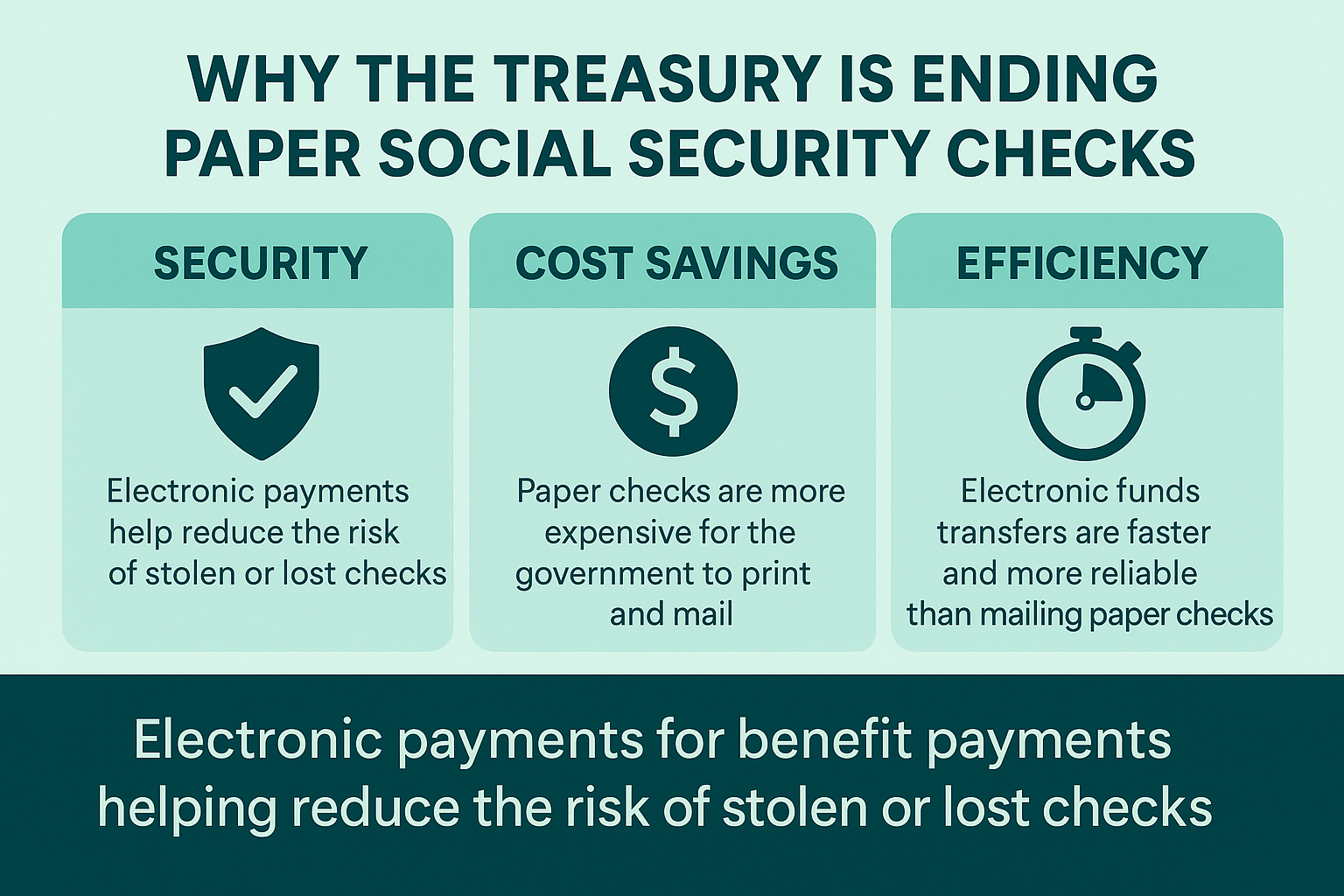
The Treasury’s decision to completely stop paper checks by 2025 boils down to three main reasons:
- Security: Electronic payments for benefit payments help reduce the risk of stolen or lost checks and are more secure and reliable.
- Cost savings: Paper checks are more expensive for the government to print and mail, while electronic payment methods save money.
- Efficiency: Electronic funds transfers are faster and more reliable than mailing paper checks, helping to improve efficiency in delivering benefit payments.
Who Will Be Affected by the September 30, 2025 Deadline
Anyone still receiving SSDI paper checks will be required to switch by the deadline. This includes any beneficiary without bank accounts as well as those who may have resisted changing from traditional checks.
Some individuals are still receiving paper checks, and in rare cases where no other means are available, the government may continue to issue paper checks to ensure all beneficiaries receive their payments. Recipients of Supplemental Security Income are also affected by this change and should be aware of how the transition may impact them.
How to Switch from Paper Checks to Direct Deposit
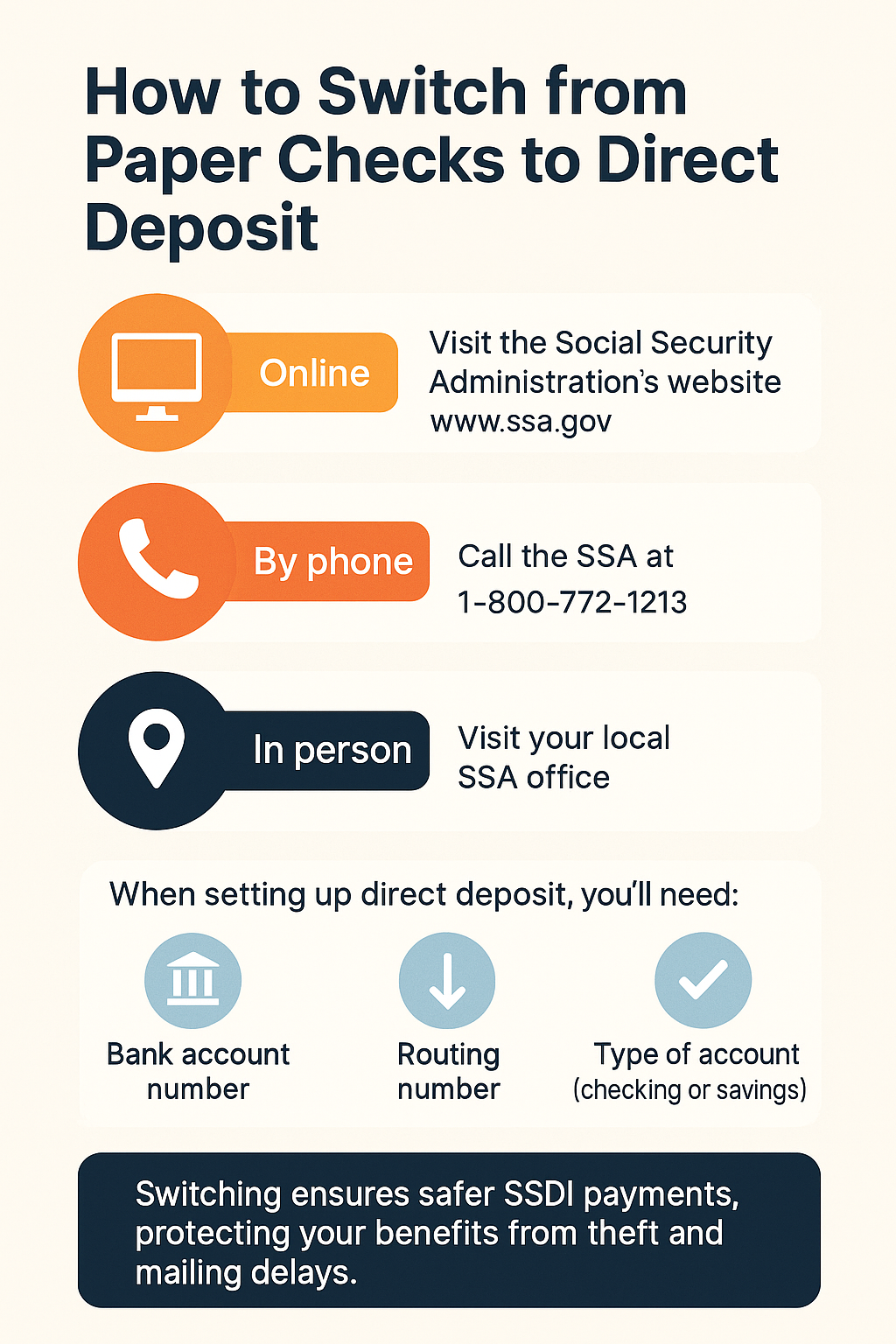
The safest and easiest way to continue SSDI payments is to enroll in direct deposit into a checking or savings account. Here’s how to do it:
- Online: Visit the Social Security Administration’s website (https://www.ssa.gov)
- By phone: Call the SSA at 1-800-772-1213.
- In person: Visit your local SSA office.
When setting up direct deposit, you’ll need:
- Bank account number
- Routing number
- Type of account (checking or savings)
- Your direct deposit information, including your account and routing numbers
You may need to file a request with the Social Security Administration to enroll in direct deposit. Always verify any communications or requests for information to avoid scams and ensure you are providing your details through official channels.
Switching ensures safer SSDI payments direct deposit, protecting your benefits from theft and mailing delays.
Using the Direct Express Debit Card for SSDI Payments
For those without a bank account, the Direct Express® debit card SSDI program is a prepaid debit card option for receiving SSDI payments. Funds are deposited directly to the card each month, and it can be used anywhere Mastercard® is accepted. Benefits of Direct Express include:
- No bank account required
- Withdraw cash at ATMs
- Make purchases and pay bills online or in stores
- Safer than carrying paper checks
This prepaid debit card is one of several electronic payment options available for Social Security benefits. If you do not have a bank account and need help setting up electronic payment options, you can contact the electronic payment solution center for assistance.
This option ensures access to funds without needing traditional banking.
Benefits of Electronic Payments: Faster, Safer, More Secure
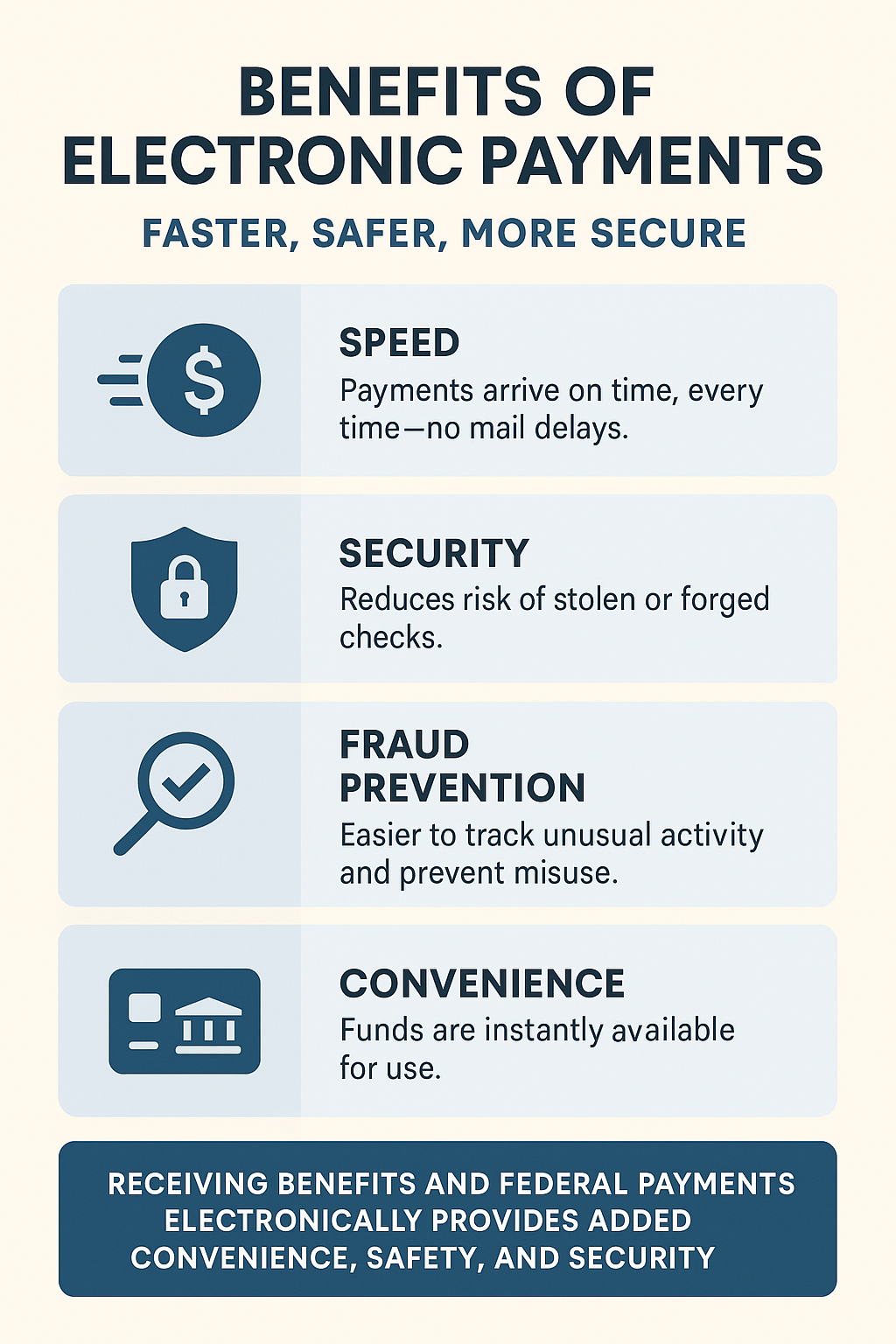
Switching to electronic payments offers multiple advantages. Overall, the method is both quicker and safer than paper checks.
- Speed: Payments arrive on time, every time—no mail delays.
- Security: Reduces risk of stolen or forged checks.
- Fraud prevention: Easier to track unusual activity and prevent misuse.
- Convenience: Funds are instantly available for use.
Receiving benefits and federal payments electronically through direct deposit or electronic benefit transfer programs, provides added convenience, safety, and security. Enrolling to receive social security payments electronically ensures timely and reliable access to your federal benefit payments. Today, federal benefit payments are primarily delivered through electronic methods, reducing reliance on paper checks and improving efficiency.
What Happens If You Don’t Switch Before the Deadline
Failing to update your payment method could result in delayed or missed SSDI payments after September 30, 2025. The Treasury will no longer issue paper checks, so beneficiaries who haven’t set up direct deposit or Direct Express may not be able to receive payment.
In most cases, transitioning to electronic payments is required to avoid disruption and ensure continued access to your funds.
Conclusion
The end of paper SSDI checks is a big shift, but it also makes payments safer, faster, and more reliable, making the benefits process smoother.
If you believe you may qualify for a waiver or exemption from the electronic payment requirement, contact the U.S. Treasury or the appropriate agency for more information.
At Benefits.com, we aim to point you in the right direction towards all the benefits available to you. Take our free eligibility quiz today to get started!
 Benefits.com Advisors
With expertise spanning local, state, and federal benefit programs, our team is dedicated to guiding individuals towards the perfect program tailored to their unique circumstances.
Rise to the top with Peak Benefits!
Join our Peak Benefits Newsletter for the latest news, resources, and offers on all things government benefits.