













The Section 8 Housing Choice Voucher program is one of the most important federal assistance programs available to help low-income families and individuals with disabilities secure safe, affordable housing across the country.
If you’re wondering how to apply, you’re not alone – millions of Americans rely on this program to make housing costs manageable, whether for an apartment or other eligible housing types.
We’ll walk you through every step of the application process, eligibility requirements, and what to expect along the way.
What Is Section 8 Housing and How Does It Work?
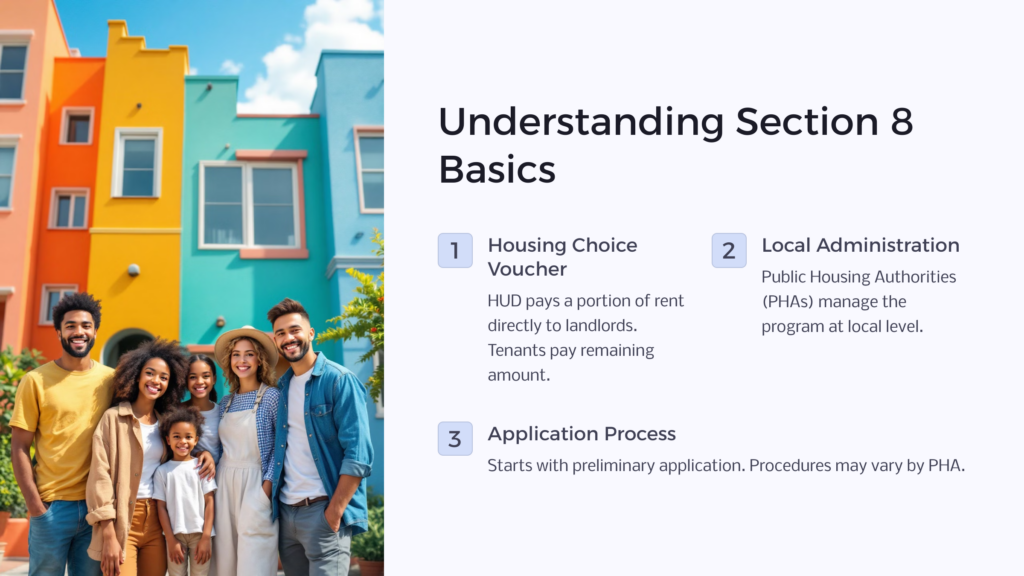
The Section 8 Housing Choice Voucher (HCV) program is administered by the U.S. Department of Housing and Urban Development (HUD) through local Public Housing Agencies (PHAs).
Unlike traditional public housing, Section 8 doesn’t provide government-owned units. Instead, it offers rental subsidies in the form of vouchers that can be used in the private rental market.
Here’s how it works: eligible tenants receive a voucher that covers a portion of their rent, ensuring they pay no more than 30-40% of their adjusted monthly income toward housing costs. The PHA pays the remaining amount directly to the landlord.
The payment standard is the maximum amount the housing agency will pay toward rent, and payment standards are generally set based on area-wide Fair Market Rents to reflect local market conditions. PHAs determine the amount of assistance by considering factors such as the tenant’s income and local rent levels.
In addition to tenant-based vouchers, there are also project based vouchers, which are tied to specific units and remain with the unit even if the tenant moves. This system gives recipients flexibility to choose from various housing options, including single-family homes, townhouses, and apartments, supporting tenants in a range of housing types.
Section 8 Eligibility Requirements: Do You Qualify?
Eligibility is affected by protections against housing discrimination based on familial status and national origin, as outlined in the Fair Housing Act.
Basic Eligibility Requirements:
- U.S. citizenship or eligible immigration status
- Income below the limits set by HUD for your area
- No recent evictions for drug-related criminal activity
- Accurate and complete information on your application
Additional Eligibility Factors:
- Criminal background
- Rental history
- Family size and composition
- Whether you or any family member is subject to a lifetime registration requirement under a state sex offender registration program
- Familial status and national origin: The Fair Housing Act protects applicants from housing discrimination based on familial status (including families with children and pregnant women) and national origin.
Providing false information or omitting details about federally assisted housing can put applicants at risk of losing eligibility for assistance.
Income Requirements: The HUD sets income limits based on area median income (AMI). Your gross income, along with other amounts such as certain deductions, may affect the total income calculation for eligibility.
Income Requirements
Your family’s total annual gross income must not exceed 50% of the median income for your county or metropolitan area. Most PHAs prioritize applicants with:
- Extremely low income: Up to 30% of area median income
- Very low income: Up to 50% of area median income
Other amounts, such as allowable deductions, may also be considered when determining income eligibility.
Additional Eligibility Factors
- Citizenship Status: Must be a U.S. citizen or qualified non-citizen with eligible immigration status
- Social Security Number: Head of household must have a valid SSN
- Family Size: Determines both income limits and housing unit size eligibility
- Criminal Background: All household members 18+ undergo background checks
- Housing History: Prior evictions from Section 8 housing or outstanding debts to housing authorities can affect eligibility
- Fair Housing Protections: Under the Fair Housing Act, it is illegal to engage in housing discrimination based on familial status or national origin. Both are protected classes, and applicants are protected from discriminatory practices when applying for housing.
How to Apply for Section 8: The Complete Process
Step 1: Find Your Local Public Housing Agency
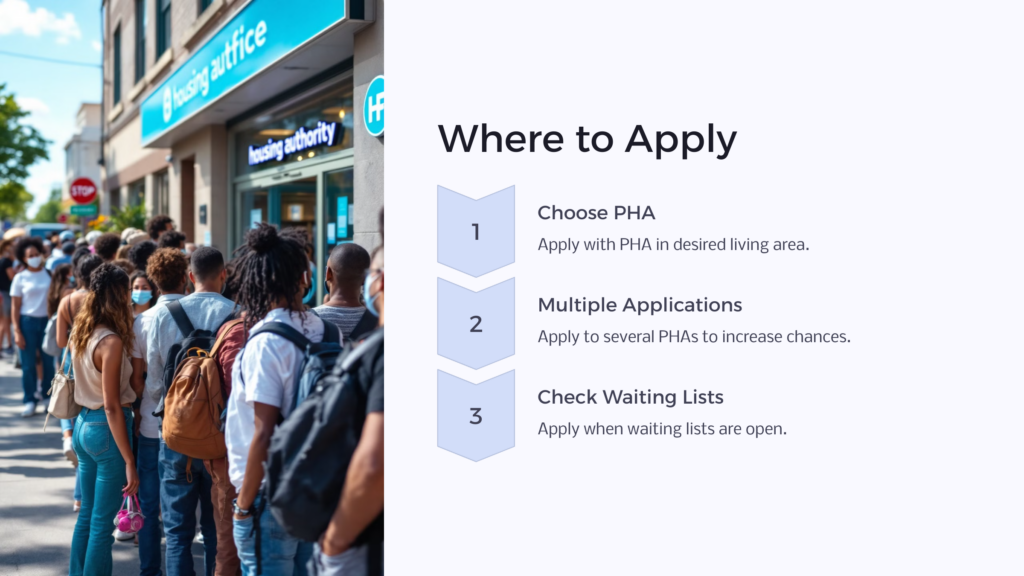
The first step in how to apply for Section 8 is locating your local PHA. Since the program is administered locally, you must apply through the PHA serving your desired city or urban area. Use HUD’s Public Housing Agency Directory at www.hud.gov to find contact information for PHAs in your region.
Pro Tip: You can apply to multiple PHAs with open waiting lists to increase your chances, but be aware that some agencies prioritize local residents.
Step 2: Monitor Waiting List Openings
Due to high demand, most PHAs maintain waiting lists that can extend from several months to over a decade in densely populated areas. Long waiting lists are common for housing assistance programs, so applicants should be prepared for extended wait times. Many PHAs periodically close their waiting lists when they reach capacity.
To stay informed about openings:
- Check PHA websites regularly
- Follow local housing authority social media accounts
- Monitor local newspaper announcements
- Sign up for notification alerts when available
Step 3: Complete the Preliminary Application
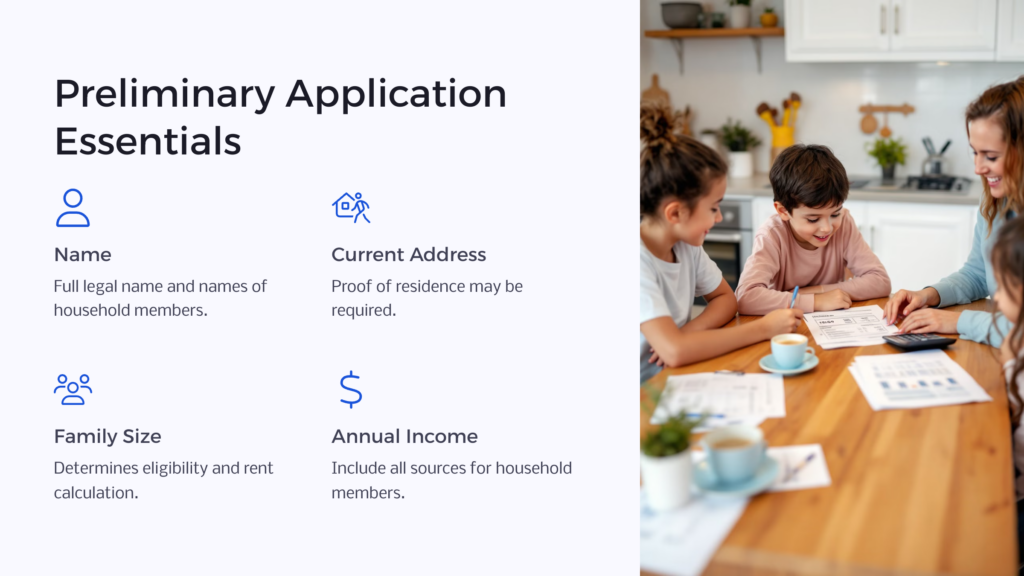
When a waiting list opens, you’ll typically start with a preliminary application (pre-application) that includes:
- Names of all household members
- Current address and contact information
- Family size
- Total annual gross income for all household members
- Date and time of application submission
Many PHAs now offer online applications, which are often the fastest way to apply. Ensure all information is accurate and complete when submitting your application to avoid delays. Some PHAs may also allow submitting applications by mail as an alternative to online submission.
Step 4: Submit Your Full Application
If your preliminary application shows potential eligibility, you’ll be placed on the waiting list. When your name approaches the top, the PHA will invite you to complete a comprehensive application requiring you to provide documentation to support your application. This documentation is essential to verify your eligibility and any claims of financial hardship.
Income Documentation:
- Pay stubs from all working household members
- Social Security benefit statements
- Disability benefit letters
- Pension information
- Child support or alimony records
- Bank statements
Personal Information:
- Detailed information about all dependents
- Previous landlord contact information
- Criminal history disclosure (if applicable)
- Medical expenses (for elderly or disabled family members)
- Childcare or disability care costs
Step 5: Attend Your Eligibility Interview
You’ll be scheduled for an in-person interview where you must bring original documents to verify your application information:
- Government-issued photo ID
- Birth certificates for all household members
- Social Security cards
- Proof of citizenship or legal immigration status
- Income verification documents
- Medical documentation (if claiming disability-related expenses)
During the interview, a PHA representative will review your documents, confirm eligibility, and explain program rights and responsibilities. Applicants must also respond promptly to any additional requests for information from the PHA to maintain their eligibility.
Step 6: Receive Your Voucher and Begin Housing Search
If approved, you’ll receive a Housing Choice Voucher with an expiration date (typically 60-120 days). You’re responsible for finding suitable housing that meets HUD’s Housing Quality Standards (HQS). The voucher helps you find housing that meets program requirements, including options for individuals with disabilities who may need access to accessible units or reasonable accommodations.
Helpful Resources for Housing Search:
- AffordableHousing.com (formerly GoSection8.com)
- SocialServe.com
- PHA-provided landlord lists
- Local housing advocacy organizations
Step 7: Complete the Housing Process
Once you find an acceptable unit:
- Submit the Request for Tenancy Approval (RFTA) packet
- PHA inspects the unit to ensure it meets health and safety standards
- The PHA determines if rent is reasonable for the area. The landlord and applicant will be notified of the inspection results
- Sign lease agreement with landlord (minimum one-year term)
- PHA and landlord sign Housing Assistance Payments Contract
Note: Tenants must notify the PHA of any changes in household circumstances, income, or contact information during the process.
Maintaining Your Section 8 Benefits
After successfully completing the application process, program participants must:
- Pay their portion of rent on time (typically 30-40% of adjusted income) and ensure they consistently pay rent as required by the program
- Notify the Public Housing Agency (PHA) immediately of any changes in income or household composition
- Maintain the unit in good condition
- Allow annual recertification and inspections
- Use the unit as your primary residence only
Failure to meet these requirements puts you at risk of losing your housing benefits.
Common Challenges and How to Address Them
Dealing with Long Wait Times
Waiting periods of 2-5 years are common, with some areas experiencing even longer delays. Long waiting lists are a common challenge for applicants seeking housing assistance. Stay patient and:
- Keep your contact information updated with all PHAs where you’ve applied
- Apply to multiple PHAs when possible
- Consider PHAs in surrounding areas or smaller communities
Handling Application Denials
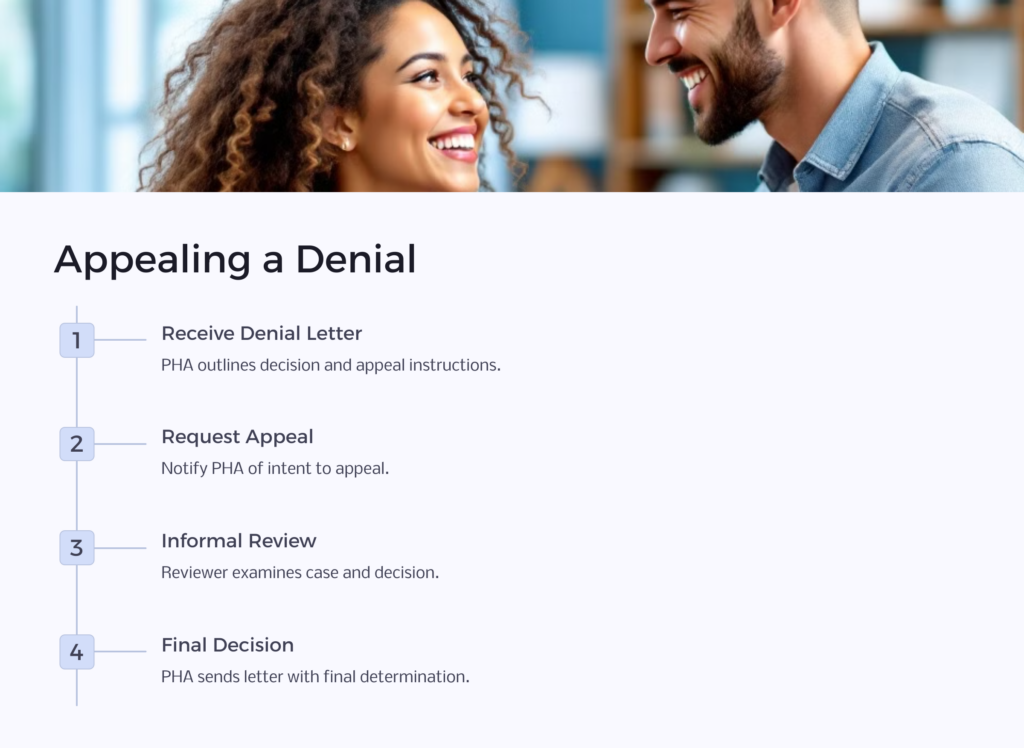
If denied, an applicant has the right to request an informal appeal. Common denial reasons include:
- Income exceeding limits
- Incomplete documentation
- Criminal background issues
- Previous housing violations
Applicants can also find answers to common questions in PHA resources and FAQs.
Avoiding Scams
Remember that applying for Section 8 is completely free. Never pay fees for:
- Application forms or information
- Placement on waiting lists
- Housing search assistance
- “Guaranteed” voucher approval
Additional Resources and Support
Government Resources
- HUD.gov: Official information and PHA directory
- Local PHAs: Primary contact for applications and program details (some PHAs may require or accept documents by mail)
- HUD Fair Housing Office: File discrimination complaints
Non-Profit Organizations
Many local non-profits provide application assistance, housing counseling, and advocacy services. Search for housing assistance organizations in your area.
Online Housing Platforms
- AffordableHousing.com: Searchable database of Section 8-friendly rentals, helping users find apartments for renting with Section 8 vouchers
- SocialServe.com: Affordable housing listings nationwide, including apartments available for renting with housing assistance
- Local Craigslist and rental websites with Section 8 filters to locate apartments for renting using vouchers
Options For Veterans
The VA has housing aid options for veterans, as well as private companies wanting to help veterans. One such site offers ready and easy housing assistance for veterans here!
Conclusion
Don’t let the complexity of the process deter you – the time invested in properly applying for Section 8 can provide years of housing security and financial stability. Start your application journey today and take the first step toward achieving your housing goals.
Begin today with your benefits journey by taking our free eligibility quiz at Benefits.com.
 Benefits.com Advisors
With expertise spanning local, state, and federal benefit programs, our team is dedicated to guiding individuals towards the perfect program tailored to their unique circumstances.
Rise to the top with Peak Benefits!
Join our Peak Benefits Newsletter for the latest news, resources, and offers on all things government benefits.