














For many people, early retirement feels like the ultimate dream: stepping away from the daily grind while you’re still young, healthy, and able to truly enjoy your time. While retiring early does come with unique challenges, it isn’t unrealistic or reserved only for the ultra-wealthy. With intentional planning, discipline, and flexibility, early retirement can be achievable.
The key difference between early retirement and traditional retirement isn’t just how much you save — it’s when and how you prepare. A shorter working timeline means more aggressive decisions up front, paired with a longer period of financial independence on the back end.
If early retirement is something you’re considering, this guide walks you through the essential steps to help you plan realistically and confidently.
What Does “Early Retirement’ Really Mean?
Early retirement doesn’t have a single definition. For some, it means leaving the workforce at 45; for others, it means retiring at 60 instead of 67. Before doing any financial planning, you need clarity on two things:
- Your target retirement age
- What “retirement” looks like for you
For many early retirees, retirement doesn’t mean never earning income again. Instead, it often means leaving a traditional 9-to-5 job in favor of flexible, part-time, creative, or passion-based work. Knowing whether you want complete financial independence or partial income flexibility will significantly shape your plan.

Who Early Retirement Is (and Isn’t) For
Early retirement tends to work best for people who:
- Are willing to live below their means
- Can save aggressively for a sustained period
- Are comfortable managing investments or working with advisors
- Value flexibility and time more than lifestyle inflation
It may be less realistic — or require a longer timeline — for those with unpredictable income, high fixed expenses, or limited access to employer retirement benefits. Importantly, early retirement is not an all-or-nothing goal. Even moving your retirement date forward by five years can have a meaningful impact on your quality of life.
What Is the Early Retirement Age?
The Social Security Administration (SSA) defines early retirement as age 62, and full retirement age as 65 or 67, depending on the year you were born. That’s when an employee is expected to apply for and receive Social Security retirement benefits. However, you can apply for and begin receiving those benefits as early as age 62.
But what you gain in time you forfeit in your retirement benefit amount – for every month before age 67 that you receive a retirement benefit, your benefit amount is reduced 5/9 of 1%, up to 36 months. After 36 months, benefits will go down by another 5/12 of a percent per month.
If you begin receiving your social security benefit at age 62 and your normal retirement age is 67, your monthly benefit amount will be reduced by 30 percent overall. So it’s worth calculating whether you have other income, like a pension or a retirement portfolio, that you can draw from until at least age 67, or whether the reduced social security benefit, combined with your other retirement or pension plan, is sufficient for your annual expenses.
10 Practical Steps to Plan for Early Retirement
There are several proactive steps you can take to make sure you’re ready to retire early.
1. Examine Your Financial Starting Point
Before you can plan where you’re going, you need to understand where you are. Start by assessing:
- Net worth (assets minus liabilities)
- Monthly and annual spending
- Emergency savings
- Existing retirement and investment accounts
This process can be eye-opening, but it’s essential. Clear data leads to better decisions.
For some people, “early retirement” might mean leaving the labor force at age 45, while for others it means retiring at age 60. Before you start any kind of planning or preparation, make sure you – and your spouse and/or dependents – are completely clear on what your early retirement date looks like. Just exactly what age would you like to be when you retire? Even a five-year difference can have a hefty financial impact.
Besides the age, you also should be clear about what you mean by, “retirement.” For many who choose to retire early, being retired doesn’t mean never earning another paycheck. But it may mean leaving a structured, 9-5 position for something more flexible or creative, or simply something that allows more time and opportunity for outside interests.
When and how to retire is a very personal decision, so take the time to think about what you’d like retirement behavior to look like for you. When you know that specific target, the best plan becomes clearer and more straightforward.
The first start in retirement planning is figuring out where you are today. First, what’s your net worth? And, second, what are your spending habits? How robust is your emergency fund? This may take some time, but you can add up all your assets and expenses to see the relationship between the two. Knowing exactly where you stand financially can help you move on to the next step, which is setting the financial goals that will make early retirement a reality.
2. Establish Your Goals
The important next task is to calculate how much money you’ll need to have saved to cover annual spending once you start your retirement. This is where you can benefit from the expertise of a financial planner to help you plan for various scenarios. Ultimately, there’s no one “right” way to set a financial goal since it will be so tied to your personal preferences and habits. But it is important to set a goal – you can always adjust it as time goes on.
3. Plan for Health Insurance Before Age 65
Health insurance is one of the biggest challenges for early retirees. If you retire before Medicare eligibility at age 65, you’ll need a coverage strategy.
Options may include:
- Coverage through a working spouse
- COBRA continuation (typically time-limited and expensive)
- Private insurance through the ACA marketplace
- Health savings accounts (HSAs) as a bridge strategy
Failing to plan for healthcare costs can derail even the strongest retirement plan.
4. Understanding Social Security and Early Retirement
The Social Security Administration defines early retirement as claiming benefits at age 62. However, doing so permanently reduces your monthly benefit.
If your full retirement age is 67:
- Claiming at 62 results in roughly a 30% reduction
- Benefits are reduced monthly for early claiming
Many early retirees delay Social Security and rely on savings or investment income first. Understanding how Social Security fits into your broader income plan is critical.
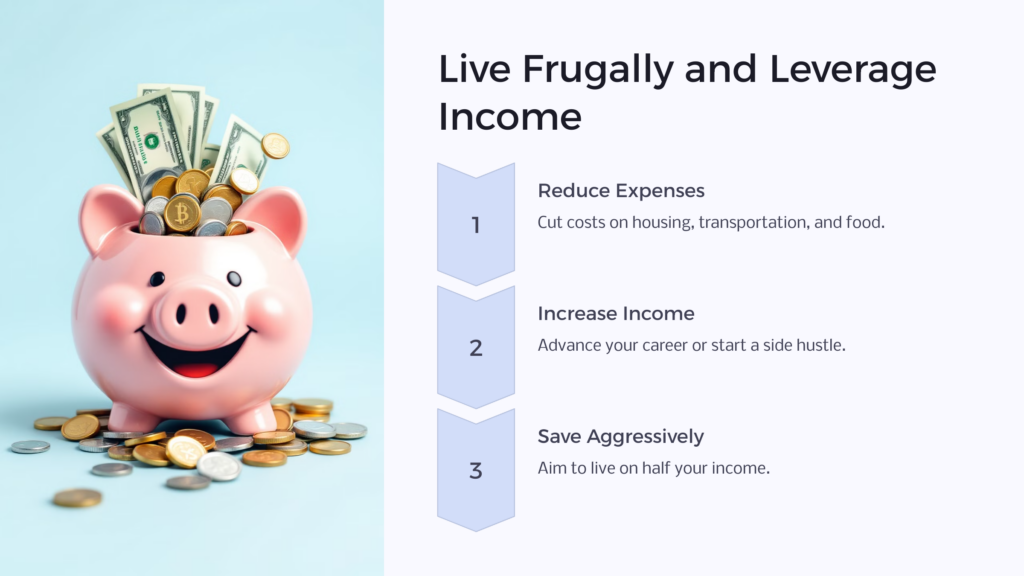
5. Live Well Below Your Means
Aggressive saving requires intentional spending. Early retirees often focus on reducing their largest expenses:
- Housing
- Transportation
- Food
Some aim to live on half their income during peak earning years, allowing the rest to fuel long-term investments. Frugality isn’t about deprivation — it’s about aligning spending with priorities.
6. Increase and Diversify Income
Cutting expenses helps, but increasing income can have an even greater impact over time. Strategies include:
- Advancing within your career
- Developing new skills or credentials
- Starting a side business
- Building passive or semi-passive income streams, such as rental property
Multiple income sources add flexibility and resilience to your retirement plan.
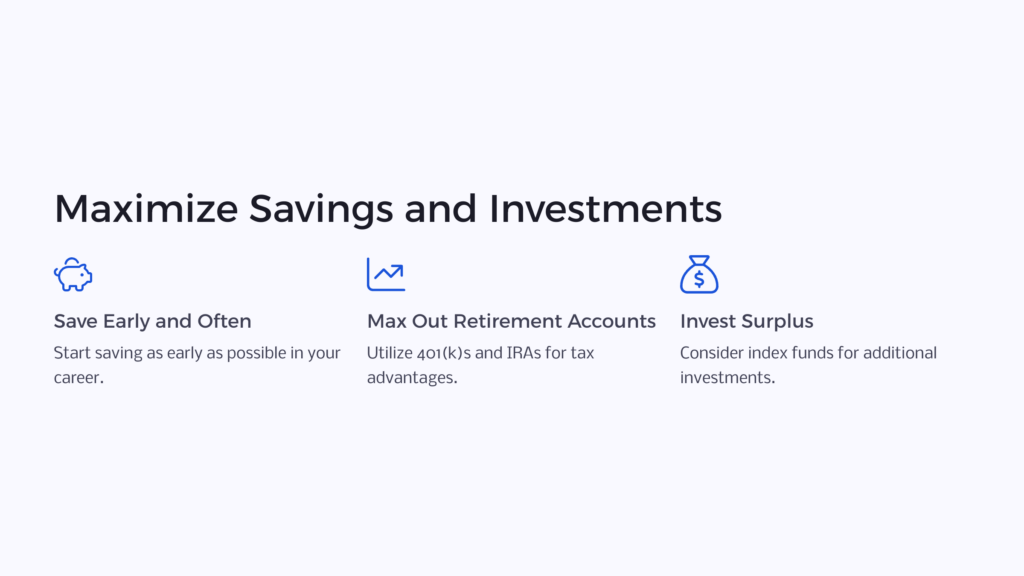
7. Save Early and Consistently
Time is one of your most powerful tools. Maximize contributions to tax-advantaged accounts whenever possible:
- Employer-sponsored retirement plans
- Traditional or Roth IRAs
Be mindful of withdrawal rules. For example:
- Early withdrawals from a 401(k) usually trigger penalties
- Roth IRA contributions (not earnings) can often be accessed without penalties
Understanding these rules helps you plan income bridges before traditional retirement age.
8. Eliminate High-Interest Debt
High-interest debt works directly against early retirement goals. Prioritize paying off:
- Credit cards
- Personal loans
- High-interest auto loans
Many early retirees also aim to enter retirement mortgage-free, reducing fixed expenses and financial stress.
9. Invest Beyond Retirement Accounts
If you’ve maxed out tax-advantaged accounts, taxable brokerage accounts can provide flexibility. These accounts allow you to:
- Invest in stocks, bonds, or index funds
- Access funds without age-based penalties
Diversification and risk tolerance should guide investment choices, especially with a longer retirement horizon.
10. Build a Plan B
No plan is immune to market downturns, health issues, or changing priorities. A strong early retirement plan includes flexibility:
- Willingness to earn supplemental income if needed
- Emergency reserves
- Adjustments to spending during volatile periods
A backup plan can be the difference between stress and confidence.
Leverage Income
Working hand in hand with decreasing expenses is increasing your income. While cutting expenses can be an effective short-term solution to saving, increasing your income over the life of your career continues literally to pay over your lifetime – and may help open the door to early retirement. You can do this in a few different ways – you can continue to pursue education, experience, and credentials that help you advance within your career, you can start a side hustle to diversify your income stream, and you can even pursue a passive income strategy, like real estate, for example, to vary where your income comes from and how much you’re able to save now.
What Is the 4% Rule — and Does It Work for Early Retirement?
The 4% Rule suggests withdrawing no more than 4% of retirement savings annually to preserve long-term income. While useful as a guideline, it was developed using traditional retirement timelines.
If you plan to retire early, you may need a more conservative approach. Longer retirements increase exposure to inflation, market volatility, and unexpected expenses. A financial professional can help determine whether this rule fits your situation.
Early Retirement Is About Choice

Early retirement isn’t just about stopping work — it’s about gaining control over your time. With thoughtful planning, discipline, and adaptability, financial independence can arrive earlier than you might expect.
At the same time, it’s important to enjoy life along the way. A sustainable plan balances future goals with present fulfillment. Small rewards, flexibility, and regular plan reviews help ensure that the journey toward early retirement is just as meaningful as the destination.
 Benefits.com Advisors
With expertise spanning local, state, and federal benefit programs, our team is dedicated to guiding individuals towards the perfect program tailored to their unique circumstances.
Rise to the top with Peak Benefits!
Join our Peak Benefits Newsletter for the latest news, resources, and offers on all things government benefits.