














When applying for Social Security Disability Insurance (SSDI), understanding the Blue Book conditions and eligibility criteria can make or break your case. The Blue Book and Listing of Impairments are based on the provisions of the Social Security Act, which established the legislative foundation for disability determination. The Social Security Administration (SSA) uses the Listing of Impairments, commonly called the “Blue Book,” which is organized by body systems, to determine if your medical condition qualifies as disabling under their rules. To qualify, applicants must meet all the criteria listed for their specific condition.
What Is the Social Security Blue Book?
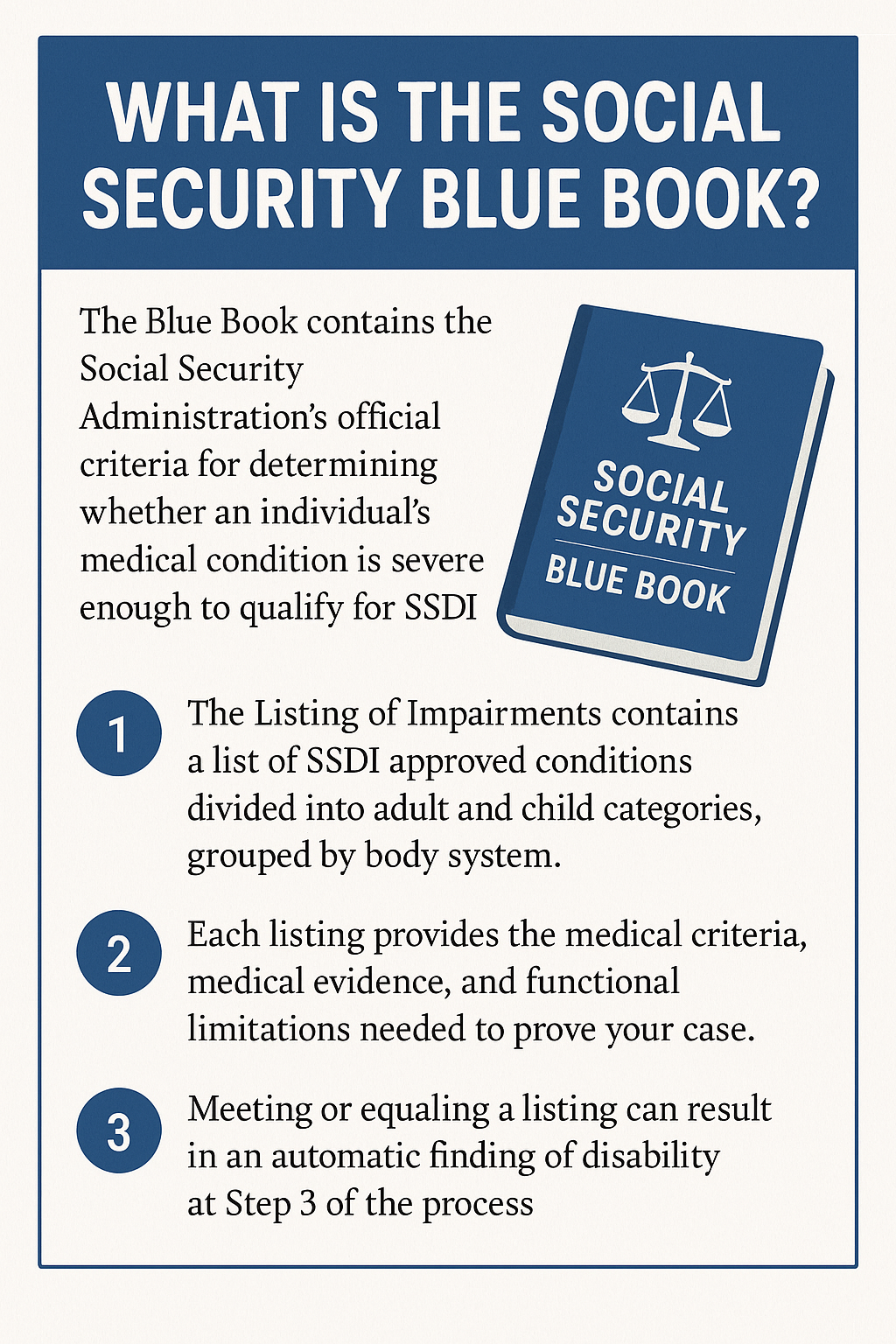
The Blue Book Guidelines are the Social Security Administration’s official criteria for determining whether an individual’s medical condition is severe enough to qualify for SSDI. The Blue Book uses medical criteria to determine eligibility.
- The Listing of Impairments contains a list of SSDI approved conditions divided into adult and child categories, grouped by body system.
- Each listing provides the medical criteria, medical evidence, and functional limitations needed to prove your case.
- Meeting or equaling a listing can result in an automatic finding of disability at Step 3 of the process.
Common Blue Book Conditions and Medical Criteria for Eligibility
| Category | Examples of SSDI Approved Conditions | Key Eligibility Criteria (Blue Book Guidelines) |
|---|---|---|
| Musculoskeletal Disorders (1.00) | Spine disorders, joint dysfunction, fractures, amputations, soft tissue injuries | Imaging (X-ray/MRI) showing structural damage; inability to ambulate effectively or perform fine motor movements for 12+ months; severe functional limitations |
| Cardiovascular Disorders (4.00) | Chronic heart failure, congestive heart failure, ischemic heart disease, myocardial ischemia, coronary artery disease, recurrent arrhythmias, cardiovascular impairments, cardiovascular disease affecting the cardiovascular system | Objective testing (e.g., echocardiogram, stress test, angiographic findings); persistent symptoms despite prescribed treatment; functional limitations; documentation of disease processes |
| Respiratory Disorders (3.00) | COPD, chronic bronchitis, pulmonary fibrosis, asthma, cystic fibrosis, chronic pulmonary hypertension, respiratory failure, lung transplantation | Pulmonary function tests (FEV1/FVC); blood gas studies; frequent hospitalizations; reduced exertional capacity; SSA will evaluate respiratory failure and respiratory system impairments based on severity and treatment (including lung transplantation) |
| Neurological Disorders (11.00) | Epilepsy, multiple sclerosis, Parkinson’s disease, ALS, traumatic brain injury, cerebral palsy | Documented seizures despite medication; motor function loss; significant interference with walking, balance, or hand use; severe functional limitations |
| Mental Disorders (12.00) | Depression, bipolar disorder, PTSD, anxiety disorders, schizophrenia, psychotic disorders, other psychotic disorders, panic attacks, related disorders, speech disorders | Medical documentation plus evidence of “marked” or “extreme” limitation in mental functioning or inability to adapt to work settings; severe functional limitations |
| Immune System Disorders (14.00) | Lupus, rheumatoid arthritis, HIV/AIDS, immune disorders, autoimmune disorders, HIV infection | Lab findings confirming diagnosis; organ/system involvement; significant functional limitations despite treatment; symptoms such as involuntary weight loss and severe fatigue considered |
| Endocrine Disorders (9.00) | Diabetes with complications, thyroid disorders | Evidence of severe complications (e.g., neuropathy, retinopathy, cardiovascular events) affecting daily functioning; may affect multiple body systems |
| Digestive Disorders (5.00) | Crohn’s disease, liver disease, short bowel syndrome, inflammatory bowel disease, chronic liver disease | Endoscopy/imaging confirming diagnosis; repeated hospitalizations; inability to maintain adequate nutrition or weight; severe functional limitations |
| Cancer (13.00) | Leukemia, lymphoma, breast cancer, lung cancer, malignant neoplastic diseases | Pathology reports; ongoing treatment (may include stem cell transplantation for some cancers); metastasis or recurrence despite therapy; severe functional limitations |
| Hematological Disorders (7.00) | Sickle cell disease, bone marrow failure, hemolytic anemias, stem cell transplantation as treatment | Laboratory evidence of hematological disorders; documentation of disease processes; functional limitations; evaluation of treatment course (including stem cell transplantation) |
| Kidney Disorders (6.00) | Chronic kidney disease, dialysis patients, kidney transplant, genitourinary disorders, such disorders | Lab tests (creatinine, GFR); ongoing dialysis or post-transplant status; documented functional limitations; severe functional limitations |
| Sensory Disorders | Blindness (central visual acuity 20/200 or worse in better eye), deafness | Objective vision/hearing tests; central visual acuity criteria for blindness; severe functional limitations |
| Congenital Disorders | Down syndrome, other congenital disorders that affect multiple body systems | Genetic or clinical diagnosis; evidence that the disorder can affect multiple body systems; severe functional limitations |
Note: The Social Security Administration evaluates impairments based on their impact on multiple body systems, bodily systems, and underlying disease processes. Other disorders not specifically listed may also qualify if they result in severe functional limitations and meet the criteria outlined in the Blue Book.
Applying for Social Security Disability Benefits
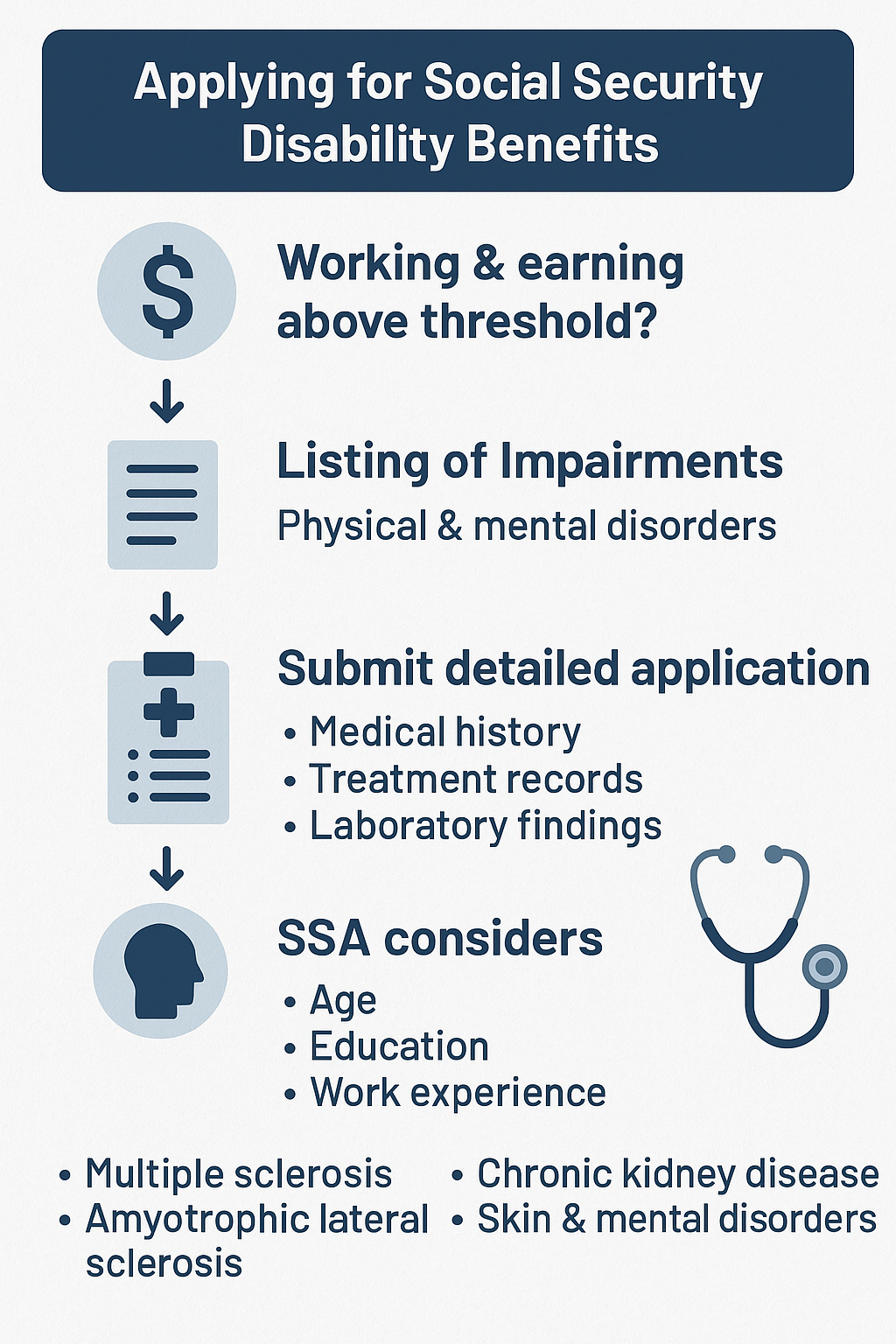
Applying for Social Security disability benefits is a detailed process that requires careful organization and thorough documentation. The Social Security Administration uses a structured five-step evaluation to determine if you qualify for disability benefits. The first step assesses whether you are currently working and earning above the allowed threshold. If not, the Social Security Administration then examines your medical condition to see if it meets or equals a listing in the official Listing of Impairments.
The Listing of Impairments covers a broad spectrum of physical and mental disorders, including chronic kidney disease, neurological disorders like multiple sclerosis and amyotrophic lateral sclerosis, skin disorders, and various mental disorders. These conditions are recognized as severe enough to prevent substantial work activity, provided they meet the specific criteria outlined by the SSA.
When you apply for Social Security disability benefits, you will need to submit a comprehensive application that includes detailed information about your medical history, laboratory findings, and all relevant treatment records. The Social Security Administration will review this evidence to determine if your condition matches or is equivalent to the medical criteria for a listed impairment. In addition to your medical documentation, the SSA considers your age, education, and work experience to evaluate your ability to perform any work.
For applicants with neurological disorders, such as multiple sclerosis or amyotrophic lateral sclerosis, it is especially important to provide extensive medical records, including a history of symptoms, results from neurological exams, and any laboratory findings that support your diagnosis. Similarly, those with chronic kidney disease, skin disorders, or mental disorders should ensure their application includes all pertinent medical evidence and documentation of how their condition limits their daily functioning.
By understanding the SSA’s requirements and preparing a thorough application, you can improve your chances of qualifying for Social Security disability benefits and securing the support you need.
How to Strengthen Your Social Security Disability Insurance Claim for Disability Benefits Using the Blue Book Guidelines
The Social Security Administration (SSA) uses the Blue Book as a guide when evaluating disability claims, helping determine if applicants meet the criteria to qualify for Social Security benefits.
✅ Match Your Condition to a Listed Impairment: Identify where your diagnosis fits within the Social Security list of impairments.
✅ Gather the Right Medical Evidence: SSA requires specific tests, imaging, and longitudinal treatment records to meet the eligibility criteria for disability claims.
✅ Get Your Doctor Involved: Ask your treating physician to address the SSA listings directly in their medical source statement.
✅ Argue Equivalency if Needed: Even if you don’t meet a listing exactly, your impairments combined can equal a disabling medical condition under SSA rules.
✅ Ensure Your Documentation Helps You Qualify for Social Security: Provide thorough and accurate records that demonstrate your condition meets or equals the SSA’s requirements.
✅ Understand How the SSA Is Evaluating Impairments: Familiarize yourself with how the SSA assesses the severity and characteristics of your condition during the review process.
Understanding the SSDI Evaluation Process
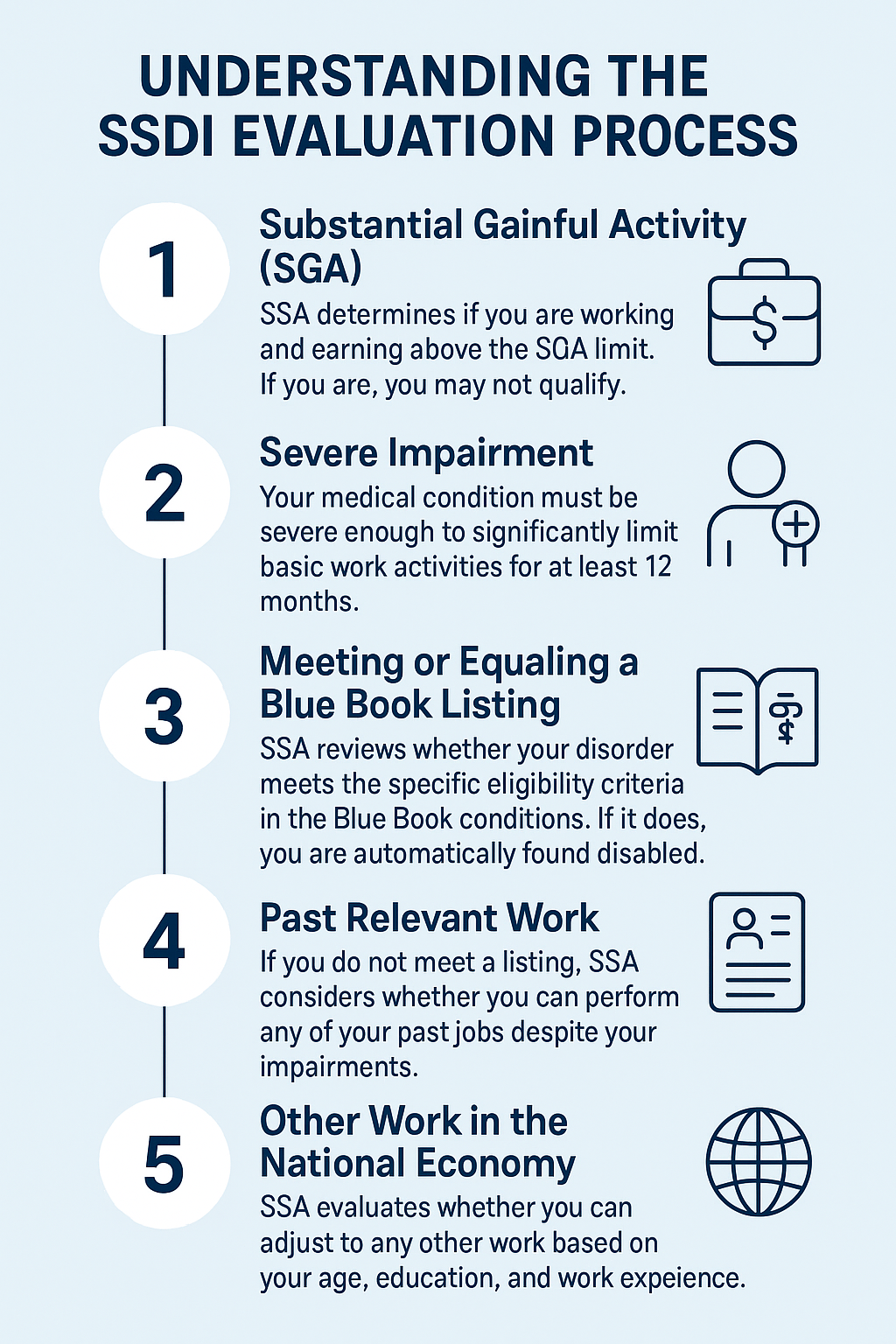
The Social Security Administration follows a strict five-step SSD evaluation process to determine whether you qualify for a disability benefit. Understanding these steps helps you see where the Blue Book Guidelines fit into your Social Security benefits claim:
Substantial Gainful Activity (SGA): SSA determines if you are working and earning above the SGA limit. If you are, you may not qualify.
Severe Impairment: Your medical condition must be severe enough to significantly limit basic work activities for at least 12 months. At this step, the SSA considers limitations in both physical and mental functioning.
Meeting or Equaling a Blue Book Listing: SSA reviews whether your disorder meets the specific eligibility criteria in the Blue Book conditions. If it does, you are automatically found disabled.
Past Relevant Work: If you do not meet a listing, SSA considers whether you can perform any of your past jobs despite your impairments.
Other Work in the National Economy: SSA evaluates whether you can adjust to any other work based on your age, education, and work experience.
Conclusion
The Social Security Blue Book provides a list of physical and mental disorders that automatically qualify for a certain amount of Social Security benefits. Make sure to check for your disorder, it may be a listed impairment, making your claim process much easier.
At Benefits.com, we are here to help you navigate the process and receive the benefits you deserve. Begin today by taking our free eligibility quiz.
 Benefits.com Advisors
With expertise spanning local, state, and federal benefit programs, our team is dedicated to guiding individuals towards the perfect program tailored to their unique circumstances.
Rise to the top with Peak Benefits!
Join our Peak Benefits Newsletter for the latest news, resources, and offers on all things government benefits.