












VA survivor benefits encompass financial, healthcare, and educational support programs provided by the U.S. Department of Veterans Affairs to eligible family members following a veteran’s death. These benefits may include Dependency and Indemnity Compensation (DIC), VA survivor pension benefits, healthcare via CHAMPVA, education assistance, and burial benefits for survivors.
Eligibility is generally based on the veteran’s service record and the survivor’s relationship, such as a spouse, dependent child, or occasionally a dependent parent. Survivors typically need to submit an application for VA survivor benefits to access these resources.
Why This Update
This article was revised in March 2026 to ensure that it accurately reflects the current VA policies and eligibility criteria. Since veterans’ programs are regularly updated, maintaining current information assists families in understanding the benefits available to them after the loss of a loved one who served in the military.
Michelle’s Take
After a veteran’s death, navigating the available benefits can be daunting. Many families are unaware of the range of VA survivor benefits accessible after a veteran’s passing, from monthly compensation to healthcare coverage.
Taking the time to understand these programs can significantly impact financial stability and access to care during a challenging time. I personally navigated VA benefits for my father when he became disabled.
What Are VA Survivor Benefits and Who Is Eligible?
VA survivor benefits are designed to provide financial and supportive assistance to qualified surviving spouses, surviving children, and sometimes parents of a deceased veteran or military service member who died under qualifying conditions.
Understanding Dependency and Indemnity Compensation (DIC)
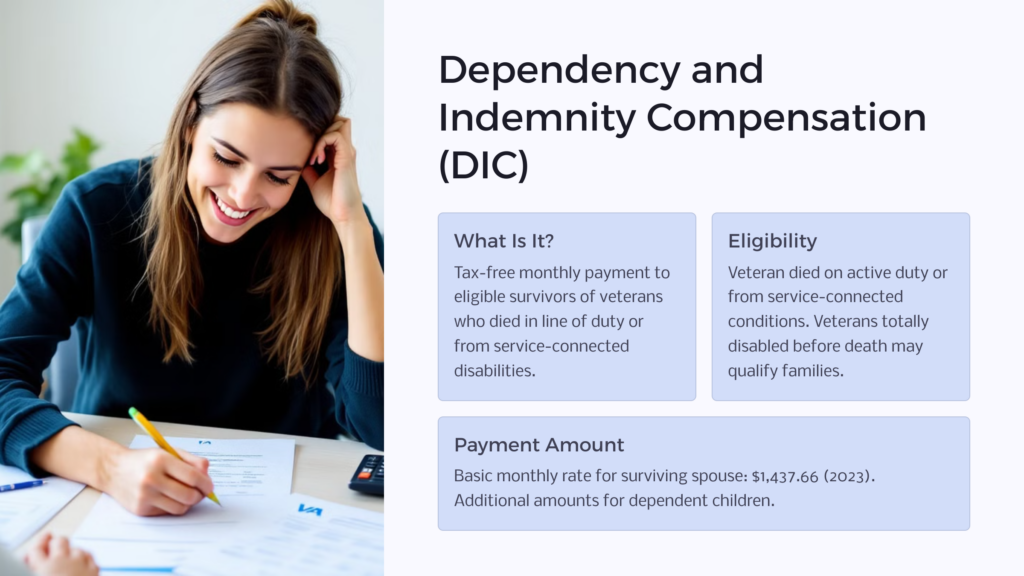
Dependency and Indemnity Compensation (DIC) is a tax‑free monthly payment provided to eligible surviving spouses, children, or parents of service members who died in the line of duty or veterans whose death resulted from a service-connected condition.
VA Survivors Pension: Income Limits and Eligibility
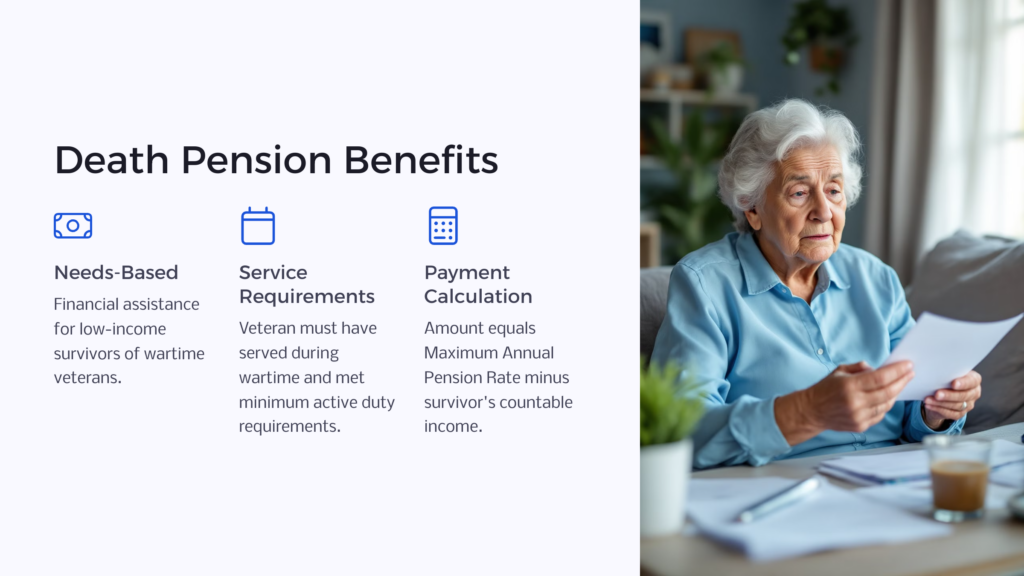
The survivors pension benefit is available to qualified surviving spouses and dependent children of deceased veterans. Eligibility is subject to certain limits, including a yearly income limit and net worth limits. The net worth limit to be eligible for Survivors Pension benefits is $163,699 as of December 1, 2025. The maximum annual pension rates (MAPR) for a surviving spouse without dependents is $11,699.
The VA pays the difference between the applicant’s countable income and the yearly income limit for the Survivors Pension. This benefit is generally paid in monthly installments, rounded down to the nearest dollar.
To qualify, the veteran must have completed the full period of active military service required, and eligibility depends on whether the service meets wartime service requirements. Only survivors of wartime veterans are eligible for this benefit; survivors of peacetime veterans are not entitled to the VA Survivors Pension.
If a survivor is eligible for both DIC and the VA Survivors Pension, the VA will only pay the one benefit that provides the most money.
Health Care and Education Benefits for Survivors
CHAMPVA is a medical program that provides health care coverage for eligible spouses and children, including needs such as doctor visits, hospital care, prescriptions, and mental health services. CHAMPVA offers cost-sharing for medical services and supplies to survivors who do not qualify for TRICARE. Children who are permanently incapable of self support due to disability may also be eligible for CHAMPVA.
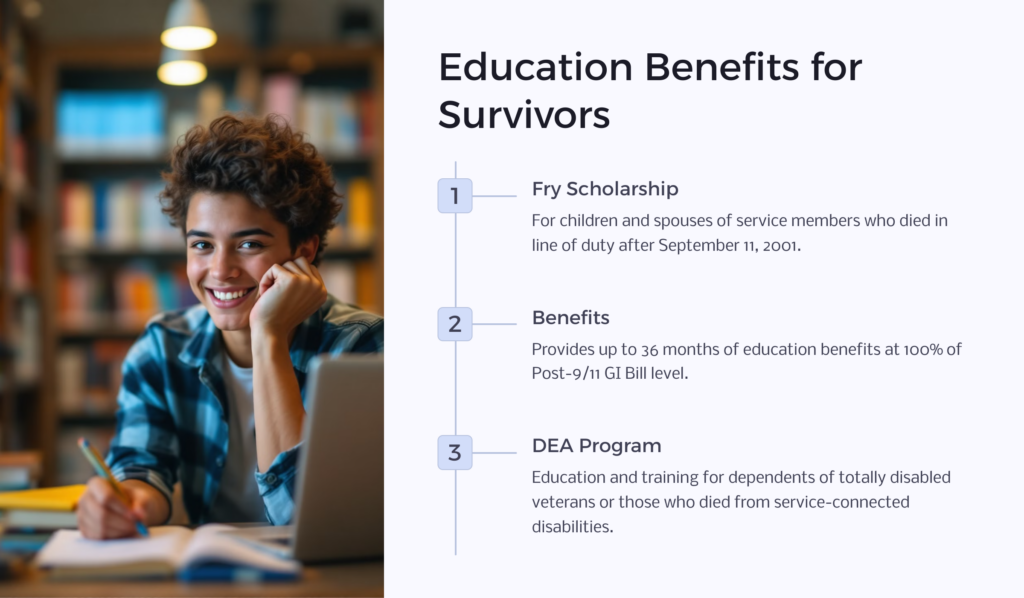
Surviving spouses and children might also qualify for educational benefits which offer monthly payments for degree programs, apprenticeships, or on-the-job training. The Fry Scholarship provides Post-9/11 GI Bill benefits to eligible survivors to attend school for up to 36 months at the 100% rate. Attendance at a VA approved school is required for certain education benefits.
Survivors may also qualify for aid and attendance or housebound benefits if they need help with daily activities due to a permanent disability.
VA burial benefits for survivors can help with funeral expenses and provide burial allowances, headstones, or interment in national cemeteries.
How to Apply for VA Survivor Benefits
You can submit your forms online using the QuickSubmit tool through AccessVA. Alternatively, you can apply by mailing your completed application form to the appropriate VA regional office. After you apply for VA survivor benefits, you can check the status of your claim online.
It is recommended to submit an intent to file form before applying to preserve your effective date while you gather evidence. Evidence may include documents like military service records, doctor’s reports, and medical test results. You need to fill out the appropriate application form based on your survivor status.
Common documentation includes discharge papers (DD-214), death certificates, and proof of relationship.
Example Scenario
Maria’s husband was a service member in the U.S. Army, and he died from a service connected disability. After applying for VA survivor benefits, Maria qualified for Dependency and Indemnity Compensation (DIC), which provided monthly tax‑free payments. Her children also qualified for education benefits. The family received a burial allowance as part of the VA burial benefits for survivors to help cover funeral costs.
Frequently Asked Questions
Who qualifies for VA survivor benefits?
Certain benefits are available to those eligible based on military service and their relationship to the deceased veteran or service member. Eligible survivors typically include a spouse, dependent child, or dependent parent of a deceased veteran or service member who served under qualifying conditions, including active duty.
What are VA benefits for surviving spouse?
A surviving spouse may qualify for DIC, survivors pension benefits, CHAMPVA health coverage, education benefits, and may also be eligible for the Survivor Benefit Plan (SBP), which provides a monthly annuity to beneficiaries of military retirees who opted into the plan.
What is the difference between DIC and survivors’ pension?
Eligibility for DIC or survivors’ pension depends on whether the veteran died while on active duty or as a result of a service-connected disability. DIC is provided when the veteran’s death is service‑connected or occurred during active duty, while the survivors pension is a needs‑based benefit.
How long does a VA survivor benefits application take?
Processing times vary, but many claims take several months depending on documentation and eligibility verification.
Are there VA survivor benefits for children?
Yes. Eligible children may receive compensation, education benefits, and health coverage.
Do survivors receive burial assistance?
Yes. The VA offers burial allowances and memorial benefits to help honor the veteran’s service.
If you have questions about what you qualify for or how to get your benefits, reach out to us at Benefits.com!
 Benefits.com Advisors
With expertise spanning local, state, and federal benefit programs, our team is dedicated to guiding individuals towards the perfect program tailored to their unique circumstances.
Rise to the top with Peak Benefits!
Join our Peak Benefits Newsletter for the latest news, resources, and offers on all things government benefits.