













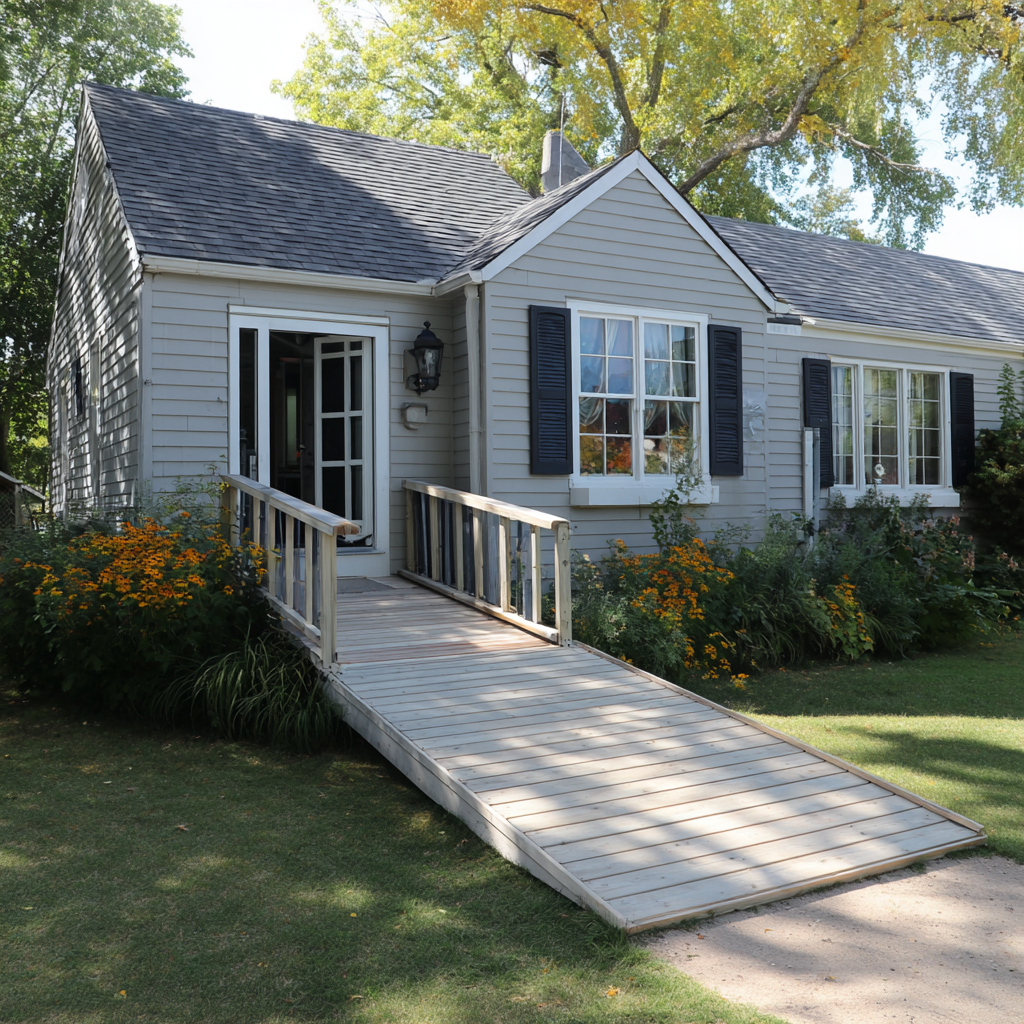
Veterans and active-duty service members enrolled in VA healthcare qualify for a HISA grant if a VA physician determines they need medically necessary home modifications. Under VA Prosthetic Clinical Management Program guidelines, eligibility falls into two tiers: veterans with service-connected disabilities or those with non-service-connected conditions plus a separate 50% or higher service-connected rating qualify for up to $6,800 lifetime.
Veterans with only non-service-connected conditions requiring modifications qualify for up to $2,000 lifetime. The grant covers structural changes like wheelchair ramps, widened doorways, and bathroom modifications.
Home Improvements and Structural Alterations (HISA)
The Home Improvements and Structural Alterations (HISA) grant is a VA benefit that helps veterans pay for medically necessary home modifications.
Unlike the Specially Adapted Housing (SAH) grant, which requires severe disabilities like limb loss, HISA eligibility depends solely on a VA physician determining that a modification is medically needed.
The grant is a lifetime benefit, meaning the funding limits apply across your entire lifetime rather than resetting annually. It covers veterans who own or rent their primary residence, though renters need landlord approval before modifications can proceed.
Two Funding Tiers: Which One Applies to You?
HISA grants are divided into two tiers based on disability status, and eligible veterans may qualify for different funding tiers depending on whether their disability is service-connected or not.
Tier 1 provides up to $6,800 lifetime and applies to veterans who meet any of these criteria:
- Have a service-connected disability requiring the modification
- Have a non-service-connected condition requiring modification, plus a separate service-connected disability rated at 50% or higher
- Have a disability treated as service-connected (such as one acquired through VA medical treatment)
Tier 2 provides up to $2,000 lifetime for eligible veterans with non service connected disabilities who are enrolled in VA healthcare. This tier covers modifications needed for prescribed treatment, mobility, or safety but does not require any service-connected disability rating.
Covered and Excluded Projects
The HISA grant strictly covers structural modifications that support accessibility and daily living.
Covered modifications include:
- Wheelchair ramps and improved entrance paths
- Widened doorways for wheelchair or scooter access
- Bathroom modifications such as roll-in showers, walk-in tubs, or grab bars
- Lowered counters and sinks for accessibility
- Electrical or plumbing upgrades to support home medical equipment
Excluded projects include:
- Exterior decking, walkways to detached structures, or new construction
- Spas, hot tubs, or Jacuzzis
- Routine maintenance, cosmetic upgrades, or standard repairs like roof replacement
- Portable or temporary equipment such as removable ramps
For example, installing a permanent roll-in shower qualifies, but adding a hot tub for therapeutic purposes does not. The distinction centers on whether the modification is structural and directly supports medical needs.
HISA Grant Application
Start by gathering the required documents, and submitting them all to the VA with Form 10-0103. Applicants must also be enrolled in VA health care to be eligible.
A completed HISA application package includes:
- VA Form 10-0103 (Veterans Application for Assistance in Acquiring Home Improvement and Structural Alterations)
- A medical prescription letter from a VA physician that includes medical justification for the prescribed improvement or structural alteration.
- A written itemized estimate of costs for labor, materials, permits, and inspections for the home improvement and structural alteration from a licensed, bonded, and insured contractor
- Color photographs of the area before modification
- For renters: signed and notarized landlord consent
To apply for the HISA grant, you must ensure your application contains all required forms, documentation, and cost estimates. The application process may take between 6 to 12 weeks, depending on the completeness of your submission and the local VA medical center’s workload.
Once the HISA application is submitted, a multidisciplinary committee may conduct a site inspection to verify the necessity and scope of the requested modifications.
Funding Gaps and Advocacy Efforts in 2026
A significant challenge facing HISA applicants is the funding gap between grant limits and actual construction costs. The $6,800 and $2,000 maximums have not been adjusted since 2010, despite construction material and labor costs rising more than 50% over that period.
In practical terms, a bathroom modification that cost $5,000 in 2010 might now cost $8,000 or more, leaving the veterans to cover the difference themselves.
Advocacy groups are pushing for change. The Paralyzed Veterans of America and similar organizations are lobbying Congress to pass the Autonomy for Disabled Veterans Act (H.R. 2245 / S. 1644 in the 119th Congress). This legislation would raise HISA limits and tie future increases to the Consumer Price Index (CPI), ensuring the benefit keeps pace with inflation.
Example Scenario
John, age 68, is a Vietnam-era veteran enrolled in VA healthcare with a 60% service-connected disability rating for hearing loss. He recently developed severe arthritis in both knees, a non-service-connected condition that now requires him to use a wheelchair inside his home.
His VA physician has prescribed bathroom modifications including a roll-in shower and grab bars to prevent falls. Because John has a separate service-connected disability rated above 50%, he qualifies for the Tier 1 HISA benefit with a lifetime maximum of $6,800.
His contractor’s estimate totals $9,200, meaning John will need to cover approximately $2,400 out-of-pocket or seek supplemental funding from another program.
Frequently Asked Questions
What is the HISA grant and how much can veterans receive?
The HISA grant is a lifetime VA benefit that helps veterans make medically necessary modifications to their homes. Veterans with service-connected disabilities can receive up to $6,800, while those with non-service-connected conditions enrolled in VA healthcare can receive up to $2,000.
What home modifications does the HISA grant cover?
The HISA grant covers structural accessibility modifications including wheelchair ramps, widened doorways, roll-in showers, walk-in tubs, grab bars, lowered counters, and plumbing or electrical upgrades for medical equipment.
Do I need a service-connected disability to qualify for the HISA grant?
No. Veterans with non-service-connected conditions can qualify for the $2,000 tier if they are enrolled in VA healthcare and a VA physician determines the home modification is medically necessary. However, service-connected disabilities or a separate 50%+ rating qualifies you for the higher $6,800 tier.
Can renters apply for the HISA grant?
Yes, renters can apply for the HISA grant. You must obtain a signed and notarized statement from your landlord authorizing the structural modifications before submitting your application to the VA medical center.
How long does HISA grant approval take?
The VA is required to issue a decision within 30 days of receiving a fully completed application.
What documents do I need to apply for the HISA grant?
You need VA Form 10-0103, a medical prescription letter from a VA physician justifying the modification, an itemized contractor estimate from a licensed and bonded contractor, color photographs of the unimproved area, and landlord approval if renting.
Why do veterans say the HISA grant isn’t enough money?
The $6,800 and $2,000 limits have not been adjusted since 2010, while construction costs have risen over 50%. Advocacy groups like Paralyzed Veterans of America are pushing for the Autonomy for Disabled Veterans Act to raise limits and tie future increases to inflation.
Practical Considerations Before You Apply
If you’re considering a HISA application, start by scheduling an appointment with your VA physician to discuss whether your condition qualifies for a medical necessity determination. This clinical evaluation is the foundation of your application.
Next, obtain multiple contractor estimates before selecting one. The VA requires a detailed, itemized estimate, and comparing bids helps ensure you’re getting fair pricing within budget constraints. Remember that the grant covers approved costs only, and any expenses beyond your tier limit are your responsibility.
For renters, secure landlord approval early in the process. A landlord’s refusal to authorize permanent structural changes can halt the application entirely. Homeowners should verify that planned modifications comply with local building codes, as permits may be required and inspections could affect project timelines.
 Benefits.com Advisors
With expertise spanning local, state, and federal benefit programs, our team is dedicated to guiding individuals towards the perfect program tailored to their unique circumstances.
Rise to the top with Peak Benefits!
Join our Peak Benefits Newsletter for the latest news, resources, and offers on all things government benefits.