








We are privately owned and not affiliated or endorsed by any government agency.

Take the Benefits Quiz

Embarkation area

Definition

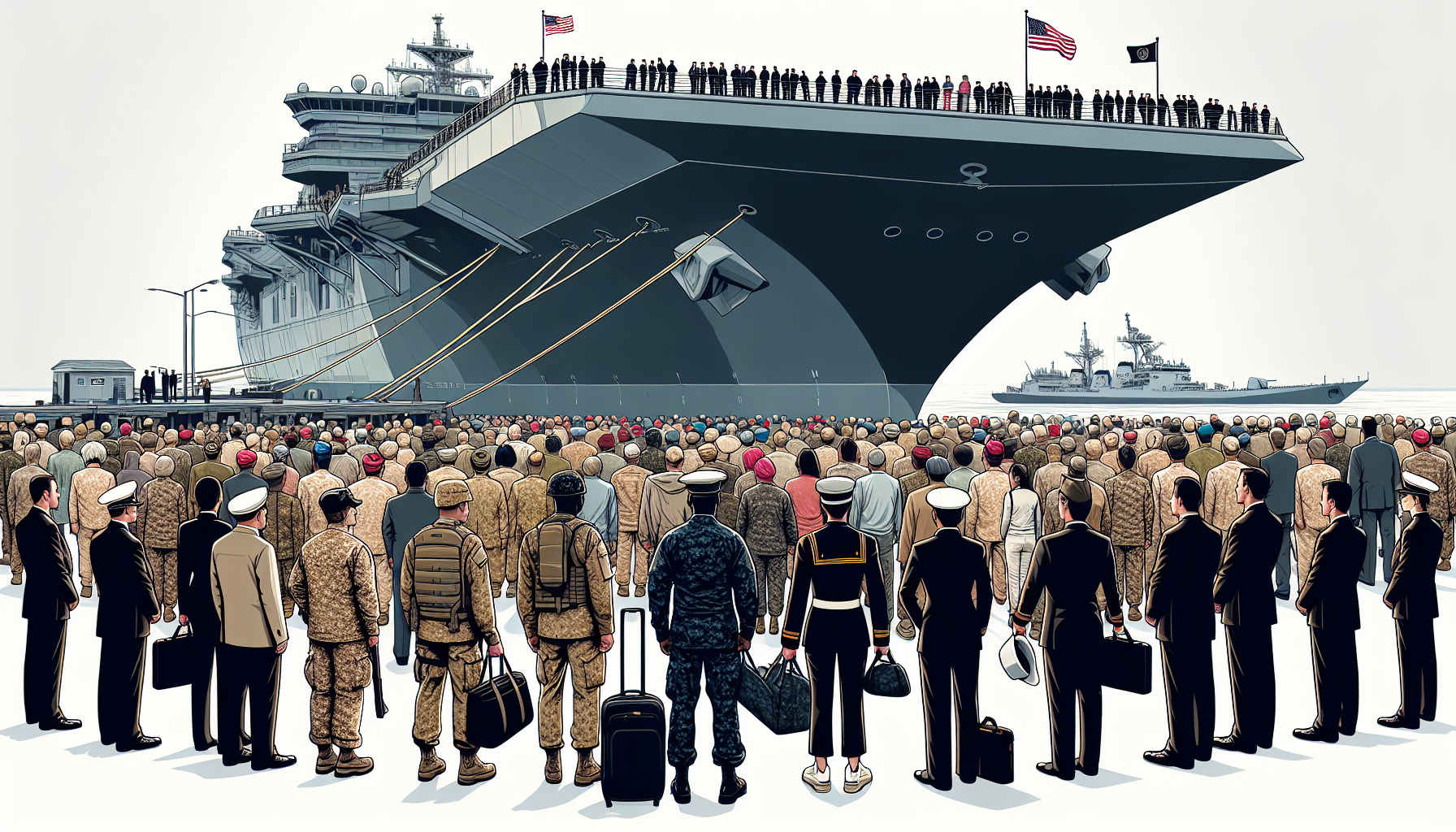
An embarkation area is a designated geographical location where military forces and their equipment assemble, prepare, and load onto ships, aircraft, or other modes of transportation for deployment. It is often the last secure area before military forces move into a combat zone. It’s a critical spot for organization, logistics, and final checks before transport to a mission.

Key Takeaways

  1. The Embarkation Area refers to a designated zone where military forces assemble, organize, and prepare for deployment during a military operation.
  2. It often involves a logistical process, such as loading vehicles, materials, and personnel onto transport mechanisms like ships, aircrafts or rail cars.
  3. The proper organization and management of an Embarkation Area is crucial. It ensures a smooth deployment operation while minimizing any hitches that could potentially delay or jeopardize the mission.

Importance

Embarkation area refers to a location where troops, equipment, and supplies are loaded onto ships or aircraft for deployment. The concept of an embarkation area is critically important in military operations for several reasons.

Primely, it serves as a critical staging point for moving troops and equipment into operational areas, proving efficient management and coordination of resources, thus streamlining deployments. Proper management of these areas can decrease load time, expedite deployment, and subsequently increase the responsiveness to threats or mission requirements.

Also, security of this area is paramount, as any disruptions could potentially delay mission execution and expose the military assets to risks. Understanding and implementing the use of embarkation areas is therefore pivotal for successful military operations.

Explanation

The Embarkation area plays a critical role in military operations, serving as the designated location from where troops, equipment, and supplies commence their journey by sea, air, or land to specific destinations. In more complex operations, this area is not just a single point, but could actually be an extensive location encompassing multiple points of embarkation.

These areas are intricately formulated and organized in order to ensure that military forces are deployed effectively, efficiently, and in a timely manner. This logistical area is used for verification of personnel, and for the staging, inspection, and loading of equipment and supplies.

It ensures that all necessary precautions are taken, and everything is thoroughly checked before departure. This pre-embarkation process minimizes the risk of any equipment being left behind, which in turn enhances operational effectiveness.

Thus, the embarkation area is all about ensuring the smooth progress of the operation right from the beginning, avoiding any unnecessary delays or issues which can put the mission, and the lives of the personnel involved, at risk.

Examples of Embarkation area

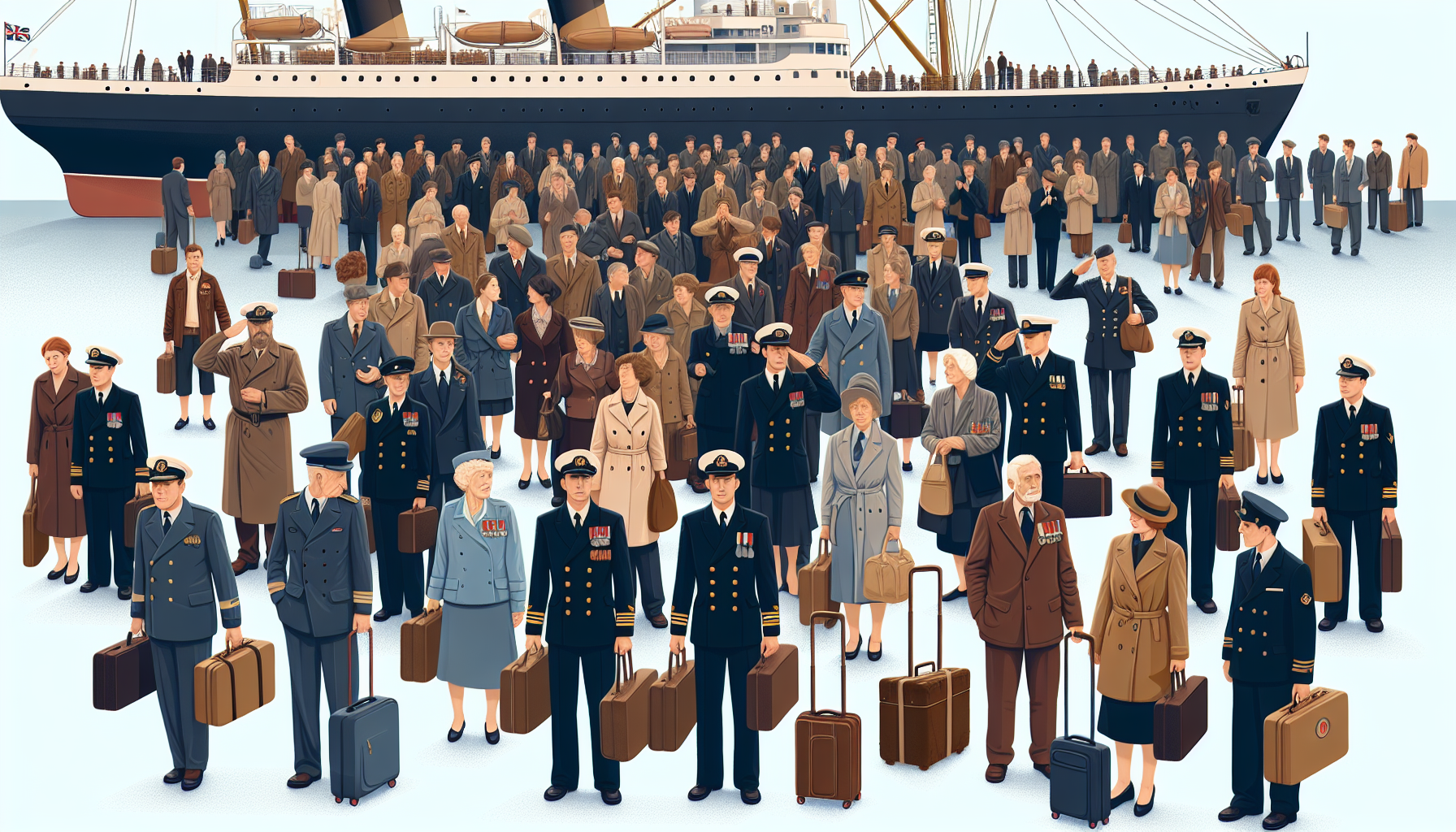
“Operation Overlord” during World War II: This is a historical example of an embarkation area where soldiers, material, and vehicles were gathered in Southern England before the D-Day’s Invasion of Normandy in

This operation required extensive planning and coordination, as it involved preparing and loading thousands of ships at multiple embarkation points along the English coast.

The “Persian Gulf War” in 1990-1991: Prior to the launch of Desert Storm, a massive embarkation area was established in Saudi Arabia. Troops, vehicles, and supplies were shipped to Saudi Arabia from the United States and other coalition nations over a period of months. These forces were then deployed from the embarkation area when the ground war commenced.

The “U.S. Deployment to Afghanistan” in 2001: In response to the September 11 terrorist attacks, U.S. military forces prepared to launch operations in Afghanistan to dismantle al-Qaeda. Troops, equipment, and supplies were gathered at multiple embarkation areas across the U.S. and at allied military bases across the world, prepped for airlift to Central Asia. These embarkation areas played a critical role in enabling the rapid deployment of forces to Afghanistan.

FAQs on Embarkation Area

What is an embarkation area?

An embarkation area is the designated location where troops and equipment are gathered and organized before getting onboard a ship or aircraft for military operations. This area can range anywhere from a small airfield to a large military base.

Why is an embarkation area important in military operations?

An embarkation area is crucial to military operations as it ensures efficient and systematic deployment of troops and equipment. The planning and management of this area can significantly affect the success of military missions.

What activities occur in an embarkation area?

An embarkation area houses several activities such as troop briefing, equipment inventory, final checks, and the actual boarding onto the transport vessels or aircraft. It is also normally where final medical checks and logistical briefings take place.

How is security handled in an embarkation area?

The security of an embarkation area is of utmost importance. There are usually designated security measures in place like constant patrols, controlled access points, surveillance systems, and Guards. The area is always kept confidential and only the relevant personnel are allowed access.

Are civilians allowed in the embarkation area?

Civilians are generally not allowed in the embarkation area, especially during the operational phase, unless they have been given specific clearance from the respective command. It is for security reasons and to ensure smooth and efficient operations.

Related Military Operation Terms

  • Deployment Zone
  • Veteran’s Travel Reimbursement
  • Military Transport
  • Overseas Military Base
  • Troop Movement

Sources for More Information

Benefits.com Advisors

With expertise spanning local, state, and federal benefit programs, our team is dedicated to guiding individuals towards the perfect program tailored to their unique circumstances.

Rise to the top with Peak Benefits!

Join our Peak Benefits Newsletter for the latest news, resources, and offers on all things government benefits.


Related Articles

VA HISA Grant

VA SMC R1 Requirements

VASRD 2026 Updates

Embarkation element

Definition

The embarkation element in military operations refers to the component or unit responsible for planning, organizing, and managing the loading of personnel, equipment, and supplies onto ships or aircraft for deployment. It ensures the strategic and efficient loading of necessary equipment for operational tasks. Their other roles include providing necessary documentation and maintaining accurate records of all embarkation activities.

Key Takeaways

  1. The Embarkation Element is a part of military operations, usually related to amphibious warfare, which is responsible for the efficient movement of troops, equipment, and supplies from the methods of transport onto the terrain where the conflict or exercise is taking place.
  2. It plays a crucial role for the successful completion of the mission, as it ensures that all necessary personnel, equipment, and supplies reach the desired locale in a timely and organized manner, while also considering the safety of the personnel and equipment involved.
  3. The Embarkation Element is not only limited to naval operations. It also applies to air and land operations where military forces must be transported efficiently to the territories where the mission is being executed.

Importance

The term “Embarkation Element” in military operations is critical as it pertains to the planning, coordinating, and executing of the movement of troops, vehicles, equipment and supplies from their origin to a designated destination.

The embarkation element is responsible for the efficient organization and loading of military assets onto transportation vessels (land, sea, or air). This ensures an orderly transition and timely arrival of military resources at the needful location, hence the success of the mission heavily relies on them.

Therefore, a correctly executed embarkation element is essentially a decisive element in strategic military mobilization and deployment.

Explanation

The embarkation element is an essential component within military operations, serving a vital function in managing tactical logistics. Its main purpose is to plan, coordinate, and oversee the movement of personnel, equipment, and supplies from a home base or staging area to the intended point of deployment.

Essentially, the embarkation element ensures a smooth and efficient transition during the strategic relocation of forces, facilitating the rapid and successful execution of military missions around the globe. From a broader perspective, the embarkation element also typically oversees the safe loading and off-loading of ships, aircraft, or ground transport vehicles to ensure cargo is securely stowed and troops are safely transported.

This can involve intricate arrangements like deciding the order in which units or equipment will be loaded and unloaded, ensuring that troops have the necessary resources as soon as they land. Thereby, the embarkation element plays a critical role in force projection by guaranteeing that troops and their supporting equipment are methodically transported, enabling the successful execution of military campaigns.

Examples of Embarkation element

Embarkation element refers to personnel, units, or equipment designated for deployment in a military operation where they need to embark onto a vehicle, ship, or aircraft for transportation.

D-Day Operation Overlord (World War II): Embarkation elements in this military operation included infantry divisions, tanks, and essential supplies from the Allied forces. They embarked on numerous transport ships across the English Channel under meticulous planning and scheduling, and then disembarked on the beaches of Normandy to commence the largest amphibious assault in history.

Operation Iraqi Freedom (2003): In this military operation, U.S. and Coalition forces were the embarkation elements. They loaded onto naval vessels and aircraft from various points in the U.S. and allied countries. Deployment involved the massive movement of troops, munitions, fuel, food, and medical supplies to forward operating locations.

Pacific Campaigns (World War II): Significant embarkation took place here involving the American naval and marine forces. U.S. troops embarked on transport ships from various Pacific bases and flank toward numerous island targets held by Japanese forces. Advanced logistics planning was key to the successful execution of these voyages across the Pacific Ocean to launch the island-hopping campaign. In these examples, the main focus was on the management of the embarkation process, which included planning, supervision and execution of carrying personnel and equipment from a point of origin to a staging area for operations.

FAQs about Embarkation Element

What is an Embarkation Element?

The Embarkation Element is a key component in military logistics, responsible for the planning, directing, and controlling of personnel and cargo movement by sea, land, and air transport.

What are the tasks of an Embarkation Element?

The Embarkation Element is in charge of preparing, planning, and supervising the execution of the embarkation phase of a military operation. Duties may include everything from coordinating troop movements to ensuring the proper loading and unloading of equipment.

What skills are necessary for someone working in an Embarkation Element?

Individuals in this role must have strong organizational and planning skills, a keen understanding of ground and air military vehicles, and proficiency in logistics and inventory management software. Excellent communication skills are also essential for coordinating with various units and personnel.

How to train for an Embarkation Element role?

Training for an Embarkation Element role usually takes place during military service. Most branches offer specialized training in troop movement and logistics. Understanding of the principles and systems used in transportation and supply chain are essential. Moreover, it can be beneficial to seek further education in areas like logistics or supply chain management.

What are the possible challenges faced by an Embarkation Element?

The main challenges faced by an Embarkation Element can stem from the logistic complexities of coordinating large-scale troop and cargo movements. Unforeseen events or problems with transportation can further complicate these tasks. Therefore, it’s crucial for individuals in this role to be adaptable and flexible in their planning.

Related Military Operation Terms


  • Deployment Documentation
  • Military Travel Orders
  • Personnel Movement Report
  • Overseas Service Recognition
  • Operational Preparation Period


Sources for More Information

  • U.S. Marine Corps Official Website: The official website of the U.S. Marine Corps offers extensive information about all aspects of military operations, including embarkation elements.
  • U.S. Army Official Website: The Army’s official website provides resources and details regarding operational terms and military embedment.
  • Joint Chiefs of Staff Official Website: The Joint Chiefs of Staff is a body of senior uniformed leaders in the United States Department of Defense. Their website provides extensive information about military operations and terminologies, including embarkation elements.
  • U.S. Navy Official Website: The Navy’s official website provides relevant information and resources, which can be useful to understand various military operations including the concept of embarkation elements.

Benefits.com Advisors

With expertise spanning local, state, and federal benefit programs, our team is dedicated to guiding individuals towards the perfect program tailored to their unique circumstances.

Rise to the top with Peak Benefits!

Join our Peak Benefits Newsletter for the latest news, resources, and offers on all things government benefits.

Related Articles

VA HISA Grant

VA SMC R1 Requirements

VASRD 2026 Updates

Embarkation group

Definition

An embarkation group is a military term referring to multiple units or a portion of a larger unit that is assembled and organized for the purpose of being loaded onto ships, aircraft, or other vehicles for transport. This group is often organized by specific load plans to ensure an efficient and effective loading and transportation process. The composition of the group may change based on the mission requirements or transportation means.

Key Takeaways

  1. The embarkation group refers to a cluster of personnel, supplies, and vehicles that are organized for the purpose of loading onto a ship or aircraft for military operations.
  2. Coordinating an embarkation group requires strategic planning and meticulous organization to ensure all necessary elements are included, properly arranged, and prepared for transportation.
  3. Embarkation groups play a crucial role in military operations, particularly in overseas missions and rapid deployment scenarios where troops and supplies need to be transported quickly and efficiently.

Importance

The term “Embarkation Group” is important in military operations as it represents the organized assembly of personnel, equipment, and supplies, prepared for loading onto a ship, aircraft, or any other means of transport during combat or peace missions.

This systematization ensures efficiency, coordination, and prompt readiness for departure.

The proper arrangement of the embarkation group can significantly reduce the time needed for loading and unloading, facilitating the smooth transition of military forces from one location to another, and enhancing the overall mobility and readiness of military units, which can be crucial factors in the success of military operations.

Explanation

Embarkation group is a critical component in military operations with a primary aim of facilitating the systematic and efficient deployment of troops, equipment, and other essential resources from one location to another. Essentially, the embarkation group is responsible for the entire mobilization process, managing activities from initial planning to the actual execution.

These activities involve the comprehensive arrangement and coordination of logistical affairs such as booking, scheduling, loading, and offloading military personnel and supplies. They ensure that all items and individuals are correctly and safely loaded onto the appropriate transportation, typically sea vessels or aircraft.

In terms of its use, the embarkation group plays an indispensable role in maintaining operational readiness and enhancing the strategic mobility of the military forces. When carrying out international deployments, whether for humanitarian aid, peace-keeping missions or in active combat scenarios, it’s paramount that the movement of resources is done in a timely and organized manner.

The embarkation group ensures that the right assets and personnel reach their intended destinations, and that they are fully prepared for their mission once they arrive. This group’s work substantially boosts the military’s ability to respond quickly and efficiently in varying situations, ultimately supporting the successful execution of its global operations.

Examples of Embarkation group

Embarkation Group refers to a unit, group, or team that is responsible for planning, coordinating, and executing the safe loading and unloading of personnel and equipment for military operations. Here are three real-world examples to illustrate this:

Operation Overlord (D-Day): One of the largest amphibious military assaults in history occurred during World War II on June 6,

The Allied forces’ successful embarkation was critical for Operation Overlord, which involved planning, staging, and loading personnel, vehicles, and supplies onto over 5,000 vessels. The operation was successful, and the troops were able to land on the beaches of Normandy, which was a turning point in the war.

Iraq War (Operation Iraqi Freedom): In 2003, U.S. Military Embarkation Groups were crucial in transporting heavy military equipment, weapons, and personnel to the war zones. This preparation and movement included logistics, supply chain coordination, and efficient planning for transporting troops from the United States to Iraq with all the necessary tools to carry out the mission.

United Nations Peacekeeping Missions: Embarkation groups play a vital role in UN peacekeeping missions, which often involve moving large numbers of troops and equipment to conflict zones around the world. An example could be the UN Mission in South Sudan (UNMISS), where Embarkation Groups ensured the successful deployment of peacekeeping troops and necessary supplies. This often requires meticulously coordinated logistics to ensure a safe and efficient overseas deployment.

FAQs about Embarkation Group

What is an Embarkation Group?

An Embarkation Group is a functional group within a military operation that is responsible for organizing, planning, and executing the movement of troops, equipment, and supplies from the point of origin to their final destination.

What are the main functions of an Embarkation Group?

A team under the Embarkation Group mainly focuses on functions such as movement planning, loading and unloading operations, coordinating transportation, managing logistical considerations, and ensuring all troops, equipment, and necessary materials reach their destination efficiently, safely, and in an orderly manner.

Who leads an Embarkation Group?

An Embarkation Group is usually led by a high-ranking military officer who has extensive experience in logistics, transportation, and military operations. The leader works with a team of specially trained individuals to ensure that all objectives of the Embarkation Group are met.

Is training necessary to be a part of the Embarkation Group?

Yes, members of the Embarkation Group usually undergo specialized training to gain the skills and knowledge required to perform their duties effectively. This training often includes areas like logistics management, transportation planning, equipment handling, safety guidelines, etc.

Do Embarkation Group members participate in combat?

While their main role is focused on logistical support, members of an Embarkation Group may also have combat roles depending on the needs of the operation. However, their primary role is to ensure that troops, equipment, and supplies are moved efficiently and effectively.

Related Military Operation Terms

  • Deployment: This refers to the mobilization of armed forces or military resources for action or service, usually in a foreign country.
  • Discharge: This is the official release of a service member from active military duty.
  • Veteran’s Administration: It’s a government agency, responsible for providing assistance like healthcare and educational services to former members of the armed forces.
  • Service-Connected Disability: It’s a term used in the VA benefits context to refer to a disability that was caused or aggravated by military service.
  • Post-9/11 GI Bill: It’s a specific benefit provided by the Veterans Administration, which provides educational assistance to individuals with at least 90 days of aggregate service on or after September 11, 2001, or individuals discharged with a service-connected disability after 30 days.

Sources for More Information

  • U.S. Army official site: A comprehensive site with a wealth of information about military operations and terms, including the “Embarkation group”.
  • U.S. Navy official site: This official navy page contains valuable input on naval procedures and operations, such as the “Embarkation group”.
  • U.S. Marine Corps official site: A great source to access information about Marine Corps operations, including “Embarkation group”.
  • Global Security: This non-profit organization has detailed sections on a wide variety of military tactics and operations, including the “Embarkation group”.

Benefits.com Advisors

With expertise spanning local, state, and federal benefit programs, our team is dedicated to guiding individuals towards the perfect program tailored to their unique circumstances.

Rise to the top with Peak Benefits!

Join our Peak Benefits Newsletter for the latest news, resources, and offers on all things government benefits.

Related Articles

VA HISA Grant

VA SMC R1 Requirements

VASRD 2026 Updates

Embarkation officer

Definition

An embarkation officer is a military officer who oversees and manages the process of personnel and equipment loading onto ships, aircraft, or other transport vehicles during military operations. They are responsible for logistics planning, loading strategies and ensuring that all regulations pertaining to transport and safety are followed. This role is particularly crucial during military deployments and evacuations.

Key Takeaways

  1. An Embarkation Officer is an individual within the military who is responsible for managing the process of personnel and equipment loading onto ships, aircrafts or other military vehicles.
  2. This role requires in-depth knowledge of logistical operations, strong ability to make quick decisions under tight timeframes and excellent organization and coordination skills due to the complexity and importance of the tasks involved.
  3. The Embarkation Officer plays a critical role in military supply chain, ensuring that vital military resources are transported safely, effectively and in accordance with the operational requirements.

Importance

The role of an Embarkation Officer in military operations is crucial because they are primarily responsible for the organization and execution of personnel and equipment transportation during deployments, troop movements, or other military actions.

Their planning and supervisory responsibilities ensure that all necessary supplies, weapons, vehicles, and personnel are safely and efficiently moved to their designated locations as required.

Poorly executed embarkation can negatively impact the operation by causing delays or misallocation of resources.

Therefore, a knowledgeable and competent Embarkation Officer plays an essential role in the success of any military operation by facilitating smooth logistics, ensuring readiness and improving operational efficiency.

Explanation

The role of an Embarkation Officer in military operations is immensely significant with regards to the successful movement of personnel and equipment. An Embarkation Officer, often appointed among the military staff, is responsible for the coordination, administration, and general supervision of all aspects of deploying or transporting troops, equipment, and materials from one location to another.

This person’s primary purpose is organizing and overseeing the efficient and timely embarkation (loading) procedures for military units, ensuring that all cargo and personnel movement is in accordance with the established plan. The Embarkation Officer works alongside other military departments, utilizing their expertise in transportation and logistics planning to ensure error-free operation.

They pay attention to detail in assessing transportation equipment, such as aircraft or naval vessels, and understand the capacity and limitations of each. Also, they play a crucial role in deciding the order of loading, taking into account factors like zone of conflict, order of battle, weight, and volume of equipment.

The aim here is to ensure maximum efficiency and safety, allowing military operations to proceed on schedule and without unnecessary interruptions. In this context, the Embarkation Officer could be considered as the backbone of military logistics and operations, contributing significantly to the successful execution of missions.

Examples of Embarkation officer

D-Day Invasion during World War II: An Embarkation Officer played a crucial role in the D-Day Invasion by coordinating the enplaning of troops, vehicles, and supplies on the naval transports for the invasion. Their role included planning proper locations for cargo and personnel on ships, ensuring smooth launching of landing craft, and helping in deconflicting outgoing and returning vessels.

Humanitarian Aid Missions: During operations such as disaster relief missions, an Embarkation Officer is responsible for the systematic process of loading and ensuring the logistics for aid supplies and relief workers are correctly and efficiently loaded onto the relief vessels or aircraft. For example, during the 2010 Haiti earthquake, Embarkation Officers played a critical role in ensuring that humanitarian aid was accurately accounted for and distributed.

Deployment to Iraq and Afghanistan: An Embarkation Officer was key during the wars in Iraq and Afghanistan, ensuring troops, vehicles, and necessary equipment were efficiently loaded onto transport vehicles for movement overseas. These logistical processes had to be carried out with precision to ensure no delay in operations, and the safety and security of the troops.

FAQs for Embarkation Officer

What is the role of an Embarkation Officer?

Embarkation Officers are responsible for planning, coordinating, and executing the movement of personnel, equipment, and supplies in a military setting. They oversee the processes involved in loading and unloading ships, aircraft, and other transport vehicles.

What is the necessary training for becoming an Embarkation Officer?

Embarkation Officers are typically required to have undergone officer training through a military academy or a similar program. They should have knowledge of logistics, transport regulations, military protocols, and inventory management. Some services may require additional specialized training in embarkation procedures.

What skills does an Embarkation Officer need to have?

An Embarkation Officer should have strong planning and organizational skills, as well as the ability to handle the logistical challenges of moving large numbers of personnel and equipment. They should also possess good communication and leadership skills to effectively manage teams and coordinate with other departments.

Does an Embarkation Officer need to have previous military experience?

Typically, yes. An Embarkation Officer is a specialized role within the military, so individuals often need to have some level of military experience. The specific requirements depend on the requirements of the specific military branch and role.

How does an Embarkation Officer contribute to military operations?

Embarkation Officers play a key role in ensuring that military personnel, equipment and supplies reach their required locations safely and efficiently. Their work can impact the success of deployments, missions, and other military operations.

Related Military Operation Terms

  • Deployment: This term refers to the action of sending out military forces to specific locations for military operations. It can often be associated with an Embarkation Officer’s duty, who is in charge of the process.
  • Military Logistics: This term relates to the planning, implementing, and controlling the efficient flow of military forces and their associated supplies. It’s an essential function an Embarkation Officer would coordinate.
  • Port-Of-Call: This term is typically used to describe the intermediary stops a ship makes during its journey. An Embarkation Officer would oversee the organization at these docking points.
  • Personnel Management: This refers to the effective administration of individuals within the armed forces, which could involve accountability, task assignment, and welfare checks. An Embarkation Officer may have responsibilities involving personnel management.
  • Veteran Benefits Administration (VBA): This term pertains to an agency of the U.S. Department of Veterans Affairs that oversees various benefits of service members. This can include, pensions, education assistance, and home loans. Though not directly linked to the role of an Embarkation Officer, understanding its functions can provide a broader context of military service and personnel care.

Sources for More Information

  • U.S. Marine Corps: This is the United States government’s official Marine Corps website where you can find direct information about the duties and responsibilities of an Embarkation Officer.
  • U.S. Army: This is the official site of the United States Army. You can search for information about the role and functions of an Embarkation Officer in the ‘search’ field.
  • Joint Chiefs of Staff: Official website of the United States’ highest-ranking military officers. They provide detailed information about all military roles, including that of an Embarkation Officer.
  • U.S. Navy: This is the United States government’s official Navy Corps website which might provide you with valuable information about the definition and tasks of an Embarkation Officer.

Benefits.com Advisors

With expertise spanning local, state, and federal benefit programs, our team is dedicated to guiding individuals towards the perfect program tailored to their unique circumstances.

Rise to the top with Peak Benefits!

Join our Peak Benefits Newsletter for the latest news, resources, and offers on all things government benefits.

Related Articles

VA HISA Grant

VA SMC R1 Requirements

VASRD 2026 Updates

Embarkation order

Definition

An Embarkation Order in military operations is a command given to prepare troops or equipment for loading onto a ship, aircraft, or other transportation method for deployment. It outlines specific instructions, including the time, location, and method of embarkation. Notably, this term is mostly associated with the planning and execution of overseas military missions.

Key Takeaways

  1. The Embarkation order is a vital document in military operations, outlining the strategy for how troops, equipment, vehicles and other resources will be loaded (embarked) onto ships, aircraft, or other modes of transportation.
  2. These orders are typically highly detailed and coordinated, as they must account for the specific logistics of transporting military personnel and equipment, including considerations for timing, routing, and security.
  3. Embarkation orders not only specify the ‘what’ and ‘how’ of military transport, they also often include emergency contingencies, alert states, and other critical details to ensure a smooth and efficient process in ever-changing operational situations.

Importance

The term “Embarkation Order” holds significant importance in military operations as it provides a detailed directive for the movement of troops, equipment, and supplies from their original location to a specified embarkation site.

This order is a critical component in any overseas deployment as it outlines essential details such as the types of units being moved, the exact quantities of equipment or personnel, the timing and sequencing of movements, and the designation of loading officers.

The efficiency of transporting military personnel and resources greatly relies on the accurate execution of the Embarkation Order.

Misunderstandings or inaccuracies in this order could potentially lead to logistical complications slowing down the operational readiness and effective execution of military assignments.

Explanation

The embarkation order plays a vital role in the field of military operations. This order’s primary purpose is to detail and streamline the movements and actions relating to the embarkation of military troops or equipment onto vehicles, aircraft, ships, or other forms of transport.

It ensures that troops, machinery, or equipment are transported and deployed efficiently and systematically, thus enhancing the military’s operational readiness and tactical effectiveness. This order further controls the time-efficient movement of resources from one theater of operation to another.

The use and execution of the embarkation order directly impact the success of various military campaigns and missions. It functions as a regulatory mechanism to mitigate logistical complexities and potential bottlenecks during a military operation.

It includes specifying what and when the personnel or equipment need to be moved, where the intended destination is, the scheduled time for the movements and loadings, and the allocation of transport space. By coordinating each element and action involved, the embarkation order ensures a smooth, deliberate and sequenced activity that fulfills the military’s mission requirements while optimizing the use of available resources.

Examples of Embarkation order

D-Day Invasion during WWII: One of the most significant real-world examples of an embarkation order would be the D-Day Invasion during World War II. Operation Overlord, as it was called, required complex planning where millions of troops and tons of equipment were ordered to board thousands of transport ships from various points in the UK to launch the invasion of Nazi-occupied France.

U.S Invasion of Panama: Another instance when the Pentagon issued an embarkation order was before the U.S Invasion of Panama in 1989 (Operation Just Cause). The ordered entailed troops and equipment to be loaded onto aircraft and ships for a surprise attack that resulted in the capture of Panamanian dictator Manuel Noriega.

Gulf War: A third example would be during gulf war in 1990-

The embarkation order was issued by the U.S Department of Defense to mobilize large number of troops and equipment to Saudi Arabia in response to Iraq’s invasion of Kuwait. Remember, in all these cases, an Embarkation Order was crucial in organizing military personnel and equipment for transport to the designated theater of operations.

FAQs for Embarkation Order

1. What is an Embarkation Order?

Embarkation order is a military term that refers to the sequence in which troops, vehicles, and other equipment are loaded onto naval vessels or aircraft for transportation. It is designed to ensure that military operations can be carried out efficiently and effectively.

2. Why is the Embarkation Order important?

An Embarkation Order is critical to successful military operations. It ensures that each unit and their equipment are allocated a proper place on the transport, taking into account priority, safety, balance of load, and the tactical requirements at the point of disembarkation.

3. Who is responsible for preparing an Embarkation Order?

The preparation of an Embarkation Order is usually the responsibility of a military officer who is knowledgeable about the tactical requirements of the operation and the specifications of the available means of transport.

4. What information is contained in an Embarkation Order?

An Embarkation Order typically includes details about the sequence of embarkation, the time when embarkation begins, the designated loading area, and specific instructions for each unit involved in the operation.

5. Can an Embarkation Order change once it has been issued?

Yes, an Embarkation Order can be changed if circumstances require it. Such circumstances can include changes in the tactical situation, changes in the availability of transport, or unanticipated delays in preparing units or equipment for embarkation.

Related Military Operation Terms

  • Veteran Affair’s (VA) Benefits
  • Military Deployment
  • Service Discharge Papers
  • Troop Movement
  • Military Orders Documentation

Sources for More Information

  1. Military Times is known for its comprehensive coverage of U.S military affairs and operations.
  2. Defense News contains extensive articles and commentaries about global defense, military and security issues.
  3. UK Ministry of Defence is a government-run organization that provides information about UK military matters.
  4. U.S. Army Center of Military History provides information about the history and roles of military operations in the U.S.

Benefits.com Advisors

With expertise spanning local, state, and federal benefit programs, our team is dedicated to guiding individuals towards the perfect program tailored to their unique circumstances.

Rise to the top with Peak Benefits!

Join our Peak Benefits Newsletter for the latest news, resources, and offers on all things government benefits.

Related Articles

VA HISA Grant

VA SMC R1 Requirements

VASRD 2026 Updates

Embarkation organization

Definition

An embarkation organization is a temporary structure established by the military to efficiently manage the movement of personnel and supplies from a departure point to a designated destination. Typically, it involves planning, coordinating, and executing the processes involved in loading and shipping. This organization addresses logistics like transportation schedules, allocation of resources, and compliance with relevant regulations and safety measures.

Key Takeaways

  1. Embarkation Organization refers to the systematic, planned arrangement of the movement of troops, vehicles, and supplies from the point of origin to their destination. This process is crucial in ensuring successful military operations.
  2. Secondly, the Embarkation organization process covers logistics including loading, transportation, and unloading. It therefore requires careful planning and coordination to ensure efficient and timely delivery and setup of military resources where they are needed.
  3. Finally, Embarkation Organization doesn’t just encompass physical transport of supplies or personnel, but it may also involve strategic timing, maintaining the security of the transported goods, and precision in terms of the location of the drop-off points to ensure the safety of personnel and success of the operations.

Importance

The term “embarkation organization” in military operations is crucial as it refers to the systematic process by which military personnel, equipment, and supplies are loaded onto ships or aircraft for transport.

This is a strategic stage of military operations which requires meticulous planning and execution.

Effective embarkation ensures that troops and necessary resources arrive safely and timely at specific locations.

It impacts troop deployment effectiveness, coordination between units, and ultimately the success of military missions.

Its importance is underscored by the need for timing precision, logistical efficiency, and the security measures inherent in transferring military resources, particularly during times of conflict.

Explanation

The central purpose of an embarkation organization in military operations is to effectively manage the transition of troops, equipment, supplies, and other military resources from their home bases to the focus of the operations, often a battlefront or other conflict zone. This system assures the seamless transport and accommodation of these assets to specified departure points, whether by land, sea, or air, predicated on the tactical demands of the operation.

It not only monitors and coordinates the movement of these resources, but also ensures their adequate preparation for the journey, including necessary servicing, packing and marking, and timely loading. Embarkation organization is used to realize an efficient integration of logistical processes with operational strategy, aligning the movement of personnel and materiel with the overall military objectives.

It demands meticulous planning and stringent organization to avoid delay or mishap, and often involves liaison with diverse entities, from transport providers to administrative personnel, to fulfil its function. Additionally, it is also responsible for the adherence to standards and regulations pertaining to load planning.

In essence, an embarkation organization is indispensable for making military operations feasible and efficient, by ensuring that units are not just moved, but moved right, from the moment of departure to the point of arrival.

Examples of Embarkation organization

The Invasion of Normandy (D-Day) – During the Second World War, the Allies launched the biggest amphibious invasion in history. Thousands of troops, vehicles, and supplies were loaded onto ships and aircraft in England, with their destination being the beaches of Normandy, France. The complex logistics of this undertaking made it an impressive example of an embarkation organization operation.

The Falklands War – The Falklands War between the United Kingdom and Argentina over the disputed Falkland Islands in 1982 is another example. After Argentina occupied the islands, UK forces were organized and shipped thousands of miles from the UK to the South Atlantic. Embarkation organization was critical in terms of planning, deployment, and supplying the forces.

Operation Desert Storm – During the Gulf War in 1991, the United States and coalition forces conducted mass deployments of troops, equipment, and supplies to the Middle East. Military bases in the United States and other coalition countries served as embarkation points, where troops and equipment were loaded onto ships and aircraft. This required detailed planning and synchronization, making this a significant example of the use of an embarkation organization.

FAQs about Embarkation Organization

What is an Embarkation Organization?

An Embarkation Organization is a military term for the orderly assembly and loading of troops, equipment, and supplies onto ships or aircraft for deployment purposes. It involves complex logistics, planning, and coordination to ensure the swift and efficient embarkation of military personnel and materials.

What roles are included in an Embarkation Organization?

Various roles are encompassed within an Embarkation Organization. These include but are not limited to: logistics officers, who coordinate the process; movement control teams, who oversee cargo loading and tracking; embarkation officers, who handle embarkation plans; and manpower, who physically carry out the loading process.

What skills are needed in an Embarkation Organization?

Important skills for those working in an Embarkation Organization include strong communication and coordination, skills in logistics planning, efficient problem-solving abilities, a high attention to detail, and a good understanding of military equipment and cargo.

Why is an Embarkation Organization crucial in military operations?

An Embarkation Organization is critical in military operations as it ensures the right personnel, equipment, and supplies are at the right place at the right time. Efficient embarkation processes can significantly affect the success of a mission – delays or mistakes could disadvantage military forces once they reach the operation area.

What are some challenges faced by an Embarkation Organization?

Some challenges faced by an Embarkation Organization can include unpredictable changes in weather, issues with equipment, logistical constraints, and sudden changes in operation plans. Therefore, flexibility and quick adjustment are essential in this field.

Related Military Operation Terms

  • Veterans Affairs (VA) Benefits
  • Military Deployment
  • Troop Transport
  • Mobilization Procedure
  • Operation Planning

Sources for More Information

  • Global Security: A leading platform providing up-to-date and reliable information on different sectors of security including military operations.
  • U.S. Department of Defense (DoD): Official website for U.S DoD offering comprehensive information about military tactics, procedures and terminologies.
  • Joint Chiefs of Staff: U.S. Department of Defense’s source for issues involving the military’s role in achieving national strategic objectives.
  • Britannica: A popular online encyclopedia providing information on a vast range of topics including military operations.

Benefits.com Advisors

With expertise spanning local, state, and federal benefit programs, our team is dedicated to guiding individuals towards the perfect program tailored to their unique circumstances.

Rise to the top with Peak Benefits!

Join our Peak Benefits Newsletter for the latest news, resources, and offers on all things government benefits.

Related Articles

VA HISA Grant

VA SMC R1 Requirements

VASRD 2026 Updates

Embarkation phase

Definition

The embarkation phase in military operations refers to the process of loading personnel, equipment, and supplies onto ships, aircraft, trains, or other vehicles for transport. This phase is part of a broader process of moving military forces from their home base or another location to a specific destination. Therefore, it’s a critical stage in the deployment, mobilization, and movement of military personnel and assets.

Key Takeaways

  1. Embarkation Phase is a crucial stage of military deployment where troops, materials and resources are loaded onto the vessels (like ship, aircraft, or vehicle) for transportation to the operation area. This phase ensures readiness and mobility for the upcoming missions.
  2. The phase involves thorough planning and management, to ensure efficient and successful embarkation. This includes preparing detailed operational plans, coordinating the movement of troops, equipment and supplies, and ensuring everything is properly packed and loaded. Mistakes during this phase can significantly impact the success of the military operation.
  3. This phase not only includes the physical movement of troops and resources, but also encompasses necessary documentation, briefings, health assessments, and other logistics-related tasks. Embarkation phase is fundamental to ensure all personnel and equipment arrive on time and in the right condition at the deployment location.

Importance

The Embarkation phase in military operations is crucial because it involves the organization, planning, and movement of military personnel and equipment from their original location to a specific destination. This phase is significant and requires meticulous planning because successful deployment relies heavily on it.

The effectiveness of the forces in achieving their mission largely depends on the efficiency of this phase. It also ensures the physical safety and security of both personnel and equipment during transit.

Moreover, it involves scheduling, documentation and staging, which are essential elements in mobilizing for the military mission. Failing in this phase may result in operational delays and potential operational security breaches, undermining the overall success of the military operation.

Explanation

The Embarkation Phase is a critical period in military operations that aligns with the principles of logistical planning and movement management. It involves a series of systematic processes geared towards moving military personnel, materials and equipment from one post to another – typically from home stations or initial assembly areas towards a seaport or airfield, for onward transportation to a designated operational area.

Essentially, the Embarkation Phase is the launch pad from where troops and vessels are prepped, detailed for execution, and then launched to specific operational theaters. The purpose of the Embarkation Phase is twofold: efficiency and security.

From an efficiency perspective, it involves the meticulous planning and execution of loading plans for personnel and equipment onto ships, aircraft, or any other transport vessels. It guarantees the optimal use of transport resources and also ensures the promptness and readiness of forces for deployment, directly impacting the effectiveness of military operations.

From a security standpoint, the Embarkation Phase serves to secure the troops and equipment during transit, maintaining their fitness for the mission while preserving the surprise element, which is a significant factor that could determine the success or failure of a military operation.

Examples of Embarkation phase

Operation Overlord (D-Day Invasion): One of the most famous real-world examples of the embarkation phase is Operation Overlord during World War II. This was the massive operation where Allied forces prepared to invade Normandy. During the embarkation phase, troops, vehicles, and supplies were embarked (loaded) onto thousands of ships in England. Once everything was ready, the fleet then crossed the English Channel to initiate the invasion.

Operation Desert Shield: This was the first phase of the Gulf War in the early 1990s. In the embarkation phase, the United States and coalition forces massed troops and resources in the Middle East to protect Saudi Arabia. This involved airlifting and seaborne transportation of troops, armored vehicles, fuel, ammunition, and equipment from all around the world to the Saudi desert.

Falklands War (Operation Corporate): In 1982, when Argentina invaded the Falkland Islands, the UK initiated Operation Corporate to retake the islands. During the embarkation phase, British forces loaded ships with soldiers, helicopters, aircraft, and supplies in ports such as Portsmouth and Southampton. They then embarked on a long journey through the Atlantic to reach the conflict areas, nearly 8,000 miles away.

FAQs on Embarkation Phase in Military Operations

What is an Embarkation Phase in a military operation?

The Embarkation Phase refers to the process within a military operation where forces move from a staging area to the transportation that will convey them to their operation area. It involves the loading of troops, vehicles, and equipment onto ships, aircraft, or other means of transportation.

What is the importance of the Embarkation Phase?

The Embarkation Phase is essential as it facilitates the effective and organized transfer of military personnel and equipment. It ensures that all necessary resources reach the operation area in a timely and efficient manner, hence enhancing the success probability of the operation.

What are the key steps of the Embarkation Phase?

There are four steps in the Embarkation Phase: Embarkation Planning, Pre-Embarkation Preparation, Embarkation, and Post-Embarkation. Careful planning and preparation significantly contribute to the smooth execution of the overall phase.

Who is responsible for managing the Embarkation Phase?

In military operations, the Embarkation Officer is usually responsible for managing the Embarkation Phase. This officer ensures the orderly movement and loading of troops, equipment, and supplies onto transport vessels.

How does the Embarkation Phase link with other phases in military operations?

The Embarkation Phase often follows the Assembly and Preparation Phase and precedes the Transportation Phase. While each phase is distinct, they all link and seamlessly lead from one to the next, forming the total operation deployment sequence.

Related Military Operation Terms

  • Deployment Preparation
  • Transportation Assistance
  • Military Readiness
  • Pre-Embarkation Training
  • Operational Briefing

Sources for More Information

  • U.S. Army Official Homepage: This is the official home page of the U.S. Army which could contain detailed information about embarkation phases in military operations.
  • U.S. Marine Corps: The official website of the United States Marine Corps. It provides comprehensive information about various military terms and operations.
  • Department of Defense: This is the official website of the U.S. Department of Defense. It has a vast amount of information including definitions and explanations of various military concepts and terminologies.
  • U.S. Government Accountability Office: They often release reports on military operations and logistics, which may include explanations of various phase such as the embarkation phase.

Benefits.com Advisors

With expertise spanning local, state, and federal benefit programs, our team is dedicated to guiding individuals towards the perfect program tailored to their unique circumstances.

Rise to the top with Peak Benefits!

Join our Peak Benefits Newsletter for the latest news, resources, and offers on all things government benefits.
Related Articles

VA HISA Grant

VA SMC R1 Requirements

VASRD 2026 Updates

Embarkation plans

Definition

Embarkation plans refer to the procedural arrangements made for loading personnel, vehicles, and other equipment onto ships, aircraft, or other forms of transport during a military deployment. They detail the logistics and the careful sequence of how troops, supplies, and vehicles are to be boarded. This includes specifics like timing, order, and loading instructions to ensure an effective and organized movement of military resources.

Key Takeaways

  1. Embarkation plans are a fundamental part of military operations used to outline the procedures and methods for loading personnel, equipment, and supplies onto vessels or aircraft for deployment.
  2. They provide detailed instructions that ensure efficient, organized, and safe transportation of military assets, considering factors such as timing, loading sequence, space management, and security measures.
  3. Robust Embarkation plans involve cooperation between multiple military components and might also incorporate contingencies for unexpected scenarios, changes in orders or strategic priorities ensuring operational flexibility and readiness.

Importance

Embarkation plans are crucial in military operations as they outline a strategic process for the efficient and effective movement of troops and equipment from one location to another, often in preparation for or during a military campaign.

The plan organizes the assembly, timing, loading, transportation, and unloading of personnel and materials required for a mission.

It contains details such as embarking points, routes, and destinations, as well as contingencies for unforeseen circumstances.

The success of the embarkation plan can significantly impact the speed, coordination, and overall success of the operation, hence its importance.

Explanation

Embarkation plans play a crucial role in military operations by ensuring the efficient and effective deployment of military personnel and resources. They detail the method and process by which troops, vehicles, and supplies are transported from the point of origin to the intended destination.

In essence, they provide the strategic management of logistics, timing, and order of transfer – elements that are vital in both peace and conflicted times. The purpose of these plans is to maintain military readiness and streamline logistical tasks during every phase of transport.

This includes everything from loading personnel and equipment onto the transport vehicles or vessels to the actual travel and safe arrival at the destination. Successful embarkation plans are essential for maintaining operational security, minimizing cargo loss, and ensuring that forces arrive in the proper order for battle or mission requirements.

Therefore, the meticulous detailing and execution of embarkation plans can greatly contribute to the success of a military operation.

Examples of Embarkation plans

Embarkation plans are a critical part of military operational planning that involves the organization, logistics, and processes of moving troops and supplies to an intended area of operations. Here are three real-world examples that demonstrate the concept:

Operation Overload (D-Day): One of the most notable military embarkation plan in history was during Operation Overload in World War II where Allied forces, including the U.S, UK, and Canada, planned an amphibious invasion of Normandy, France. The embarkation involved the precise movement of thousands of troops, vehicles, and supplies across the English Channel. This required complex plans determining what units would load onto what ship, when and where they would load, and the order they would unload at the beach.

Operation Desert Shield/Desert Storm: During the Gulf War in 1990-1991, the U.S-led coalition had to develop extensive embarkation plans for deploying a large number of forces to the Middle East. It involved air, land, and sea transport of troops and all their combat equipment from the U.S and various bases around the world to Saudi Arabia initially, and then onward into Iraq and Kuwait.

The Falklands War: In 1982, the British sent an expeditionary force to reclaim the Falkland Islands from Argentina. The embarkation plan called for a complex sealift operation involving dozens of civilian and naval vessels combined, including liners converted to troopships, container ships as freight & supply vessels, and even an ocean liner serving as a hospital ship. This embarked force had to be transported over 8,000 nautical miles across the South Atlantic, from the UK via Ascension Island, to the contested isles.These examples illustrate the level of logistical detail, planning and coordination that go into military embarkation plans.

FAQs about Embarkation Plans

1. What is an Embarkation Plan?

An Embarkation Plan is a detailed organized schedule or strategy for moving military personnel, equipment, and materials from a point of origin to a specific destination. It’s a vital aspect of logistics planning for military operations.

2. Who is responsible for creating an Embarkation Plan?

The unit commanders and the logistics staff are usually responsible for creating an Embarkation Plan, in coordination with the necessary transportation units.

3. When is an Embarkation Plan developed?

An Embarkation Plan is typically developed during the planning process of a military operation once the mission and the resources necessary to achieve that mission have been clearly defined.

4. What elements are included in an Embarkation Plan?

An Embarkation Plan usually includes the loading times, departure and arrival points, routes, types of transportation used, and the sequence for loading equipment and personnel. It also outlines contingency plans should the primary plan be deemed unfeasible.

5. How does an Embarkation Plan help in military operations?

Embarkation Plans are crucial for ensuring the timely and orderly movement of troops, equipment, and supplies to the area of operation. This assists in the achievement of strategic and tactical goals during military missions.

Related Military Operation Terms

  • Deployment Status
  • Troop Transportation
  • Military Logistics
  • Strategic Mobility
  • Operational Preparation

Sources for More Information

  • Joint Chiefs of Staff: The United States Joint Chiefs of Staff homepage, which includes a wide breadth of military information.
  • U.S Department of Defense: The official website of the U.S. Department of Defense, featuring information about various military operations.
  • U.S Coast Guard: The official website of the United States Coast Guard, which can contain specific information about embarkation plans in the context of the Coast Guard.
  • U.S Marine Corps: The official website of the Marine Corps, which may have information on maritime embarkation plans.

Benefits.com Advisors

With expertise spanning local, state, and federal benefit programs, our team is dedicated to guiding individuals towards the perfect program tailored to their unique circumstances.

Rise to the top with Peak Benefits!

Join our Peak Benefits Newsletter for the latest news, resources, and offers on all things government benefits.

Related Articles

VA HISA Grant

VA SMC R1 Requirements

VASRD 2026 Updates

Embarkation team

Definition

An embarkation team is a specialized group within the military responsible for planning, coordinating, and executing the process of loading personnel, vehicles, and supplies onto ships, aircraft, or other types of transportation for deployment. They handle all aspects relating to the preparation, implementation, and completion of a successful embarkation process. The core function of the team involves ensuring the efficient and safe transportation of military cargo and personnel during operations.

Key Takeaways

  1. An Embarkation Team is responsible for the strategic organization and management of troops, equipment, and supplies being transported via military vehicles and vessels.
  2. The team consists of trained personnel who have specialized skills in logistics and transportation, ensuring that military operations run efficiently and effectively.
  3. The Embarkation Team plays a vital role in military operations, contributing to the success of missions by ensuring all necessary resources are suitably transported to the precise location at the correct time.

Importance

The term “Embarkation Team” is important in military operations because it refers to a dedicated group responsible for planning, directing, and supervising the efficient movement of personnel, equipment, and supplies from the point of origin to the designated destination.

These teams are crucial for successful military operations as they ensure that units are properly equipped and personnel distributed, and that load plans for ships, aircraft, or other transport vehicles are accurately created and executed.

Thus, ensuring the combat readiness and viability of the forces being deployed.

Ultimately, the precision and effectiveness of an Embarkation Team can significantly affect the outcome of a military operation, highlighting its importance.

Explanation

The primary purpose of an embarkation team is to efficiently organize, coordinate, and execute the movement of troops and logistics from one location to another. This generally involves the utilization of various modes of transportation, such as ships, aircraft, and other vehicles.

Acting as a multi-functional logistics unit, an embarkation team leads the process of transferring people, equipment, and resources in times of combat or peacekeeping operations. Integral to military strategy and planning, these teams are tasked with ensuring a seamless transition from one area to another while minimizing any potential disruption to the operations at hand.

Beyond just physical movement of personnel and resources, embarkation teams also play pivotal roles in tactical planning and logistical strategy. They are responsible for assessing the logistic demands of a mission, including calculating weight and space of cargo, organizing packing priorities according to operational needs, scheduling movement, and coordinating logistics with transportation units.

Thus, their role is not only to manage the effective movement of personnel and supplies but also to anticipate and solve logistical issues before they can impact ongoing operations. This foresight and coordination can be invaluable in military operations, where logistics and rapid deployment of resources often determine the rate of success.

Examples of Embarkation team

Operation Overlord (D-Day): This was a military operation that took place in World War II when Allied forces stormed the beaches of Normandy in France. An embarkation team played a critical role here in coordinating the loading, transportation, and unloading of personnel, equipment, and supplies. They also organized the troops onto different naval vessels considering their role in the operation.

Operation Desert Storm: In the Gulf War, the U.S. military sent a significant number of troops, military equipment and supplies to Saudi Arabia to engage with Iraqi forces. The operations team responsible for embarkation ensured a successful, organized flow of transportation, with responsibilities ranging from personnel management to logistics planning.

U.S. 7th Transportation Brigade: Known as the ‘Always First’ team, these units function as the embarkation experts projecting and sustaining combat power throughout the command’s area of operations. Whether it’s loading and unloading ships or ensuring cargo and troops are transported efficiently, embarkation teams like these play a crucial role. In past missions, such as disaster relief operations in Haiti (Operation United Response), they have proven instrumental in ensuring efficient embarkation and disembarkation strategies.

FAQs about the Embarkation Team

What is an Embarkation Team?

An Embarkation Team is a group of specialized military personnel responsible for coordinating the movement of troops, equipment, and supplies from one location to another. This includes loading and unloading ships, planes, and other forms of transportation, as well as ensuring all necessary documentation is in order.

What are the responsibilities of an Embarkation Team?

An Embarkation Team has the main role of preparing and stowing cargo and personnel for transportation. The responsibilities encompass everything from inventory management and packaging to controlling material movement and documentation. They work closely with logistic and transportation units to ensure successful and seamless operations.

What skills are needed to be part of an Embarkation Team?

Being part of an Embarkation Team requires strong physical stamina, knowledge of logistics and transport procedures, excellent organizational skills, and a keen attention to detail. It also requires the ability to work well under pressure, as these teams often operate in time-sensitive and high-stress environments.

What sort of Training does an Embarkation Team undergo?

An Embarkation Team undergoes comprehensive training in planning, staging, and maintaining military transport operations. This includes studying best practices for managing cargo, calculating load capacities, and ensuring safety during loading and unloading operations. As regulations may change, ongoing training is also essential.

Where are Embarkation Teams typically deployed?

Embarkation Teams are typically deployed wherever there’s a need for moving military personnel, equipment, and supplies. They function at military bases, ports, airfields, and other transit points both on home soil and in territories abroad during times of conflict, peacekeeping operations, or humanitarian missions.

Related Military Operation Terms

  • Deployment Benefits
  • Transition Assistance Program (TAP)
  • Servicemembers’ Group Life Insurance (SGLI)
  • veterans’ Compensation for Service-connected Disabilities
  • Post-9/11 GI Bill (education benefits)

Sources for More Information

  • U.S. Navy Official Website: They may have specific articles or information on Embarkation teams.
  • U.S. Marines Official Website: This site often provides detailed descriptions of various military units and operations.
  • U.S. Department of Defense: It’s the official website of U.S. Department of Defense where they have a glossary containing definitions for many military terms.
  • Global Security: This site is a reliable source for information about various military terms and operations.

Benefits.com Advisors

With expertise spanning local, state, and federal benefit programs, our team is dedicated to guiding individuals towards the perfect program tailored to their unique circumstances.

Rise to the top with Peak Benefits!

Join our Peak Benefits Newsletter for the latest news, resources, and offers on all things government benefits.

Related Articles

VA HISA Grant

VA SMC R1 Requirements

VASRD 2026 Updates

Embarkation unit

Definition

An embarkation unit in military operations refers to a designated group of personnel, vehicles, and/or equipment that is assembled and organized in preparation for movement within a transport vehicle or vessel. This unit is devised to ensure efficient loading, transportation, and unloading at the destination. The intent is to streamline operational readiness and logistical organization during military movements.

Key Takeaways

  1. An Embarkation Unit refers to a specific military group or team specially trained and tasked with the coordination and execution of the logistics and procedures involved in sea, air or land transportation during military operations.
  2. The main responsibilities of an Embarkation Unit include planning and preparation for deployment, as well as coordinating the loading, unloading, and transport of troops, equipment, and supplies necessary for an operation.
  3. The Embarkation Unit plays a vital role in ensuring that military operations are conducted efficiently and effectively, being integral to the successful deployment and redeployment of personnel and materials, thereby supporting larger military strategies and objectives.

Importance

The term “Embarkation Unit” is crucial in military operations as it refers to the specific group of personnel and equipment that are organized, processed, and prepared for loading onto ships, aircraft, or other vehicles for deployment.

These units play a crucial role in the timely and efficient transportation of military personnel and resources, which is an essential aspect of tactical preparedness, mobility, and success in military operations.

The proper organization and planning of embarkation units safeguard that troops and supplies are accurately accounted for, are in optimal condition for transport, and can be promptly deployed upon reaching their destination.

Thus, the term signifies an indispensable element in strategic military planning and logistics.

Explanation

An Embarkation Unit is an integral part of the military operation, facilitating a smooth and efficient transition of troops, equipment, and supplies from a home base or staging area to the area of operations. The exact function of an Embarkation Unit can vary depending on the specific military context, but its primary purpose is to ensure that military forces are moved securely, timely, and effectively to where they are required.

The unit plans, organizes, and oversees the loading of personnel and logistical support onto ships, aircraft, or other modes of transportation in a strategic and orderly manner. The utility of an Embarkation Unit is manifold; it is indispensable in the conduct of modern warfare scenarios.

For example, during invasions, mass troop movements, or humanitarian missions, Embarkation Units play a key role in operational readiness and response times. They are also heavily involved in the coordination of military resources, ensuring that the right units are deployed in the right places and at the right times.

This function includes careful tracking and handling of military assets, supplies, and personnel – a critical and complex task often performed under hostile conditions or on tight schedules. Hence, an Embarkation Unit is essential in maintaining the efficiency, speed, and effectiveness of military deployments.

Examples of Embarkation unit

Operation Overlord – WW2: This historical military operation, also known as the D-Day, was one of the most significant implementations of embarkation units. Here, ships, aircrafts, and transport vehicles were utilized to transport soldiers, weapons, and other equipment to invade German-occupied Western Europe.

United Nations Peacekeeping Missions: In UN peacekeeping missions, troops from various countries are transported to conflict zones around the world. These could be called embarkation units as they involve strategic planning, coordinating with various government bodies, and logistical deployment of troops and equipment to required regions. For instance, in the UN mission in South Sudan (UNMISS), embarkation units are routinely executed to move troops and equipment around the region.

US Deployment to Middle East: In recent years, the U.S. military’s deployments to the Middle East, particularly Iraq and Afghanistan, have included the planning and movement of troops, weapons, supplies – an embodiment of what an embarkation unit does. Troops are often transported via naval ships and aircraft, making the operation a comprehensive process of embarkation and disembarkation.

Frequently Asked Questions About Embarkation Unit

What is an Embarkation Unit?

An Embarkation Unit refers to a unit within the military responsible for managing the logistics and operations involving the deployment of troops and supplies. They coordinate and oversee the movement of military personnel and equipment from their base to the area of operations.

What are the Duties of an Embarkation Unit?

The primary duties of an Embarkation Unit include planning and coordinating the transportation of personnel or equipment, monitoring the delivery and receiving processes, maintaining accurate records of operations, and ensuring the adherence to military standards and regulation. It also includes management of loading and off-loading activities, conducting inspections and facilitating customs and border control procedures when necessary.

How Important is an Embarkation Unit in Military Operations?

The Embarkation Unit plays a crucial role in military operations. In essence, they ensure that troops and the necessary equipment get to their destination safely and on time, contributing to the overall efficiency and success of military missions.

What Skills are Required in the Embarkation Unit?

Individuals working in the Embarkation Unit require excellent logistics and organization skills. They should also have the ability to multitask and work under pressure as they coordinate significant operations often under tight deadlines. Good understanding of military equipment and personnel deployment protocols, as well as problem-solving abilities, are also required.

How to Join the Embarkation Unit?

To join the Embarkation Unit, one must enlist in the military first, go through basic training, and then undergo specific training for embarkation operations. Depending on the branch of service, additional qualifications and experience may be necessary.

Related Military Operation Terms

  • Deployment orders
  • Overseas service period
  • Military transportation
  • Ready Reserve
  • Active Duty Status

Sources for More Information

Benefits.com Advisors

With expertise spanning local, state, and federal benefit programs, our team is dedicated to guiding individuals towards the perfect program tailored to their unique circumstances.

Rise to the top with Peak Benefits!

Join our Peak Benefits Newsletter for the latest news, resources, and offers on all things government benefits.

Related Articles

VA HISA Grant

VA SMC R1 Requirements

VASRD 2026 Updates

x