








We are privately owned and not affiliated or endorsed by any government agency.

Take the Benefits Quiz

Disability Appeal

Definition

A Disability Appeal is a process in which veterans can challenge the decision made by the U.S. Department of Veterans Affairs (VA) regarding their disability benefits claims. It typically occurs when a veteran disagrees with the VA’s ruling on their disability rating or benefit eligibility. The appeal aims to provide the veteran an opportunity for reconsideration or reevaluation of their claim based on new or additional evidence supporting their case.

Key Takeaways

  1. A Disability Appeal refers to the process that a veteran can undertake to seek a review of a decision made by the Department of Veterans Affairs (VA) regarding their disability benefit claims.
  2. There are multiple appeal options available to veterans, including requesting a Higher-Level Review, filing a Supplemental Claim with new evidence, or appealing directly to the Board of Veterans Appeals (BVA).
  3. It is important for veterans to carefully adhere to the deadlines and requirements for filing an appeal to ensure their case is properly reviewed and reconsidered by the VA.

Importance

The term Disability Appeal holds significant importance in the context of VA benefits as it represents a crucial process for veterans who believe their disability compensation claims have been unfairly denied or underrated.

Often, initial claims decisions made by the Department of Veterans Affairs (VA) may not accurately assess the extent of a veteran’s disability or the full range of benefits they are entitled to.

By engaging in the Disability Appeal process, veterans have the opportunity to present additional information, medical evidence, or clarification, and request reconsideration of their case.

This process not only ensures that these brave individuals receive the proper recognition and financial support they deserve for their service-related disabilities but also promotes a fair and transparent system within the VA benefits framework.

Explanation

Disability appeals serve as a crucial component in the process of seeking assistance and support for veterans who have experienced disability or injuries during their service in the armed forces. The purpose of a disability appeal is to ensure that veterans are provided with ample opportunities to contest any decisions made by the Department of Veterans Affairs (VA) that may have been deemed unfair or incorrect in relation to the veteran’s claim.

In essence, disability appeals empower veterans to advocate for themselves, ensuring that their voices are heard, and giving them the right to present additional evidence or clarify the severity and impact of their disabilities to the designated authorities. The disability appeal process is used when a veteran disagrees with the VA’s decision on their disability claim, including the denied benefits, rating percentage assigned or the effective date established for their compensation.

By requesting an appeal, veterans have the chance to potentially obtain a more favorable decision, ultimately resulting in access to critical medical resources, financial compensation, and other essential support services. By providing this pathway for appeals, the VA acknowledges that errors or misjudgments can occur within the decision-making process, and it emphasizes their commitment to ensuring that veterans receive fair and accurate assessments when it comes to acknowledging the extent of their service-related disabilities.

Examples of Disability Appeal

Case of an Army Veteran with PTSD:An Army veteran diagnosed with Post-Traumatic Stress Disorder (PTSD) submits a claim for VA disability benefits. The VA initially denies the claim, stating that there’s insufficient evidence to establish a service connection for the PTSD. The veteran then decides to file a disability appeal to have the decision reconsidered. After submitting new evidence, which includes buddy statements and a more detailed narrative of their in-service traumatic events, the VA grants the veteran’s appeal and assigns a disability rating.

Example of a Navy Veteran with Sleep Apnea:A Navy veteran files a claim for VA disability benefits due to sleep apnea which, according to the veteran, was caused by their service in the military. The claim is denied by the VA, citing the absence of a definitive nexus between the veteran’s military service and sleep apnea. The veteran initiates a disability appeal, providing additional medical documents, proving a service-connection to their sleep apnea, and requests a reevaluation. A Board of Veterans’ Appeals (BVA) hearing takes place and, after reviewing the new evidence, reverses the initial denial, granting the veteran the disability benefits.

A Gulf War Veteran with Chronic Fatigue Syndrome:A Gulf War veteran submitted a claim due to chronic fatigue syndrome that they believe is linked to their military service and exposure to environmental hazards during their deployment. Their claim is denied, with the VA asserting that the syndrome could be attributed to a cause outside military service, such as a sedentary lifestyle. The veteran files a disability appeal, stating that they were unaware they needed medical documentation to support their claim. They then submit medical records and a statement from a private doctor, supporting the service-connection of their chronic fatigue syndrome. The BVA reviews the case and, after considering the additional evidence, grants the veteran’s appeal for disability benefits.

Disability Appeal FAQ

What is a disability appeal?

A disability appeal is a process in which a veteran who has submitted a claim for disability benefits and disagrees with the decision made by the Department of Veterans Affairs (VA) can request a review, seeking to change the decision or obtain an increase in the granted benefits.

How do I file a disability appeal?

To file a disability appeal, you must complete and submit a Notice of Disagreement (NOD) form following the guidelines provided by the VA. You can submit this form either by mail or online using the VA website. Ensure that you provide sufficient evidence and reasons to support your claim for reconsideration.

What are the types of disability appeals available?

There are three main types of disability appeals: (1) Higher-Level Review, where a senior VA employee reviews your case; (2) Supplemental Claim, where you submit new and relevant evidence to support your claim; and (3) Appeal to the Board of Veterans’ Appeals, where you can request a direct review, submit additional evidence, or request a hearing.

What is the timeline for a disability appeal?

The timeline for a disability appeal varies depending on the type of appeal and the complexity of your case. Typically, you have one year from the date of the VA decision to submit an appeal. Higher-Level Reviews and Supplemental Claims usually take a few months to be processed, while the appeal to the Board of Veterans’ Appeals can take a year or more to be resolved.

Can I get help with my disability appeal?

Yes, you can seek help from accredited Veterans Service Organizations (VSOs), VA-accredited attorneys, or claims agents to assist you in preparing and submitting your disability appeal. These professionals can help you navigate the complex process and ensure that your case is well-presented, increasing your chances of a favorable outcome.

Related VA Benefit Terms

  • Notice of Disagreement (NOD)
  • Statement of the Case (SOC)
  • Board of Veterans’ Appeals (BVA)
  • Supplemental Claim
  • Higher-Level Review (HLR)

Sources for More Information

Benefits.com Advisors

With expertise spanning local, state, and federal benefit programs, our team is dedicated to guiding individuals towards the perfect program tailored to their unique circumstances.

Rise to the top with Peak Benefits!

Join our Peak Benefits Newsletter for the latest news, resources, and offers on all things government benefits.


Related Articles

VA HISA Grant

VA SMC R1 Requirements

VASRD 2026 Updates

Disability Award

Definition

A Disability Award is a financial compensation provided by the Department of Veterans Affairs (VA) to veterans who have suffered physical or mental injuries, diseases, or other disabilities acquired or aggravated during their military service. The amount of compensation is determined based on the severity of the disability, and it is intended to provide financial assistance to help veterans cope with any lifestyle changes or medical expenses resulting from their condition. The VA assesses and rates each disability according to specific criteria, which helps in determining the extent of the benefit payments.

Key Takeaways

  1. Disability Award is a financial compensation provided by the U.S. Department of Veterans Affairs (VA) to veterans with disabilities directly related to their military service.
  2. Eligibility for Disability Award is determined by the VA based on factors such as the severity of the disability, the impact on the veteran’s ability to work, and the link between the disability and military service.
  3. Disability Award amount is based on the Combined Disability Rating and can range from a 0% rating, which provides no monetary compensation, to a 100% rating, which provides the maximum monthly compensation.

Importance

The VA benefits term “Disability Award” is important because it represents the financial assistance and support provided by the Department of Veterans Affairs (VA) to veterans who have become disabled due to injuries, illnesses, or conditions sustained during their military service.

This compensation plays a crucial role in helping veterans with disabilities cover medical expenses, adapt to new living situations, and maintain a reasonable quality of life.

Furthermore, the Disability Award provides recognition of the sacrifices made by these veterans, ensures their well-being, and demonstrates a commitment to support them and their families after their military service, making it an essential aspect of the nation’s care for its veterans.

Explanation

The Disability Award serves as a significant aspect of VA benefits aimed at providing financial assistance and support to veterans who have incurred disabilities due to their military service. The primary purpose of this award is to acknowledge the sacrifices made by veterans and compensate for the injuries or illnesses connected to their time in service.

These benefits are crucial for easing the financial burden from the ongoing medical care, rehabilitation, and specialized equipment that they may need for their disability-related expenses. As such, the Disability Award plays an essential role in enhancing the well-being and quality of life for veterans and their families, thereby demonstrating the nation’s gratitude for their service.

Moreover, Disability Awards are designed to cater to a wide array of service-related conditions, ranging from physical injuries to mental health disorders, such as PTSD. The amount received as compensation depends upon the severity of the disability, determined through a disability rating scale.

The whole process of evaluating disability claims allows the VA to better understand and address the veteran population’s unique needs while providing them access to a more comprehensive range of benefits and services. Overall, the Disability Award not only serves as financial support but also contributes towards a supportive and inclusive environment for our nation’s heroes as they reintegrate into civilian life.

Examples of Disability Award

Example 1: A military veteran, John, served in the armed forces and sustained a back injury during his deployment. After returning home, he experienced chronic pain and limited mobility, making it difficult for him to maintain a steady job. John applied for VA disability benefits and was granted an 80% disability rating. This disability award provides John with monthly compensation, access to healthcare within the VA system, and support for his family based on his disability status.

Example 2: Susan, a military veteran, developed Post-Traumatic Stress Disorder (PTSD) as a result of her service in a combat zone. The symptoms of her PTSD made it difficult to maintain a full-time job and socialize with others. Susan filed a claim for VA disability benefits and was awarded a 70% disability rating. This disability award not only provides her with monthly compensation but also ensures she has access to mental health treatment and counseling through VA healthcare facilities.

Example 3: Mark, a military veteran, lost his hearing in one ear during an explosion while on deployment. Since returning home, he faced challenges with communication, employment, and daily functioning. Mark applied for VA disability benefits and was awarded a 30% disability rating due to his hearing loss. This disability award allows Mark to receive monthly compensation and healthcare services tailored to his needs, including specialized care for his hearing impairment, within the VA healthcare system.

FAQ – Disability Award

What is the Disability Award?

The Disability Award is a tax-free, lump-sum payment offered to eligible veterans with a service-related disability. This benefit aims to compensate for the pain, suffering, and economic loss experienced as a result of the disability.

Who is eligible for the Disability Award?

Eligible veterans for the Disability Award include those who have developed an illness or sustained an injury while in service, or those whose pre-existing conditions have been aggravated due to their military service. Each case is considered individually to determine the eligibility based on the connection between the disability and the service.

How do I apply for the Disability Award?

To apply for the Disability Award, you need to fill out and submit the necessary forms, along with supporting medical documentation, to your country’s veterans agency. You can usually find these forms and more information about the application process on the official agency website or by contacting a regional office.

How is the amount of the Disability Award determined?

The amount of the Disability Award is determined based on the level of disability, considering factors such as the severity, impacts on quality of life, and the individual’s specific situation. Each case is reviewed by a medical professional to determine the appropriate level of compensation.

Can I receive other benefits in addition to the Disability Award?

Yes, receiving the Disability Award does not preclude you from receiving other benefits or financial assistance for your service-related disability. You can also apply for other benefits, such as rehabilitation services, career transition services, and education training programs. Be sure to check the eligibility requirements for each individual program.

Related VA Benefit Terms

  • Service-Connected Disability
  • Disability Compensation Rates
  • VA Disability Claim Process
  • Individual Unemployability
  • Veterans Benefits Appeals

Sources for More Information

Benefits.com Advisors

With expertise spanning local, state, and federal benefit programs, our team is dedicated to guiding individuals towards the perfect program tailored to their unique circumstances.

Rise to the top with Peak Benefits!

Join our Peak Benefits Newsletter for the latest news, resources, and offers on all things government benefits.

Related Articles

VA HISA Grant

VA SMC R1 Requirements

VASRD 2026 Updates

Disability Benefits Questionnaire (DBQ)

Definition

A Disability Benefits Questionnaire (DBQ) is a standardized form used by medical professionals to evaluate and document a veteran’s medical condition for the purpose of determining eligibility for disability benefits. The DBQ helps to streamline the process of assessing disabilities related to military service by providing clear, concise information to the Department of Veterans Affairs (VA). It covers a wide range of conditions, including physical and mental disabilities, ensuring that the necessary data is collected to support a veteran’s claim for benefits.

Key Takeaways

  1. Disability Benefits Questionnaires (DBQ) are standardized forms used by medical professionals to document medical conditions and the severity of disabilities for veterans seeking compensation and pension benefits from the Department of Veterans Affairs (VA).
  2. DBQs are completed by either VA or private healthcare providers, with the goal of streamlining the process for determining disability ratings, expediting claims processing, and increasing accuracy in the decision-making process.
  3. Veterans can search for relevant DBQ forms based on their medical conditions on the VA website and are encouraged to discuss their conditions with their healthcare providers to ensure proper documentation and aid in receiving a timely and accurate rating decision.

Importance

The Disability Benefits Questionnaire (DBQ) is important as it streamlines the process of evaluating and documenting disabilities for veterans seeking benefits from the Department of Veterans Affairs (VA). DBQs are standardized medical forms completed by healthcare providers, offering a comprehensive assessment of a veteran’s medical condition and its impact on their daily life.

By detailing the severity and limitations resulting from a service-connected disability, the DBQ helps the VA make informed decisions regarding the appropriate compensation, expediting the process and ultimately ensuring that veterans receive the benefits and assistance they deserve in a timely manner.

Explanation

The Disability Benefits Questionnaire (DBQ) is a vital tool designed to streamline the process for veterans seeking disability benefits from the U.S. Department of Veterans Affairs (VA). The primary purpose of a DBQ is to assist in the assessment and evaluation of a veteran’s medical condition for determining the appropriate disability compensation they may be entitled to.

By standardizing the information gathered from veterans, the DBQ plays an essential role in increasing accuracy and consistency across the VA’s decision-making process, ultimately leading to better resolutions for those who have served our country and may have sustained service-connected injuries or illnesses. Furthermore, DBQs serve as the primary means for the VA to collect necessary medical evidence required for evaluating disability claims.

This standardized form, which is completed by a medical professional, ensures that the necessary information is provided in a consistent and comprehensive manner. In turn, this expedites the review process and helps veterans receive the benefits they deserve in a more timely fashion.

In essence, the Disability Benefits Questionnaire is an invaluable resource both for the evaluators in the VA and for the veterans seeking much-needed support for service-related medical conditions.

Examples of Disability Benefits Questionnaire (DBQ)

Veteran Suffering from Hearing Loss: A veteran who has served in a noisy environment during their military service, such as operating heavy machinery or working near explosions, may suffer from hearing loss or tinnitus afterward. They can use a Disability Benefits Questionnaire (DBQ) completed by their audiologist to support their claim for disability compensation. The DBQ is designed to assess the severity of hearing loss or tinnitus and demonstrate a possible connection to the veteran’s military service, making it an essential document for receiving VA benefits.

Veteran with PTSD: A veteran who has experienced a traumatic event during their military service and now suffers from Post Traumatic Stress Disorder (PTSD) must complete a DBQ for their VA disability claim. The DBQ, completed by a mental health professional, assesses the severity and frequency of the veteran’s symptoms and provides important information to show a connection between the traumatic event in service and the current PTSD symptoms. This evidence helps to determine the appropriate disability rating for the veteran and ensures they receive the proper compensation and assistance moving forward.

Veteran with a Musculoskeletal Condition: A veteran who has sustained an injury to their joints or muscles during their military service may need to complete a DBQ to support their disability claim. For example, a veteran who suffered a knee injury while serving may now experience chronic pain, swelling, and limited mobility as a result. A DBQ completed by a licensed medical professional will help document the extent of the impairment and its relation to military service, allowing the veteran to receive the correct VA disability benefits for their condition.

Disability Benefits Questionnaire (DBQ) FAQ

1. What is a Disability Benefits Questionnaire (DBQ)?

A Disability Benefits Questionnaire (DBQ) is a standardized form designed by the Department of Veterans Affairs (VA) to help healthcare providers gather information needed to assess a veteran’s disability claim. DBQs help streamline the disability evaluation process and provide more accurate benefit decisions.

2. Who can complete a DBQ?

DBQs can be completed by private healthcare providers, as well as healthcare providers at VA medical facilities. To have a DBQ completed by a private provider, the healthcare professional must be properly licensed and possess experience in the specific area that corresponds to the disability being claimed.

3. How are completed DBQs submitted to the VA?

Completed DBQs should be submitted along with a veteran’s disability compensation claim through the VA’s eBenefits website, in person at a regional benefit office, or by mail. It’s essential to include any pertinent medical records, service treatment records, and lay statements or buddy statements to support your claim.

4. Can I submit a DBQ without a VA compensation claim?

No, a DBQ must be submitted as part of the disability compensation claim process. It serves as an essential tool for the VA to make accurate rating decisions based on your specific conditions.

5. Are there specific DBQ forms for various medical conditions?

Yes, there are various DBQ forms designed to address specific medical conditions and disabilities. Some examples include DBQs for respiratory conditions, DBQs for psychiatric conditions, and DBQs for audiological conditions. It’s crucial to use the correct form related to your claimed disability for an accurate evaluation.

6. Can a completed DBQ speed up my claim processing time?

Submitting a completed DBQ with your claim may help speed up the decision-making process. A thoroughly completed DBQ provides essential information to the VA, allowing them to make a more accurate decision regarding your claim. This may reduce the need for additional examinations or evidence gathering, potentially accelerating the overall claim processing time.

Related VA Benefit Terms

  • Veterans Affairs (VA)
  • Service-connected disability
  • Compensation and Pension (C&P) examination
  • VA Claims and Appeals process
  • Rating Decision

Sources for More Information

Benefits.com Advisors

With expertise spanning local, state, and federal benefit programs, our team is dedicated to guiding individuals towards the perfect program tailored to their unique circumstances.

Rise to the top with Peak Benefits!

Join our Peak Benefits Newsletter for the latest news, resources, and offers on all things government benefits.

Related Articles

VA HISA Grant

VA SMC R1 Requirements

VASRD 2026 Updates

Disability Compensation for Loss of Creative Organ

Definition

Disability Compensation for Loss of Creative Organ refers to a specific type of financial benefit provided by the Department of Veterans Affairs (VA) to veterans. It is aimed at financially compensating eligible veterans who have experienced a permanent loss or impairment of a creative organ, such as the testes or ovaries, due to a service-connected injury or illness. This compensation may be included within a veteran’s regular disability compensation or paid as an additional benefit, depending on the situation.

Key Takeaways

  1. Disability Compensation for Loss of Creative Organ refers to monetary benefits provided by the Department of Veterans Affairs (VA) for veterans who have experienced an injury or illness resulting in the loss of a creative organ, such as a reproductive organ (removal of testicles, ovaries, etc.), due to their military service.
  2. These benefits are considered a part of the VA’s general disability compensation program, aimed at providing financial support to veterans who have sustained disabilities as a result of their time in the military. The compensation is intended to help offset the impact of the disability on the veteran’s daily life and ability to work or engage in other activities.
  3. To receive Disability Compensation for Loss of Creative Organ, veterans must provide medical evidence that supports their claim and demonstrates the loss of the creative organ was a result of their military service. The compensation amount is determined by the VA based on the severity of the disability and other factors, such as the veteran’s number of dependents.

Importance

The VA benefits term: Disability Compensation for Loss of Creative Organ is important because it recognizes the potential impact of a service-related injury or illness on a veteran’s ability to engage in creative pursuits, which can greatly affect their quality of life and mental well-being.

This benefit offers compensation to veterans who have experienced the loss or impairment of a creative organ, such as an eye, hand, or ability to speak, ensuring that they are financially supported for their sacrifice.

By acknowledging this loss, the VA helps to validate the personal and artistic significance of these abilities and, in turn, provides crucial assistance to those who have given so much in the service of their country.

Explanation

Disability Compensation for Loss of Creative Organ serves a vital purpose in the realm of VA benefits, primarily catering to the well-being of veterans who have suffered a significant loss or impairment due to their military service. This unique compensation addresses the physical and emotional toll on veterans who have lost the use of their creative organs or have experienced a reduced capacity to use them, directly impacting their ability to be productive and fulfill their creative potential.

By providing financial support and resources, this program aims to alleviate the burdens faced by those who have made great sacrifices for their country, recognizing the importance of nurturing their artistic aspirations and overall quality of life. In essence, Disability Compensation for Loss of Creative Organ is used to provide veterans with the means to pursue their creative endeavors despite the setbacks caused by their injuries.

This not only contributes to maintaining a sense of purpose and accomplishment but also plays a part in promoting psychological healing and emotional stability for those who might be struggling with the impacts of their disabilities. The compensation allows veterans to explore opportunities to adapt, engage with their creative interests, and continue to grow, thereby fostering resilience, independence, and a greater sense of fulfillment.

Overall, this aspect of VA benefits underscores the value placed on the creative potential of veterans and the vital role it plays in supporting their well-being in their post-service lives.

Examples of Disability Compensation for Loss of Creative Organ

The Department of Veterans Affairs (VA) provides disability compensation for veterans who have lost the use of a “creative organ” due to an injury or illness sustained during their military service. Here are three real-world examples involving this compensation:

Testicular Injury: A male veteran may experience a loss or impairment of a testicle due to combat injuries or an accident during their military service. In this situation, the veteran would be eligible for VA disability compensation for the loss of a creative organ. The severity of the injury and the level of impairment would be taken into account when determining the amount of compensation.

Ovary Removal: A female veteran who has had to undergo surgery to remove an ovary due to a service-related condition, such as cancer or a severe injury, would also qualify for disability compensation for the loss of a creative organ. Similar to the male veteran case, the compensation amount would depend on the severity of the condition and the level of impairment resulting from the loss of the organ.

Male infertility due to exposure or injury: A male veteran who becomes infertile due to exposure to hazardous chemicals, radiation, or a service-related injury to their reproductive organs while on active duty may also be eligible for disability compensation. In this case, infertility would be considered under the loss of creative organ definition, and the amount of compensation would depend on the veteran’s level of disability.In each of these examples, the VA would assess the severity of the impairment and assign a disability rating, which would then be used to determine the amount of disability compensation for the loss of a creative organ.

“`html

FAQ for Disability Compensation for Loss of Creative Organ

What is Disability Compensation for Loss of Creative Organ?

Disability Compensation for Loss of Creative Organ is a specific benefit provided by the Department of Veterans Affairs (VA) to veterans who have suffered the loss or impairment of a creative organ. This benefit is aimed at compensating veterans for their inability to continue their creative pursuits and can provide financial support and resources to help them transition into new careers or cope with the loss on a personal level.

How can veterans qualify for this benefit?

For a veteran to qualify for this benefit, they must have suffered the loss or impairment of a creative organ while on active duty, active duty for training, or inactive duty for training. The loss or impairment must be directly related to their military service. Additionally, they must not have received a dishonorable discharge from the military.

What is considered a “creative organ”?

A creative organ is any part of the body that enables a person’s creative expressions, such as their hands, vocal cords, or ears. It is not limited to these examples, and the VA reviews each case independently to determine if a loss or impairment of a creative organ has occurred.

How much compensation can veterans receive for this benefit?

The amount of compensation a veteran can receive for the loss of a creative organ varies based on their individual situation and the degree to which their ability to be creative has been affected by their service-connected disability. The VA will determine the proper amount of compensation after a thorough evaluation of the veteran’s medical evidence, service records, and any other relevant information.

How can veterans apply for Disability Compensation for Loss of Creative Organ?

Veterans can apply for this benefit by submitting a claim with the VA. They can do so online using the VA’s eBenefits portal, by mail with a completed VA Form 21-526EZ, or in person at a local VA regional office. Along with their application, veterans should submit all relevant documentation, such as medical records, service records, and any other necessary evidence to support their claim.

“`

Related VA Benefit Terms

  • Service-connected disability
  • Disability rating system
  • Veterans Benefits Administration (VBA)
  • Schedular rating system
  • Compensation and Pension exam (C&P)

Sources for More Information

Benefits.com Advisors

With expertise spanning local, state, and federal benefit programs, our team is dedicated to guiding individuals towards the perfect program tailored to their unique circumstances.

Rise to the top with Peak Benefits!

Join our Peak Benefits Newsletter for the latest news, resources, and offers on all things government benefits.

Related Articles

VA HISA Grant

VA SMC R1 Requirements

VASRD 2026 Updates

Disability Evaluation System (DES)

Definition

The Disability Evaluation System (DES) is a process used by the United States Department of Veterans Affairs (VA) to assess and determine a veteran’s disability rating. This rating is based on the severity of a service-connected disability and affects the amount of compensation the veteran receives. The DES considers medical evidence, personal statements, and service records to make an accurate and fair determination of the disability rating.

Key Takeaways

  1. DES is a comprehensive system designed to evaluate military personnel’s medical conditions and determine if they’re eligible for disability benefits from the Department of Veterans Affairs (VA).
  2. This system combines the efforts of both the Department of Defense (DoD) and the VA to provide a seamless and efficient process for service members transitioning to veteran status and seeking compensation for their disabilities.
  3. DES considers factors such as the severity of the disability, the impact on the service member’s ability to work, and service connection to decide the appropriate level of benefits and services that the veteran is eligible to receive.

Importance

The Disability Evaluation System (DES) is a crucial aspect of the VA benefits system, as it ensures that military service members and veterans receive the appropriate compensation and assistance for any debilitating physical or mental conditions sustained during their service.

Evaluating disabilities accurately and fairly is essential in determining the proper level of benefits and support, which can significantly impact a veteran’s quality of life and their ability to reintegrate into civilian society.

Furthermore, the DES provides a standardized and consistent process for assessing disability ratings, promoting equity and transparency in the allocation of resources.

Ultimately, the importance of the DES lies in its role as a cornerstone to uphold the commitment of honoring and supporting those who have served and sacrificed for their country.

Explanation

The Disability Evaluation System (DES) serves a critical purpose within the realm of VA benefits, as it plays a vital role in determining disability and compensation for service members and veterans. The primary goal of the DES is to ensure that timely, accurate, and consistent evaluations are conducted for all qualifying individuals.

This process forms the basis for determining the level of assistance and benefits that veterans receive to address their specific disability needs. By doing so, the DES allows for better support and resources to be provided to those who have served their country and now require assistance due to disabilities incurred during their service.

The DES is used to assess a veteran or service member’s medical condition by employing a standardized fitness for duty examination and disability rating system. This objective assessment takes into account the severity of the individual’s medical conditions, the limitations they face, and the impact that these disabilities have on their overall quality of life.

Consequently, the DES enables a fair and accurate compensation plan, which ensures that veterans with similar medical conditions are provided with consistent benefits and support services. By utilizing the DES, the Department of Veterans Affairs is better equipped to fulfill its responsibility to adequately care for and provide for the many brave individuals who have served and sacrificed for their nation.

Examples of Disability Evaluation System (DES)

Case of a Veteran with Post-Traumatic Stress Disorder (PTSD): A veteran who served in a combat zone and experienced a traumatic event develops PTSD as a result. They have frequent nightmares, difficulty sleeping, and problems with regulating their emotions. The veteran seeks help from the VA and goes through the Disability Evaluation System (DES) to assess the severity of their PTSD and determine an appropriate disability rating. Based on the rating, they could then receive appropriate benefits, including financial compensation and access to healthcare services and support.

Veteran with Traumatic Brain Injury (TBI): A service member suffers a traumatic brain injury during their time in the military, which affects their cognitive function and makes employment difficult after being discharged. The veteran applies for VA disability benefits and enters the DES process, where they undergo a medical examination to evaluate the extent of their cognitive deficits. The VA assigns a disability rating based on the exam results, which then determines the level of financial support and vocational rehabilitation services provided.

Veteran with Service-Connected Hearing Loss: A veteran experiences hearing loss due to prolonged exposure to loud noises during their military service. After leaving the military, they find it challenging to communicate and maintain a job. They seek assistance from the VA and navigate the DES process, submitting the necessary documentation, medical records, and undergoing a hearing exam. The VA determines the veteran’s disability rating based on the severity of their hearing loss, granting them appropriate benefits such as monthly compensation, hearing aids, or other medical equipment required to manage their condition.

FAQ: Disability Evaluation System (DES)

What is the Disability Evaluation System (DES)?

The Disability Evaluation System (DES) is a cooperative program between the Department of Defense (DoD) and the Department of Veterans Affairs (VA) designed to streamline the disability assessment process for injured or ill service members, ensuring timely and accurate evaluation and access to medical care and benefits.

How does the DES process work?

DES has two main components: the Medical Evaluation Board (MEB) and the Physical Evaluation Board (PEB). The MEB assesses the service member’s medical condition and is responsible for documenting injuries, illnesses, and disabilities. The PEB reviews the MEB’s findings and determines the service member’s fitness for duty. If found unfit for duty, the PEB provides a disability rating and refers the service member to the VA for benefits processing.

What benefits are awarded through the DES process?

VA benefits through the DES process include disability compensation payments, health care services, vocational rehabilitation, and educational benefits. The types and amounts of benefits awarded depend on the service member’s disability rating and individual circumstances.

How long does it take to complete the DES process?

The duration of the DES process varies depending on the complexity of the service member’s case and the timeliness of required evaluations and documentation. On average, the process takes between 100-305 days from initiation to final determination and benefits processing.

Can service members remain in the military following the DES process?

In some cases, service members may be permitted to continue military service following the DES process if they are found fit for duty with accommodations or assigned to a limited duty status. In cases where the service member is found unfit for duty, they will be separated or retired from the military with disability benefits.

How can service members track the progress of their DES cases?

Service members can track the progress of their DES cases through their respective service branch’s case management system, such as the Army’s Physical Disability Evaluation System (PDES) or the Navy’s Medical Evaluation Board Tracking Office (MEBTO). These systems allow service members and their advocates to monitor case status, submit documentation, and communicate with the MEB and PEB.

Related VA Benefit Terms

  • Compensation and Pension (C&P) Examination
  • Veterans Affairs Schedule for Rating Disabilities (VASRD)
  • Integrated Disability Evaluation System (IDES)
  • Service-related disability claim
  • Percentage of disability determination

Sources for More Information

Benefits.com Advisors

With expertise spanning local, state, and federal benefit programs, our team is dedicated to guiding individuals towards the perfect program tailored to their unique circumstances.

Rise to the top with Peak Benefits!

Join our Peak Benefits Newsletter for the latest news, resources, and offers on all things government benefits.
Related Articles

VA HISA Grant

VA SMC R1 Requirements

VASRD 2026 Updates

Disability Exam

Definition

A Disability Exam, also known as a Compensation & Pension (C&P) Exam, is an essential step in the Department of Veterans Affairs (VA) disability claims process. It consists of a medical evaluation performed by a VA healthcare provider or a contracted examiner to assess the veteran’s service-connected injuries or illnesses. The results of the exam help determine the veteran’s eligibility for disability compensation and the specific disability rating.

Key Takeaways

  1. A Disability Exam, also known as a Compensation and Pension (C&P) exam, is a medical assessment performed by a healthcare professional to determine the severity of a veteran’s service-connected disability.
  2. During the exam, the medical professional will evaluate the veteran’s medical records, perform a physical examination, and document their findings, which will be used by the Department of Veterans Affairs to make a decision on the veteran’s disability claim.
  3. The outcome of the Disability Exam can directly impact the veteran’s disability rating, which determines the amount of benefits they receive and their access to other programs and services offered by the VA.

Importance

The VA benefits term “Disability Exam” is important because it serves as a crucial step in determining a veteran’s eligibility for disability benefits.

This medical examination evaluates the extent of service-connected illness or injury and assists the Department of Veterans Affairs (VA) in deciding the appropriate level of disability compensation.

A thorough assessment ensures that veterans receive accurate ratings for their conditions, enabling them to access the necessary medical care and financial assistance they deserve for their sacrifices during military service.

Overall, the Disability Exam plays a vital role in supporting the well-being and quality of life for those who have served their country.

Explanation

The Disability Exam, also known as the Compensation and Pension (C&P) exam, serves a crucial purpose in determining a veteran’s eligibility for disability compensation and other benefits provided by the Department of Veterans Affairs (VA). This exam allows healthcare professionals to evaluate and document the level of severity of a veteran’s service-related disabilities and medical conditions.

By undertaking a thorough assessment, the VA can ensure that veterans receive the appropriate level of support and compensation they deserve, thereby enabling them to manage their health and maintain a good quality of life post-service.

During the Disability Exam, a VA healthcare provider or contracted physician conducts a comprehensive evaluation of the veteran’s medical records along with in-person examinations to understand the extent of the service-connected disability.

This process significantly impacts the subsequent decision-making process for the VA, as the results dictate the specific disability rating and corresponding benefits that will be allocated to the veteran.

As such, the Disability Exam proves to be an essential tool in identifying the needs of veterans and helping them access adequate medical care, financial assistance, and other VA benefits designed to support their transition to civilian life.

Examples of Disability Exam

A Disability Exam, also known as a Compensation and Pension (C&P) Exam, is a medical assessment conducted by a medical professional to assess the severity and service connection of a veteran’s disability. Here are three real-world examples of situations in which a Disability Exam may be necessary:

Example 1: A veteran who served in the military has been experiencing chronic back pain stemming from an injury sustained during service. They have applied for VA disability benefits and, as part of the evaluation process, they must undergo a Disability Exam to assess the severity of their back pain, determine the current level of disability, and confirm that the injury is indeed related to their military service.

Example 2: A veteran who suffers from post-traumatic stress disorder (PTSD) due to experiences during deployment needs to have their condition evaluated to apply for VA disability benefits. They will attend a Disability Exam, during which a mental health professional will assess their PTSD symptoms, evaluate the severity of their condition, and confirm its relation to their military service.

Example 3: A veteran who lost their hearing as a result of exposure to loud noises during service seeks to apply for VA disability benefits. As part of the application process, the veteran undergoes a Disability Exam to establish the severity of their hearing loss, ensure that the damage is consistent with the service-related cause they claim, and determine the appropriate compensation level.In each example, the Disability Exam serves as a crucial step in the VA disability benefits application process, allowing for an accurate evaluation of the severity and service connection of a veteran’s disability.

FAQ Section: Disability Exam

What is a Disability Exam?

A Disability Exam, also known as a Compensation and Pension (C&P) Exam, is a medical evaluation conducted by a healthcare provider to determine the degree of a veteran’s service-connected disabilities. The results of the exam are used by the VA to accurately assess the disability and assign a proper rating for benefits.

How is the Disability Exam scheduled?

When a veteran files a disability claim, the VA will determine if a Disability Exam is necessary. If required, the VA will schedule the appointment for the veteran and inform them about the date, time, and location of the evaluation.

How should I prepare for my Disability Exam?

To prepare for a Disability Exam, it’s essential to gather and bring all relevant medical records, including any prior military and civilian medical documentation. It’s also helpful to review your claim to understand specific conditions or issues the examiner may evaluate. Finally, ensure you arrive on time for your appointment, and be prepared to discuss your symptoms and the impact they have on your daily life.

What happens during the Disability Exam?

During the Disability Exam, a healthcare provider will evaluate the veteran’s claimed disabilities by performing a physical examination and reviewing pertinent medical history. This may include assessing the range of motion, pain levels, or any post-traumatic stress disorder (PTSD) symptoms. The provider may also ask questions to understand better how the disabilities affect the veteran’s daily activities and quality of life.

What happens after the Disability Exam?

After the Disability Exam, the healthcare provider will submit a report to the VA, detailing the findings from the evaluation. The VA will use this information, along with other evidence, to decide on the veteran’s claim. Veterans will receive a decision letter from the VA, informing them of the outcome and explaining the reasoning for the decision.

Can I appeal the decision if I disagree with the outcome?

If a veteran disagrees with the VA’s decision, they have the right to appeal by filing a Notice of Disagreement (NOD). The NOD must be submitted within one year of receiving the VA decision letter. The entire appeal process may include additional evidence submission, a hearing, or a supplemental statement of the case. It’s essential to consult with a Veteran Service Organization for assistance during the appeals process.

Related VA Benefit Terms

  • Compensation and Pension (C&P) Exam
  • Service-Connected Disability
  • Disability Rating
  • VA Claims Process
  • Medical Evaluator (ME)

Sources for More Information

Benefits.com Advisors

With expertise spanning local, state, and federal benefit programs, our team is dedicated to guiding individuals towards the perfect program tailored to their unique circumstances.

Rise to the top with Peak Benefits!

Join our Peak Benefits Newsletter for the latest news, resources, and offers on all things government benefits.

Related Articles

VA HISA Grant

VA SMC R1 Requirements

VASRD 2026 Updates

Disability Hearings

Definition

Disability hearings refer to the legal process where veterans can present evidence, testify, and request a review of their disability claims in front of a Decision Review Officer (DRO) or a Veterans Law Judge (VLJ). These hearings typically occur when a veteran is appealing a denied or inaccurately rated disability compensation claim from the Department of Veterans Affairs (VA). The purpose of the hearing is to provide the veteran an opportunity to clarify their claim and receive a well-informed decision on the issue.

Key Takeaways

  1. Disability hearings provide veterans the opportunity to present their case for disability benefits in-person or via video conference to a Decision Review Officer (DRO), who makes a new decision about the claim.
  2. These hearings offer the chance for veterans to provide additional evidence, clarify misunderstandings, and offer personal testimony, potentially leading to a more favorable outcome for their claims.
  3. While a veteran can request a disability hearing at any time during the claims appeal process, it is important to understand that these hearings do not guarantee a favorable outcome, so proper preparation and expert representation by a VA-accredited attorney or Veteran Service Officer is essential.

Importance

Disability Hearings are an important aspect of the VA benefits system, as they provide veterans with an opportunity to present their case and supporting evidence in front of a Decision Review Officer (DRO) or a judge at the Board of Veterans’ Appeals (BVA). These hearings are crucial for veterans as they often deal with complex issues surrounding service-related injuries, illness or disabilities, where standard claims processes may have failed to recognize or comprehend the extent of these conditions.

Disability Hearings offer a forum in which veterans can provide additional information, testimony, and clarification, ensuring that their disability claims are assessed fairly and comprehensively.

Ultimately, this process plays a pivotal role in safeguarding the rights and interests of veterans seeking appropriate compensation and benefits for their service-connected disabilities.

Explanation

Disability Hearings serve a crucial purpose in the process of obtaining VA benefits for veterans with service-related disabilities. Their primary function is to provide an opportunity for veterans and their representatives to present evidence, clarify information, and communicate any special circumstances to the decision-makers regarding their disability claims.

This forum allows for a fair and thorough examination of the case, ensuring that veterans have a chance to make their voices heard and potentially expediting the benefits approval process by addressing any concerns or queries the VA may have about the case. Beyond just being a platform for presenting evidence, Disability Hearings also contribute to improving the quality and transparency of the VA benefits process.

Through the hearings, veterans can develop a better understanding of the VA’s rationale behind their decision and the criteria used to evaluate disability claims. Moreover, the hearings contribute towards maintaining the VA’s accountability, as they allow the decision-makers to provide veterans with a comprehensive explanation of the decision-making process and showcase their commitment to serving veterans fairly and impartially.

In essence, Disability Hearings play a vital role in protecting veterans’ rights while reinforcing the credibility of the VA benefits system.

Examples of Disability Hearings

Veteran with PTSD: A U.S. military veteran served in Iraq and was exposed to multiple combat situations. Upon returning home, they began experiencing symptoms of post-traumatic stress disorder (PTSD) such as insomnia, anxiety, and social isolation. The veteran applied for VA disability benefits but was initially denied due to insufficient medical evidence. The veteran requested a disability hearing, where they provided additional documentation, including testimony from a mental health professional, supporting their claim for PTSD-related disability. After the hearing, the VA granted the veteran disability benefits with a higher disability rating, providing increased financial support and access to mental health treatment.

Veteran with a Traumatic Brain Injury: In this case, a veteran was involved in an IED (Improvised Explosive Device) blast during their deployment in Afghanistan. They suffered a traumatic brain injury (TBI) and began experiencing chronic headaches, memory problems, and dizziness. The veteran filed for disability benefits, but the VA assigned a lower disability rating than they believed accurately reflected the severity of their condition. To address the discrepancy, the veteran requested a disability hearing to provide more evidence, such as updated medical records and testimonials from fellow service members who were with them during the explosion. Based on the presented evidence during the hearing, the VA reevaluated their decision and granted the veteran an increased disability rating, acknowledging the severity of their condition.

Veteran with a Musculoskeletal Injury: A veteran served as a mechanic in the U.S. military. During their service, they developed a severe back injury from constantly lifting and moving heavy equipment. Upon leaving the military, the veteran applied for VA disability benefits, citing their chronic back pain and limited mobility. However, the VA initially assigned a low disability rating, underestimating the impact of the injury on the veteran’s daily life. The veteran requested a disability hearing to challenge the decision. In the hearing, they provided additional medical records, statements from their personal physician, and demonstrated how their back injury affected their daily living activities. As a result, the VA revised the disability rating to higher, granting the veteran additional financial support and access to specialized treatment.

FAQ – Disability Hearings

What is a Disability Hearing?

A Disability Hearing is a chance for veterans who disagree with the decision made by their initial claim or appeal to present additional evidence and testimony to a Decision Review Officer (DRO) in order to overturn the decision. The DRO may ask questions, review the appeal, and help reach a more favorable decision.

Who can request a Disability Hearing?

Any veteran who has received an unfavorable decision on their disability claim or appeal can request a Disability Hearing. It is crucial to file an appeal within one year from the date of the denial letter, or the decision becomes final.

What to expect during a Disability Hearing?

During a Disability Hearing, the veteran and their representative will meet with a Decision Review Officer (DRO). This hearing is informal and provides the opportunity to present new evidence, clarify facts, and explain why the initial decision was incorrect. The DRO may ask questions, and the veteran should be prepared to discuss their disability claim in detail.

How can I prepare for a Disability Hearing?

To prepare for a Disability Hearing, gather all relevant medical records, service records, and any new evidence you want to submit. You may also want to prepare a written statement detailing how your disability has affected your life. It is advisable to consult with a Veterans Service Officer (VSO) or other authorized representative for assistance with both the preparation of evidence and the hearing itself.

What happens after a Disability Hearing?

After a Disability Hearing, the DRO will review the new evidence and testimony presented. They will issue a new decision on the appeal based on this additional information. If the decision is still unfavorable, the veteran has the option to appeal further to the Board of Veterans’ Appeals (BVA) or the Court of Appeals for Veterans Claims (CAVC).

Related VA Benefit Terms

  • Disability Ratings
  • Compensation and Pension (C&P) Examination
  • Veterans Law Judge
  • Board of Veterans’ Appeals
  • Notice of Disagreement (NOD)

Sources for More Information

Benefits.com Advisors

With expertise spanning local, state, and federal benefit programs, our team is dedicated to guiding individuals towards the perfect program tailored to their unique circumstances.

Rise to the top with Peak Benefits!

Join our Peak Benefits Newsletter for the latest news, resources, and offers on all things government benefits.

Related Articles

VA HISA Grant

VA SMC R1 Requirements

VASRD 2026 Updates

Disability Home Loans

Definition

Disability Home Loans refer to special mortgages and loan programs offered by the Department of Veterans Affairs (VA) to disabled veterans and eligible service members. These loans aim to provide financial assistance to help the beneficiaries purchase, build, or adapt a home suitable for their particular disability needs. They come with favorable terms, such as lower interest rates, no down payment, and relaxed credit requirements, ensuring that disabled veterans can enjoy a safe and accessible living environment.

Key Takeaways

  1. Disability Home Loans offer financial assistance to veterans with service-related disabilities by providing resources to help them purchase, build, or adapt a home with necessary accommodations.
  2. These loans are backed by the Department of Veterans Affairs and typically have more favorable interest rates, terms, and minimal or no down payment requirements when compared to conventional loans.
  3. Eligible veterans must have a valid Certificate of Eligibility (COE) and meet specific service requirements, including proof of the service-related disability, to qualify for this benefit.

Importance

The term “Disability Home Loans” is important in the context of VA benefits, as it specifically refers to a program designed to aid veterans with service-connected disabilities in obtaining accessible and affordable housing.

These loans, made available through the Department of Veterans Affairs, provide financial support to eligible veterans, allowing them to purchase, construct, or adapt a home to suit their needs while offering competitive interest rates, lower down payment requirements, and more lenient credit qualifications.

By offering such benefits, the Disability Home Loans program not only aids in improving the quality of life and promoting independent living for disabled veterans, but also recognizes and honors their service and sacrifices for the nation.

Explanation

The purpose of the Disability Home Loans offered by the Department of Veterans Affairs (VA) is to cater to the unique needs of disabled veterans and active duty service members. These individuals, who have sacrificed a great deal in service to their country, may have requirements that differ significantly from those of typical borrowers.

As such, the VA has created a specialized home loan program designed to empower disabled veterans with increased mobility, independence, and a safe home environment. By granting access to affordable housing solutions, the VA helps improve the overall quality of life of disabled veterans and service members.

The VA Disability Home Loans are used for a variety of purposes—most importantly, they enable disabled veterans to purchase, build, or adapt a home to suit their needs. These loans provide competitive interest rates, often without the requirement of a down payment, easier qualification standards, and the possibility of funding fees being waived for those with service-related disabilities.

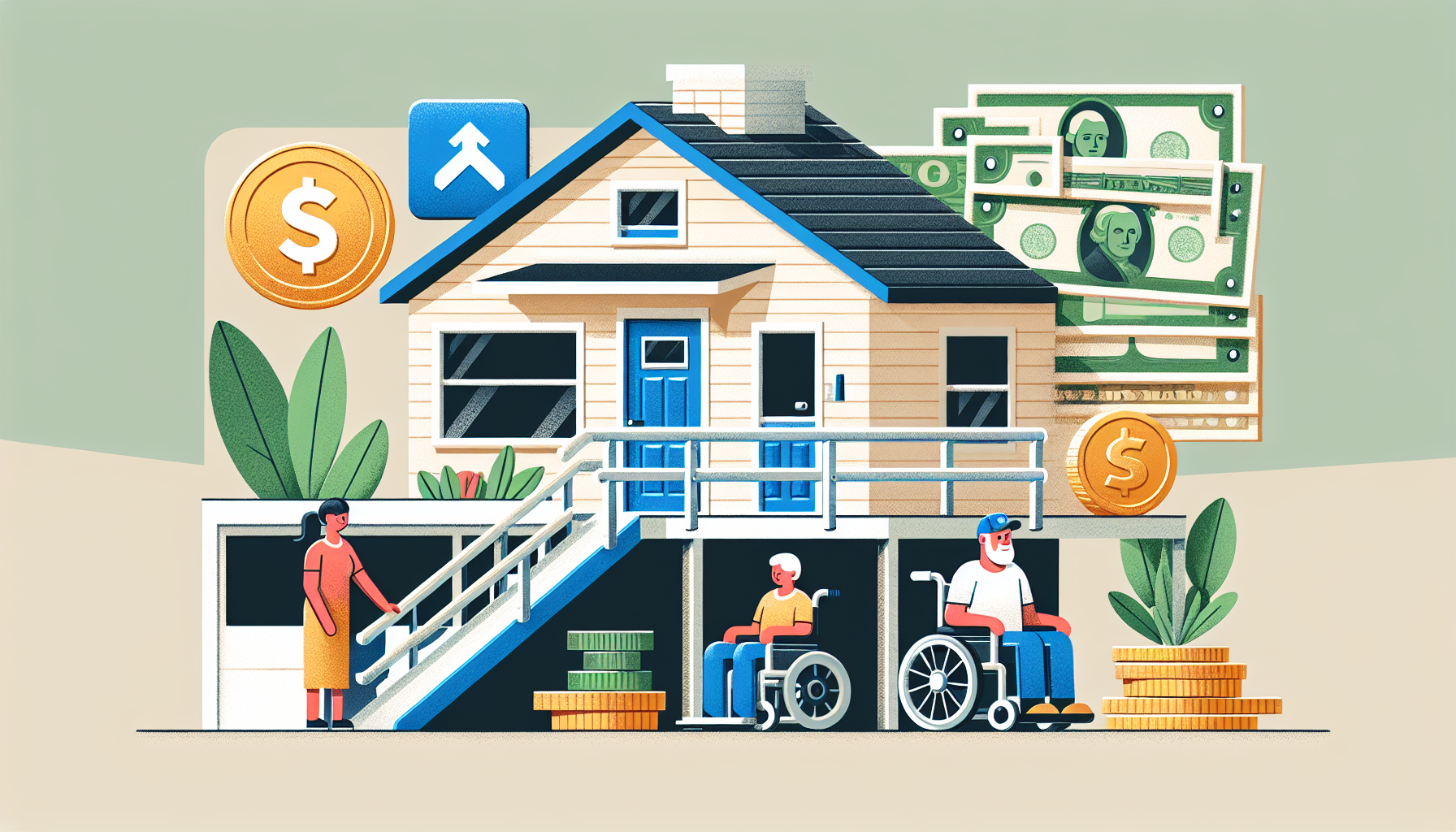
Moreover, this loan category can be utilized to refinance existing loans and make modifications or improvements to better accommodate the specific needs of disabled veterans, such as wheelchair ramps, widened doorways, and other accessibility features. By offering these benefits, the VA aims to create a secure and comfortable environment where veterans with disabilities can fully participate in their everyday activities, nurturing a sense of dignity and self-reliance.

Examples of Disability Home Loans

Specially Adapted Housing (SAH) Grant: A real-world example for Disability Home Loans is the Specially Adapted Housing (SAH) Grant. This grant is specifically designed for disabled veterans with severe service-connected disabilities. The grant helps them by providing financial assistance to purchase or modify a house and adapt it to their specific needs. For instance, a disabled veteran with a wheelchair might require wider doorways, ramps, and an accessible bathroom. The SAH grant provides funding to make these necessary modifications to ensure that the veteran has a suitable and comfortable living environment.

Specially Adapted Housing Assistive Technology (SAHAT) Grant: Another example of a Disability Home Loan is the Specially Adapted Housing Assistive Technology (SAHAT) Grant. This program aims to help veterans with service-connected disabilities to live more independently in a home that is fully adapted to their needs. The SAHAT grant provides funding for the development, testing, and implementation of the latest assistive technologies, making it possible for disabled veterans to control various electronic devices in their home with minimal physical effort. For instance, a veteran with limited mobility may use the grant to install smart home technology that allows them to control lights, heating, security, and other systems through voice commands or a smartphone app.

Home Loan Guaranty Program: The third example of a Disability Home Loan for veterans is the VA Home Loan Guaranty Program, which specifically helps disabled veterans buy or refinance a home. Eligible veterans can receive up to 100% financing for home purchases and refinances. With this loan program, veterans with service-connected disabilities can obtain a home loan at competitive interest rates, with no down payment or private mortgage insurance (PMI) required. Furthermore, disabled veterans are usually exempt from paying the VA funding fee which can be a significant savings in the home-buying process. The Home Loan Guaranty program enables disabled veterans to own or modify their dream home, meeting their unique needs and life circumstances.

FAQ: VA Disability Home Loans

1. What are VA Disability Home Loans?

VA Disability Home Loans are mortgage loans backed by the U.S. Department of Veterans Affairs (VA) that are specifically designed for eligible service members, veterans, and surviving spouses who are disabled due to service-related injuries or illnesses. These loans are designed to provide affordable and accessible homeownership options to those who have sacrificed for our country.

2. Who is eligible for VA Disability Home Loans?

Eligibility for VA Disability Home Loans is limited to service members, veterans, and surviving spouses who have a service-connected disability through the VA. The applicant must also meet other requirements such as obtaining a valid Certificate of Eligibility (COE), meeting income and credit requirements, and occupying the home as their primary residence.

3. What benefits do VA Disability Home Loans offer?

VA Disability Home Loans offer several benefits, including no down payment, competitive interest rates, no private mortgage insurance (PMI) requirement, flexible credit guidelines, and the ability to use the benefit more than once. Additionally, borrowers with at least a 10% service-connected disability rating have the VA Funding Fee waived, which can save thousands of dollars.

4. How can I apply for a VA Disability Home Loan?

To apply for a VA Disability Home Loan, you’ll need to obtain a Certificate of Eligibility (COE) through the VA’s eBenefits web portal or by mailing a complete VA Form 26-1880 to the VA’s Eligibility Center. Once you have your COE, you’ll need to choose a VA-approved lender to begin the loan application process. Your lender will guide you through the necessary paperwork, underwriting, and the closing process.

5. Can I refinance my current mortgage through a VA Disability Home Loan?

Yes, you can refinance your current mortgage using a VA Disability Home Loan with a VA Interest Rate Reduction Refinance Loan (IRRRL). The IRRRL allows you to refinance to a lower interest rate or a fixed-rate mortgage, potentially lowering your monthly payments. In addition, the process is generally simpler and requires less documentation than a traditional refinance.

6. How does the VA determine my disability rating?

The VA uses a specific rating schedule to determine your disability percentage, which is based on the severity of your service-connected disabilities. The VA evaluates medical evidence, such as doctors’ reports, treatment records, and exam results, to assign a disability rating. This rating impacts your eligibility for VA benefits, including Disability Home Loans.

Related VA Benefit Terms

  • Adaptive Housing Grants
  • Veterans Affairs Home Loan Guaranty
  • Interest Rate Reduction Refinance Loan (IRRRL)
  • Native American Direct Loan (NADL) Program
  • Home Loan Funding Fee waiver

Sources for More Information

Benefits.com Advisors

With expertise spanning local, state, and federal benefit programs, our team is dedicated to guiding individuals towards the perfect program tailored to their unique circumstances.

Rise to the top with Peak Benefits!

Join our Peak Benefits Newsletter for the latest news, resources, and offers on all things government benefits.

Related Articles

VA HISA Grant

VA SMC R1 Requirements

VASRD 2026 Updates

Disability Housing Grants

Definition

Disability Housing Grants refer to financial assistance provided by the U.S. Department of Veterans Affairs (VA) to eligible veterans and service members with disabilities. These grants aim to help recipients build, modify, or purchase adapted homes that accommodate their disabilities. The goal is to enhance the individuals’ mobility and overall quality of life within their living spaces.

Key Takeaways

  1. Disability Housing Grants are financial assistance provided by the Department of Veterans Affairs (VA) to disabled veterans or service members to help them purchase, build, or modify a home to accommodate their disabilities.
  2. There are three main types of VA disability housing grants: Specially Adapted Housing (SAH) Grant, Special Housing Adaptation (SHA) Grant, and Temporary Residence Adaptation (TRA) Grant. Each grant has specific eligibility requirements and maximum amounts that can be awarded.
  3. Applying for a VA Disability Housing Grant requires submitting an application through the VA, as well as providing documentation to prove eligibility, such as a disability rating, medical records, and evidence of ownership or proposed ownership of the property.

Importance

Disability Housing Grants are crucial for disabled veterans as they provide essential financial assistance towards modifying or purchasing homes that accommodate their specific needs.

These needs may include improved accessibility, mobility, and overall safety.

By offering these grants, the Department of Veterans Affairs is actively supporting the comfort and independence of disabled veterans, significantly improving their quality of life.

In turn, these grants acknowledge the sacrifices veterans have made and ensure they receive adequate support as they transition into post-service living situations.

Explanation

Disability Housing Grants are an essential component of the support system provided by the Department of Veterans Affairs (VA) to disabled veterans in the United States. The primary purpose of these grants is to remove financial barriers and assist disabled veterans in attaining a suitable and comfortable living environment that caters to their specific needs.

These grants address the challenges faced by veterans with disabilities, helping them to modify their homes or acquire new, accessible homes with adaptive features to improve their daily lives and promote self-sufficiency. The VA offers several types of Disability Housing Grants to cater to various disability levels and situations.

These include the Specially Adapted Housing (SAH) grant, the Special Housing Adaptation (SHA) grant, and the Temporary Residence Adaptation (TRA) grant. Each grant targets different aspects of housing, like home modifications, construction of a new home, or adapting a family member’s home for the disabled veteran’s needs.

By providing financial assistance, the VA ensures that the brave individuals who have served their country receive the adequate accessibility and independence they require in their homes, thereby enhancing their overall quality of life.

Examples of Disability Housing Grants

The VA Disability Housing Grants are designed to help eligible veterans and service members with disabilities to adapt, purchase, or modify their homes to accommodate their specific needs. Here are three real-world examples:

Specially Adapted Housing (SAH) Grant: A disabled veteran named John, who lost both of his legs in combat, uses the SAH grant to modify his existing home. Through the grant, John installs ramps, wider doorways, and a roll-in shower to accommodate his needs for a wheelchair-friendly living space, enabling him to live more comfortably and independently.

Special Housing Adaptation (SHA) Grant: Mary, a veteran diagnosed with severe burn injuries from her time in the service, is eligible for the SHA grant. With this grant, she modifies her home by installing a central air conditioning system, specialized windows and blinds to control light exposure, and other adaptations to help manage her condition and temperature sensitivity more effectively.

Temporary Residence Adaptation (TRA) Grant: Bill, a veteran with limited mobility due to a spinal cord injury sustained while on active duty, is currently staying with his brother while his own home is being constructed. Bill applies for a TRA grant to make temporary modifications to his brother’s home, including installing a ramp at the entrance and grab bars in the bathroom, allowing him to safely live in the temporary residence until his own accessible home is completed.

FAQ: Disability Housing Grants

What are Disability Housing Grants?

Disability Housing Grants are financial assistance programs offered by the Department of Veterans Affairs (VA) for eligible disabled veterans and service members. These grants aim to help in purchasing, building, or modifying homes to meet their specific disability needs, allowing them to live independently and comfortably.

Who is eligible for Disability Housing Grants?

Eligible applicants include veterans and service members who have sustained a service-connected disability, have received a disability rating from the VA, and meet specific disability requirements. Also, the eligibility criteria vary for different types of disability housing grants, such as the Specially Adapted Housing (SAH) grant, the Special Housing Adaptation (SHA) grant, and the Temporary Residence Adaptation (TRA) grant.

What is the difference between SAH, SHA, and TRA grants?

The SAH grant assists veterans in building, modifying, or purchasing an accessible home, meeting their specific needs. The SHA grant helps qualified veterans adapt their residential property or that of a family member with whom they reside. The TRA grant is a temporary financial aid for eligible veterans to modify a family member’s home they are temporarily residing in.

How do I apply for a Disability Housing Grant?

To apply for a Disability Housing Grant, you must fill out the VA Form 26-4555 (Veteran’s Application in Acquiring Specially Adapted Housing or Special Home Adaptation Grant) available online through the eBenefits portal, or submit a printed copy of the form to your nearest VA regional office. Ensure that you have all necessary documents, including a written statement from your doctor detailing how the grant will help you live more independently.

How much funding does the VA provide for Disability Housing Grants?

The amount of funding varies depending on the type of grant you’re applying for and the specific needs related to your disability. The VA updates the maximum grant amounts every fiscal year, so it’s essential to visit the VA website or contact your local VA office for the current grant amounts.

Can I use my grant funds for a home purchase?

Yes, grant funds from the SAH and SHA programs can be used towards the purchase cost of an adapted home. However, it’s best to consult the VA before proceeding with the home purchase, as there are specific requirements for using grant funds towards a home purchase.

Related VA Benefit Terms

  • Specially Adapted Housing (SAH) Grants
  • Special Housing Adaptation (SHA) Grants
  • Temporary Residence Assistance (TRA) Grants
  • Home Improvements and Structural Alterations (HISA) Grants
  • Native American Direct Loan (NADL) Program

Sources for More Information

Benefits.com Advisors

With expertise spanning local, state, and federal benefit programs, our team is dedicated to guiding individuals towards the perfect program tailored to their unique circumstances.

Rise to the top with Peak Benefits!

Join our Peak Benefits Newsletter for the latest news, resources, and offers on all things government benefits.

Related Articles

VA HISA Grant

VA SMC R1 Requirements

VASRD 2026 Updates

Disability Insurance

Definition

Disability insurance, in the context of VA benefits, refers to financial support provided to veterans who have sustained a service-connected disability or illness. It aims to compensate for the reduced earning capacity as a direct result of that disability. The amount received depends on the severity of the disability, with a disability rating assigned by the Department of Veterans Affairs determining the specific compensation level.

Key Takeaways

  1. Disability Insurance provides monthly financial assistance to eligible veterans with a service-connected disability as compensation for the loss of civilian earning capacity due to the injury or illness sustained during their military service.
  2. The amount of compensation depends on the severity of the veteran’s disability, which is determined by a rating percentage assigned by the VA. Additional allowances may be provided if the veteran has dependents or if the disability is severe enough to require special assistance or adaptive equipment.
  3. Applying for VA Disability Insurance requires completing and submitting the Veterans Application for Compensation and/or Pension (VA Form 21-526EZ) along with supporting documentation, such as service and treatment records. The process may take several months, depending on the complexity of the claim and the backlog at the VA regional office handling the claim.

Importance

Disability Insurance is an important term within VA benefits, as it relates to a crucial financial support system specifically designed to assist veterans who have sustained disabilities, injuries, or illnesses during their military service.

This insurance helps to protect the income and overall financial security of veterans, ensuring they receive financial assistance when facing difficulties in maintaining employment or performing daily activities, thereby preserving their quality of life.

By compensating veterans for the loss of their earning potential and alleviating the financial burden that often accompanies disabilities, the VA Disability Insurance system plays a significant role in honoring their service and fostering their reintegration into civilian life.

Explanation

Disability Insurance, as a part of VA benefits, serves the purpose of providing vital financial assistance to veterans who have sustained injuries or illnesses that were either obtained or aggravated during their active military service. The objective of this insurance is to ensure compensation to those veterans for the reduction of their earning capacity due to a service-connected disability.

This benefit aims to assist veterans in coping with the financial challenges that come along with such disabilities, while also acknowledging their sacrifices and devotion in serving the country. Not only does Disability Insurance provide monthly compensation, but it also offers other support measures specific to the needs and requirements of disabled veterans.

These may include vocational rehabilitation, healthcare services, and access to specialized medical care facilities. Moreover, the compensation amount is determined by the individual’s disability rating, which reflects the severity of the disability and its impact on the veteran’s ability to lead a normal life.

Overall, Disability Insurance plays a crucial role in ensuring that veterans receive the necessary financial and medical aid to help them transition to civilian life and maintain a decent quality of life despite their service-related disabilities.

Examples of Disability Insurance

The VA Disability Insurance, also known as VA Disability Compensation, is a tax-free benefit provided to veterans with disabilities that were incurred or aggravated during their military service. Here are three real-world examples of how VA Disability Insurance can help veterans:

Post-Traumatic Stress Disorder (PTSD): A veteran who served in a combat zone and developed PTSD as a result of their military service can apply for VA Disability Insurance. If the veteran is found eligible and their PTSD is service-connected, they may receive monthly compensation to help offset the financial impact of their disability.

Hearing Loss: A veteran who experienced hearing loss during their military service may qualify for VA Disability Insurance. If their hearing loss is determined to be service-connected, the veteran may receive a monthly benefit that takes into account the severity of their hearing impairment and helps to alleviate the financial strain from their disability.

Traumatic Brain Injury (TBI): Veterans who have sustained a TBI while in the military can apply for VA Disability Insurance. If their TBI is service-connected, they may receive a monthly compensation to provide financial support for their ongoing treatment and care, and help address the long-term effects of living with a traumatic brain injury.These examples demonstrate how VA Disability Insurance can assist veterans in managing the financial burden of service-related disabilities and help improve their overall quality of life.

FAQ: VA Disability Insurance Benefits

What is VA Disability Insurance?

VA Disability Insurance is a tax-free, monthly benefit provided to veterans who have a service-connected disability or illness. The benefit is meant to compensate veterans for the reduction in earning capacity and provide financial support.

How do I apply for VA Disability Insurance benefits?

You can apply for VA Disability Insurance benefits online through the eBenefits portal, by mail, or in person at a VA regional office. You will need to fill out the appropriate forms and submit any necessary documentation to support your claim.

What factors determine my VA Disability rating?

The VA assigns disability ratings based on the severity of your service-connected conditions, represented as a percentage. Factors considered include medical evidence, service records, and personal statements. The higher the rating, the greater the benefits you may be eligible to receive.

Can I receive VA Disability Insurance if I am still employed?

Yes, you can receive VA Disability Insurance benefits even if you are employed. The benefits are designed to compensate for reduced earning capacity due to service-connected disabilities and are not impacted by your current employment status.

Can my family members also receive benefits?

In certain cases, dependents of disabled veterans may be eligible to receive benefits, such as education support, health care, and other financial assistance. Eligibility for dependents’ benefits is determined by the veteran’s disability rating and the dependent’s relationship to the veteran.

How long does it take to process a VA Disability Insurance claim?

The processing time for VA Disability Insurance claims can vary widely depending on the complexity of your case and the workload at the VA regional office handling your claim. It may take several months or longer for a decision to be made on your claim.

Can I appeal a decision if I disagree with my VA Disability rating?

Yes, if you disagree with your VA Disability rating, you have the right to appeal the decision within one year of the date on the decision letter. You can submit new evidence, request a hearing, or have your case reviewed by a senior official in the appeals process.

Related VA Benefit Terms

  • Service-connected disability
  • Disability compensation
  • Veterans Affairs Schedule for Rating Disabilities (VASRD)
  • Compensation and Pension exams (C&P exams)
  • Individual Unemployability (IU)

Sources for More Information

Benefits.com Advisors

With expertise spanning local, state, and federal benefit programs, our team is dedicated to guiding individuals towards the perfect program tailored to their unique circumstances.

Rise to the top with Peak Benefits!

Join our Peak Benefits Newsletter for the latest news, resources, and offers on all things government benefits.

Related Articles

VA HISA Grant

VA SMC R1 Requirements

VASRD 2026 Updates

x