







We are privately owned and not affiliated or endorsed by any government agency.

Take the Benefits Quiz

Amphibious Operation (PHIBOP)

Definition

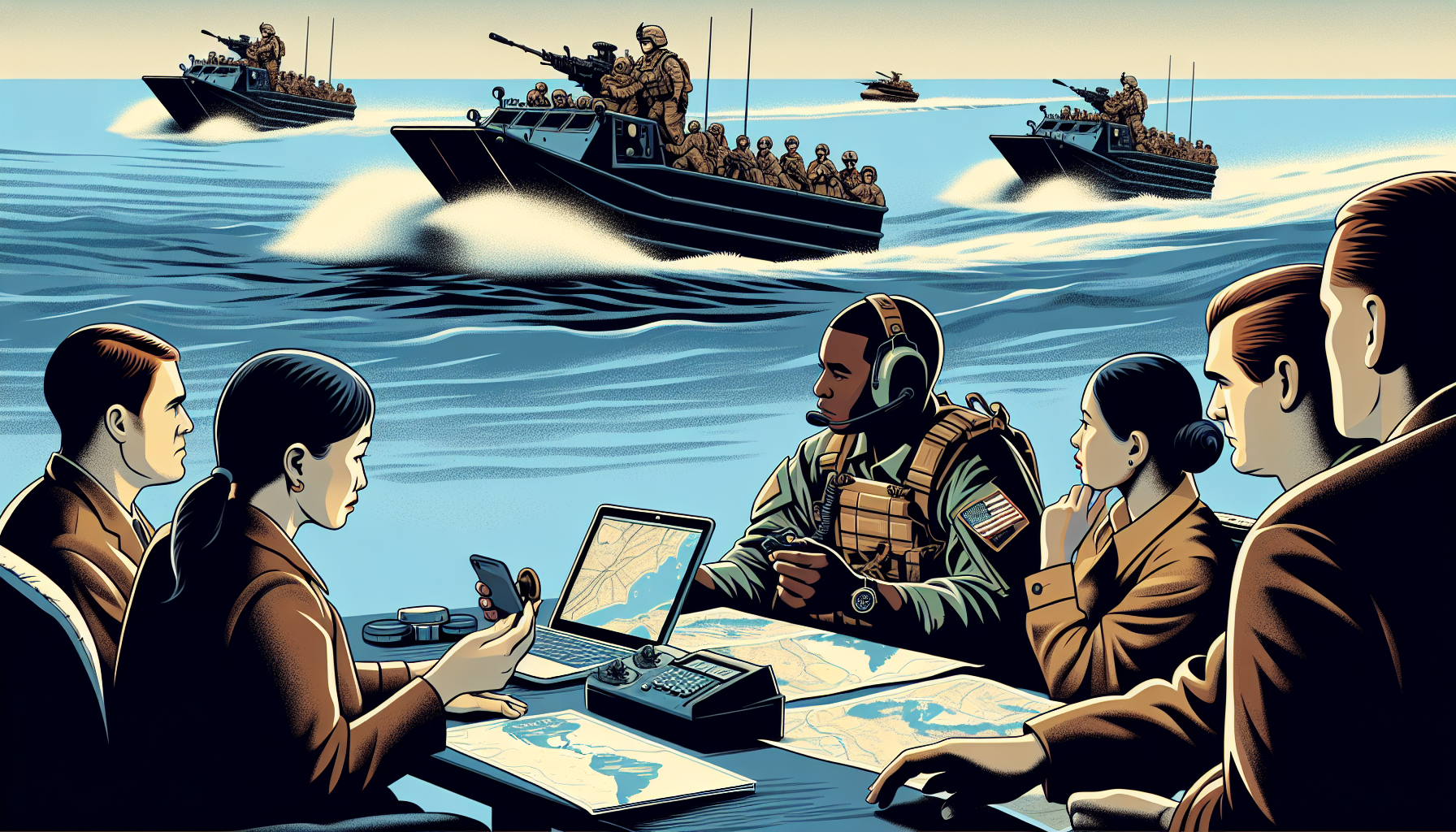
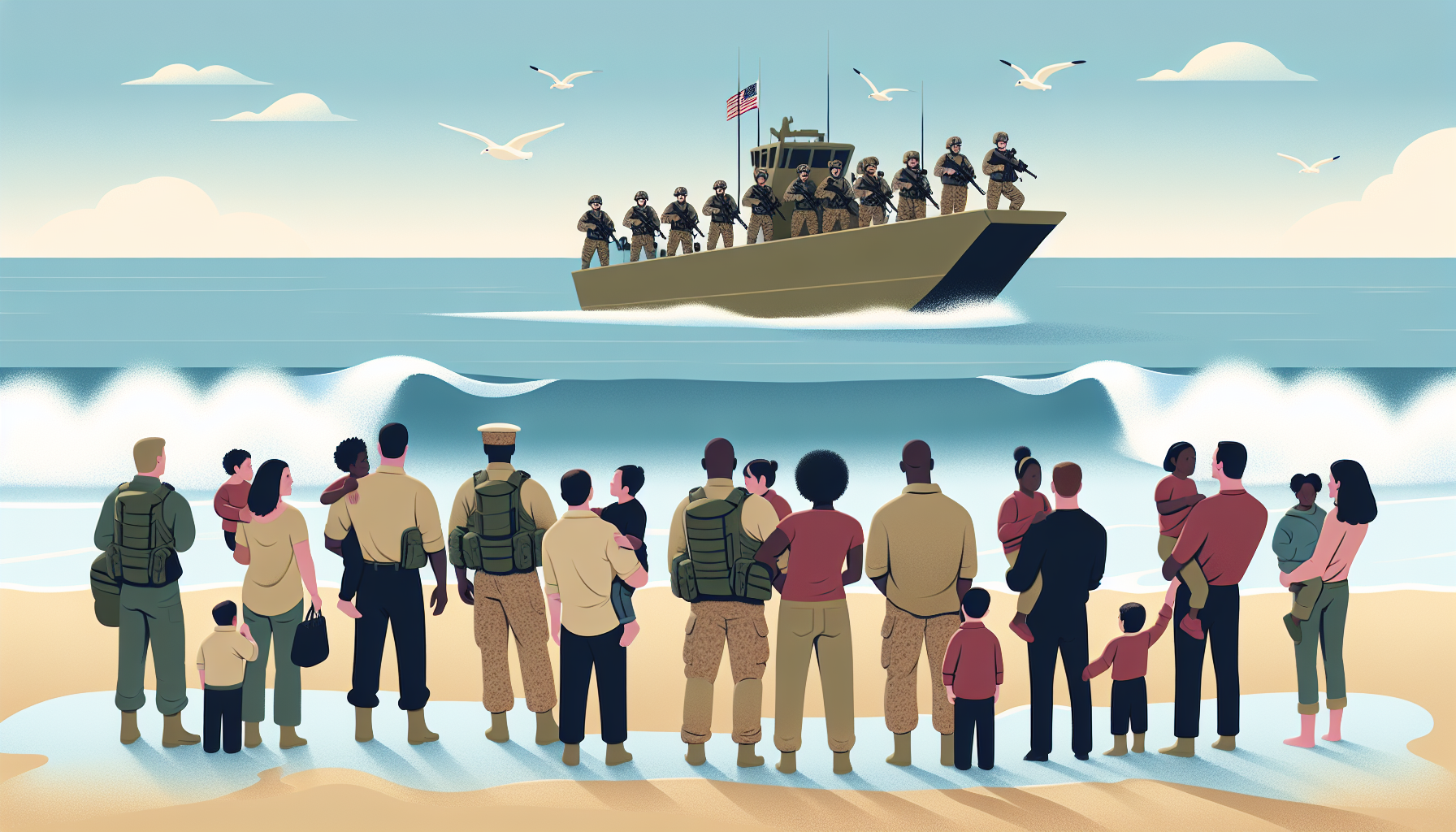
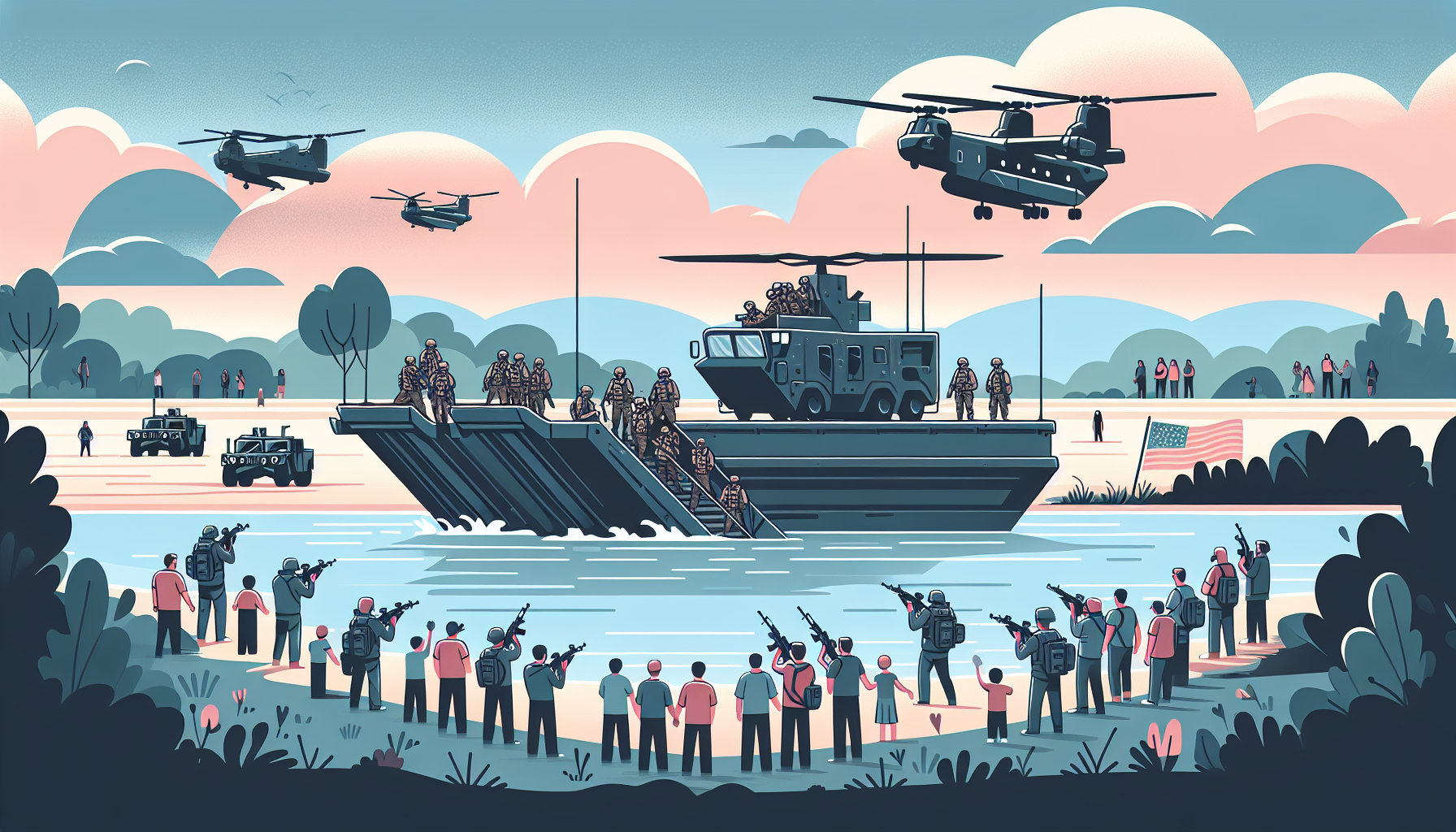
An Amphibious Operation (PHIBOP) refers to a military operation in which forces, primarily naval and ground, coordinate to project power and establish a presence on a hostile or potential enemy shoreline. It typically involves a combination of land, sea, and air power to transport troops and equipment from ships to a landing zone on the shore. The primary goal of a PHIBOP is to secure a strategic location or to establish a base for further military actions.

Key Takeaways

  1. An amphibious operation (PHIBOP) refers to the use of naval and land forces to conduct extensive military actions such as assaults and withdrawals on coastal areas.
  2. These operations typically involve the execution of multiple coordinated activities, including planning, ship-to-shore movement, and combat support, to ensure successful troop deployment and engagements on the shoreline.
  3. Amphibious operations require extensive communication and collaboration between air, naval, and ground forces to seamlessly perform tasks in a complex and often contested environment.

Importance

The term “Amphibious Operation,” often shortened to PHIBOP, is important because it refers to a critical military strategy that involves coordinated actions between naval and land forces to project power across hostile coastlines.

These operations are essential in modern warfare as they provide the ability to deploy, support, and sustain forces quickly and effectively in various conflict scenarios.

The success of an amphibious operation often depends upon careful planning, coordination, and execution, which can be challenging due to factors such as weather, terrain, and opposing forces.

Historically, PHIBOPs have played a significant role in key battles such as D-Day during World War II and are still crucial today in maintaining global security and the ability to respond to threats from land, sea, or air.

Explanation

Amphibious operations (PHIBOP) serve a strategic purpose by allowing military forces to effectively project power and establish a presence in areas of conflict or contested territories. These operations involve the coordinated deployment of naval and ground components, which work in unison to penetrate enemy defenses, capture key objectives, and secure a favorable position for further action. PHIBOPs provide a versatile and flexible means for countries to address a broad range of threats, such as conventional enemies, counter-insurgency efforts, disaster relief, or humanitarian missions.

By harnessing the mobility of naval assets and the combat power of ground forces, amphibious operations can rapidly respond to diverse situations and adapt to the dynamic nature of modern warfare. One of the critical aspects of a successful PHIBOP is the careful integration of the various forces involved. To this end, the planning and execution of amphibious operations require a high degree of coordination between the different service branches, as well as the establishment of efficient command and control structures.

The ability to seamlessly integrate marine, land, air, and even special operations forces allow the military to exploit the enemy’s vulnerabilities, capitalize on the element of surprise, and ensure the success of the mission. Furthermore, the joint nature of PHIBOPs not only fosters inter-service collaboration but also enhances interoperability – a vital factor in the complex security environment of the 21st century. Overall, amphibious operations remain a powerful tool in a nation’s military arsenal, providing a unique combination of tactical and strategic capabilities across a wide spectrum of scenarios.

Examples of Amphibious Operation (PHIBOP)

Operation Overlord (D-Day, 1944): One of the most notable amphibious operations in history is D-Day, during World War II. On June 6, 1944, the Allied forces launched Operation Overlord, a massive amphibious assault on the shores of Normandy, France. This operation involved over 150,000 troops from the United States, United Kingdom, and Canada, as well as numerous ships and aircraft. The successful invasion marked the beginning of the liberation of Nazi-occupied Europe and played a crucial role in the eventual defeat of the Axis powers.

Battle of Inchon (Korean War, 1950): This amphibious operation took place from September 10-19, 1950, during the Korean War. Under the leadership of General Douglas MacArthur, the U.S. and allied forces launched a surprise amphibious assault on the city of Inchon, located along the western coast of the Korean Peninsula. The operation, known as the Inchon Landing, involved more than 75,000 troops and 260 naval vessels. It resulted in a decisive victory for the United Nations, allowing them to take control over the strategically important city and ultimately turn the tide of the war in their favor.

The Falklands War (1982): The British Armed Forces conducted an amphibious operation to retake the Falkland Islands after Argentina invaded and occupied the territory in April

The British task force, which included 127 ships and thousands of personnel, conducted a series of amphibious landings on the East Falkland and West Falkland islands. Starting with the successful Operation Sutton, which saw 4,000 British troops land at San Carlos Water, the British forces were able to retake key positions, ultimately leading to the Argentine surrender in June

The operation demonstrated the continued importance of amphibious capabilities in modern warfare.

FAQs for Amphibious Operation (PHIBOP)

1. What is an Amphibious Operation (PHIBOP)?

An Amphibious Operation (PHIBOP) is a military operation where forces with the capability to operate on both land and sea are deployed to a littoral region in support of a strategic mission. This can include actions such as a beach assault, naval blockade, coastal raids, and humanitarian assistance efforts.

2. What are the main components of a successful PHIBOP?

A successful PHIBOP consists of four main components: planning, preparation, execution, and sustainment. In addition to these components, seamless interoperability between the land, sea, and air components of the military force is crucial for the successful execution of an amphibious operation.

3. How are amphibious operations conducted?

Amphibious operations are conducted through the coordination of naval, air, and ground assets. Forces are deployed from naval assets such as amphibious assault ships, transport ships, and hovercrafts. Air assets, including helicopter and fixed-wing aircraft, provide air support and surveillance during the operation. Ground forces, consisting of infantry and armored units, form the core of the land-based operation, often supported by maritime and air assets.

4. What types of military units are involved in a PHIBOP?

A variety of military units are involved in a PHIBOP, including special forces, infantry, armor, artillery, air assets, support personnel, and naval forces. The specific composition of the assault force depends on the scope and objectives of the specific mission.

5. What is the role of cooperation between different military branches in a PHIBOP?

Cooperation and coordination between different military branches are crucial for the successful execution of a PHIBOP. Joint training exercises and the use of standardized procedures ensure that all branches involved can communicate effectively and work towards a common goal.

6. What challenges does a PHIBOP typically face?

A PHIBOP typically faces challenges such as unpredictable weather and sea conditions, difficult terrain, coordination between different military units, and enemy defenses such as mines, missile systems, and shore-based artillery. The planning and preparation phase of the operation is essential for overcoming these challenges and ensuring mission success.

Related Military Operation Terms

  • Assault Landing
  • Beachhead Establishment
  • Marine Expeditionary Unit (MEU)
  • Ship-to-Shore Movement
  • Joint Logistics Over-The-Shore (JLOTS)

Sources for More Information

Benefits.com Advisors

With expertise spanning local, state, and federal benefit programs, our team is dedicated to guiding individuals towards the perfect program tailored to their unique circumstances.

Rise to the top with Peak Benefits!

Join our Peak Benefits Newsletter for the latest news, resources, and offers on all things government benefits.


Related Articles

VASRD 2026 Updates

Social Security Back Pay

SSDI Approval Rate by Age

SSDI Pay Chart 2026

VA Survivor Benefits

Amphibious Raid

Definition

An amphibious raid is a military operation where forces swiftly attack a target, often coastal or near a water body, using a combination of Naval, Air, and Ground units. The objective is to rapidly achieve a specific goal, like gathering intelligence or destroying enemy assets, and then quickly withdraw. It is characterized by its surprise element, swift execution, and limited scope, thus minimizing the risk to attackers and maximizing operational efficiency.

Key Takeaways

  1. An amphibious raid is a specialized military operation which involves the deployment of troops from waterborne platforms onto hostile or potentially hostile shores, primarily for swift and targeted attack or reconnaissance missions.
  2. These raids require a high level of coordination and planning to ensure the seamless execution of the naval, air, and land components, thus allowing for maximum surprise and minimizing the risk of failure or opposition from the enemy forces.
  3. Amphibious raids are often conducted by highly trained forces such as Marines or Special Operations teams due to the complex nature of the operations and the need for precision and adaptability in challenging environments.

Importance

The term “Amphibious Raid” holds significant importance in military operations as it refers to a swift and well-coordinated attack launched from the sea, targeting specific objectives on or near the shore.

This type of maneuver requires extensive planning, effective communication, and seamless coordination among various military units, including naval, air, and ground forces.

The primary aim of these raids is to achieve tactical surprise, cause disruption to the enemy’s assets or infrastructure, gather intelligence, or prepare the ground for larger amphibious operations.

The success of an amphibious raid hinges on the element of surprise, speed, and precision, making it a vital and effective strategy in modern warfare.

Explanation

An amphibious raid is a critical military operation designed to create a strategic advantage for the attacking forces while causing confusion and disruption among the enemy ranks. The primary purpose of this operation is to carry out swift, surprise attacks on specific military or strategic targets located in the enemy’s coastal or littoral regions. The main objectives of these raids include intelligence gathering, destruction of enemy installations, capturing high-value targets, and creating a diversion for a larger-scale operation.

The success of these raids often lies in their ability to achieve their objectives swiftly before the enemy can launch a counterattack, enabling the attacking forces to withdraw to their naval vessels, leaving minimal footprints for the defenders to trace. Conducting an amphibious raid requires detailed planning, coordination, and specialized training among the different branches of the military, including naval, air, and ground forces. Ideally, these forces must conduct joint reconnaissance and obtain real-time intelligence on enemy positions, movement, and capabilities.

To increase the chances of success, raids are typically carried out under the cover of darkness or in challenging weather conditions, which impair the enemy’s ability to detect or predict the impending attack. These carefully orchestrated operations are conducted utilizing specialized landing crafts, amphibious assault vehicles, and well-trained units capable of operating effectively in both marine and land environments. In conclusion, amphibious raids are a valuable tactical instrument in modern warfare that enable militaries to project force, create chaos among the enemies, and ultimately dominate strategic areas of interest, giving them the upper hand in the conflict.

Examples of Amphibious Raid

Operation Claymore (1941): During World War II, British Commandos conducted Operation Claymore, an amphibious raid aimed at German military installations in the Lofoten Islands, off the northern coast of Norway. The raid resulted in the destruction of several factories, the seizure of strategic intelligence documents, and the capture of numerous prisoners of war. It also had a significant impact on the morale of both the German and British military forces.

Makin Island Raid (1942): In August of 1942, US Marine Corps Raiders carried out an amphibious raid on the Japanese-held Makin Island in the Pacific. The mission’s main objectives were to destroy enemy installations, gather intelligence, and divert Japanese forces away from the main Allied offensive at Guadalcanal. Though the raid had limited strategic success, it proved valuable for testing the effectiveness of amphibious raids and honing tactics for future operations.

Operation Chariot (1942): Also known as the St. Nazaire Raid, Operation Chariot was an amphibious attack by British Commandos on the heavily defended Normandie dry dock in the German-occupied French port of St. Nazaire. The objective was to destroy the dock, rendering it unusable for large German battleships and disrupting the Atlantic coastal defenses. Despite suffering heavy casualties, the raid was successful in destroying the dock and British forces managed to extract vital intelligence information from the damaged facility.

“`html

FAQ: Amphibious Raid

What is an amphibious raid?

An amphibious raid is a specialized military operation conducted by naval infantry, using naval ships to attack a target from the sea. It typically involves the rapid insertion of a small force, usually to seize or destroy a specific objective, followed by a swift withdrawal. The main purpose of an amphibious raid is to surprise the enemy and achieve the desired objective with minimal force and little to no collateral damage.

What are the key elements of an amphibious raid?

Key elements of an amphibious raid include: planning, intelligence gathering, rehearsals, insertion (landing of troops), execution (accomplishing the objective), extraction (withdrawal of troops), and debriefing. A successful amphibious raid relies on speed, surprise, and a well-coordinated plan.

How do amphibious raids differ from other types of military operations?

Amphibious raids are unique in that they involve both naval and ground forces working together to achieve a specific objective. Unlike larger-scale amphibious assaults, raids are characterized by a smaller force, a limited objective, and a rapid withdrawal. This reduces the risk of sustained combat and potential casualties, making it an attractive option for certain military operations.

What are some historical examples of amphibious raids?

Some famous historical examples of amphibious raids include the British Royal Marine’s raid on the French port of St. Nazaire during World War II (also known as the “Greatest Raid of All”), the U.S. Navy SEALs raid on Osama bin Laden’s compound in Pakistan, and the Israeli naval commando raid in Lebanon during the 1982 Lebanon War.

What types of equipment and vehicles are used during amphibious raids?

Equipment and vehicles used during amphibious raids can vary depending on the specific operation and the forces involved. Commonly used equipment includes small boats, landing craft, amphibious assault vehicles, helicopters, and sometimes even submarines for stealth insertion. Additionally, troops may use specialized gear such as inflatable boats, scuba diving equipment, or underwater propulsion devices.

“`

Related Military Operation Terms

  • Marine Corps Operations
  • Joint Military Forces
  • Naval Beachhead
  • Coastal Assault
  • Expeditionary Warfare

Sources for More Information

Benefits.com Advisors

With expertise spanning local, state, and federal benefit programs, our team is dedicated to guiding individuals towards the perfect program tailored to their unique circumstances.

Rise to the top with Peak Benefits!

Join our Peak Benefits Newsletter for the latest news, resources, and offers on all things government benefits.

Related Articles

VASRD 2026 Updates

Social Security Back Pay

SSDI Approval Rate by Age

SSDI Pay Chart 2026

VA Survivor Benefits

Amphibious Squadron (PHIBRON)

Definition

An Amphibious Squadron (PHIBRON) is a naval unit within the United States Navy that specializes in amphibious warfare. It primarily consists of a combination of amphibious assault ships, dock landing ships, and transport dock ships. The primary role of a PHIBRON is to plan and coordinate amphibious operations, including troop transport and landing, in support of joint military campaigns or humanitarian assistance.

Key Takeaways

  1. An Amphibious Squadron (PHIBRON) is a unit of the United States Navy responsible for the command and control of an amphibious warfare group.
  2. PHIBRONs typically consist of various types of naval vessels, including amphibious assault ships, landing dock ships, and landing platform docks, which work together to conduct amphibious operations and deploy troops to the shore.
  3. Amphibious Squadrons play a crucial role in the Navy’s mission by enabling the rapid transport and deployment of military forces, ensuring power projection, and providing support for various types of military operations, such as humanitarian assistance and disaster relief efforts.

Importance

The military term Amphibious Squadron (PHIBRON) is important because it signifies a crucial unit within naval forces that is responsible for executing seamless, coordinated operations both in water and on land.

This capability makes PHIBRON uniquely versatile and vital for various national defense missions and strategic objectives.

Such a squadron typically comprises of multiple naval ships and Marine Corps units, working together as a cohesive task force.

They conduct extensive training to ensure professional efficiency during amphibious assaults, humanitarian assistance, disaster relief, and other joint operations.

Consequently, the significance of an Amphibious Squadron lies in its ability to combine naval and ground forces, enabling nations to respond rapidly to various threats and maintain a strong military presence in diverse operational environments.

Explanation

The primary purpose of an Amphibious Squadron (PHIBRON) is to provide the necessary command and control structure for planning, executing, and supporting a range of amphibious operations within a designated area. PHIBRONs play a crucial role in maintaining the operational readiness of U.S. naval forces while enhancing their capability to project power ashore.

For instance, a PHIBRON might be tasked with coordinating the deployment and integration of naval forces in support of a joint operation, such as providing humanitarian assistance and disaster relief. Additionally, PHIBRONs serve as vital components in the overall Marine Air-Ground Task Force structure, which enables the U.S. Marine Corps to fight and win on land, air, and sea.

To accomplish their missions effectively, PHIBRONs are composed of a mix of specialized assets including amphibious assault ships, amphibious transport docks, and landing ship docks. These versatile units facilitate the transport of troops, vehicles, and equipment to and from the shoreline, ensuring seamless transition between naval and land-based operations. Furthermore, PHIBRONs employ a variety of air and surface craft including helicopters, landing craft air cushions (LCACs), and landing craft utility (LCUs) to execute swift and efficient insertion and extraction of forces.

As part of a larger Naval Expeditionary Force, PHIBRONs reinforce the U.S. Navy’s capacity to maintain freedom of navigation and deter potential adversaries across the globe.

Examples of Amphibious Squadron (PHIBRON)

Operation Overlord (D-Day, 1944): One of the most well-known amphibious military operations in history, Operation Overlord, also known as D-Day, took place in June 1944 during World War II. The Allied forces, including the US, UK, and Canadian military, launched a massive amphibious assault on the shores of Normandy, France, involving several PHIBRONs to transport and land troops and equipment. This operation ultimately resulted in the successful establishment of a beachhead and the eventual liberation of Western Europe from Nazi Germany.

Battle of Inchon (Korean War, 1950): The Battle of Inchon was a crucial amphibious operation during the Korean War, led by the United States and United Nations forces against the Communist North Korean forces in September

Under the command of General Douglas MacArthur, an amphibious assault was launched against the strategically important city of Inchon, involving multiple PHIBRONs to ferry troops ashore. The operation was a decisive success and allowed UN forces to retake Seoul and turn the tide of the war in their favor.

Operation Enduring Freedom – Philippines (2002): As part of the global war on terror, a less-known amphibious operation occurred in February 2002, when the US Navy and Marine Corps Task Force 58 carried out a mission in the Philippines. Named Operation Enduring Freedom – Philippines, the amphibious operation involved PHIBRONs working alongside US Army and Philippine forces to combat terrorist activity from the Abu Sayyaf militant group in the region. Through this mission, the joint amphibious force successfully established a strong presence, conducting counterterrorism operations and providing training to the Philippine military.

Amphibious Squadron (PHIBRON) FAQ

What is an Amphibious Squadron (PHIBRON)?

An Amphibious Squadron (PHIBRON) is a strategic naval task force that specializes in amphibious warfare, which includes employing the necessary assault, landing, and support forces for a variety of naval operations. These operations may include humanitarian assistance, disaster relief, and combat missions.

What is the main mission of a PHIBRON?

The primary mission of a PHIBRON is to conduct amphibious operations and provide command and control for the embarked forces. These operations may involve the transportation, deployment, and support of Marine Expeditionary Units (MEUs) or other units to coastal regions to achieve specific military objectives.

What types of ships make up a PHIBRON?

A PHIBRON typically consists of several types of amphibious ships, including amphibious assault ships (LHD or LHA), amphibious transport docks (LPD), dock landing ships (LSD), and supporting vessels such as logistics ships and guided-missile cruisers (CG) or destroyers (DDG).

What role does an Amphibious Squadron play in joint military operations?

In joint military operations, a PHIBRON serves as a vital component of a larger task force by providing a versatile and strategically mobile force capable of rapidly responding to a wide range of military and humanitarian missions. These include amphibious landings, personnel evacuations, humanitarian assistance, and disaster relief operations.

How does a PHIBRON integrate with Marine Expeditionary Units (MEUs)?

A PHIBRON works closely with a Marine Expeditionary Unit (MEU) to form an Amphibious Ready Group (ARG). The ARG integrates the capabilities of the Navy and Marine Corps to create a highly effective, combined naval force capable of executing various missions. This partnership provides the necessary support for embarked Marines, including transportation, logistical support, and medical services.

Related Military Operation Terms

  • Navy Expeditionary Strike Group (ESG)
  • Marine Corps Amphibious Operations
  • Landing Craft Air Cushion (LCAC)
  • Amphibious Assault Ships (LHD/LHA)
  • Amphibious Transport Dock (LPD)

Sources for More Information

Benefits.com Advisors

With expertise spanning local, state, and federal benefit programs, our team is dedicated to guiding individuals towards the perfect program tailored to their unique circumstances.

Rise to the top with Peak Benefits!

Join our Peak Benefits Newsletter for the latest news, resources, and offers on all things government benefits.

Related Articles

VASRD 2026 Updates

Social Security Back Pay

SSDI Approval Rate by Age

SSDI Pay Chart 2026

VA Survivor Benefits

Amphibious Task Force (ATF)

Definition

An Amphibious Task Force (ATF) is a temporary military organization consisting of various units from the navy, marine corps, and other supporting elements, specifically assembled to conduct amphibious operations. These operations involve the coordination of land, sea, and air forces to enable troops to launch an assault from naval vessels onto a hostile or potentially hostile shore. The primary purpose of an ATF is to ensure effective planning, preparation, and execution of amphibious operations through a combined and balanced force.

Key Takeaways

  1. An Amphibious Task Force (ATF) is a specific type of military unit that is designed to conduct large-scale amphibious assaults and landings, combining both naval and ground forces in a coordinated operation.
  2. ATFs are crucial during operations where the objective involves securing strategic locations, such as islands or coastal territories, and during disaster relief missions where access to the affected area is limited by water.
  3. The composition of an ATF includes various specialized units such as assault ships, landing crafts, helicopters, and ground combat elements, all working together under a unified command structure to ensure the efficient execution of the amphibious mission.

Importance

The military operations term Amphibious Task Force (ATF) is important because it represents a significant strategic capability that allows armed forces to conduct integrated combat and support operations from both sea and land.

An ATF consists of a coordinated group of vessels, ground forces, and air assets specifically designed to project power in littoral environments, enabling the establishment of beachheads and support for follow-on land campaigns.

By incorporating elements from various branches of the military, the ATF ensures flexibility and adaptability during high-intensity conflicts, humanitarian assistance missions, and peacekeeping efforts.

This combined and versatile approach enhances the overall operational effectiveness of modern military forces, allowing them to respond to a wide range of threats and scenarios around the world.

Explanation

The Amphibious Task Force (ATF) is a strategically vital military asset designed to project power and maintain a versatile range of capabilities to handle the uncertainties and complexities of modern conflict environments. Primarily, the ATF serves the purpose of enabling rapid deployment of military forces either in response to crises or as part of a planned operation. The amphibious nature of the task force allows forces to traverse both sea and land, ensuring swift and flexible responsiveness in various scenarios.

These operations could include humanitarian aid, peacekeeping, or full-scale combat engagements. By combining naval, air, and ground element units from various military branches, the ATF is a cohesive and robust entity capable of tackling a broad spectrum of missions. Apart from the prompt reaction and flexibility, the ATF is equipped to accomplish operational objectives without the need for conventional land bases.

This unique ability allows for military forces to operate discretely and minimizes the necessity for large-scale territorial occupation, thus reducing the risks of conflict escalation or entanglement with hostile forces. The task force is characterized by strong coordination and interoperability between its integrated components, facilitating optimal joint operational potential and maximizing its capacity for swift and effective military intervention. As geopolitical tensions continue to shift across the globe, the Amphibious Task Force remains an essential instrument in ensuring coastal area security, power projection, and the safeguarding of national interests.

Examples of Amphibious Task Force (ATF)

Operation Overlord (D-Day Landings) – June 6, 1944: One of the most famous examples of an Amphibious Task Force in action was during World War II, when the Allied forces launched Operation Overlord. This operation involved the landing of thousands of troops and supplies on the beaches of Normandy, France. The ATF for this operation comprised multiple naval vessels, units from the United States, United Kingdom, and Canada, and support from air and ground forces to establish a foothold and push the German forces back.

Battle of Inchon (Korean War) – September 15, 1950: During the Korean War, the United Nations Command launched an amphibious invasion at Inchon, a port city in South Korea, to turn the tide of the conflict. The ATF for this operation was led by US General Douglas MacArthur and was composed of 75,000 troops and 261 naval vessels. The successful landing resulted in the recapture of Seoul and a significant shift in momentum in favor of the United Nations forces.

Falklands War (Operation Sutton) – April-June 1982: The Falklands War was a conflict between Argentina and the United Kingdom over the Falkland Islands, South Georgia, and South Sandwich Islands. The UK launched an Amphibious Task Force, known as Operation Sutton, to retake the islands. The ATF consisted of a naval task force, including aircraft carriers, destroyers, and frigates, as well as Royal Marines and the British Army, who conducted amphibious landings on the islands. The operation was successful, ultimately leading to Argentina’s surrender and the end of the war.

Amphibious Task Force (ATF) FAQ

What is an Amphibious Task Force (ATF)?

An Amphibious Task Force (ATF) is a temporary organization of marine and naval forces, which prepares, conducts and supports amphibious operations. It is responsible for providing landing forces, support, and transportation to conduct missions in littorals or coastal regions.

What are the primary components of an ATF?

An ATF typically consists of three main components: a command element, an amphibious shipping group, and a landing force. The command element is responsible for planning and executing the operation, while the amphibious shipping group provides transport and logistical support. The landing force is made up of ground, aviation, and logistics units that will carry out the mission ashore.

How are ATFs formed?

ATFs are formed based on the mission requirements and the specific assets needed to achieve the mission objectives. They can be scaled up or down in size and capability depending on the nature of the operation. Assets from various naval and marine units are assigned to the ATF for the duration of the operation and will return to their parent units upon mission completion.

What are some common missions for an ATF?

ATFs can be tasked to conduct a variety of missions, including amphibious assaults, humanitarian assistance and disaster relief, non-combatant evacuation operations, military exercises, and maritime security operations. The specific mission dictates the size and composition of the task force, as well as the types of assets needed to achieve the objectives.

What is the role of the ATF Commander?

The ATF Commander is responsible for the overall organization, planning, execution, and control of the amphibious operation. This includes establishing and maintaining effective command and control, coordinating with other forces or agencies involved in the operation, allocating resources, and ensuring that the operation is conducted safely and effectively.

Related Military Operation Terms

  • Joint Expeditionary Base
  • Amphibious Warfare Ships
  • Landing Craft Support
  • Marine Air-Ground Task Force (MAGTF)
  • Ship-to-Shore Movement

Sources for More Information

  • GlobalSecurity.org – A leading source of military and security information, including detailed articles on military forces and operations.
  • Naval Technology – Provides insight and analysis on naval developments and technology, including articles on amphibious operations and task forces.
  • U.S. Naval Institute – Offers articles and discussions related to the U.S. Navy and Marine Corps, including information on amphibious operations and task forces.
  • U.S. Navy – The official website of the U.S. Navy, where you can find information about the Navy’s mission, history, and organizational structure, including amphibious task forces and their roles.

Benefits.com Advisors

With expertise spanning local, state, and federal benefit programs, our team is dedicated to guiding individuals towards the perfect program tailored to their unique circumstances.

Rise to the top with Peak Benefits!

Join our Peak Benefits Newsletter for the latest news, resources, and offers on all things government benefits.

Related Articles

VASRD 2026 Updates

Social Security Back Pay

SSDI Approval Rate by Age

SSDI Pay Chart 2026

VA Survivor Benefits

Amphibious Vehicle

Definition

An amphibious vehicle is a specialized type of transportation that is capable of maneuvering on both land and water. These vehicles are typically designed with features such as water-tight hulls, buoyancy aids, and propulsion systems that work effectively in both environments. They play a crucial role in military operations, especially in scenarios involving beach landings, river crossings, and coastal defense.

Key Takeaways

  1. Amphibious vehicles are specially designed to operate both on land and in water, allowing for efficient transportation of troops and equipment during military operations.
  2. These versatile vehicles play a crucial role in amphibious assaults and humanitarian relief missions, decreasing dependency on traditional transportation methods and increasing operational flexibility.
  3. Amphibious vehicles often include features such as watertight hulls, powerful engines, and specialized propulsion systems for navigating various terrains and water conditions.

Importance

The term “Amphibious Vehicle” is important in military operations because it denotes a specialized type of vehicle designed to operate on both land and water.

This dual capability significantly enhances the strategic and tactical mobility of military forces, granting them the ability to swiftly and efficiently perform diverse missions such as troop and equipment transportation, surveillance, amphibious assault, and disaster relief.

By utilizing amphibious vehicles, military forces can seamlessly transition between various terrains and environments, thereby increasing their operational flexibility, adaptability, and potential for rapid response in critical situations.

Overall, amphibious vehicles are invaluable assets in modern warfare due to their versatile functionality and significant contribution to efficient military operations.

Explanation

Amphibious vehicles serve a critical purpose in military operations, as they are designed to facilitate the seamless transition between land and water-based missions. They provide a unique advantage by allowing military forces to conduct complex operations with increased maneuverability and flexibility. This not only expands their capability to operate in diverse warfare situations but also enables them to respond to various geographic challenges that may be encountered during military campaigns.

In essence, these vehicles were created with the intention of bridging gaps in conventional transportation means, thereby enhancing the overall effectiveness and mobility of armed forces in the field of battle. One such example of an amphibious vehicle is the Landing Craft, Air Cushion (LCAC), which is used by the US Navy to transport personnel, equipment, and supplies from sea to shore. This hovercraft-like vessel is capable of traversing beaches, coastal waterways, and even adverse weather conditions, thereby providing a valuable asset to military naval forces.

Apart from LCACs, amphibious assault vehicles (AAVs) are utilized by various militaries around the world, serving as armored personnel carriers, armed with weaponry for offensive and defensive capabilities. These vessels may also carry out rescue missions in disaster-stricken areas, aid in the evacuation of personnel, or participate in reconnaissance and intelligence-gathering operations. In summary, the primary utility of amphibious vehicles lies in their adaptability – a critical attribute for ensuring the success of any kind of military endeavor.

Examples of Amphibious Vehicle

Landing Vehicle Tracked (LVT): Also known as the “amtrac” or “Water Buffalo,” this amphibious vehicle was developed during WWII, primarily by the United States. It was instrumental in multiple amphibious assaults, including the Battle of Tarawa and the Battle of Peleliu. The LVT played a vital role by allowing Marines to be transported from ships to shore, under both armored protection and firepower support.

BAV 01 Zubr-class LCAC: The Zubr-class Landing Craft Air Cushion (LCAC) is a large hovercraft used by the Russian, Greek, and Chinese navies for amphibious operations. It can transport tanks, troops, and other heavy equipment at high speeds over water and onto land. With its ability to access hard-to-reach coastal areas and overcome obstacles like shallow water and mines, the Zubr-class LCAC significantly enhances the effectiveness of amphibious assaults.

AAV-P7/A1 Assault Amphibious Vehicle: The AAV-P7/A1 (Amphibious Assault Vehicle) is used primarily by the United States Marine Corps for amphibious landing and transport operations. With both land and water capabilities, it allows seamless transition from ship to shore and vice versa. The vehicle can transport up to 25 combat-equipped Marines or up to 10,000 pounds of cargo. Its armor and weapon systems, including a .50 caliber machine gun and a 40mm grenade launcher, provide ample protection and firepower to support landing forces.

FAQ – Amphibious Vehicle

1. What is an amphibious vehicle?

An amphibious vehicle is a type of transportation designed to operate both on land and in water. They are primarily used for military purposes but can also be used in civilian settings such as disaster relief and recreational use.

2. How do amphibious vehicles work?

Amphibious vehicles typically have specialized designs that allow them to transition between land and water terrain smoothly. They may feature water-tight hulls, retractable wheels, and propellers or water jets for propulsion in the water. These vehicles are built to withstand challenging environmental conditions and offer versatility for various missions.

3. What are some common types of amphibious vehicles?

There are numerous types of amphibious vehicles, including amphibious trucks, ATVs, and military assault vehicles like the AAV (Amphibious Assault Vehicle) and the LCAC (Landing Craft Air Cushion). Some other categories include amphibious reconnaissance vehicles and amphibious landing crafts.

4. What roles do amphibious vehicles play in military operations?

Amphibious vehicles are vital in various military operations, including amphibious assaults, transportation of troops and equipment, reconnaissance, disaster relief, and humanitarian assistance. They provide considerable advantages over conventional vehicles since they can traverse diverse terrain types without the need for separate land and water transport systems.

5. Are amphibious vehicles used in civilian applications?

Yes, while amphibious vehicles are primarily designed for military use, they can also be applied in various civilian operations. These may include search and rescue missions, flood response, firefighting, and even recreational purposes like hunting, fishing, and eco-tourism.

Related Military Operation Terms

  • Marine Corps
  • Assault Craft
  • Landing Operations
  • Waterborne Military Transport
  • Amphibious Warfare

Sources for More Information

Benefits.com Advisors

With expertise spanning local, state, and federal benefit programs, our team is dedicated to guiding individuals towards the perfect program tailored to their unique circumstances.

Rise to the top with Peak Benefits!

Join our Peak Benefits Newsletter for the latest news, resources, and offers on all things government benefits.

Related Articles

VASRD 2026 Updates

Social Security Back Pay

SSDI Approval Rate by Age

SSDI Pay Chart 2026

VA Survivor Benefits

Amphibious Vehicle Availability Table

Definition

The Amphibious Vehicle Availability Table (AVAT) is a reference tool used to provide information on the allocation of amphibious vehicles during military operations. This table outlines the quantity, type, and intended function of amphibious vehicles available for use in a specific mission or operation. By utilizing the AVAT, military planners and commanders can make informed decisions on the deployment and distribution of amphibious assets to improve the overall effectiveness and efficiency of their operations.

Key Takeaways

  1. An Amphibious Vehicle Availability Table is a valuable planning tool that displays the number and type of amphibious vehicles available to support military operations across different scenarios;
  2. The table assists in efficient allocation of resources by providing crucial information to military commanders, enabling them to make informed decisions and optimize the utilization of amphibious vehicles during missions;
  3. The availability tables are often updated and revised according to changes in the mission or environment, thus ensuring adaptability and flexibility in the amphibious force deployment planning process.

Importance

The Amphibious Vehicle Availability Table (AVAT) is an essential military operations term because it represents a comprehensive inventory of available amphibious vehicles and crucial information about their capabilities, maintenance status, and deployment readiness.

This data is vital for coordinating and planning amphibious military operations, such as landings, logistical support, and disaster-relief missions, as it ensures the right resources are allocated to achieve strategic objectives.

In addition, the AVAT plays a critical role in identifying potential gaps or limitations in amphibious vehicle availability, allowing military leaders to take timely actions to address any deficiencies and maintain the efficacy and flexibility of their forces.

Explanation

Amphibious Vehicle Availability Table (AVAT) is a vital tool for military planners and decision-makers in organizing the efficient deployment and usage of amphibious vehicles during coordinated operations. In amphibious assaults or joint littoral missions, the role of armed aquatic vehicles is of paramount significance. Such vehicles possess the ability to transition smoothly from water to land-based combat while ensuring optimal positioning and covering of troops.

AVAT serves as a comprehensive inventory and scheduling mechanism that streamlines coordination between various units, enhancing the operational readiness of these vehicles and thereby minimizing unforeseen challenges. As a cornerstone of seamless amphibious operations, the AVAT keeps updated information on the technical capabilities, maintenance schedules, and resource allocations for a given amphibious vehicle fleet. By having a reliable database of each vehicle’s tactical capabilities and limitations, operational planners can efficiently assign tasks and accurately predict mission outcomes.

AVAT also aids in regular maintenance and quality checks, thus guaranteeing fewer breakdowns or malfunctions during critical times. Additionally, the table assures efficient allocation of resources and personnel, which is particularly crucial for simultaneous or overlapping missions. Consequently, AVAT helps increase the overall success rate of amphibious operations by enabling adaptable and prepared units to be effective in modern, multidimensional warfare.

Examples of Amphibious Vehicle Availability Table

The Amphibious Vehicle Availability Table (AVAT) is a tool used by military forces to plan and prepare for amphibious operations by assessing and organizing the availability and capabilities of various amphibious vehicles. Here are three real-world examples involving the use of amphibious vehicles in military operations:

Operation Overlord (D-Day): On June 6, 1944, the Allied forces invaded the beaches of Normandy, France, in the largest amphibious operation in history. The operation involved the use of various amphibious vehicles, including the Landing Craft, Vehicle, Personnel (LCVP) and the Landing Ship, Tank (LST). The AVAT concept would have been critical in ensuring that enough landing crafts and vehicles were available for the massive amphibious assault.

Operation Chromite (Incheon Landing) – Korean War: On September 15, 1950, the United Nations Command under General Douglas MacArthur conducted an amphibious assault at Incheon, South Korea, with the goal of bypassing heavily defended shorelines to establish a beachhead. Successful planning and execution of this assault relied on the proper organization and availability of amphibious vehicles, including the LST and Landing Craft Infantry (LCI), which would have been outlined in an AVAT-like organization.

Falklands War (1982): During the conflict between the United Kingdom and Argentina over the Falkland Islands, the British Armed Forces conducted amphibious operations to regain control of the disputed territory. The British employed various amphibious vehicles such as the Landing Craft Utility (LCU) and Landing Craft Vehicle Personnel (LCVP) to transport troops and equipment from their naval task force to the islands. An Amphibious Vehicle Availability Table would have been an essential planning tool to ensure that the right number and types of amphibious vehicles were available and used effectively during the campaign.

Amphibious Vehicle Availability Table FAQ

What are Amphibious Vehicles?

Amphibious vehicles are specially designed vehicles capable of operating both on land and in water. They are commonly used in military operations for transportation of troops, equipment, and supplies.

What are some common types of Amphibious Vehicles?

Some common types of amphibious vehicles include Landing Craft, Amphibious Assault Vehicles (AAVs), Amphibious Reconnaissance Vehicles, and hovercraft.

What is the Amphibious Vehicle Availability Table (AVAT)?

The Amphibious Vehicle Availability Table (AVAT) is a document or resource that provides information on the inventory, status, and readiness of amphibious vehicles across military forces. This data can be crucial in planning operations and coordinating resources.

Why is it important to have an AVAT?

Having an AVAT is important because it helps military forces effectively plan and execute amphibious operations. By providing an overview of available vehicles and their capabilities, the AVAT enables commanders to make informed decisions about which vehicles to use and how to allocate resources efficiently.

How often is the AVAT updated?

The frequency of updating the AVAT can vary depending on the specific military force or organization. However, it is generally expected to be updated regularly to ensure the information remains accurate and up-to-date to support decision-making processes.

Where can I access the AVAT?

The AVAT is typically available through military channels and may be accessible to authorized personnel only. Depending on the specific military force, the AVAT may be available on secured intranet systems or through designated points of contact within the organization.

Related Military Operation Terms

  • Amphibious Assault Operations
  • Marine Corps Vehicles
  • Expeditionary Warfare Equipment
  • VA Benefits for Service Members
  • Operational Readiness Assessment

Sources for More Information

Benefits.com Advisors

With expertise spanning local, state, and federal benefit programs, our team is dedicated to guiding individuals towards the perfect program tailored to their unique circumstances.

Rise to the top with Peak Benefits!

Join our Peak Benefits Newsletter for the latest news, resources, and offers on all things government benefits.

Related Articles

VASRD 2026 Updates

Social Security Back Pay

SSDI Approval Rate by Age

SSDI Pay Chart 2026

VA Survivor Benefits

Amphibious Vehicle Employment Plan

Definition

The Amphibious Vehicle Employment Plan, in military operations, refers to a coordinated strategy outlining the utilization, deployment, and integration of amphibious vehicles during a mission or operation. These vehicles are designed for both land and water navigation, playing a crucial role in transporting troops, equipment, and supplies. The plan takes into consideration various factors such as terrain, enemy threats, objectives, and available resources to efficiently and effectively employ amphibious vehicles in support of the overall mission.

Key Takeaways

  1. The Amphibious Vehicle Employment Plan (AVEP) refers to the strategic planning and coordination of using amphibious vehicles to execute military operations that involve transitioning troops and equipment from sea to land and vice versa.
  2. AVEP takes into account different factors such as the type of vehicles to be used, the terrain, the weather conditions, the mission objectives, and the required level of logistical support, to ensure the success of the amphibious operations.
  3. An effective AVEP often involves not only the successful deployment and extraction of troops and equipment but also the integration of the amphibious vehicles with other forces, such as air and ground units, to achieve a unified and synchronized execution of military objectives.

Importance

The Amphibious Vehicle Employment Plan (AVEP) is a crucial aspect of military operations as it outlines the strategic and tactical utilization of amphibious vehicles, which are essential for ensuring a seamless transition of forces between land and water environments.

This plan is of paramount importance because it allows for efficient coordination and collaboration among different military units, as well as providing clear guidelines on how to deploy, maintain, and control these versatile assets during various combat scenarios.

By having a well-structured AVEP, militaries can assure the optimal allocation of their amphibious vehicles, thus enhancing their overall mobility and operational capabilities, and ultimately, improving their chances of mission success in situations where land and water interfaces are critical factors.

Explanation

The Amphibious Vehicle Employment Plan (AVEP) serves a critical purpose in the strategic planning and execution of military operations that involve both maritime and land domains. Its primary function is to streamline the coordination and integration of amphibious vehicles into a comprehensive, well-organized plan. This ensures that these specialized vehicles, which are designed to operate effectively both on land and in water, are utilized optimally in support of the overall operation objectives.

By accurately assessing and anticipating various factors, such as the mission goals, the terrain, and potential threats, AVEP plays a crucial role in maximizing the capabilities of amphibious vehicles and enabling military forces to achieve success both on and off shore. To achieve its purpose, the Amphibious Vehicle Employment Plan meticulously outlines how amphibious vehicles should be deployed, maneuvered, and supported throughout the different stages of a military operation. The plan takes into consideration the unique capabilities and limitations of these vehicles, as well as the specific requirements and constraints of the mission at hand.

Throughout this planning process, the AVEP also facilitates communication and synchronization between various units and branches involved in the operation. This comprehensive, collaborative approach ensures that each element of the military force is working together efficiently and effectively, minimizes potential risks, and enhances the overall likelihood of mission success. In essence, the AVEP enables military planners to harness the full potential of amphibious vehicles and integrate them seamlessly into the broader operational framework.

Examples of Amphibious Vehicle Employment Plan

An Amphibious Vehicle Employment Plan (AVEP) is a strategy designed to use amphibious vehicles to conduct military operations from the sea to the land. Here are three real-world examples:

Operation Overlord (D-Day, 1944): The most famous example of an AVEP is the Normandy landings during World War II. Allied forces planned the use of various amphibious vehicles, such as Higgins boats (LCVP) and LVTs (Landing Vehicle, Tracked), to breach the Atlantic Wall and establish beachheads for the invasion of German-occupied France. The successful operation involved extensive preparations, including the coordination of multiple amphibious landing sites across the Normandy coastline.

The Battle of Inchon (Korean War, 1950): The Inchon Landing was a large-scale amphibious invasion and a critical turning point during the Korean War. UN forces, led by the United States, launched a surprise attack on the heavily fortified Inchon harbor, using various amphibious vehicles like Landing Craft Utility (LCU), DUKWs (amphibious truck), and LVTs to transport troops, equipment, and supplies. The successful operation allowed U.S. and South Korean forces to push North Korean forces back from their positions, eventually leading to the recapture of Seoul.

Falklands War (1982): The Falklands War between the United Kingdom and Argentina featured several AVEPs. British forces engaged in amphibious landings at San Carlos Water, which involved the use of Landing Craft Assault (LCA), Landing Craft Utility (LCU), and Landing Craft Vehicle & Personnel (LCVP) to transport troops and equipment from ships to land. This operation led to the establishment of a British beachhead, enabling subsequent inland advances that ultimately led to the recapture of the Falkland Islands.

FAQ: Amphibious Vehicle Employment Plan

What is an Amphibious Vehicle Employment Plan?

An Amphibious Vehicle Employment Plan is a comprehensive strategy that guides the usage, deployment, and maneuvers of amphibious vehicles in military operations to achieve optimal efficiency, safety, and effectiveness in various mission scenarios. It covers aspects such as vehicle selection, landing zones, tactical routes, and integration with other military assets.

What types of amphibious vehicles are used in military operations?

There are several types of amphibious vehicles used in military operations, including Landing Craft Air Cushion (LCAC), Amphibious Assault Vehicles (AAV), and Expeditionary Fighting Vehicles (EFV). These vehicles are designed to operate on land and water, enabling troops and equipment to be transported smoothly from seaborne vessels to shorelines during military campaigns.

Why are amphibious vehicles necessary in military operations?

Amphibious vehicles serve a crucial role in military operations as they enable rapid deployment, transportation, and combat capabilities across water and land environments. They are designed to handle adverse terrain, and their flexible employment ensures mission success in various situations, including assaults, evacuations, disaster response, and logistics support.

How does an Amphibious Vehicle Employment Plan contribute to mission success?

An effective Amphibious Vehicle Employment Plan contributes to mission success by ensuring that amphibious vehicles are utilized and coordinated optimally. By considering factors such as vehicle type, landing zones, and integration with other assets, the plan helps to achieve faster and safer mission execution, efficient communication and command, and improved overall tactical performance.

How is an Amphibious Vehicle Employment Plan formulated?

An Amphibious Vehicle Employment Plan is formulated by assessing various factors such as the mission objectives, the available assets, the operational and environmental constraints, and the potential threats and challenges during military operations. The planning process involves input from various stakeholders, including commanders, staff, and vehicle operators, to create a practical, adaptable, and effective plan for the deployment of amphibious vehicles.

Related Military Operation Terms

  • Amphibious Operations
  • Assault Shipping
  • Force Projection
  • Tactical Mobility
  • Expeditionary Warfare

Sources for More Information

Benefits.com Advisors

With expertise spanning local, state, and federal benefit programs, our team is dedicated to guiding individuals towards the perfect program tailored to their unique circumstances.

Rise to the top with Peak Benefits!

Join our Peak Benefits Newsletter for the latest news, resources, and offers on all things government benefits.

Related Articles

VASRD 2026 Updates

Social Security Back Pay

SSDI Approval Rate by Age

SSDI Pay Chart 2026

VA Survivor Benefits

Amphibious Warfare Ship

Definition

An Amphibious Warfare Ship is a naval vessel specifically designed to support and conduct amphibious operations, which involve the deployment and transportation of troops and military equipment from sea to land. These ships typically possess onboard accommodations for transporting troops, along with landing craft, helicopters, or other specialized vehicles to facilitate their movement to shore. They are a vital component of modern naval forces, enabling efficient and coordinated landings during military offensives or humanitarian missions.

Key Takeaways

  1. Amphibious warfare ships are designed to support and execute amphibious operations, which involve the transportation and deployment of military personnel, equipment, and assets from sea to hostile or potentially hostile coastlines.
  2. These versatile ships typically possess multiple capabilities, including a well deck for launching and recovering landing craft, a flight deck for helicopters and vertical take-off and landing (VTOL) aircraft, and troop accommodations for embarked forces.
  3. Amphibious warfare ships play a critical role in modern naval forces, as they enable power projection and increase a nation’s ability to respond to various threats and crises around the world, such as humanitarian assistance, disaster relief, and combat operations.

Importance

The term “Amphibious Warfare Ship” is important in military operations as it represents a specialized class of naval vessels specifically designed to facilitate and support amphibious warfare, which involves land-based battles initiated from the sea.

These ships enhance the capability of armed forces to launch troops, vehicles, equipment, and supplies directly onto enemy territory, providing a strategic advantage in both defensive and offensive operations.

By offering greater flexibility, maneuverability, and collaboration with air and ground forces, amphibious warfare ships are crucial for enabling a rapid and efficient response in various military scenarios, such as invasions, evacuations, and humanitarian assistance in coastal regions across the globe.

Explanation

Amphibious warfare ships serve a vital role in modern naval operations, playing a significant part in executing missions that require the integration of sea, air, and land forces to achieve various military objectives. These ships are specifically designed to facilitate transport, deployment, and support of ground troops, military vehicles, and aircraft in littoral or coastal regions.

The primary purpose of these versatile vessels is to bridge the gap between sea and land, enabling the rapid launching of amphibious assaults on enemy shores or the effective evacuation of civilians during humanitarian relief operations. In relation to their specialized task, amphibious warfare ships are equipped with a unique array of features, such as well decks or floodable areas designed for the loading and unloading of landing craft, hovercraft, and amphibious vehicles.

Moreover, they often possess flight decks and hangar facilities to accommodate helicopters or tilt-rotor aircraft, which can transport troops and supplies to the battlefield or provide close air support and reconnaissance. In addition to their transport and deployment capabilities, amphibious warfare ships can also provide vital command and control functions during operations, making them essential elements in power projection and force sustainability scenarios.

Overall, these ships act as a multifaceted platform, enabling nations to project military force across a range of environments and bolster their ability to respond effectively to various threats and challenges.

Examples of Amphibious Warfare Ship

USS Wasp (LHD-1): The USS Wasp is a United States Navy multipurpose amphibious assault ship, the lead ship of her class. Commissioned in 1989, the Wasp has a displacement of 40,500 long tons, can carry over 1,000 crew members, and supports an air wing of helicopters, V-22 Osprey tiltrotor aircraft, and F-35B Lightning II aircraft. The Wasp has participated in various military operations and has played a vital role in providing a mobile, versatile platform for both military and humanitarian operations around the world.

HMS Albion (L14): HMS Albion is an amphibious transport dock ship and the current flagship of the UK Royal Navy. Commissioned in 2003, it is designed primarily for the transport of troops and equipment for amphibious assaults, as well as providing support for humanitarian missions. With a capacity to accommodate up to 650 troops and 32 large landing craft, HMS Albion played a significant role in the UK naval operations, including participation in the 2003 Iraq War and providing aid during the 2005 Asian Tsunami.

HMAS Canberra (L02): The HMAS Canberra is an amphibious assault ship of the Royal Australian Navy (RAN), and the first of two Canberra-class landing helicopter dock ships commissioned in

The Canberra has a displacement of 27,500 tonnes and can accommodate up to 1,600 personnel and 110 vehicles. The ship is designed for multiple missions, such as amphibious warfare, helicopter operations, and humanitarian assistance and disaster relief operations. HMAS Canberra took part in multiple exercises and missions, including the Australian-led Joint Task Force 661 for Operation Fiji Assist in 2016, providing aid after Tropical Cyclone Winston.

FAQ: Amphibious Warfare Ship

What is an Amphibious Warfare Ship?

An Amphibious Warfare Ship is a type of naval vessel specifically designed to support amphibious operations, such as landing troops and vehicles on enemy shores to establish a beachhead. These ships usually have the ability to transport, deploy, and support landing forces, including providing various resources like firepower, logistics, and command and control.

What are the main types of Amphibious Warfare Ships?

The main types of Amphibious Warfare Ships include Landing Ship Tanks (LSTs), Landing Ship Docks (LSDs), Landing Platform Docks (LPDs), and Landing Helicopter Docks (LHDs). Each type serves specific purposes and roles in amphibious operations, ranging from transporting and launching landing crafts, hosting helicopters for air assault, to providing medical support and facilities for the deployed forces.

How do Amphibious Warfare Ships support amphibious operations?

Amphibious Warfare Ships support amphibious operations in several ways. They can transport troops and vehicles to the designated landing areas, provide an offshore command and control center for the operation, supply air support through embarked helicopters, deploy landing craft to establish a beachhead, and offer logistical support and medical facilities to ensure the success and safety of the mission.

What are some examples of Amphibious Warfare Ships?

Some notable examples of Amphibious Warfare Ships include the US Navy’s Wasp-class LHDs, San Antonio-class LPDs, and Whidbey Island/Harpers Ferry-class LSDs. Other nations also operate various types of amphibious warfare ships, such as the Royal Navy’s Albion-class LPDs, the French Mistral-class LHDs, and the Japanese Izumo-class helicopter destroyers, which serve as multi-purpose amphibious ships.

How are Amphibious Warfare Ships different from traditional naval vessels?

Amphibious Warfare Ships differ from traditional naval vessels in their primary mission and design. While traditional naval vessels mainly focus on maritime security, sea control, and power projection, amphibious warfare ships are specifically designed to support the deployment and sustainment of ground forces in hostile territory. As a result, these ships often have unique features like large well decks, flight decks, and embarked landing forces, which are not typically found on traditional warships.

Related Military Operation Terms

  • Amphibious Assault Vehicles (AAV)
  • Landing Craft Air Cushion (LCAC)
  • Ship-to-Shore Connector (SSC)
  • Expeditionary Transfer Dock (ESD)
  • Expeditionary Sea Base (ESB)

Sources for More Information

Benefits.com Advisors

With expertise spanning local, state, and federal benefit programs, our team is dedicated to guiding individuals towards the perfect program tailored to their unique circumstances.

Rise to the top with Peak Benefits!

Join our Peak Benefits Newsletter for the latest news, resources, and offers on all things government benefits.

Related Articles

VASRD 2026 Updates

Social Security Back Pay

SSDI Approval Rate by Age

SSDI Pay Chart 2026

VA Survivor Benefits

Amphibious Withdrawal

Definition

Amphibious Withdrawal refers to a military operation in which troops, equipment, and vehicles are systematically disengaged from a landing area and reembarked onto naval vessels. This operation is typically executed under combat conditions, and requires careful planning, coordination, and timing to ensure success. The purpose of an amphibious withdrawal is often to safely extract forces from a hostile or potentially adversarial environment.

Key Takeaways

  1. Amphibious Withdrawal refers to the planned and organized removal of military forces from an operational area, such as a coastline or island, using an integrated naval and land approach.
  2. This type of withdrawal is often used when the objective of the mission has been achieved or a change in strategy is required, allowing the involved troops to disengage and regroup for future operations without significant losses or complications.
  3. Key factors for a successful Amphibious Withdrawal include effective command and control, coordination between naval and land forces, accurate intelligence, and a well-executed extraction plan that addresses all possible risks or challenges that may arise.

Importance

The term “Amphibious Withdrawal” holds significant importance in military operations as it refers to the process of coordinated relocation and disengagement of military personnel, equipment, and supplies from a hostile or potentially hostile territory, either to an alternate location on land or back to naval vessels.

This complex maneuver requires extensive planning, effective communication, and the synchronization of various military units to safely and efficiently extract a force from combat zones while minimizing casualties and protecting mission-critical assets.

Because of the challenges posed by both land and sea environments, mastering amphibious withdrawal is crucial for preserving combat capabilities, ensuring future operational readiness, and preventing the unnecessary loss of human life and resources during conflicts.

Explanation

Amphibious withdrawal serves as a strategic maneuver employed by military forces to effectively disengage and extract personnel, equipment, and resources from a hostile or untenable situation in a coastal or littoral environment. The primary purpose of this operation is to preserve the safety and integrity of the troops by minimizing the potential for enemy retaliation and ensuring a safe and efficient transition from land to sea.

Additionally, it aims to maintain the operational effectiveness of military forces by allowing them to regroup, reorganize, and prepare for further deployment or future engagements. Effective planning and coordination of naval, air, and ground forces – as well as timely intelligence, surveillance, and reconnaissance – are crucial elements in ensuring the success of an amphibious withdrawal operation.

The implementation of amphibious withdrawal is employed in various circumstances, primarily when the military forces find themselves at an operational disadvantage, facing overwhelming enemy forces, or when their mission objectives have been achieved and a safe retreat is necessary. During these operations, it is essential to maintain strict operational security, as the withdrawal stage is regarded as the most vulnerable phase due to potential enemy interdiction and pursuit.

Control and communication between elements engaged in the withdrawal process – from ground forces, air support, and transport ships – are of utmost importance to ensure the proper sequencing of activities and the successful extraction. Furthermore, the simultaneous execution of deceptive tactics and decisive defensive measures contribute to the overall effectiveness of the amphibious withdrawal by concealing the true nature and scale of the operation and impeding the enemy’s ability to exploit any perceived weaknesses.

Examples of Amphibious Withdrawal

Operation Chromite (1950): During the Korean War, the United Nations Command executed a large-scale amphibious landing at Incheon in South Korea called Operation Chromite. Following this successful landing, the troops conducted an amphibious withdrawal from the port of Hungnam in North Korea to move forces back to South Korea. The withdrawal was a result of Chinese forces’ intervention in the conflict, which dramatically changed the course of the war.

Gallipoli Campaign (1915-1916): The Gallipoli Campaign during World War I involved the Allies’ failed attempt to capture critical straits in Turkey by landing and fighting on the Gallipoli Peninsula. After months of fierce fighting and heavy casualties, the British and Anzac (Australian and New Zealand Army Corps) forces withdrew in a well-executed amphibious operation. The withdrawal involved the discreet and orderly evacuation of more than 100,000 men, as well as their equipment, without any significant loss or the Turks noticing the operation.

Dunkirk Evacuation (1940): Also known as Operation Dynamo, the Dunkirk Evacuation was a significant amphibious withdrawal conducted during World War II. Faced with the German advance in France, the British Expeditionary Force, as well as French and Belgian troops, withdrew to the port of Dunkirk. Over 330,000 soldiers were evacuated from the beaches and harbor of Dunkirk, crossing the English Channel and reaching Britain. The evacuation is considered one of the most significant military and humanitarian operations in history, preserving a significant portion of the British and Allied fighting forces.

Frequently Asked Questions: Amphibious Withdrawal

1. What is amphibious withdrawal?

An amphibious withdrawal is a military operation in which forces are evacuated from a coastal area back to naval vessels, typically after conducting a mission ashore. This can occur for various reasons, such as a successful completion of an objective, a need to redeploy forces elsewhere, or a tactical withdrawal due to unfavorable circumstances.

2. How does an amphibious withdrawal differ from an amphibious assault?

While both operations involve the coordination between naval and ground forces, an amphibious assault is focused on landing troops and establishing a presence in a hostile or potentially hostile area. An amphibious withdrawal, on the other hand, involves the extraction of forces from the shore back onto naval vessels, typically after the completion of a mission or objective.

3. What are some challenges faced during amphibious withdrawals?

Amphibious withdrawals can be complex and challenging for a variety of reasons. Coordinating the timely arrival of naval vessels for extraction, managing the different types of equipment and vehicles to be reembarked, and ensuring that all personnel are accounted for are just a few of the logistical challenges. Additionally, forces conducting the withdrawal may be under enemy attack or the threat of attack, increasing the need for a well-executed and timely operation.

4. Are there any famous examples of amphibious withdrawals?

One of the most well-known examples of an amphibious withdrawal is the evacuation of British and Allied forces from the beaches of Dunkirk during World War II. Under immense pressure from advancing German forces and with limited resources, the evacuation, known as Operation Dynamo, successfully extracted over 330,000 soldiers back to England.

5. How do modern militaries train for amphibious withdrawals?

Modern militaries train for amphibious withdrawals through various means, including live exercises, simulations, and scenario-based planning. Joint training exercises between naval and ground units help to ensure that each branch understands the unique challenges and roles they may need to undertake during the operation. Communication, timing, and logistical understanding are all key components of effective amphibious withdrawal training.

Related Military Operation Terms

  • Marine Corps Operations
  • Veterans Affairs Benefits
  • Military Support Services
  • Combat Readiness
  • Amphibious Training

Sources for More Information

Benefits.com Advisors

With expertise spanning local, state, and federal benefit programs, our team is dedicated to guiding individuals towards the perfect program tailored to their unique circumstances.

Rise to the top with Peak Benefits!

Join our Peak Benefits Newsletter for the latest news, resources, and offers on all things government benefits.
Related Articles

VASRD 2026 Updates

Social Security Back Pay

SSDI Approval Rate by Age

SSDI Pay Chart 2026

VA Survivor Benefits

Analysis and Production

Definition

Analysis and Production is a term used in military operations that refers to the process of gathering raw intelligence data, evaluating and interpreting it, and then producing actionable knowledge or intelligence products. This enables decision-makers in the military to devise and execute well-informed strategies and tactics. The produced intelligence can cover various aspects such as enemy capabilities, intentions, vulnerabilities, and the operational environment.

Key Takeaways

  1. Analysis and Production refers to the process of collecting, processing, integrating, analyzing, and evaluating available information to create actionable intelligence products.
  2. This crucial step in the intelligence cycle helps military operations by generating relevant, reliable, and timely information. This aids decision-making and guides effective action in response to threats and challenges.
  3. Analysis and Production involves collaboration between various military agencies, as well as the use of advanced technological tools, in order to achieve an accurate and comprehensive understanding of the operational environment.

Importance

Analysis and Production is a crucial term in military operations as it pertains to the systematic process of gathering, evaluating, and synthesizing raw intelligence and information from various sources to create actionable intelligence that informs decision-making.

These well-reasoned assessments aid military commanders in understanding the enemy’s intentions, capabilities, and potential threats, while also suggesting appropriate strategies and courses of action.

As an integral component of the intelligence cycle, Analysis and Production enhances the effectiveness and efficiency of military operations, ultimately contributing to the security and success of missions while minimizing risks to both military personnel and civilians.

Explanation

Analysis and Production is a crucial aspect of military intelligence and strategic planning. Its primary purpose is to ensure that decision-makers have access to timely, accurate, and relevant insights derived from a wide range of information sources.

This enables military commanders and other stakeholders to make informed choices and to better understand the force posture, capabilities, and intentions of potential adversaries. The process helps transform raw data into actionable intelligence and knowledge that can be employed to effectively respond to threats, maintain situational awareness, and ensure that military resources are employed for maximum effect.

The process of Analysis and Production involves the systematic examination, review, and synthesis of complex information, which may include imagery, communications, and open source data, among others. Highly trained analysts employ a variety of methodologies, such as pattern recognition, trend analysis, and geospatial assessments, to discern the underlying meaning and implications of this information.

These specialists then distill their findings into concise, evaluative products that serve as the basis for critical decisions regarding mission priorities, force deployment, and other strategic imperatives. Ultimately, the success of Analysis and Production relies on the ability to analyze disparate data sources and to present cogent recommendations that can shape the direction of military operations.

Examples of Analysis and Production

Analysis and Production is a component of the intelligence cycle in military operations where raw data is processed, analyzed, and converted into actionable intelligence. Here are three real-world examples of Analysis and Production in military operations:

Operation Desert Storm (1991): In the build-up to Operation Desert Storm, the US military and its allies analyzed and produced an extensive range of intelligence on Iraqi military capabilities, positions, and logistics. This intelligence was gathered from satellite imagery, intercepted communications, and on-the-ground intelligence operations. The resulting integrated assessments allowed coalition forces to effectively target and dismantle Iraq’s air defense systems, infrastructure, and supply lines during the conflict.

Abbottabad raid – Operation Neptune Spear (2011): The raid that led to the death of Osama bin Laden in Pakistan involved an intensive analysis and production process. The CIA and other intelligence agencies sifted through an immense amount of information from various sources, including satellite images, intercepted communications, and reports from human informants. Analysts produced actionable intelligence that guided the planning and execution of the SEAL team’s operation and contributed to its success.

Counter-ISIS operations (2014-present): The ongoing military campaign against ISIS in Iraq and Syria has relied heavily on analysis and production of intelligence. Data from various sources, including human intelligence, intercepted communications, and drone surveillance, has been processed and analyzed to identify key leaders, military assets, and supply routes. This actionable intelligence has enabled allied forces to carry out targeted airstrikes, cyberattacks, and special operations raids that have degraded and diminished ISIS’s territorial control and capabilities.

FAQ: Analysis and Production in Military Operations

1. What is Analysis and Production in military operations?

Analysis and Production is the process of collecting, processing, evaluating, analyzing, and integrating information from different intelligence sources to develop accurate, timely, and relevant intelligence products. These products are then used to support military planning, decision-making, and operations.

2. What types of intelligence sources are used in Analysis and Production?

Analysis and Production draws from various intelligence sources including, but not limited to, Human Intelligence (HUMINT), Signals Intelligence (SIGINT), Imagery Intelligence (IMINT), Geospatial Intelligence (GEOINT), Measurement and Signature Intelligence (MASINT), and Open Source Intelligence (OSINT).

3. What are the key stages in the Analysis and Production process?

The key stages in the Analysis and Production process are: data collection, processing and exploitation, analysis and synthesis, production, and dissemination. Each of these stages involves different techniques and methodologies to transform raw intelligence into useful, actionable products.

4. What types of products are created through Analysis and Production?

Analysis and Production generates various intelligence products, such as reports, briefs, assessments, maps, and imagery, to meet specific intelligence requirements. These products can be tailored according to customers’ needs and may have different formats, content, and levels of classification.

5. How do analysts ensure the accuracy and reliability of intelligence products?

Analysts perform rigorous evaluation and validation of intelligence sources, use multiple sources to cross-reference and corroborate information, apply critical thinking and analytical methods to assess the credibility and accuracy of data, and constantly update and refine their analysis to improve the quality of intelligence products.

6. Who are the users of intelligence products generated through Analysis and Production?

Intelligence products generated through Analysis and Production are used by a wide range of customers including military commanders, governmental authorities, policymakers, and other intelligence professionals to support informed decision-making and effective operations.

Related Military Operation Terms

  • Data Collection
  • Eligibility Assessment
  • Benefit Calculation
  • Program Evaluation
  • Report Generation

Sources for More Information

Benefits.com Advisors

With expertise spanning local, state, and federal benefit programs, our team is dedicated to guiding individuals towards the perfect program tailored to their unique circumstances.

Rise to the top with Peak Benefits!

Join our Peak Benefits Newsletter for the latest news, resources, and offers on all things government benefits.

Related Articles

VASRD 2026 Updates

Social Security Back Pay

SSDI Approval Rate by Age

SSDI Pay Chart 2026

VA Survivor Benefits

x