














Kentucky residents who experience disabling conditions may be eligible for federal Social Security Disability Insurance (SSDI) or Supplemental Security Income (SSI).
The Kentucky Cabinet for Health and Family Services’ Disability Determination Services (DDS) processes state-level medical disability determinations for these federal programs, following strict Social Security Administration (SSA) guidelines. SSDI requires a work history, while SSI is a needs-based program for those with limited income and resources, regardless of work history.
Both provide crucial financial support for individuals unable to work due to severe, long-term physical or mental impairments. Understanding the specific eligibility criteria and application process is vital for successful claims in the state.
Why This Update
We want to make sure you stay up-to-date on your benefits! Information can change, and we want to keep our content fresh.
Facts About Kentucky
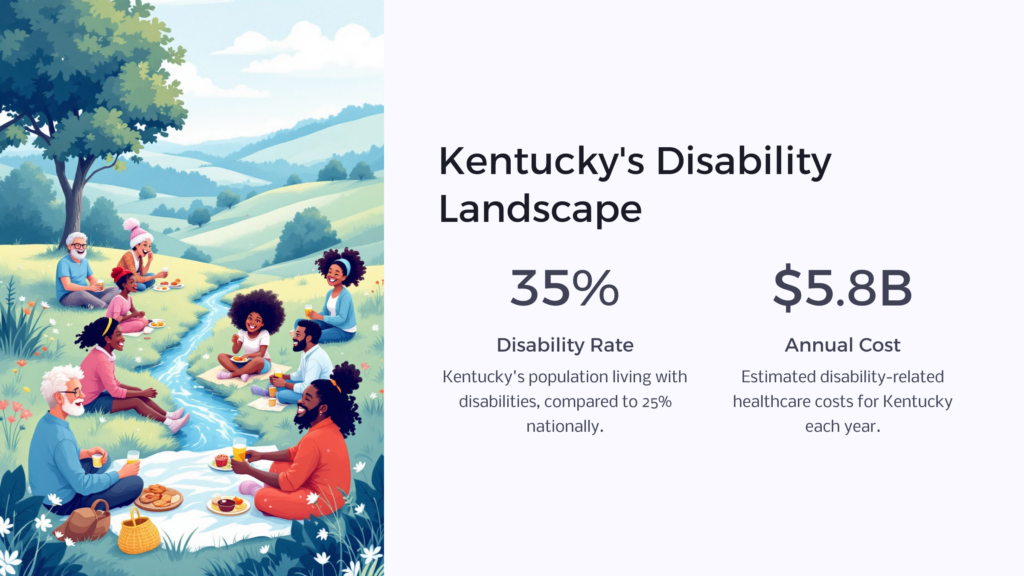
Roughly 35% of Kentucky’s population reports living with a disability, compared to the national average of just over 25%. Connecting state of Kentucky residents with the resources and assistance they need is a priority for the state.
These disabilities add up to an estimated $5.8 billion in disability-related healthcare costs for the state each year – which isn’t too surprising considering that adults with disabilities are less likely to be active, more likely to be obese, more likely to smoke and more likely to have high blood pressure.
For all categories of disabilities – mobility-related, cognitive, inability to live independently, hearing, vision and disabilities affective self-care – Kentucky residents report higher incidences of disability than the U.S. at large. Programs like SSDI and SSI help these residents access the services and assistance they need.
How To Qualify for SSDI in Kentucky
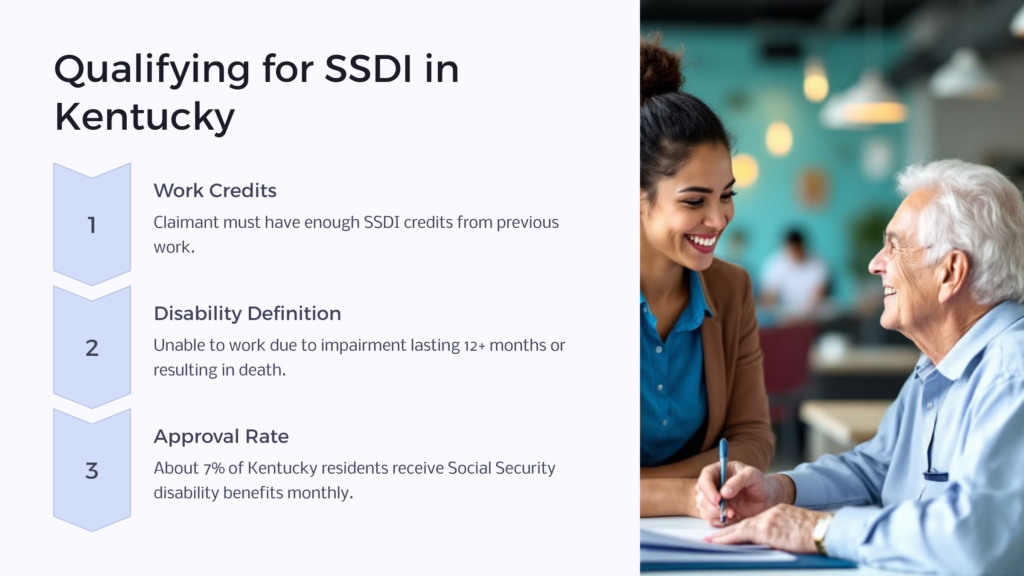
SSDI is a federal program, so the eligibility requirements are the same across all U.S. states. A Social Security field office in the state of Kentucky will first determine technical eligibility for the SSDI program – meaning that a claimant has worked enough and earned enough SSDI credits to qualify for the program by having taxes taken out of their income to augment the Social Security Trust Fund.
The claimant must also be deemed disabled. According to the federal SSDI definition, an adult must be rendered unable to work by a physical or mental impairment(s) that has lasted or is expected to last for at least 12 months or to result in death. It’s important to note that this stipulation includes any type of employment, not just the type of work that the claimant was previously engaged in.
Of the nearly 3 million residents of the state of Kentucky, roughly 7% receive Social Security disability benefits each month. Keep in mind that the Social Security Administration’s definition of disability is extremely narrow. The SSA will only support total disability rulings. If you choose to seek legal advice, a qualified disability attorney can help you decide whether your situation is likely to lead to a successful disability claim.
How To Apply for SSDI in Kentucky
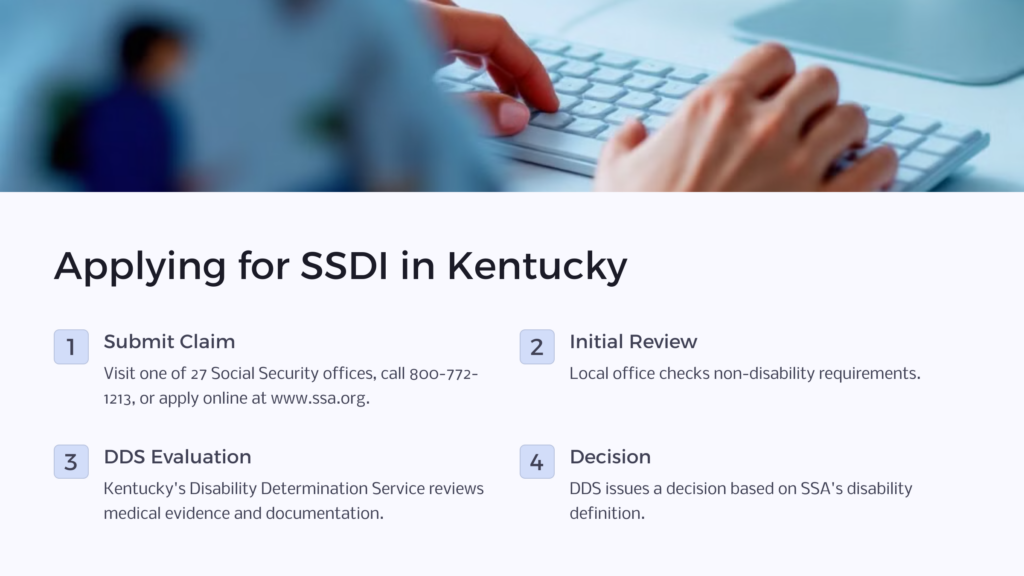
In order to apply for SSDI benefits, a claimant should submit a Social Security disability claim at any one of Kentucky’s 27 Social Security offices across the state. You can also submit a claim over the phone at 800-772-1213 or online at www.ssa.org.
Once your claim is submitted, it will first be reviewed by a local Social Security office to determine if you meet non-disability requirements. If the answer is yes, then your claim is forwarded to the state of Kentucky’s Disability Determination Service for review.
DDS then will examine medical evidence and documentation related to your claim and may also ask you to participate in an independent medical evaluation. DDS eventually will issue a decision, based on the documentation presented, about whether your case meets the SSA definition of disability.
How To Appeal a Denial in Kentucky
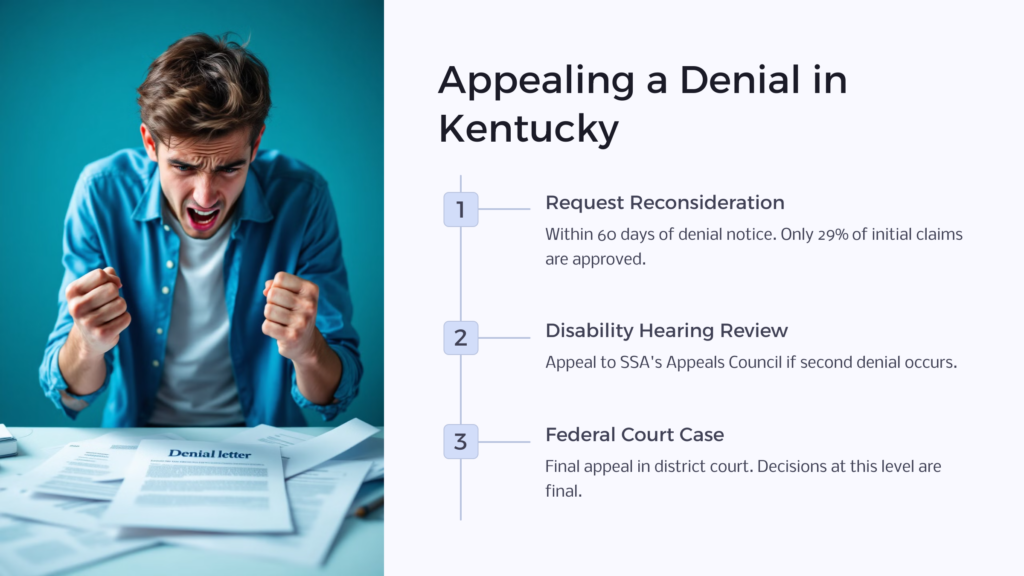
If your initial claim for disability benefits is denied, you have the option to appeal the decision. You must ask for reconsideration within 60 days of receiving your denial notice. Please know that the denial of an initial claim is fairly common. In Kentucky, only 29% of benefit claims are approved on first submission.
Upon appeal, your claim and medical records will be reviewed by a different person, an examiner who did not participate in your original review. If this results in a second denial, you may request a disability hearing review by the Social Security Administration’s Appeals Council.
If you remain dissatisfied with the determination at this stage, your final appeal is a federal court case filed in the district court for the judicial district in which you live. Decisions made at this level are considered final. At any point during the appeal process, you may decide to partner with a disability attorney for trusted counsel and advice on how best to proceed.
More Kentucky Benefits
In addition to SSDI benefits, the state of Kentucky administers other programs that help disabled Kentucky residents access both the financial aid and appropriate health care they need for independent living.
SSI
Supplemental Security Income is a federal program that helps provide financial assistance to those who have low levels of income and accrued assets, with a particular focus on those who are disabled, are blind, or are over age 65. A single adult can receive up to $794 per month in SSI benefits and also is granted Medicaid coverage without needing to file a separate application for that program. Unlike SSDI, applicants do not need to have worked previously or earned credits in order to qualify.
Kentucky Medicaid
Kentucky’s Medicaid program aims to help low-income Kentucky residents gain access to the vital health care they need. The two key eligibility requirements for Medicaid in Kentucky are you must be a Kentucky resident and you must be a U.S. citizen or legally authorized to live and work in the U.S.
Other criteria that may make residents eligible for Kentucky Medicaid include being pregnant, being responsible for a child under age 18, or having a disability or living with a family member who is disabled. Applicants must meet federal income standards for the Medicaid program, which are based on household income and total household size.
Kentucky Unemployment
Kentucky unemployment benefits help bridge the income gap for Kentucky residents who have lost their jobs through no fault of their own.
Unemployment benefits are issued on a weekly basis and help provide overall economic stability not only for individual households affected by unemployment, but also for local communities and for the comprehensive statewide economy.
To remain eligible for weekly benefits, Kentucky unemployed workers must show that they are physically and mentally able to work and available to accept suitable work when it is offered.
Example Scenario
Karen, a 45-year-old resident of Lexington, Kentucky, worked as a certified nursing assistant for 20 years before developing severe rheumatoid arthritis that made standing and lifting impossible. After trying various treatments, her doctors confirmed she could no longer perform her job or similar work. She applied for SSDI, knowing she had enough work credits, and also inquired about Medicaid due to her reduced income. Sarah’s experience demonstrates the common path many Kentucky residents take when faced with a condition that prevents them from working.
Frequently Asked Questions
What is the main difference between SSDI and SSI in Kentucky?
SSDI is for those with a qualifying work history who have paid Social Security taxes, while SSI is a needs-based program for individuals with limited income and resources, regardless of work history. Both require meeting the SSA’s strict definition of disability.
Who makes the disability determination for Kentucky residents?
The Kentucky Cabinet for Health and Family Services’ Disability Determination Services (DDS) makes medical disability determinations for both SSDI and SSI claims, following federal Social Security Administration guidelines.
How can I apply for disability benefits in Kentucky?
You can apply for Social Security disability benefits online at www.ssa.gov, by calling the SSA at 800-772-1213, or by visiting a local Social Security field office in Kentucky.
What should I do if my disability claim is denied in Kentucky?
If your claim is denied, you have 60 days from receiving the denial notice to file an appeal, starting with a Request for Reconsideration. Further appeals include an Administrative Law Judge (ALJ) hearing and Appeals Council review.
Does Kentucky offer state-specific disability benefits?
While Kentucky administers the federal SSDI and SSI programs, it also offers state-specific support like Medicaid for eligible low-income residents, which includes many with disabilities, to help with healthcare costs.
Are there income limits for disability benefits in Kentucky?
Yes, for Supplemental Security Income (SSI), there are strict federal income and asset limits. For Social Security Disability Insurance (SSDI), there are no income limits after approval, but you must be unable to engage in Substantial Gainful Activity (SGA).
What role do Social Security offices play in Kentucky disability claims?
Local Social Security offices in Kentucky handle the initial review of claims to ensure non-disability requirements (like work credits for SSDI or income/asset limits for SSI) are met before forwarding the claim to Kentucky’s DDS for medical determination.
If you have more questions about benefits, don’t hesitate to reach out to us at Benefits.com, we are here to help clear things up!
 Benefits.com Advisors
With expertise spanning local, state, and federal benefit programs, our team is dedicated to guiding individuals towards the perfect program tailored to their unique circumstances.
Rise to the top with Peak Benefits!
Join our Peak Benefits Newsletter for the latest news, resources, and offers on all things government benefits.