













The Department of Veterans Affairs (VA) understands that family caregivers are the backbone of support for many of our nation’s veterans, especially those living with service-connected disabilities. Through the Program of Comprehensive Assistance for Family Caregivers (PCAFC), Veterans Affairs offers comprehensive assistance for family caregivers. The program is designed to provide not only financial help but also emotional and educational support, ensuring that they have the resources they need to manage their caregiving duties.
The Comprehensive Assistance program’s mission is to support caregivers who provide essential caregiving responsibilities to veterans with serious service-connected injuries or illnesses. Beyond the monthly tax-free stipend, the program offers VA health care insurance, mental health counseling, respite care, and specialized training to help caregivers provide the best possible care.
VA Caregiver Stipend Calculator
The VA Caregiver Support Program provides monthly stipends to family caregivers of eligible veterans. Use our calculator below to estimate your potential monthly stipend based on your location and level of care provided.
How It Works
The VA calculates caregiver stipends based on three key factors:
- Geographic Location: Stipends are adjusted based on the cost of living in your area using OPM locality pay rates
- Level of Care: Two tiers based on the veteran’s care needs (Level 1 or Level 2)
- Current Rates: Base rates are updated annually and tied to the GS-4 Step 1 federal pay scale
Important Notes
- This calculator provides estimates only – actual stipend amounts are determined by the VA
- Stipends are generally considered taxable income
- Eligibility requirements must be met to participate in the program
- Rates shown reflect 2024-2025 OPM pay scales
Ready to calculate your potential stipend? Select your state, locality, and level of care in the calculator below to get started.
VA Caregiver Stipend: Eligibility Requirements
Veteran Eligibility Requirements
For a veteran to qualify for the caregiver program, they must meet specific eligibility criteria:
Service-Connected Disability Rating: Eligible and covered veterans must have a service-connected disability rating of 70% or higher, or a combination of mental or physical disabilities totaling 70% or more. This includes conditions such as:
- Traumatic brain injury (TBI)
- Post-traumatic stress disorder (PTSD)
- Severe physical disabilities
- Blindness, deafness, or loss of limbs
An injury or illness sustained during active military service may also qualify.
Discharge Status: The veteran must have been discharged from the U.S. military, including those who served in the air service or other branches during active military duty, with an honorable discharge or be an active-duty service member undergoing medical discharge.
Continuous Care Needs: The veteran must require at least six continuous months of personal care services for their health and safety. This includes:
- Inability to perform activities of daily living (ADLs) such as bathing, dressing, grooming, toileting, feeding, and mobility
- Need for constant supervision or protection due to a neurological or other impairment
- Requirement for regular or extensive instruction to function safely in daily life
VA Health Care Enrollment: The veteran must be enrolled in the VA health care system and receive ongoing care from a Primary Care Team.
Health care providers within the Veterans Affairs medical program play a key role in assessing eligibility and ongoing clinical services and care needs.
Family Caregiver Eligibility Requirements
The family caregiver applying for the comprehensive assistance program must meet these criteria:
- Age: Caregiver must be at least 18 years old
- Relationship: Caregiver must be a spouse, child, parent, stepfamily member, extended family member, or other family members as defined by the family caregivers program, or someone who lives full-time with the veteran
- Training Capability: Caregiver must be able to complete caregiver education and skills training programs
- No History of Abuse: Caregiver must have no VA determination of abuse or neglect of the veteran
- Commitment to Care: Caregiver must be willing and able to provide necessary personal care services
The comprehensive assistance for family caregivers program allows veterans to designate a primary caregiver and up to two secondary caregivers, who can be family members or close friends, to support the veteran’s care team. Secondary family caregivers serve as backup support and may receive certain benefits and training through the program.
How Much is the VA Caregiver Stipend?
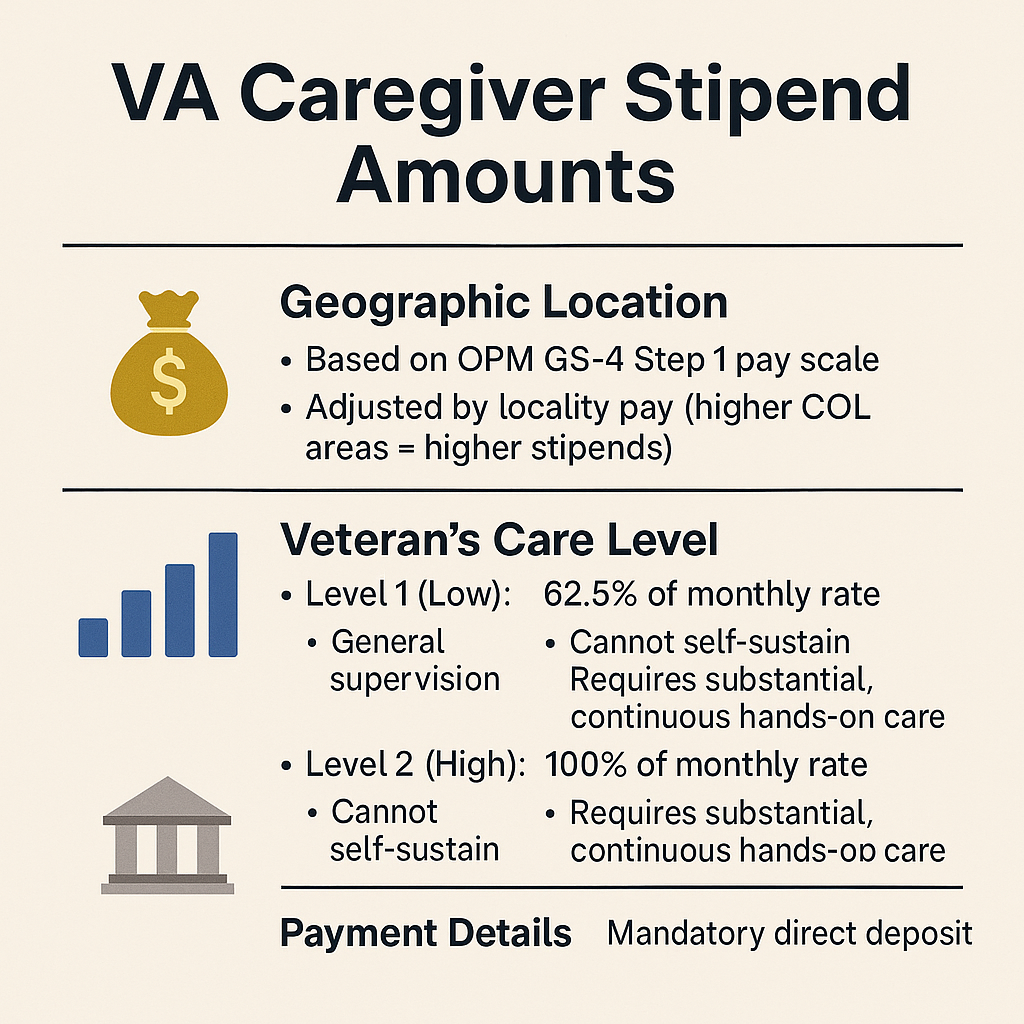
The stipend amount varies based on two key factors:
- Geographic Location: The stipend is tied to the Office of Personnel Management (OPM) General Schedule Grade 4, Step 1, based on the locality pay area where the veteran resides. This means caregivers in higher cost-of-living areas receive higher stipends.
- Veteran’s Care Level: The VA evaluates the veteran’s care needs to determine the appropriate stipend tier, which may be low or high based on the level of care required.
- Level 1 (Low): For veterans requiring general supervision but fewer hands-on care activities. The monthly stipend equals 62.5% of the monthly rate.
- Level 2 (High): For veterans who cannot self-sustain in the community and require substantial, continuous hands-on care from a caregiver. The monthly stipend equals 100% of the monthly rate.
All stipend payments are made via mandatory direct deposit and are tax-free.
Step-by-Step Instructions: Application Process for Comprehensive Assistance for Family Caregivers.
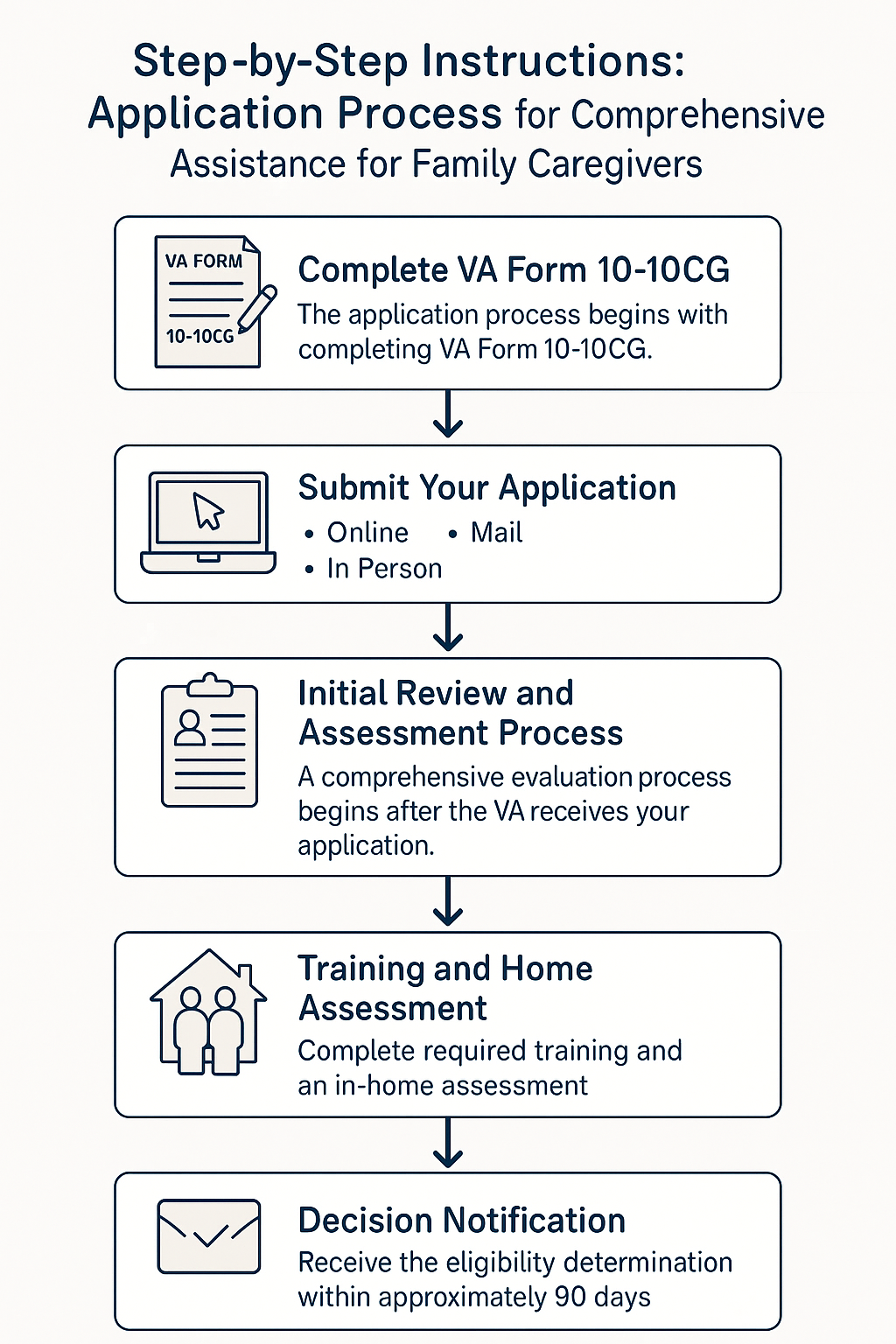
Step 1: Complete VA Form 10-10CG
The application process begins with completing VA Form 10-10CG, “Application for the Program of Comprehensive Assistance for Family Caregivers” (the VA family caregivers program, which offers clinical services and support). This form must be completed and signed by both the veteran and the primary family caregiver applicant.
Important: Do not send medical records with your initial application. The VA will request these if needed during the evaluation process.
Step 2: Submit Your Application
You have three options for submitting your completed application:
- Online Submission (Recommended): Apply through the official VA website’s caregiver benefits section for the fastest processing.
- Mail Submission: Send your completed form to: 10-10CG Evidence Intake Center PO Box 5154 Janesville, WI 53547-5154
- In-Person Submission: Bring your completed form to the VA caregiver support program at your nearest VA medical center.
Step 3: Initial Review and Assessment Process
Once the VA receives your application, a comprehensive evaluation process begins:
- Application Intake: A VA Caregiver Support Program (CSP) team member reviews your form to ensure all required information and signatures are included.
- Veteran Assessment: Health care providers conduct a clinical assessment with the veteran to gather information about their condition and care needs, including any mental health conditions that may impact daily living.
- Caregiver Assessment: Each family caregiver applicant undergoes a separate clinical assessment to evaluate their ability to provide home care.
- Functional Assessment: The VA completes a detailed functional assessment to objectively evaluate the veteran’s abilities and personal care needs.
Step 4: Training and Home Assessment
If you’re determined potentially eligible, the next phase includes:
- Caregiver Training: Complete the required Caregiver Core Curriculum training, which includes modules on self care and is available through online programs for added convenience. Training can often be done online or via DVD/workbook.
- Home-Care Assessment: A CSP Clinical Assessor conducts an in-home assessment with both the veteran and primary caregiver to confirm competence and safety in the home environment.
- Final Review: The VA’s Centralized Eligibility and Appeals Team conducts a final review of all information.
Step 5: Decision Notification
Within approximately 90 days of receiving your initial application, you’ll receive notification of the eligibility determination both by phone and through an official decision letter explaining the outcome and reasoning.
VA Caregiver Benefits Beyond the Stipend
- Health care Benefits (CHAMPVA): This is a medical program providing health insurance for caregivers, including civilian health coverage for those not eligible through employer-based plans.
- Respite Care
- Mental Health Support
- Educational Resources
- Additional Benefits:
- Travel reimbursement for VA medical appointments
- Free legal and financial counseling services
- Access to military commissaries, exchanges, and recreational facilities
Caregivers may also receive other benefits as part of the comprehensive support package.
Tips for a Successful Application
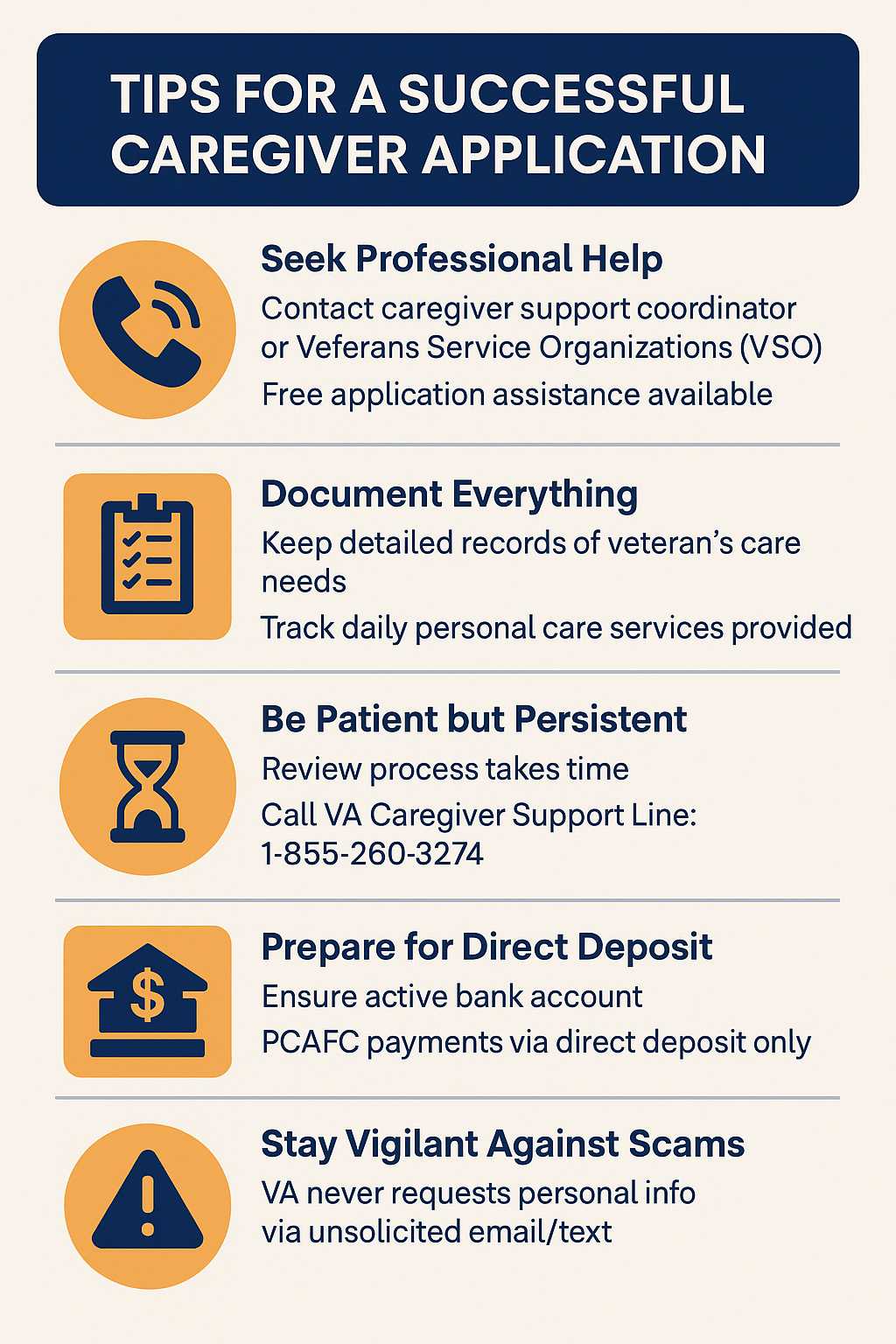
- Seek Professional Help: Contact a caregiver support coordinator or Veterans Service Organizations for free assistance with your application.
- Document Everything: Keep detailed records of the veteran’s care needs and the specific personal care services you provide daily.
- Be Patient but Persistent: The review process can take time. Follow up regularly by calling the VA Caregiver Support Line at 1-855-260-3274.
- Prepare for Direct Deposit: Ensure you have a bank account ready for direct deposit, as PCAFC paper checks and paper checks are no longer issued—all payments are now made via direct deposit.
- Stay Vigilant Against Scams: The VA will never ask for personal information via unsolicited emails or texts.
What to Expect After Applying
Timeline for Approval
The VA aims to provide a decision within 90 days, though complex cases may take longer depending on the need for additional assessments or documentation.
Ongoing Responsibilities
If approved, you’ll need to complete periodic reassessments to maintain benefits and report any significant changes in the veteran’s condition or your caregiving situation.
If Your Application is Denied
A denial isn’t final. You can file an appeal with additional evidence addressing the reasons for denial. Consider working with a Veterans Service Organization to strengthen your appeal.
Frequently Asked Questions
Can secondary caregivers receive the stipend?
No, only the primary family caregiver receives the monthly stipend, though secondary family caregivers can access other program benefits.
Is the stipend taxable income?
No, VA caregiver stipend payments are tax-free.
Can I work while receiving the caregiver stipend?
Yes, there are no restrictions on outside employment while receiving comprehensive assistance for family caregivers.
What happens if the veteran’s condition improves?
The VA conducts periodic reassessments. If the veteran no longer requires the same level of care, VA benefits may be reduced or discontinued.
Conclusion
Learning how to apply for VA caregiver stipend benefits can seem overwhelming, but understanding the process and requirements puts you on the path to receiving much-needed support. The PCAFC program represents a significant investment in recognizing the vital role family caregivers play in veteran recovery and well-being.
At Benefits.com, we are here to help you navigate the process and receive the benefits you deserve. Begin today by taking our free eligibility quiz.
 Benefits.com Advisors
With expertise spanning local, state, and federal benefit programs, our team is dedicated to guiding individuals towards the perfect program tailored to their unique circumstances.
Rise to the top with Peak Benefits!
Join our Peak Benefits Newsletter for the latest news, resources, and offers on all things government benefits.