














Quick Answer
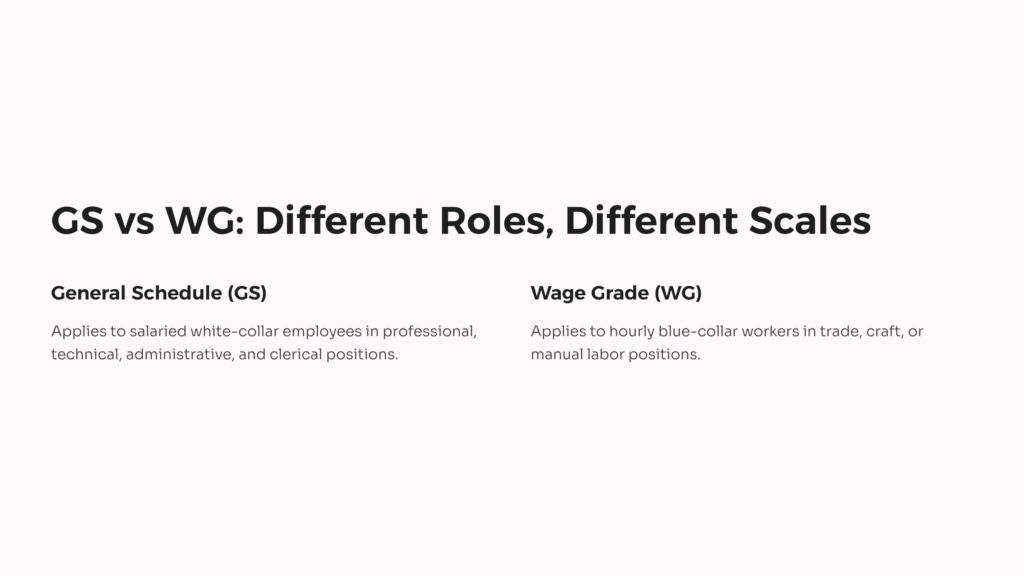
The General Schedule (GS) and Wage Grade (WG) pay scales are the primary compensation systems for most U.S. federal civilian employees. The GS system covers white-collar professional, technical, administrative, and clerical positions, while the WG system applies to blue-collar federal employees in trades, crafts, and labor occupations.
Both scales undergo annual adjustments, typically announced late in the preceding year or early in the target year, reflecting cost-of-living changes and economic factors.
For 2026, employees can anticipate a potential across-the-board increase for both base pay and locality adjustments, influenced by federal budget decisions and labor market conditions. Understanding these scales is crucial for federal employees to project their earnings and career progression.
Why This Update
These pay scales can be adjusted annually, due to a number of factors, and both had an increase for 2026.
Understanding the Federal GS Pay System
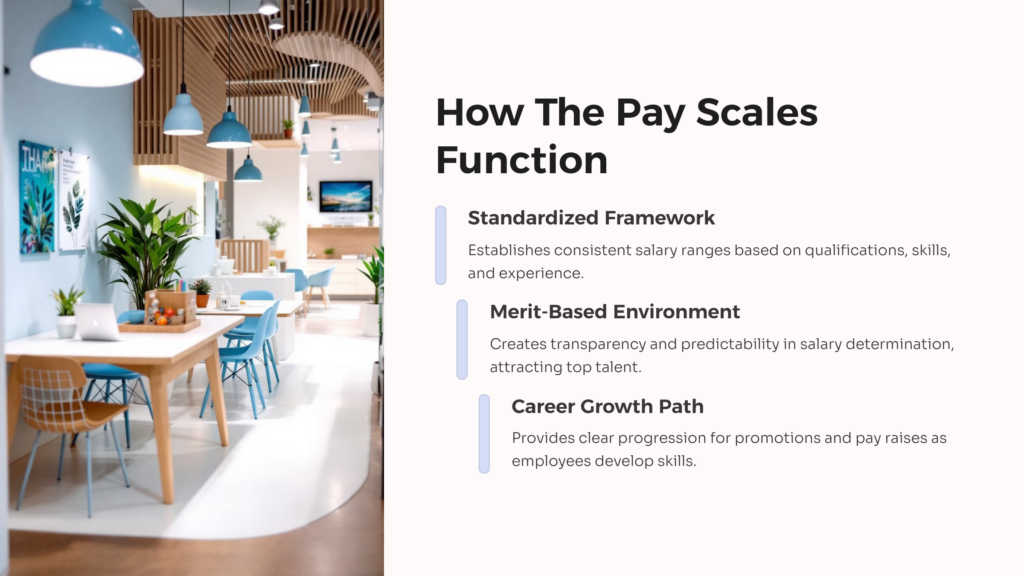
The General Schedule (GS) is the primary pay scale for federal professional and administrative employees. It includes grades GS-1 through GS-15. Each grade contains 10 steps that allow for gradual pay increases throughout a person’s career, as outlined in a comprehensive federal employment guide.
Your pay comes from two parts: the base GS rate and a locality pay adjustment. The locality adjustment varies based on where you work geographically.
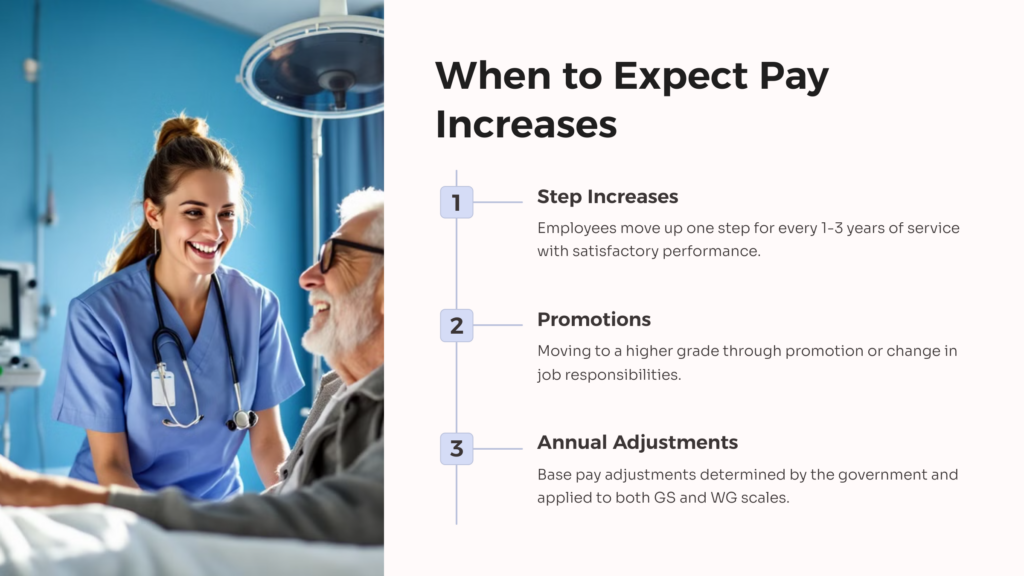
Pay increases within your grade follow specific waiting periods rather than automatic yearly raises. You must wait 52 weeks to move from step 1 to step 4. Steps 4 through 7 require 104 weeks between increases. Steps 7 through 10 require 156 weeks between advances. This structure means your pay progression reflects both your time in service and continued satisfactory performance, impacting future military pension plans.
Decoding the Federal WG Pay System
The Wage Grade (WG) system covers federal employees in trades and labor occupations. This includes people working in crafts, technical trades, and manual labor roles.
WG pay is based on prevailing local wage rates. “Prevailing wage” means the typical pay for similar jobs in the private sector in your area. Federal agencies conduct periodic wage surveys to determine these rates. This approach helps ensure that federal trades and labor employees receive pay comparable to private-sector workers doing similar work in the same location.
Unlike GS, WG pay rates are set at a local level and may be updated more frequently. The rates often involve different pay bands or steps within each trade. Because WG pay is localized, two federal employees in the same occupation but different cities may have significantly different wage rates based on their local labor markets.
Factors Influencing 2026 Pay Scale Adjustments
Annual pay raises for both GS and WG scales are determined through congressional action and presidential executive orders. Several key factors influence these decisions.
The Employment Cost Index (ECI) measures changes in labor costs and helps guide pay decisions. The ECI tracks how much it costs employers to compensate workers over time. Federal decision-makers also consider current economic conditions and budget priorities when setting pay adjustments.
Locality pay adjustments are reviewed annually. These adjustments supplement base pay and may significantly affect total compensation for specific regions. The review process considers labor market competitiveness and cost-of-living differences. This helps ensure federal positions remain attractive to qualified candidates across various geographic areas.
Navigating Locality Pay Areas and Their Impact
Locality pay accounts for differences in cost of living and labor market competitiveness across geographic regions. The U.S. Office of Personnel Management (OPM) defines specific locality pay areas. Each area has its own percentage adjustment added to base pay.
People working in higher cost-of-living areas typically receive a greater locality pay percentage on top of their base GS rate. This system supports federal agencies in competing for talent in expensive metropolitan areas. At the same time, it maintains equitable pay structures nationwide.
Understanding your locality pay area is important for calculating your actual compensation. The locality adjustment can represent a substantial portion of your total pay, especially in high-cost urban areas.
How Veterans’ Preference Affects Federal Employment and Pay
Veterans’ preference can improve a veteran’s chances of securing a federal job and other veteran benefits. However, it does not directly change the GS or WG pay scales themselves. Once hired, your pay grade and step are determined by your qualifications, experience, and the specific job requirements—the same as for any other employee.
The preference primarily affects the hiring process rather than the pay structure. Veterans may have an advantage in gaining entry into higher-paying GS or WG positions due to hiring preferences and special appointing authorities. These advantages may indirectly lead to potentially better long-term compensation.
Veterans may be able to start at higher grades or access positions that might otherwise be more competitive, influencing their VA disability compensation rates. Veterans may benefit from using these preferences during the application process to maximize their career opportunities.
Resources for Current and Projected Pay Information
Official pay tables for both GS and WG are published annually by the Office of Personnel Management (OPM). You can find these tables at OPM.gov. These tables provide the authoritative source for understanding your current or potential federal compensation.
The website includes base pay schedules, locality pay adjustments, and special rate tables for specific occupations. Employees can check OPM’s website regularly for the most up-to-date information regarding base pay, locality pay, and any special pay tables.
Union representatives (for WG employees) and HR departments can also provide guidance on specific pay rates and future projections. Staying informed about pay scale updates helps federal employees make better career and financial planning decisions, including understanding federal health benefit options.
Example Scenario
Sam is a veteran with 10 years of experience as an electrician. He is applying for a federal job in San Diego. This position falls under the Wage Grade (WG) system.
His veteran status helps him in the hiring process. However, his initial pay will be determined by the local WG pay scale for electricians in the San Diego area. This is based on prevailing private sector wages and his specific qualifications and step placement.
He can consult the OPM’s WG pay tables for the San Diego area to understand his potential hourly wage.
Frequently Asked Questions
What is the difference between GS and WG pay scales?
GS (General Schedule) is for white-collar professional, administrative, and technical federal employees, while WG (Wage Grade) is for blue-collar trades, crafts, and labor occupations.
How often are federal pay scales updated?
Both GS and WG pay scales are typically updated annually, with adjustments announced late in the preceding year or early in the new year.
Does locality pay apply to both GS and WG employees?
Locality pay primarily applies to GS employees. WG pay is already inherently localized as it’s based on prevailing local wage surveys.
Where can I find the official 2026 pay scales once they are released?
The official 2026 pay scales for both GS and WG will be published on the U.S. Office of Personnel Management (OPM) website, OPM.gov.
Do all federal jobs fall under either GS or WG?
While most federal civilian jobs fall under GS or WG, some agencies have their own unique pay systems, such as the Foreign Service or certain intelligence agencies.
How are WG pay rates determined?
WG pay rates are determined through local wage surveys conducted by federal agencies, comparing federal blue-collar jobs to similar positions in the private sector within a specific geographic area.
What is the “step” system in GS pay?
The step system within each GS grade allows for incremental pay increases for employees with satisfactory performance, typically advancing one step per year until reaching Step 10 within their grade.
Check us out at Benefits.com for more information on benefits available to you!
 Benefits.com Advisors
With expertise spanning local, state, and federal benefit programs, our team is dedicated to guiding individuals towards the perfect program tailored to their unique circumstances.
Rise to the top with Peak Benefits!
Join our Peak Benefits Newsletter for the latest news, resources, and offers on all things government benefits.