













The VA Evidence Intake Center serves as the central hub for processing all documentation related to veterans’ disability compensation claims. Receiving a letter from the VA Evidence Intake Center does not always mean bad news; such correspondence can be routine, neutral, or even positive, and is a normal part of the VA communication process. Whether you’ve received a decision letter, a request for additional evidence, or a status update, this communication represents an important milestone in your claims journey. In this comprehensive guide, we’ll explore everything you need to know about EIC correspondence and provide actionable steps to ensure your claim progresses smoothly.
What Is the VA Evidence Intake Center?
The VA Evidence Intake Center (EIC), established in 2014 with its primary location in Janesville, Wisconsin, revolutionized how the VA processes disability claims documentation. The Evidence Intake Center serves as a centralized mail processing center for veterans’ claims documentation, ensuring that all paperwork is routed through a single, efficient hub. Before the EIC’s creation, paper records were managed locally by regional offices, often resulting in misplaced or delayed documents that could derail veteran claims.
The Evidence Intake Center functions as a centralized mail processing facility that handles all documentation related to veterans’ disability compensation claims. It plays a key role in digitizing and managing claim-related documents, which helps facilitate communication and reduce delays in the VA claims process. When you submit paperwork for your claim, it goes through a meticulous eight-step process:
- Claim Receipt: Your documents are physically received and logged by the Evidence Intake Center
- Mail Preparation: Documents are sorted and prepared for scanning
- Digital Conversion: Physical documents are scanned and converted to digital images
- Processing and Indexing: Digital files receive unique identifiers for tracking
- Document Categorization: Files are classified by type (medical evidence, forms, etc.)
- Quality Assurance: Independent reviewers verify accuracy
- Digital Transfer: Files are uploaded to your regional VA office within 3-5 business days
- Physical Storage: Original documents are securely stored
This digital transformation addresses historical problems like the 1973 fire at the National Personnel Records Center, which destroyed countless military files. By centralizing and digitizing documents, the VA aims to prevent future losses and streamline the claims process.
Common Reasons Why the VA Evidence Intake Center Sent You a Letter
Understanding why you receive communication from the EIC is important, as a letter from the VA Evidence Intake Center is a standard way for veterans to receive updates, requests, or decisions about their claims. The Evidence Intake Center is responsible for collecting, validating, and processing such information to support veterans’ claims and determine benefits. Here are the most common reasons:
VA Disability Claim Decision Letters
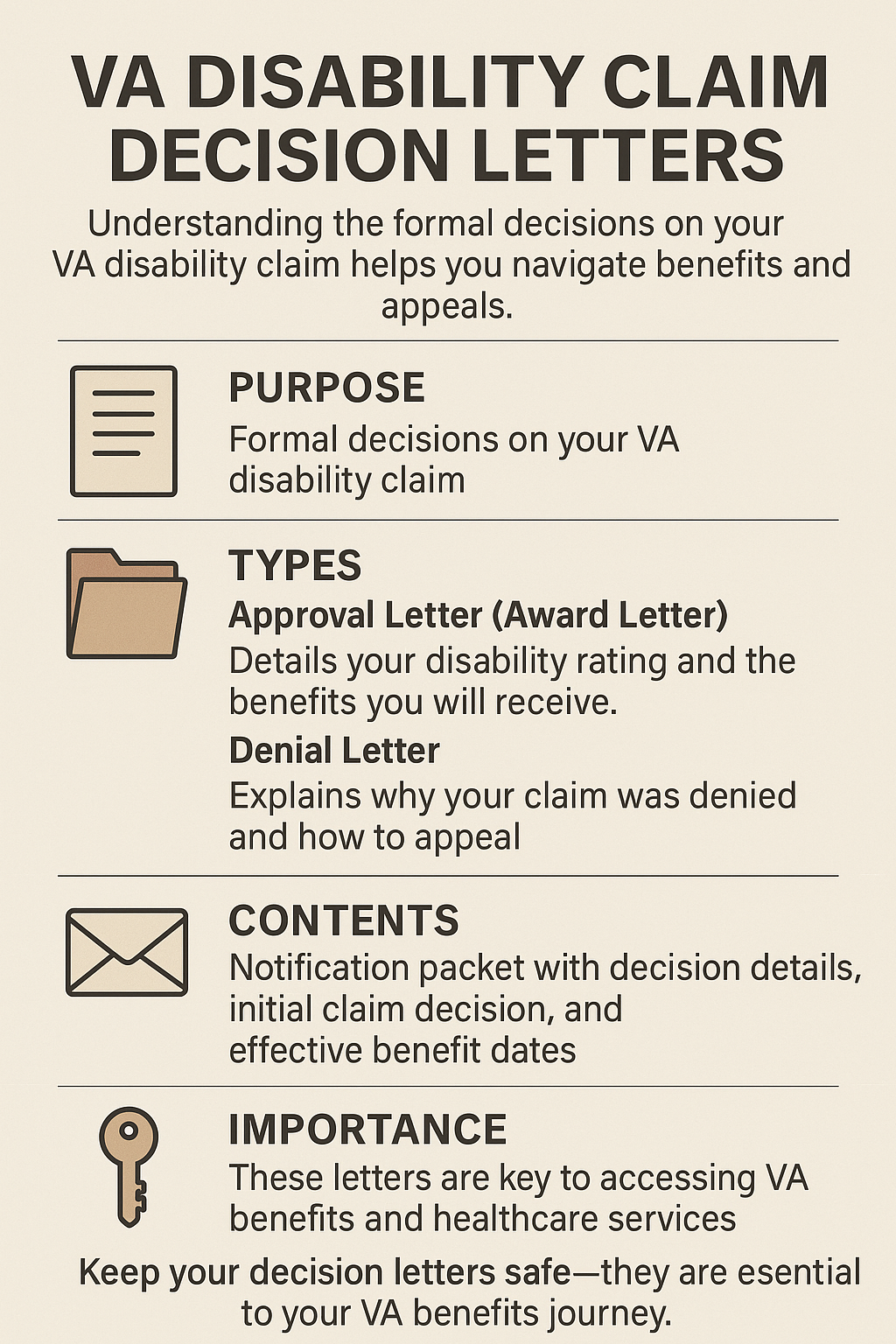
One of the most significant reasons for receiving an Evidence Intake Center letter is a formal decision on your VA disability claim. This could be:
- Approval Letter: Also known as an award letter, this outlines the benefits you’ll receive and your disability rating
- Denial Letter: This explains why your disability claim was denied and includes instructions for appealing the decision
These letters are often sent as a notification packet, which includes details about the VA’s decision, the initial decision on your claim, and the effective date of any awarded benefits.
Decision letters are crucial documents in the VA disability claims process that determine your access to VA benefits and healthcare services.
Requests for Additional Evidence
The Evidence Intake Center frequently sends development letters requesting additional information to support your claim. The EIC may request more evidence, additional documentation, supporting documents, or new evidence to fully evaluate your claim. These requests might include:
- Medical Evidence: Current medical records, treatment documentation, or specialist reports
- Service Records: Military documents linking your condition to your service
- VA Forms: Outstanding or newly required forms for your specific claim
- Lay Statements: Personal testimonies from you, family members, or fellow veterans
- Nexus Letters: Medical opinions establishing the connection between your condition and military service
- Disability Benefits Questionnaires (DBQs): Detailed medical assessments
Responding promptly and thoroughly to these requests is crucial for maintaining momentum in your claim.
Claims Process Status Updates and Procedural Changes
The Evidence Intake Center may send letters to:
- Acknowledge receipt of your submitted documents
- Provide updates on your disability claim’s status and progress
- Inform you about changes to VA procedures
- Notify you of upcoming deadlines or requirements for VA disability compensation
Eligibility and Dependency Notices
These communications often relate to:
- Adding dependents or spouses to your benefits
- Recertifying dependency status
- Informing you of additional benefits you may be entitled to receive
How to Respond When the VA Evidence Intake Center Sent You a Letter
Your response to an Evidence Intake Center letter can significantly impact your claim’s outcome. It is important to maintain clear communication with the Evidence Intake Center when responding to correspondence to ensure your information is received and processed accurately. Here’s a step-by-step approach:
At any stage of the response process, veterans can access VA resources for guidance and support to help navigate procedures and address any questions.
Step 1: Read Carefully and Don’t Panic
Take time to thoroughly review the entire letter.
Look for:
- The specific purpose of the letter
- Any actions required from you
- Important deadlines or timeframes
- Contact information for questions
- How the letter relates to your VA claim and its current stage
Step 2: Note All Deadlines
Pay close attention to any specified deadlines for submitting documents or responses. Mark these dates prominently in your calendar and set reminders.
Step 3: Gather Required Information and New Evidence
If the letter requests additional evidence, begin collecting the necessary documentation immediately:
- Contact your healthcare providers for medical records
- Reach out to the National Personnel Records Center for military documents
- Prepare lay statements from witnesses or family members
- Complete any required VA form (such as VA Form 20-0995 or 20-0996) thoroughly and accurately
Submitting evidence and sending documents promptly is essential to support your claim. Be sure to follow the Evidence Intake Center’s (EIC) instructions on how to submit evidence.
Step 4: Choose the Right Submission Method to Veterans Affairs
Online Upload (Recommended)
- Fastest processing method
- Access through VA.gov or eBenefits portal
- You can submit your claim online through the VA’s portal and receive confirmation of your submission.
Fax Submission
- Quick transmission
- Receive confirmation with date, time, and page count
- Get a Document Identifier Number for tracking
- Fax numbers: (248) 524-4260 (overseas) or (844) 531-7818 (toll-free)
Certified Mail
- Use only when other methods aren’t available
- Always request return receipt
- Provides proof of mailing and delivery
- Be sure to use the correct mailing address for the VA Evidence Intake Center: Department of Veterans Affairs, Claims Intake Center, PO Box 4444, Janesville, WI 53547-4444
- When mailing documents, keep copies for your records and use certified mail for proof of delivery.
- The postal service’s delivery times can affect when your documents are received and processed.
Step 5: Proper Document Preparation
When submitting documents:
- Never send originals unless specifically requested
- Include your full name, Social Security number, and date of birth on every page
- Add document type, submission date, and page numbers
- Keep copies of everything you submit
- Create a dedicated file for all claim-related correspondence
Expected Timeframes and What to Expect

Understanding typical processing times can help manage expectations:
- Initial claim decisions: Up to 6 months
- Supplemental claims: 5-6 months (VA goal is 125 days)
- Document processing: 3-5 business days for digitization and upload
- Evidence review: Varies based on complexity and whether additional exams are needed. The VA may review evidence as part of the initial decision or during a decision review or higher level review if you appeal or request reconsideration.
Remember that these are average timeframes, and your specific situation may require more or less time depending on the complexity of your claim and the current VA workload.
Best Practices for Managing EIC Correspondence

Create a System
Develop an organized filing system for all VA-related documents:
- Keep physical and digital copies of all correspondence
- Maintain a log of submission dates and confirmation numbers
- Track deadlines and responses in a calendar system
Stay Proactive
Don’t wait for problems to arise:
- Regularly check your claim status online
- Respond to requests promptly
- Maintain current contact information with the VA
Understand Your Rights
As a veteran, you have rights throughout the claims process:
- Right to representation by a Veterans Service Organization or attorney
- Right to appeal unfavorable decisions
- Right to request copies of your claims file
- Right to receive clear explanations of decisions
Conclusion
The VA Evidence Intake Center plays a key role in processing disability compensation claims by managing documentation and ensuring your VA disability claim is handled efficiently. Whether it’s a decision on your claim, a request for additional evidence, or a routine update, understanding the purpose behind EIC correspondence empowers you to respond effectively and keep your claim moving forward.
Remember that receiving a letter from the EIC is typically a normal part of the claims process, not a cause for alarm. The EIC is dedicated to handling disability related claims and supporting injured and disabled people seeking VA disability compensation, and they have to send letters to send information.
At Allveteran.com, we seek to help veterans connect with resources that may make all the difference. To find out your disability rating, take our free medical evidence screening today!
 Benefits.com Advisors
With expertise spanning local, state, and federal benefit programs, our team is dedicated to guiding individuals towards the perfect program tailored to their unique circumstances.
Rise to the top with Peak Benefits!
Join our Peak Benefits Newsletter for the latest news, resources, and offers on all things government benefits.