














A VA Intent to File is a formal notification to the Department of Veterans Affairs (VA) that you plan to submit a claim for disability benefits.
While not mandatory, it’s a crucial first step that establishes an “effective date” for your potential benefits. This date is vital because it determines when your compensation will begin if your claim is approved, maximizing potential back pay.
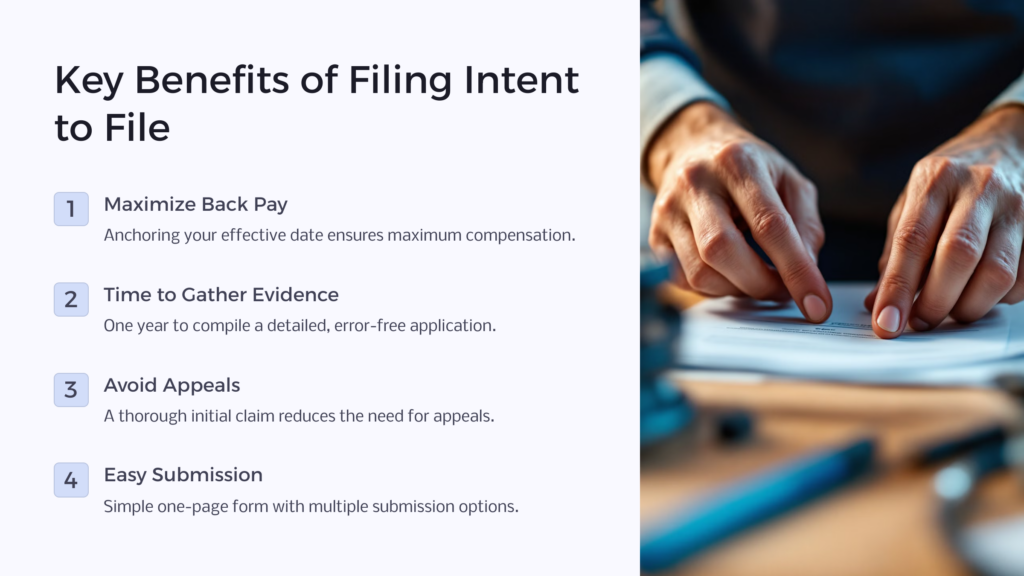
Submitting an Intent to File also grants you up to one year to gather necessary evidence and thoroughly prepare your complete claim, reducing stress and the likelihood of errors. It’s a simple, one-page form that can be submitted online, by mail, phone, or in person, providing significant advantages in the VA claims process.
Why This Update
The VA can change its processes and the forms that it uses, and we want to make sure we keep you up to date!
Understanding the VA Intent to File
The VA Intent to File is a formal declaration notifying the VA of your plan to claim disability or pension benefits. It serves to officially start your claim process by establishing an “effective date.”
If your claim is approved, your back pay will be calculated from the ITF date, ensuring you get retroactive payments from the day you submitted the ITF.
While not required, it is strongly recommended as a helpful first step in the VA claims process. It provides a protected time period for gathering necessary documentation without losing potential back pay.
The Critical Role of the Effective Date
The effective date is the official start date for your VA benefits claim, logged when the VA receives your Intent to File. This date determines the past period (also called retroactive period) for which you may receive back pay if your claim is approved.
Establishing an early effective date may maximize the total amount of compensation you receive. Without an Intent to File, the effective date defaults to when your complete claim application is received, which could reduce back pay.
Key Benefits of Submitting an Intent to File
Maximizes Back Pay: Locks in your effective date, helping ensure you receive compensation from that point if your claim is approved. This protection of your effective date may result in significantly higher back payments.
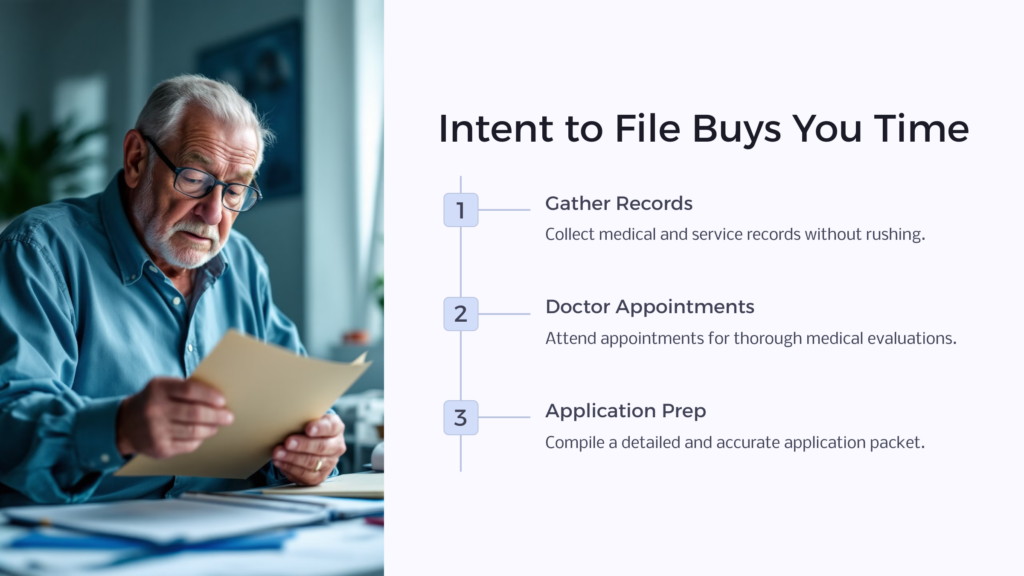
Time to Gather Evidence: Provides a full year to collect medical records, military service documents, and witness statements. This extended timeframe reduces the pressure to rush through the documentation process.
May Reduce Appeals & Supplemental Claims: Allows for thorough preparation, which may increase the likelihood of a favorable first decision and help avoid the process for appealing VA decisions.
Peace of Mind: Reduces the pressure to rush, allowing for a more detailed and careful application. This can provide peace of mind during a complex process.
How to Submit Your VA Intent to File
The Intent to File is completed using VA Form 21-0966, a straightforward, one-page document. Required information includes personal details such as your name, Social Security Number, date of birth, contact information, and the type of benefit you intend to claim.
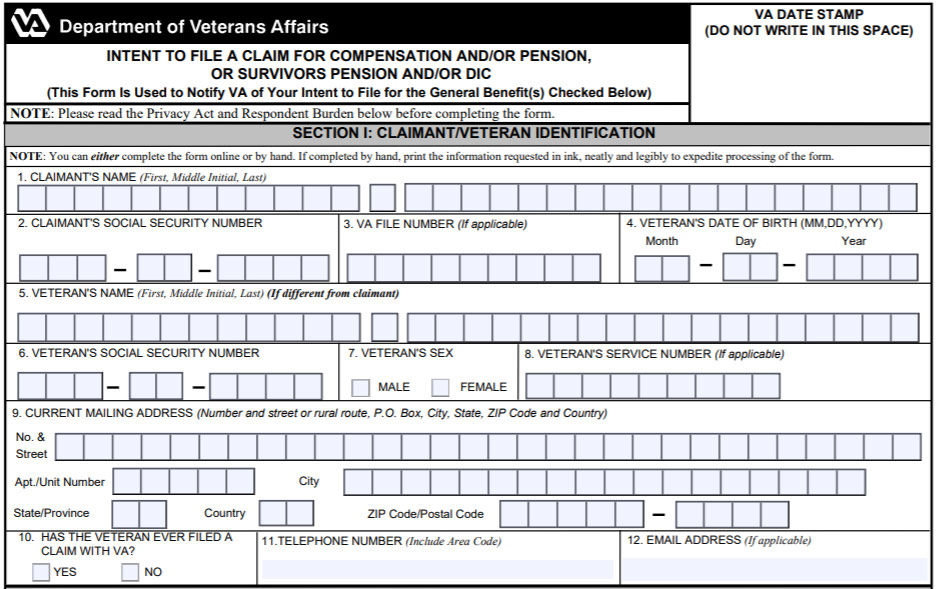
Submission options include online via VA.gov or eBenefits, by mail to a VA Regional Office, or in person at a VA facility. You can also submit by phone, or an authorized representative like a Veterans Service Officer (VSO) can submit it on your behalf.
As of June 16, 2024, the VA reports an average of 170.8 days to complete a disability claim and an average of 144.3 days to complete a supplemental claim. Current processing times are available at https://www.va.gov/disability/after-you-file-claim/.
You can track the status of your Intent to File through your VA.gov account or by contacting the VA directly.

Strategic Advantages for Your VA Claim
Securing an Intent to File allows you to prepare the strongest possible claim without losing money while you prepare. This preparation time can help you uncover additional service-connected conditions or secondary conditions not initially considered.
It may help prevent common mistakes that arise from rushing the application process, which can lead to denials or lower ratings. The ease of filing this initial document may help simplify the overall VA claims process.
Example Scenario
Anna, a veteran, submits her VA Intent to File on January 15th. This action secures her effective date, allowing her a full year to gather medical records, military documents, and obtain witness statements from fellow service members without rushing. She submits her complete disability claim eight months later on September 15th. If approved, she may receive back pay dating back to January 15th, which could significantly increase her initial compensation.
Frequently Asked Questions
What is the primary purpose of a VA Intent to File?
The primary purpose is to formally notify the VA of your intention to file a claim for benefits, which establishes an “effective date” for potential compensation and grants you up to one year to gather all necessary evidence.
Is a VA Intent to File mandatory for submitting a disability claim?
No, it is not mandatory. You can file a full claim without one, but submitting an Intent to File is highly recommended as it protects your effective date and maximizes potential back pay.
How long do I have to submit my full claim after filing an Intent to File?
You have exactly one year from the date the VA receives your Intent to File to submit your completed application and supporting evidence for your claim.
What is an “effective date” and why is it crucial for VA claims?
The effective date is the official start date of your claim. If your claim is approved, the VA may calculate your retroactive benefits (back pay) from this date, making an early effective date essential for maximizing compensation.
What information is required to submit a VA Intent to File?
You will need to provide basic personal information such as your name, Social Security Number, date of birth, mailing address, and indicate the type of benefit you intend to claim (e.g., compensation, pension, or survivor benefits).
Can a Veterans Service Officer (VSO) submit an Intent to File for me?
Yes, an authorized representative, such as a VSO or a Casualty Assistance Officer, can submit the Intent to File on your behalf if you grant them permission and they are listed as your representative.
What happens if I don’t submit my full claim within one year after filing an Intent to File?
If you don’t submit your completed claim within the one-year timeframe, the Intent to File will expire, and your established effective date will be lost. You would then need to submit a new Intent to File or a full claim to restart the process.

At Benefits.com, we want to help you get the benefits you’ve rightfully earned! Reach out to us today for more help and take our free eligibility quiz!
 Benefits.com Advisors
With expertise spanning local, state, and federal benefit programs, our team is dedicated to guiding individuals towards the perfect program tailored to their unique circumstances.
Rise to the top with Peak Benefits!
Join our Peak Benefits Newsletter for the latest news, resources, and offers on all things government benefits.