









We are privately owned and not affiliated or endorsed by any government agency.

Take the Benefits Quiz

Electromagnetic environmental effects (E3)

Definition

Electromagnetic Environmental Effects (E3) in military operations refer to the impact of electromagnetic phenomena on the performance and operational readiness of military equipment, systems, and platforms. It can encompass various considerations including electromagnetic compatibility, electromagnetic radiation, and electronic interference. E3 is crucial for the safe, reliable, and effective operation of military electronics and communication systems.

Key Takeaways

  1. Electromagnetic Environmental Effects (E3) refer to the impact of electromagnetic energy on military operations and systems. This can include potential sources such as radar, communication systems, or even naturally produced electromagnetic phenomenon. Understanding and managing E3 is crucial to maintaining the operation of military equipment and electronic systems.
  2. E3 requires strategic planning to ensure the continued operation and reliability of military systems in potential electromagnetic environment (EME). This means controls and shields should be in place to mitigate the influence of disruptive electromagnetic energy. The military makes use of E3 testing and evaluation to certify the safety, suitability, and effectiveness of their systems.
  3. The consequences of not addressing E3 can be significant. An unexpected electromagnetic event or sabotage could disrupt or impair military operations, leading to tactical disadvantages or critical loss of communication and control systems. This makes managing E3 an essential part of military planning and operations.

Importance

Electromagnetic Environmental Effects (E3) is a critical term in military operations because it encompasses the impact that the electromagnetic environment can have on systems, devices, and communications.

This involves how electronic equipment can interfere with or disrupt other electronic devices or systems (known as electromagnetic interference), but also how the same equipment can be hardened to prevent or limit potential effects from other sources.

It’s essential because modern military operations heavily rely on advanced electronics and communication systems.

Understanding and mitigating E3 can prevent unwanted disruptions and ensure equipment, systems, and operations run smoothly and successfully on the battlefield.

This can prove to be a significant advantage in both strategic planning and execution of military operations.

Explanation

Electromagnetic Environmental Effects (E3) have a significant role to play in modern warfare strategies, where telecommunication and digital systems are extensively used. The purpose of understanding and applying E3 conceptually is to ensure the reliability, performance, and safety of electronic systems during their operational life cycle. Such systems may include navigation, radar, communications, and weapons.

Military equipment especially needs to be resilient to such effects in electronic warfare or a combat scenario, thus avoiding system failures or inaccuracies due to E3 which could jeopardize military operations. E3 includes a broad range of natural and man-made electromagnetic conditions. These can potentially cause detrimental interference or damage to electronic equipment or systems, compromising their functionality or rendering them useless.

It covers everything from regular, repeatable effects like the daily changes in the earth’s magnetic field to erratic disturbances such as lightning or solar flares, and even the effects of a nuclear explosion. Additionally, the E3 program comes into play to prepare for the incidence of a High-altitude Electromagnetic Pulse (HEMP) produced by a nuclear explosion in the atmosphere. It helps in designing equipment that can withstand such effects, ensuring that crucial operations and information networks remain robust and effective across various environments.

Examples of Electromagnetic environmental effects (E3)

Radio Frequency Interference: This is an example of electromagnetic environmental effects applied in real-world military operations. Radio Frequency Interference (RFI) can occur when two or more electronic devices are in close proximity to one another, causing the signals to interrupt or disrupt each other. In military operations, RFI can interfere with the operations of various communication devices, radar systems, or navigation instruments. Therefore, military organizations must carefully manage their electromagnetic environments to prevent such interferences.

Nuclear Electromagnetic Pulse (EMP): This is when a nuclear explosion occurs and releases electromagnetic radiation. This event could disable or destroy electronics within a certain radius, marking an example of a disastrous E3 scenario. In military terms, an EMP could severely hamper operational capacity by taking out key communication and telemetry devices. This has become a major concern in strategic security and defense planning.

Electronic Warfare: This is a military tactic that uses energy-focused weaponry or technology, often through the electromagnetic spectrum, to confuse or incapacitate an enemy’s electronic systems without causing physical damage. This could be through jamming radio signals, using lasers, or a variety of other tactics. Electronic warfare systems are designed to operate in a contested electromagnetic environment, making them major examples of dealing with E

FAQs on Electromagnetic Environmental Effects (E3)

What are Electromagnetic Environmental Effects (E3)?

Electromagnetic Environmental Effects (E3) refers to the impact of electromagnetic energy on the environment and electronic systems. The impact can be harmful, causing disruption or damage to electronic devices, systems, and networks.

What are the sources of E3 in a military operation context?

In the context of military operations, E3 can be caused by a variety of sources such as natural phenomena like lightning and solar flare, or military equipment that emit or employ electromagnetic energy — for instance, radar systems, communications equipment, and electronic warfare devices.

Why is E3 mitigation important in military operations?

E3 mitigation is crucial in military operations to ensure the effective functioning of electronic systems and to prevent potential operation failure due to the damaging effects of electromagnetic energy. This process involves taking measures to reduce electromagnetic interference, enhance electromagnetic compatibility, and manage the electromagnetic spectrum.

How is E3 mitigated in military operations?

E3 is mitigated through a combination of strategic planning, system design, testing, and operational procedures. This could involve designing systems that are resistant to electromagnetic energy, installing protective equipment, selecting appropriate operational locations and frequencies, and training personnel on the importance of E3 mitigation.

What is the potential impact of E3 on communication systems in military operations?

E3 can cause significant disruption or damage to communication systems in military operations. It can cause interference or signal degradation, data corruption, and even permanent damage to the systems. This can compromise mission effectiveness and safety, particularly in critical situations where reliable communication is vital.

Related Military Operation Terms

  • Electromagnetic Interference (EMI)
  • Electromagnetic Compatibility (EMC)
  • Electromagnetic Field (EMF)
  • Electromagnetic Pulse (EMP)
  • Radio Frequency Interference (RFI)

Sources for More Information

Benefits.com Advisors

With expertise spanning local, state, and federal benefit programs, our team is dedicated to guiding individuals towards the perfect program tailored to their unique circumstances.

Rise to the top with Peak Benefits!

Join our Peak Benefits Newsletter for the latest news, resources, and offers on all things government benefits.


Related Articles

VA SMC R1 Requirements

VASRD 2026 Updates

Social Security Back Pay

SSDI Approval Rate by Age

SSDI Pay Chart 2026

Electromagnetic hardening

Definition

Electromagnetic hardening, in military operations, refers to the process of protecting electronic equipment and systems from damage or malfunction caused by electromagnetic pulse (EMP) or electromagnetic interference (EMI). This shielding process may involve the use of physical barriers, grounding, or other methods. It ensures these systems continue functioning effectively in high-intensity electromagnetic environments or during EMP attacks.

Key Takeaways

  1. Electromagnetic hardening refers to the process of increasing the resistance of electronic devices and systems against the potential damaging effects of electromagnetic interference (EMI) or electromagnetic pulse (EMP).
  2. This process is vital in military operations as it safeguards vital systems and equipment from the harmful impact of electromagnetic radiation, which could be generated from nuclear explosions, solar flares, or even from certain electronic devices.
  3. Practices for electromagnetic hardening include constructing devices with materials that shield against EMI, designing circuitry that can handle power surges, and creating systems that can function even with interference, ensuring the continued functioning of crucial military equipment and systems.

Importance

Electromagnetic hardening is a vital term in military operations, as it pertains to the protection of electronic systems and devices from electromagnetic pulse (EMP) or other related threats.

This principle is crucial because EMPs, which can be instigated naturally via lightning or solar flares or artificially through nuclear explosions or specialized devices, have the potential to disrupt or destroy electronic systems.

Consequently, this could lead to dire situations in the military context, like loss of communication or command and control systems.

Hence, to ensure the continuity of operations and maintenance of strategic advantages during conflicts, the ability to make these systems ‘hard’ or resistant to such threats forms an integral part of a nation’s military preparedness and resilience.

This underlines the significance of electromagnetic hardening.

Explanation

The primary aim of Electromagnetic hardening in military operations is to create or enhance defense mechanisms in military equipment and systems that can resist and survive the adverse effects of electromagnetic energy. This electromagnetic energy, which may be a result of nuclear explosions or electromagnetic pulse (EMP) weapons, has the potential to severely disrupt or destroy electronic systems, impacting their operational efficacy in critical situations.

Electromagnetic hardening, therefore, ensures the continued functionality of military operations under high-risk electromagnetic atmospheres. Electromagnetic hardening’s utility extends to various crucial aspects of military operations.

For instance, communication channels, navigation systems, weapons guidance systems, surveillance equipment, even vehicles and aircraft – all of which work on intricate electronic and electrical systems – require electromagnetic hardening for optimum functionality. By implementing electromagnetic hardening measures like shielding, grounding, and the usage of hardened components, the military ensures that its core operations remain unaffected, enabling the secure execution of defense tactics and strategies.

Examples of Electromagnetic hardening

B-2 Stealth Bomber: The B-2 Stealth Bomber utilized by the U.S. Airforce is an example of electromagnetic hardening. This aircraft is designed with an anti-radar feature that makes it hard to detect with radar systems. The materials and the structure in the design of the B-2 contribute to its electromagnetic hardening, protecting its internal electronic systems from getting interfered with by external electromagnetic signals or frequencies.

Military Tank Hardening: Military tanks are often underwater vehicles that are designed with electromagnetic hardening to prevent damage from electromagnetic pulse attacks, which could potentially harm the electronic systems and equipment on the board. Their hardening can protect them from getting detected by enemy systems and prevent potential interference or disruption to their communication and navigation systems.

Nuclear Electromagnetic Pulse (NEMP) Protection: Military bases and facilities often use electromagnetic hardening to protect against the potential threat of NEMP. These pulses can cause disastrous damage to all types of electronic equipment within a large radius. By designing military buildings, systems, and equipment with electromagnetic hardening, they can withstand and resist the effects of such attacks. The hardening process involves using special materials and design layouts, which can absorb or reflect electromagnetic pulses.

FAQ for Electromagnetic Hardening

What is Electromagnetic hardening?

Electromagnetic hardening refers to the process of protecting, preparing or adapting military equipment, systems, and installations to withstand the effects of an electromagnetic pulse (EMP) or other electromagnetic interference (EMI) that can compromise its operation or integrity.

Why is Electromagnetic hardening important in military operations?

Electromagnetic hardening is crucial in military operations as it ensures that the military’s critical technologies remain functional in the presence of potentially harmful electromagnetic disruptions. This could come from both natural sources, such as solar flares or man-made devices, such as EMP weapons.

How is Electromagnetic hardening achieved?

Electromagnetic hardening can be achieved in various ways. The methods include enclosing the equipment in a conductive shell or Faraday cage that channels the disruptive electromagnetic energy around sensitive components, utilizing equipment designed or modified to be resistant to the effects of intense electromagnetic fields, and other redundancy and failsafe systems applied on both hardware and software levels.

What are some examples of Electromagnetic hardened equipment?

A number of military applications are electromagnetic hardened, which includes but is not limited to aircraft avionics, communications systems, radar, and data storage systems. Non-military systems may also take advantage of electromagnetic hardening, such as power grid infrastructure, telecommunication networks, and satellite systems.

Related Military Operation Terms

  • Electromagnetic Pulse (EMP)
  • Electromagnetic Compatibility (EMC)
  • Electromagnetic Interference (EMI)
  • Electromagnetic Shielding
  • Radiation Hardening

Sources for More Information

  • Federal Business Opportunities: A one-stop source for federal business opportunities, including those relating to electromagnetic hardening.
  • United States Department of Defense: The official website of the United States Department of Defense provides a wealth of information on a variety of military operations and terminologies.
  • The RAND Corporation: A research organization that develops solutions to public policy challenges to help make communities throughout the world safer and more secure.
  • Janes | The trusted source for defence intelligence: Unrivalled defence and security analysis – Military platforms – Threat intelligence – Industry awareness – Consultancy and advisory services.

Benefits.com Advisors

With expertise spanning local, state, and federal benefit programs, our team is dedicated to guiding individuals towards the perfect program tailored to their unique circumstances.

Rise to the top with Peak Benefits!

Join our Peak Benefits Newsletter for the latest news, resources, and offers on all things government benefits.

Related Articles

VA SMC R1 Requirements

VASRD 2026 Updates

Social Security Back Pay

SSDI Approval Rate by Age

SSDI Pay Chart 2026

Electromagnetic interference (EMI)

Definition

Electromagnetic interference (EMI) is a disruption that affects an electrical circuit due to either electromagnetic conduction or radiation from an external source. This can occur when the source emits a brief burst of energy, confusing the circuit and causing it to malfunction or fail. In military operations, mitigating EMI is crucial to ensure effective communication and the proper functioning of electronic devices.

Key Takeaways

  1. Electromagnetic interference (EMI) refers to the disturbance that affects an electrical circuit due to either electromagnetic induction or electromagnetic radiation from an external source. This interference might happen due to elements naturally present within the environment or man-made devices.
  2. In military operations, EMI can have significant impacts. It can disrupt or seriously degrade the performance of electronics and radio communication devices, which play a crucial role in the execution of military activities. Therefore, understanding, mitigating, and harnessing EMI is vital for military effectiveness.
  3. EMI can be used offensively in military strategies to jam or disrupt enemy communication and sensing systems. Conversely, military hardware and devices would need protective measures to prevent being adversely affected by EMI, maintaining their functional integrity and the overall effectiveness of the military operation.

Importance

Electromagnetic interference (EMI) is of pivotal importance in military operations as it pertains to the disruption of electronic systems caused by an external source of electromagnetic energy.

EMI can interfere with the functioning of sensitive electronic equipment, communication networks, navigation systems, radar operations, and other tools that are critical for operational success in modern warfare.

It can originate from both natural and artificial sources, and in a military context, it can be deliberately induced by adversaries to disrupt systems, classify as electronic warfare.

Therefore, understanding EMI and developing strategies to mitigate its impacts is essential to maintain reliability, interoperability, and effectiveness of military systems, hence its considerable significance.

Explanation

Electromagnetic Interference (EMI) plays an essential role in military operations owing mainly to its purpose of disrupting electronic systems, thereby influencing an adversary’s capacity to communicate or handle their resources effectively. Strategically, the use of EMI can greatly affect the outcome of missions by impairing opponent’s electronics, communications, radar, and navigation systems, rendering them ineffective or completely neutralized.

Such systems are crucial for military maneuvers including surveillance, target acquisition, and troop movements; hence, their disruption can significantly cripple an adversary’s combat abilities. Furthermore, EMI is employed to project control over a specific electromagnetic spectrum against enemies.

By projecting command over the electromagnetic spectrum, forces can control the information superiority and pace of operations, allowing them to dictate the terms of engagement. For instance, aircraft use EMI to jam enemy radar systems, allowing them to penetrate enemy airspace undetected.

Similarly, naval forces can use EMI to jam communications between enemy vessels, causing confusion and disrupting coordinated efforts. Therefore, in the modern battlefield, where electronic systems hold significant importance, managing EMI has become a crucial aspect of military strategies.

Examples of Electromagnetic interference (EMI)

Radar Interference: One of the most common examples of electromagnetic interference in the military is radar interference. Radars emit electromagnetic waves to detect aircraft, ships or other objects. If another radar system is operating in the same frequency range in the nearby vicinity, it may interfere with the original radar system leading to distorted signals and inaccurate readings.

Communication Jamming: In some military operations, deliberate electronic counter measures can be used to exploit electromagnetic interference. This tactic is most commonly used to jam communication signals, making it difficult for enemy forces to coordinate or relay information. For instance, during the Iraq War, the U.S. Army used communication jamming to interfere with the Iraqi command and control system.

Equipment Malfunction: Another example of EMI in real-world military operations is when it can cause equipment to malfunction. In high-tech warfare, various systems – from communication devices to weapon systems – rely on electronic components. Electromagnetic interference, whether it’s caused by natural phenomena or intentionally induced, can disrupt the normal operation of these systems. For instance, during the Cold War, the Soviet Union reportedly used EMI to cause malfunctions in U.S. surveillance equipment.

Frequently Asked Questions about Electromagnetic Interference (EMI)

What is Electromagnetic Interference (EMI)?

Electromagnetic Interference, or EMI, is the disruption of operation of an electronic device when it is in the vicinity of an electromagnetic field (EM field) in the radio frequency (RF) spectrum that is caused by another electronic device.

Where is EMI commonly found?

EMI is commonly found in various locations such as industrial areas, areas with radio transmission, and anywhere there could be electronic devices that interfere with each other. It’s also common in the wireless communication field due to the abundance of RF signals.

What is the impact of EMI on military operations?

In the military, EMI can disrupt communication systems, navigation systems, and other critical electronic equipment that are essential for a successful operation. Thus, managing EMI properly is very crucial in the military field.

How is EMI mitigated in military operations?

There are several methods to mitigate EMI in military operations, these may include the use of EMI filters, proper system design, and physical isolation of systems causing interference. Also, shielding sensitive electronics from EM radiation is a common practice.

What are some examples of EMI in real-world military scenarios?

While specific instances are often classified, it’s known that EMI can cause loss of vital communications in the battlefield, affecting decision-making and response times. Further, during delicate operations involving precise electronic systems, EMI can cause significant disruption.

Related Military Operation Terms

  • Radio Frequency Interference (RFI)
  • Electromagnetic Compatibility (EMC)
  • Shielding
  • EMI Filtering
  • Frequency Spectrum

Sources for More Information

Benefits.com Advisors

With expertise spanning local, state, and federal benefit programs, our team is dedicated to guiding individuals towards the perfect program tailored to their unique circumstances.

Rise to the top with Peak Benefits!

Join our Peak Benefits Newsletter for the latest news, resources, and offers on all things government benefits.

Related Articles

VA SMC R1 Requirements

VASRD 2026 Updates

Social Security Back Pay

SSDI Approval Rate by Age

SSDI Pay Chart 2026

Electromagnetic intrusion

Definition

Electromagnetic intrusion refers to the deliberate use of electromagnetic energy in an attempt to disrupt, interrupt, or interfere with a device’s normal operations. This may purposely cause incorrect responses or functions in electronic systems or equipment. It is mainly utilized in military operations for purposes such as jamming enemy communications or disabling electronic systems.

Key Takeaways

  1. Electromagnetic intrusion refers to any unauthorised activity or interference with a military’s electronic systems or devices, including critical communication and navigation equipment. This can be executed both in the physical and cyber domain.
  2. It represents a significant part of electronic warfare, particularly in modern warfare, where technology plays a crucial role. Efforts to detect and prevent electromagnetic intrusions are integral to national security priorities.
  3. Whilst traditionally associated with military operations, in recent years, the scope of electromagnetic intrusion has expanded thanks to technological advancement, giving rise to concerns about the vulnerability of civilian systems to such attacks as well.

Importance

Electromagnetic intrusion is a crucial concept in military operations due to the increasing dependence of modern warfare on electronic and computerized systems. These systems run on electromagnetic spectrums, such as radars, communication devices, guidance systems, and more.

Intrusion into this domain can significantly disrupt or manipulate military operations. Cyber-attacks, jamming or spoofing signals, causing misinformation, are all examples of what can arise from electromagnetic intrusion.

Ensuring protection against such intrusions is vital for the defense sector to maintain security, operational efficiency, and effectiveness on the battlefield. Therefore, solid understanding and attentive management of electromagnetic intrusion are key to modern-day military strategy.

Explanation

Electromagnetic intrusion refers to a specialized form of electronic warfare where the objective is to exploit the electromagnetic spectrum to interrupt, degrade, or obstruct enemy devices or systems. This intrusion extends to a range of activities from exploiting radio or radar signals to disrupting data transmission and wireless operations.

Its primary goal is to compromise the adversary’s ability to effectively use their communications, sensors, and other systems that heavily rely on electromagnetic waves. Its practical application often involves jamming enemy communications and navigation systems, rendering them ineffective during a crucial period, such as combat or a strategic operation.

Advanced techniques can even permit the modification of enemy data transmissions, leading to misinformation and tactical errors. When effectively wielded, electromagnetic intrusion can serve to create confusion in the enemy’s ranks and provide the friendly forces with a strategic advantage.

Thus, it plays a critical role in modern military operations, considering the heavy reliance on electronic systems and devices.

Examples of Electromagnetic intrusion

Electromagnetic Intrusion refers to unsanctioned activities that could disrupt, confuse, or damage systems and equipment by using electromagnetic energy. Here are three potential real-world examples regarding this term:

Jamming Communication Systems: The military of a certain country might deploy devices that emit powerful radio waves to interfere with the enemy’s communication systems. These waves can create an electromagnetic intrusion that disrupts the normal functioning of the communication devices, rendering them ineffective.

Disabling Electric Grids: Another example could be a situation where a hostile entity uses electromagnetic pulse (EMP) weapons to intrude upon a country’s electrical power grid. This would cause extensive damage and could potentially shut down critical infrastructure such as hospitals, transportation, and communication networks.

Harming Navigation Systems: Adversary forces might use electromagnetic intrusions to interfere with GPS or other navigation systems, causing disorientation and leading military vehicles, ships, aircraft, or even guided missiles off course. This could compromise the effectiveness of military missions.

FAQs about Electromagnetic Intrusion

What is electromagnetic intrusion?

Electromagnetic intrusion refers to the use of electromagnetic methods to intrude, interfere, damage, or gain unauthorized access to electronic systems, equipment, or networks. Such intrusion methods often exploit vulnerabilities in the electromagnetic shielding or cybersecurity measures of the target systems.

What is the purpose of electromagnetic intrusion?

The purpose of electromagnetic intrusion varies. It can be used for offensive purposes in warfare, such as disabling enemy communication systems or disrupting their electronic networks. It can also be used for defensive purposes, like protecting one’s own systems against electromagnetic attacks. At times, it’s used for unauthorized or illegal purposes, such as hacking into secure systems or stealing classified information.

How to detect and prevent electromagnetic intrusion?

There are a variety of techniques to detect electromagnetic intrusion, such as using specialized monitoring equipment designed to detect electromagnetic anomalies or disruptions. Preventing electromagnetic intrusion involves proper shielding of electronic systems, using strong encryption techniques, and regularly auditing and updating security measures.

What is the impact of electromagnetic intrusion in military operations?

In military operations, electromagnetic intrusion can significantly impact communication systems, radar, and other electronic systems crucial for the operation’s success. Interference could affect the real-time sharing of information and decision-making process. Hence, military forces often employ measures to protect against such intrusions.

Related Military Operation Terms

  • Electromagnetic Compatibility (EMC): A discipline in electrical engineering that deals with the unintentional generation, propagation, and reception of electromagnetic energy.
  • Electromagnetic Radiation: Energy that is propagated through free space or through a material medium in the form of electromagnetic waves, such as radio waves, visible light, and gamma rays.
  • Radio Frequency Interference (RFI): A disturbance caused by an external source that affects an electrical circuit by electromagnetic induction, electrostatic coupling, or conduction.
  • Electromagnetic Field (EMF): A physical field produced by electrically charged objects, which affects the behavior of charged objects in the vicinity of the field.
  • Electromagnetic Shielding: The process of reducing the electromagnetic field in a space by blocking it with barriers made of conductive or magnetic materials.

Sources for More Information

Benefits.com Advisors

With expertise spanning local, state, and federal benefit programs, our team is dedicated to guiding individuals towards the perfect program tailored to their unique circumstances.

Rise to the top with Peak Benefits!

Join our Peak Benefits Newsletter for the latest news, resources, and offers on all things government benefits.

Related Articles

VA SMC R1 Requirements

VASRD 2026 Updates

Social Security Back Pay

SSDI Approval Rate by Age

SSDI Pay Chart 2026

Electromagnetic jamming

Definition

Electromagnetic jamming refers to the disruption or interference of electronic communications, detectors, or radar systems, primarily used in military operations, by radiating electromagnetic energy. It aims to hinder the use of electronic devices, equipment, and systems used by an adversary. The process can be targeted or random, impacting specific frequencies or a broader spectrum.

Key Takeaways

  1. Electromagnetic jamming refers to the use of electromagnetic energy to interrupt or prevent the efficient utilization of a specific portion of the electromagnetic spectrum. This is typically done to render enemy communication and detection systems ineffective during military operations.
  2. It plays a crucial role in modern warfare by giving one side a tactical edge over the other. This could involve disrupting radar signals, hindering enemy communication, or obscuring the navigation capabilities of the opposing force.
  3. The effectiveness of electromagnetic jamming depends on the power, frequency, modulation techniques, and type of targets. However, it also presents challenges as it can potentially interfere with friendly systems, necessitating careful planning and coordination.

Importance

Electromagnetic jamming, also known as electronic jamming, is a significant term in military operations because it pertains to the practice of disrupting or hindering an enemy’s communication signals or devices using electromagnetic radiation.

The core importance of this strategy lies in its ability not only to prevent effective communication between enemy lines but also to hinder their control over their equipment and instruments, such as radars or drones.

In an age where electronic devices play a crucial role in both defensive and offensive strategies, maintaining control over the electromagnetic spectrum and interfering with the enemy’s ability to do so can greatly tip the scales of battle, making electromagnetic jamming a critical component of modern warfare.

Explanation

Electromagnetic jamming, a fundamental aspect of electronic warfare, serves as a tactical tool in a variety of military operations. This technology serves the purpose of disrupting the enemy’s communication devices, radars, and other electronic systems by cluttering the electromagnetic spectrum with false or interfering signals.

It significantly compromises the enemy’s ability to coordinate their forces, glean information about the battlefield, and maintain effective control over their operations. Jamming can be very targeted, affecting specific communication channels, or widespread, causing broad-based disruptions in the enemy’s operational capabilities.

The applications of electromagnetic jamming are extensive and versatile, particularly in the digital era. It can be utilized in advance of a ground attack to sow confusion and disarray within the opposing forces, making it easier for friendly troops to establish control.

Furthermore, it is used defensively to shield military installations, vehicles, and personnel from potential threats such as guided missiles and drones that rely on electronic signals for navigation and targeting. The effective use of electromagnetic jamming can intricately shape the course of battle, ensuring that friendly forces maintain an operational advantage while disarming or neutralizing the enemy’s electronic capacities.

Examples of Electromagnetic jamming

Operation Orchard (2007): In this covert Israeli mission, electromagnetic jamming was reported to be used to jam Syrian air defense systems. The Israeli aircraft managed to approach and destroy a suspected nuclear reactor site without detection, largely due to the successful jamming of the radar system.

Operation Allied Force (1999): During the NATO bombing of Yugoslavia, electromagnetic jamming was extensively used to disrupt enemy command, control, and communication systems. This not only limited the enemy’s ability to coordinate defenses, but also hid the precise locations of NATO forces.

Gulf War (1990-1991): The U.S. extensively used electronic warfare and electromagnetic jamming to disrupt Iraq’s air-defense and communication systems. These disruptions significantly impaired Iraq’s capability to track and shoot down coalition aircraft. The U.S. primarily used EF-111A Raven and EA-6B Prowler aircraft for jamming missions.

FAQs for Electromagnetic Jamming

What is Electromagnetic Jamming?

Electromagnetic jamming is a form of electronic warfare where jammers radiate interfering signals toward an enemy’s radar, blocking the receiver with highly concentrated energy signals. The two main technique styles are noise techniques and deception techniques.

How does Electromagnetic Jamming work?

Electromagnetic jamming works by interrupting radio waves in an area. The jamming device integrates a radio transmitter that operates on the same frequency as the opponents’ equipment and is tuned to the same mode. When the jammer sends out a signal at the same wavelength and in-phase, it effectively cancels out the opponent’s signal.

What are the applications of Electromagnetic Jamming?

Applications of electromagnetic jamming include protecting troops in a battlefield scenario, preventing the detonation of roadside bombs, disabling the communication capabilities of hostile groups, and protecting national security by denying an adversary’s ability to communicate.

What are the types of Electromagnetic Jamming?

There are two main types of electromagnetic jamming: Mechanic and Electronic. Mechanical jammers block the receiver by giving off signals on the opponent’s frequencies, while Electronic jammers feed false information into radar systems, making the system useless.

Is Electromagnetic Jamming legal?

The legality of electromagnetic jamming varies per country. Some countries allow the use of jamming systems for military and law enforcement purposes, while others prohibit their use entirely. It is best to check the legislation of a particular country before making use of jamming devices.

Related Military Operation Terms

  • Signal Disruption: The deliberate interruption of radio signals through various methods, a core aspect of electromagnetic jamming.
  • Countermeasures: Preventive steps taken to protect against the harmful effects of electromagnetic jamming.
  • Spectrum Management: The process of regulating the use of electromagnetic spectrum to maximize its efficiency and prevent conflicts and disruptions.
  • Electronic Warfare: Any military action involving the use of electromagnetic and directed energy to control the electromagnetic spectrum or attack an enemy.
  • Radio Frequency (RF) Interference: The disturbance caused by an outside source that affects an electrical circuit by electromagnetic induction or electromagnetic radiation.

Sources for More Information

  • Encyclopedia Britannica – A comprehensive encyclopedia with a vast range of information on virtually any given topic including military operations and electromagnetic jamming.
  • GlobalSecurity.org – An excellent online resource dedicated to providing in-depth, accurate, and timely information about defense, security, and military topics.
  • RAND Corporation – This reputable think tank conducts research and analysis on a variety of global policy issues including military and defense strategies.
  • Jane’s by IHS Markit – Provides intelligence, analysis, and data on global defense and security issues.

Benefits.com Advisors

With expertise spanning local, state, and federal benefit programs, our team is dedicated to guiding individuals towards the perfect program tailored to their unique circumstances.

Rise to the top with Peak Benefits!

Join our Peak Benefits Newsletter for the latest news, resources, and offers on all things government benefits.

Related Articles

VA SMC R1 Requirements

VASRD 2026 Updates

Social Security Back Pay

SSDI Approval Rate by Age

SSDI Pay Chart 2026

Electromagnetic operational environment (EMOE)

Definition

The Electromagnetic Operational Environment (EMOE) is a term used in military operations to describe the sum total of all electromagnetic radiation existent in a specific battlefield atmosphere at any given time. Essentially, EMOE encompasses both friendly and enemy electromagnetic fields, including radio, radar, and other types of signals. It’s critical to military operations because it can impact command and control communications, intelligence collection and electronic warfare.

Key Takeaways

  1. The Electromagnetic Operational Environment (EMOE) refers to the combined impact of all electromagnetic conditions within which military operations occur. This includes factors such as electromagnetic radiation, the Earth’s natural magnetic field, and electromagnetic interference that might affect military systems and operations.
  2. The EMOE plays a significant role in military strategies. It influences a range of operations, from communication and navigation to intelligence surveillance and reconnaissance. Effectively managing the EMOE can enhance the operational advantage of military forces.
  3. Understanding and adapting to the EMOE is essential for today’s militaries. As technology advances and reliance on electronic systems increases, managing the Electromagnetic Spectrum (EMS) and recognizing potential sources of interference are critical to maintaining operational effectiveness and information dominance.

Importance

The Electromagnetic Operational Environment (EMOE) is crucial in military operations due to the increasing reliance on electromagnetic spectrum (EMS) in modern warfare. The EMOE represents the combination of electromagnetic phenomena and activities within an operational area.

It includes friendly, adversary and neutral entities using EMS for various purposes – whether that’s communication, navigation, sensing, or command and control. Its understanding helps in efficiently managing the spectrum, avoiding mutual interference and integrating Electromagnetic Spectrum Operations with other operations.

More importantly, understanding and controlling the EMOE can allow a force to exploit, attack, protect, and manage available resources, thereby gaining an operational advantage in the battlefield. Therefore, the significance of EMOE lies in its ability to influence the outcome of any military engagement.

Explanation

The Electromagnetic Operational Environment (EMOE) serves a critical role in modern military operations as it underscores the electromagnetic spectrum’s extensive use and impact on defense activities. The purpose of EMOE lies in its provision of a conceptual framework for understanding, analyzing, and managing various activities happening within the electromagnetic spectrum.

This spectrum, spanning from static electric and magnetic fields to gamma radiation, is extensively utilized in communication, surveillance, and weaponry systems. Therefore, effectively managing the EMOE has a direct bearing on the success of military operations.

EMOE is used for various applications, particularly aiding in the operation of devices and tools that rely on electromagnetic waves. These can include radio communications, radar imaging, navigation systems, and even certain weapon systems.

More importantly, maintaining control over one’s EMOE and disputing the enemy’s is fast becoming a new frontier in warfare known as electronic warfare. By understanding the complexities of the EMOE, military forces can optimize their use of the electromagnetic spectrum, detect and respond to potential threats, and disrupt adversarial capabilities, thus gaining a significant advantage on the battlefield.

Examples of Electromagnetic operational environment (EMOE)

Radar Systems: In many military operations, the use of radar systems plays a crucial role in detecting enemy movements, aircraft, or vessels. These radar systems function in the Electromagnetic Operational Environment by emitting electromagnetic waves that reflect off objects and return to the source. This allows the military to accurately determine distances, heights, directions, and speeds of potential threats.

Satellite Communication: The military relies heavily on satellites for a wide range of operations such as communication, intelligence, surveillance, and reconnaissance. These satellites operate in the EMOE, transmitting and receiving data through electromagnetic waves. Manipulation of this environment, either by jamming or spoofing signals, can vastly impact the military’s ability to communicate or gather information.

Electronic Warfare: This aspects of military operations specifically focuses on controlling the EMOE in times of conflict. The primary objective is either to use electromagnetic spectrum elements to attack the enemy or to protect friendly forces from similar assaults. For example, interrupting enemies’ communication channels, messing with their radar detection systems or blocking their ability to gain critical information from satellites can impair their ability to coordinate and respond effectively.

Frequently Asked Questions about Electromagnetic operational environment (EMOE)

What is Electromagnetic operational environment (EMOE)?

Electromagnetic operational environment (EMOE) refers to the combination of electromagnetic phenomena and activities, including natural and artificial, present within a defined space and time. It is primarily used to analyze or understand the impact of electromagnetic activities, interactions, and interferences on military operations.

What is the purpose of EMOE in military operations?

EMOE is utilized to analyze the space where electromagnetic activities are happening. It aids in understanding how electromagnetic activities might influence military operations. It can also help build strategies to neutralize potential threats or take advantage of certain situations.

What are some examples of EMOE considerations?

Examples of EMOE considerations include electromagnetic spectrum utilization, communication systems operation, and the impact of natural electromagnetic phenomena on equipment. Understanding these factors helps to mitigate interferences and optimize the use of the electromagnetic spectrum.

How can EMOE be computed or analyzed in military operations?

EMOE is computed or analysed through spectrum management, surveillance, and electromagnetic environmental effects (E3) assessments. It requires a cross-discipline approach and sophisticated tools designed to track and analyze a wide range of electromagnetic interactions.

Related Military Operation Terms

  • Electromagnetic Spectrum Management
  • Electromagnetic Interference (EMI)
  • Electronic Warfare (EW)
  • Electromagnetic Compatibility (EMC)
  • Electromagnetic Pulse (EMP)

Sources for More Information

  • The Joint Chiefs of Staff: The official website of the Joint Chiefs of Staff, the highest-ranking military officers in the United States Department of Defense.
  • The United States Army: The official website of the United States Army, the land warfare service branch of the U.S. Armed Forces. The Army has a lot of documents and resources on military operations.
  • The North Atlantic Treaty Organization (NATO): The international alliance that consists of 30 member states from North America and Europe, NATO has numerous resources on various military topics, including the Electromagnetic Operational Environment (EMOE).
  • The United States Air Force: The official website of the United States Air Force, the air service branch of the U.S. Armed Forces. It provides plenty of resources on different military operations.

Benefits.com Advisors

With expertise spanning local, state, and federal benefit programs, our team is dedicated to guiding individuals towards the perfect program tailored to their unique circumstances.

Rise to the top with Peak Benefits!

Join our Peak Benefits Newsletter for the latest news, resources, and offers on all things government benefits.

Related Articles

VA SMC R1 Requirements

VASRD 2026 Updates

Social Security Back Pay

SSDI Approval Rate by Age

SSDI Pay Chart 2026

Electromagnetic pulse (EMP)

Definition

An Electromagnetic Pulse (EMP) refers to a burst of electromagnetic radiation that can result from an explosion (especially a nuclear explosion) or a suddenly fluctuating magnetic field. The resulting rapid changes in electric and magnetic fields may couple with electrical/electronic systems to produce damaging current and voltage surges. It can potentially disrupt, damage, or even destroy electronic devices and systems within its range.

Key Takeaways

  1. An Electromagnetic Pulse (EMP) is a powerful burst of electromagnetic energy which can disrupt, damage, or destroy electronic equipment and devices. It is typically produced by nuclear explosions, but can also come from solar flares or specialized EMP devices.
  2. EMP acts both as a radiated, wireless energy, and as conducted electrical energy. This means it can affect items directly in its path and travel through electrical wiring to further its impact. EMP can cover vast areas, potentially affecting an entire continent if powerful enough.
  3. In military operations, EMPs are a significant concern due to their potential to incapacitate electronic systems, disrupting communication, navigation, surveillance, and other critical systems. To resist EMP effects, militaries invest in hardening sensitive equipment and developing response strategies to operate in an EMP-affected environment.

Importance

The term Electromagnetic Pulse (EMP) is significant in military operations due to its potential to disrupt, damage, or destroy electronic devices and systems, thereby profoundly impacting any military operation reliant on these technologies. EMPs are short bursts of electromagnetic energy that can be naturally occurring or man-made, and can come from various sources like a nuclear explosion high above the atmosphere or a solar flare.

The scope of their impact can be localized or extend over larger geographical areas, depending on the source. In military usage, an EMP could be used offensively to debilitate an enemy’s infrastructure, communication, and command systems, effectively derailing their ability to retaliate or defend.

Moreover, defense against EMP attacks is crucial for maintaining the resilience of a military’s own technology. Thus, understanding and being prepared for EMPs is integral to modern military strategy.

Explanation

In military operations, an electromagnetic pulse (EMP) serves as a strategic weapon with profound potential impacts. Essentially, an EMP denotes a burst of electromagnetic energy that can disrupt or damage electronic equipment adversely.

This tool is used to impair enemy’s infrastructures, particularly those that rely heavily on electricity and electronics – including communication systems, computer networks, and other electric utilities. The short-term disruption or long-term damage caused can severely handicap military operations or crucial infrastructures, giving the user of the EMP a strategic advantage.

An EMP attack advances asymmetric warfare by obliterating the technological advantage an opponent may possess. Such a surge of energy can be produced through a variety of means, including nuclear explosion, solar storms, or specialized EMP devices.

By generating an EMP, military can incapacitate or render an adversary increasingly vulnerable without directly causing immediate loss of human life. It is not only significantly used for battlefield advantages but also forms an essential strategy for crippling a nation’s critical infrastructures during a time of conflict.

Examples of Electromagnetic pulse (EMP)

Starfish Prime Test: In 1962, the U.S. conducted a high-altitude nuclear test known as Starfish Prime, which created an EMP event. The test detonated a

4 megaton bomb about 240 miles above the Pacific Ocean. The resulting EMP effects damaged or crippled about a third of the satellites then in orbit and caused electrical damage 900 miles away in Hawaii, shutting down street lights and triggering alarms.

Soviet EMP Tests: The Soviet Union also conducted a series of high-altitude nuclear explosion tests to generate EMPs from 1961 to 1962, collectively known as the K project. The results were similar to those of Starfish Prime – widespread electrical and communication grid disruptions on the ground.

The Carrington Solar Event of 1859: This is a naturally occurring example rather than a military one, but it clearly illustrates the possible effects of an EMP event. The Carrington event was a powerful geomagnetic storm caused by a solar flare, which induced one of the largest geomagnetic field shifts ever recorded. Telegraph systems worldwide went haywire, with operators getting electric shocks and paper catching fire. A similar event today could potentially shut down electrical grids around the planet, with catastrophic consequences. However, modern militaries study events like this one closely, because they demonstrate the potential effects of a large-scale EMP attack.Please note that these are examples of electromagnetic pulses affecting technology. Using an EMP as a weapon to deliberately cause damage is currently theoretical and not known to have actually been used in conflict.

“`html

Frequently Asked Questions about Electromagnetic Pulse (EMP)

What is an Electromagnetic Pulse (EMP)?

An Electromagnetic Pulse, also known as EMP, is an intense burst of electromagnetic radiation that can disrupt or damage electronic devices and systems, potentially leading to temporary or permanent failure. This phenomenon can occur naturally but can also be man-made, typically associated with nuclear explosions.

How can an EMP impact military operations?

EMP can significantly affect military operations by disrupting communication systems, disabling equipment, and potentially causing information loss in command and control systems. Being designed for robustness, most military equipment may have higher resilience to EMP, but the risk and potential impact should not be underestimated.

Are military facilities protected against EMP events?

Specific military facilities and critical infrastructure are designed to withstand EMP events through various shielding and hardening techniques. It involves using specific materials and design techniques to protect electronics from the damaging effects of an EMP.

What measures are taken to protect military equipment from EMP?

Military equipment is often shielded and hardened to endure the potential impact of an EMP. This can include careful design and construction, use of EMP-resistant materials, and the incorporation of surge protection devices. Furthermore, regular testing and validation processes ensure the effectiveness of these protective measures.

“`

Related Military Operation Terms

  • EMP Protection
  • Nuclear EMP
  • EMP Resilience
  • Non-Nuclear EMP
  • EMP Vulnerability

Sources for More Information

  • Department of Homeland Security (DHS): The DHS discusses the potential of EMPs as natural and man-made threats to national security.
  • Federal Emergency Management Agency (FEMA): FEMA provides resources and information about how to prepare and respond to various emergencies, including those caused by EMPs.
  • U.S. Department of Energy: The U.S. Department of Energy provides comprehensive information about EMPs, particularly in the context of protecting the national power grid.
  • U.S. Department of Defense: As the agency in charge of national defense, the Department of Defense has detailed resources on EMPs and their implications for military and defense strategies.

Benefits.com Advisors

With expertise spanning local, state, and federal benefit programs, our team is dedicated to guiding individuals towards the perfect program tailored to their unique circumstances.

Rise to the top with Peak Benefits!

Join our Peak Benefits Newsletter for the latest news, resources, and offers on all things government benefits.
Related Articles

VA SMC R1 Requirements

VASRD 2026 Updates

Social Security Back Pay

SSDI Approval Rate by Age

SSDI Pay Chart 2026

Electromagnetic radiation

Definition

Electromagnetic radiation is a type of energy that is propagated through free space or through a material medium in the form of electromagnetic waves, such as radio waves, visible light, and gamma rays. In military operations, this term often refers to the use of devices that emit an electromagnetic field in warfare, like radar and radio communication. It’s also associated with electronic warfare that involves the use of electromagnetic energy to interfere with enemy operations.

Key Takeaways

  1. Electromagnetic radiation in military operations refers to the use of electromagnetic waves, which include a broad spectrum of different wavelengths and frequencies, for purposes such as communications, surveillance, and warfare.
  2. The military uses electromagnetic radiation for many key operations including radar communication, satellite systems, navigation, electronic warfare, and reconnaissance. For instance, it can be utilized to detect enemy signals or interfere with their electronic systems.
  3. The exploitation of electromagnetic radiation is vitally important for military advantage, but it also carries risks, as an over-reliance on electronic systems can potentially make them vulnerable to attacks such as electronic jamming or hacking. Thus, understanding and properly managing electromagnetic radiation is critical in modern warfare.

Importance

Electromagnetic radiation is crucial in military operations because it forms the basis of modern communication and detection systems.

Military radar, radio communication, satellite operations, and various forms of guidance systems rely heavily on the principles and application of electromagnetic radiation.

Communication, information gathering, dissemination, and detection of enemy targets are all facilitated by effective use of the electromagnetic spectrum.

The capacity to navigate, monitor, intercept, jam, or manipulate these signals aids not only in tactical superiority but also upholds strategic information dominance.

Hence, it acts as a profound enhancer of battlefield efficiencies.

Explanation

Electromagnetic radiation (EMR) plays a crucial role in contemporary military operations, primarily for communication, target identification, navigation, and surveillance. Since it encompasses a wide spectrum, including radio waves, microwaves, infrared, visible light, ultraviolet, X-rays, and gamma rays, it offers a broad host of applications. For example, military forces rely on radio waves for communication between units, short-range radar systems use microwaves, while more extensive radar systems exploit longer wavelength (lower frequency) radio waves.

Furthermore, infrared is used for thermal imaging, allowing forces to identify targets in low visibility conditions, especially at night. Sophisticated technologies such as satellite communications, remote sensing, and drone operations have further underscored the importance of correctly managing and utilizing electromagnetic radiation in the military context. For instance, satellite communications, powered by EMR, is a modern tool for real-time coordination of troops during operations.

Similarly, unmanned aerial vehicles (UAV’s) or drones, employ EMR for remote control and for sending critical surveillance data to control centers. However, it is worth mentioning that the military also develops capabilities to defend against hostile use of EMR, such as electronic countermeasures (ECM) that aim to disrupt enemy’s use of the electromagnetic spectrum. Thus, electromagnetic radiation is an indispensable part of modern warfare, with usage crossing several functional areas within the military.

Examples of Electromagnetic radiation

Radar Systems: The military’s use of radar systems incorporates electromagnetic radiation. Radar technology sends out radio waves (a form of electromagnetic radiation). When these waves hit an object, they reflect back to the radar equipment, providing information on the object’s location, size, and movement. By this method, radar is used for air and maritime navigation, weather monitoring, and surveillance.

Electronic Warfare: The military often uses devices that emit strong electromagnetic pulses (EMP) to incapacitate enemy electronic systems without causing physical damage. These pulses emit because of the detonation of a nuclear weapon, where EMPs disrupt radio waves, radar, and other forms of electromagnetic radiation. A non-nuclear electromagnetic bomb (also known as an e-bomb) can also disable electronic systems.

Communication Technology: Military communications involve the use of electromagnetic radiation across different frequencies. Examples include satellite communications (which use microwaves), military radio (shortwave, VHF, UHF), and even UV communication systems. These pieces of technology depend on electromagnetic radiation to send and receive data across vast distances in real-time to keep operations running smoothly.

FAQs about Electromagnetic Radiation in Military Operations

What is the role of Electromagnetic Radiation in Military Operations?

Electromagnetic radiation is used in various applications in military operations. This includes radar systems, communication devices, and electronic warfare. The use of electromagnetic radiation has significantly enhanced the operational capabilities of the military.

How does electromagnetic radiation work in radar systems?

Electromagnetic radiation, in the form of radio waves, is used in radar systems to detect the range, angle, and velocity of objects. The radar emits a radio wave that is reflected back by any object in its path, enabling the military to locate targets.

What is the significance of Electromagnetic Spectrum Management in Military?

Electromagnetic Spectrum Management is vital in military operations as control and efficient use of the electromagnetic spectrum can provide a significant operational advantage. Conversely, an adversary’s disruption of access to the spectrum could impede operational capabilities. Hence, the military invests resources in managing and protecting its use of the electromagnetic spectrum.

How is electromagnetic radiation used in military communication devices?

Electromagnetic radiation is used for the propagation of signals in military communication devices. This includes radios and other data transmission devices that use a variety of the electromagnetic spectrum, including radio waves and microwaves. These devices enable communication between different units and command structures in the military.

What are the potential risks of electromagnetic radiation?

While electromagnetic radiation plays a key role in military operations, improper exposure can pose risks. These can include health hazards to personnel and potential interference or damage to electronic equipment. As a result, proper protective measures and procedures are crucial in environments where electromagnetic radiation is used.

Related Military Operation Terms

  • Ionizing Radiation
  • Non-ionizing Radiation
  • Electromagnetic Spectrum
  • Radio Frequency (RF)
  • Electromagnetic Fields (EMF)

Sources for More Information

  • Encyclopedia Britannica – Detailed and balanced information about electromagnetic radiation in a historical and scientific context.
  • Central Intelligence Agency (CIA) – The CIA has numerous resources and publications related to military operations and may contain information on the use of electromagnetic radiation.
  • NASA – NASA conducts extensive research in electromagnetic radiation, including its practical applications and roles in space exploration and military operations.
  • Defense Advanced Research Projects Agency (DARPA) – DARPA is at the cutting edge of technological advancements in the military, which includes the study and application of electromagnetic radiation.

Benefits.com Advisors

With expertise spanning local, state, and federal benefit programs, our team is dedicated to guiding individuals towards the perfect program tailored to their unique circumstances.

Rise to the top with Peak Benefits!

Join our Peak Benefits Newsletter for the latest news, resources, and offers on all things government benefits.
Related Articles

VA SMC R1 Requirements

VASRD 2026 Updates

Social Security Back Pay

SSDI Approval Rate by Age

SSDI Pay Chart 2026

Electromagnetic radiation hazards

Definition

Electromagnetic radiation hazards refer to potential dangers that result from exposure to electromagnetic fields produced by electronic equipment. These hazards can range from interference with electronic devices to potentially harmful health effects on humans or animals. In military operations, this could throw off the functionality of equipment or compromise safety of personnel.

Key Takeaways

  1. Electromagnetic radiation hazards refer to both the danger associated with the improper handling or exposure to electromagnetic fields and the use of electromagnetic radiation in warfare settings. It’s an integral part of military operations, with personnel instructed on safety measures and guidelines to limit harm.
  2. In the context of military operations, understanding these hazards is crucial for the defense sector for two main reasons: protecting soldiers from exposure and potentially using electromagnetic radiation for disruption or destruction of enemy communication systems. This is a key component of electronic warfare – combating an adversary’s use of the electromagnetic spectrum.
  3. Prevention and protection from these hazards include maintaining minimum safe distances from emitting antennas, using shielding techniques, and regularly monitoring radiation levels. Military equipment and structures are designed to withstand effects of electromagnetic radiation, ensuring vital communications and data aren’t compromised during conflicts.

Importance

Electromagnetic radiation hazards, often referred to as RADHAZ or EMR hazards, are crucial in military operations because they pose potential threats to the health and safety of personnel, along with impacting the functionality of electronic systems in use.

EMR hazards could expose military personnel to high intensities of radiation, potentially causing severe health problems like burns, radiation sickness, or even cancer in extreme cases.

Furthermore, the integrity of communication systems, navigation equipment, weaponry systems and other crucial electronic components in military operations can be significantly compromised due to the interference caused by strong electromagnetic fields.

Therefore, the management and awareness of EMR hazards play a critical role in ensuring both personnel safety and operational effectiveness in military operations.

Explanation

Electromagnetic radiation hazards, often known as RADHAZ, pertain to the potential dangers that arise from the exposure to electromagnetic radiation, either unintentional or operational, that military operations and devices may produce. These hazards can adversely impact the living, particularly human health, as well as performance of military equipment.

The intensity of these hazards can vary from minor interference with the operation of equipment to significant tissue damage in humans, including burns. Hence, the purpose of identifying and managing electromagnetic radiation hazards is to control these dangers and protect both personnel and equipment.

In military operations, RADHAZ is deeply considered in the operational environment because of the use of devices that emit wide spectrum of radiation, such as radar systems and communication equipment. Perceived risks can be reduced by proper training of the personnel on the safe operation of these devices, as well as the application of suitable protective measures.

Additionally, RADHAZ has also been taken into account during the deployment of wireless devices, as these are also potential sources of harmful radiation. Therefore, electromagnetic radiation hazards and its principles serve as a crucial aspect for developing, designing, and operating safe and reliable electronic systems for military use.

Examples of Electromagnetic radiation hazards

Radar Systems: These military technologies often use high-powered electromagnetic radiation that can be harmful if personnel is too close. Prolonged exposure can cause various health issues, leading to impaired function and efficiency. In the worst-case scenario, it can cause radiation sickness.

Communication Equipment: Modern military forces use advance communication equipment that relies on the emission of electromagnetic fields (EMF). Prolonged exposure to these fields, especially at higher frequencies, can potentially lead to various health problems including neurological disorders, changes in cell growth, and genetic damage.

Electronic Warfare: In electronic warfare, high-intensity radio waves can be directed towards enemy forces to interfere with their electronic systems. Although this electromagnetic radiation doesn’t directly harm humans, any malfunction in the enemy’s systems can indirectly cause human casualties. Additionally, friendly forces that are too close to the emission source can also be affected by these hazards.

FAQs on Electromagnetic Radiation Hazards

What are Electromagnetic Radiation Hazards?

Electromagnetic Radiation Hazards, or EMR Hazards, are potential dangers associated with exposure to harmful electromagnetic fields or radiation. These hazards can pose serious health risks to personnel or can impair the function of electronic equipment.

What are the main sources of Electromagnetic Radiation Hazards in a military setting?

In a military setting, common sources of EMR hazards include radar systems, communication systems, electronic warfare systems, and weapon systems that utilize electromagnetic technology.

What preventive measures can be taken against Electromagnetic Radiation Hazards?

Military operations can implement a variety of preventive measures against EMR hazards. These include effective shielding of electronic equipment, proper grounding, distance safety limits for personnel, and periodic equipment inspection and maintenance to ensure they do not emit harmful levels of electromagnetic radiation.

What are the possible health risks associated with Electromagnetic Radiation Hazards?

Exposure to high levels of electromagnetic radiation can have several adverse health effects. These can include burns, radiation sickness, cancer, and in severe cases, can potentially be fatal. Low-level long-term exposure can also lead to conditions such as insomnia, anxiety, depression, and other neurological conditions.

How can soldiers protect themselves from Electromagnetic Radiation Hazards?

By following safety protocols and guidelines, wearing appropriate protective equipment, and keeping a safe distance from sources of electromagnetic radiation, soldiers can mitigate their risk of exposure to EMR hazards. Regular health check-ups and monitoring can also help in early detection and management of any potential health conditions arising from EMR exposure.

Related Military Operation Terms

  • Compensation for Radiation Exposure
  • Ionizing Radiation Registry
  • Radiation Risk Activity
  • Occupational Radiation Exposure
  • Presumptive Service Connection

Sources for More Information

Benefits.com Advisors

With expertise spanning local, state, and federal benefit programs, our team is dedicated to guiding individuals towards the perfect program tailored to their unique circumstances.

Rise to the top with Peak Benefits!

Join our Peak Benefits Newsletter for the latest news, resources, and offers on all things government benefits.

Related Articles

VA SMC R1 Requirements

VASRD 2026 Updates

Social Security Back Pay

SSDI Approval Rate by Age

SSDI Pay Chart 2026

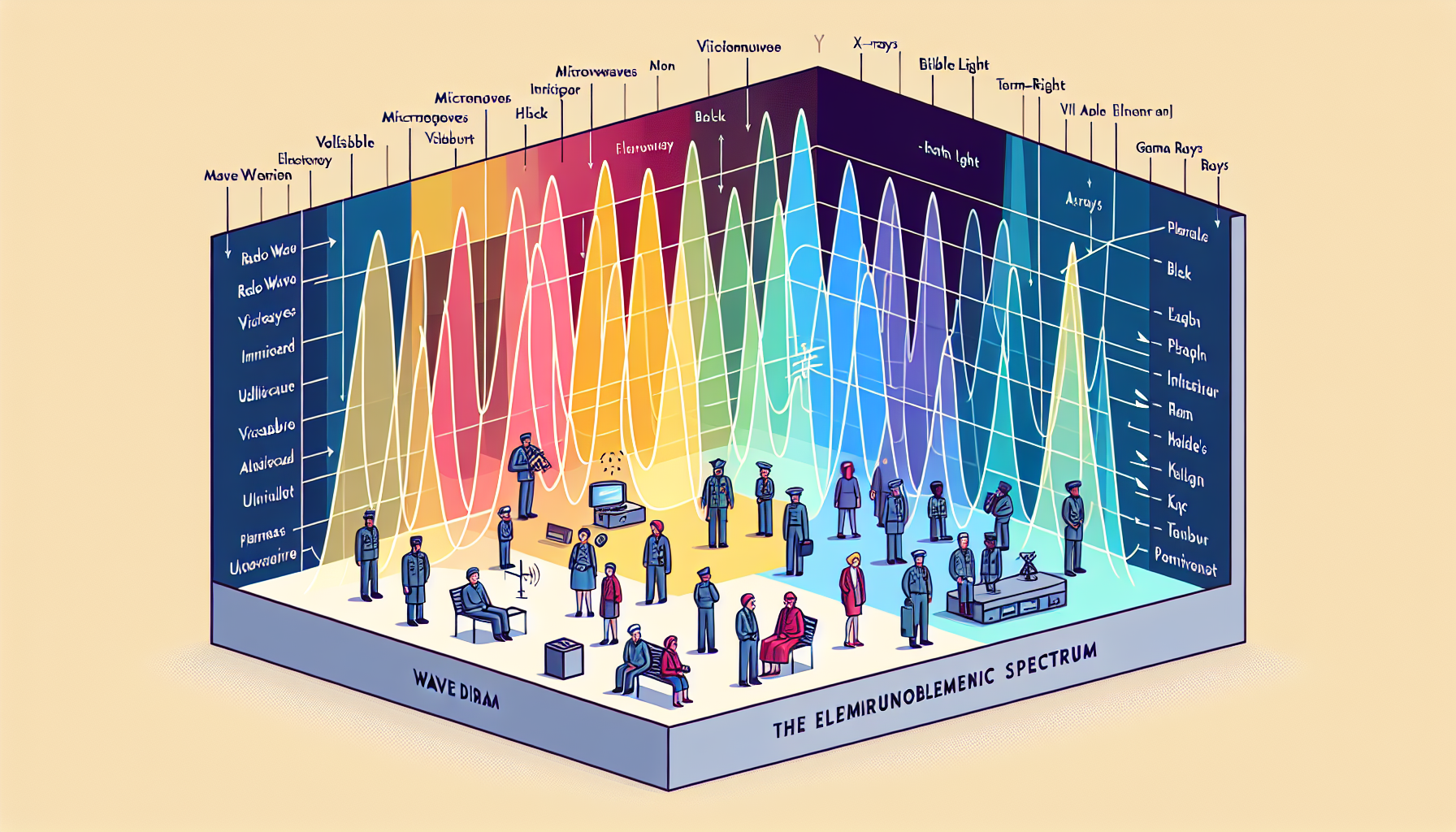
Electromagnetic spectrum

Definition

The electromagnetic spectrum is a term used in military operations to refer to the range of all types of electromagnetic radiation, including radio waves, microwaves, infrared, visible light, ultraviolet, X-rays and gamma rays. It plays a crucial role in various military operations such as communications, navigation, surveillance, and electronic warfare. The management and control of this spectrum provide a strategic advantage by disrupting enemy communications and enhancing friendly operations.

Key Takeaways

  1. The Electromagnetic Spectrum in military operations refers to the range of all types of electromagnetic radiation, which includes but is not limited to radio waves, microwaves, infrared, visible light, ultraviolet, X-rays, and gamma rays. These different types of waves can be utilized for various strategic applications in military operations.
  2. Control over the Electromagnetic Spectrum is a significant advantage in warfare. Encompassing communications, radar detection, jamming enemy transmissions, and identifying the origins of signals, understanding and harnessing the power of the electromagnetic spectrum can be a decisive factor on the battleground.
  3. Modern military systems heavily rely on the Electromagnetic Spectrum. Advanced weaponry, navigation, and communication systems depend on different parts of the spectrum. Therefore, the electromagnetic spectrum is an important area for the application of advanced technologies in defense.

Importance

The term “Electromagnetic Spectrum” is important in military operations due to its critical role in communication, intelligence, and warfare technologies.

It includes all ranges of electromagnetic radiation, like radio waves, microwaves, infrared, visible light, ultraviolet, X-rays, and gamma rays.

Modern military operations depend on this spectrum for various activities including navigation systems, radar detection of enemy movement, guiding missile systems, and secure communication lines.

Moreover, there’s an increasing trend towards electronic warfare, where the ability to disrupt opponents’ usage of the spectrum while protecting your own can significantly influence outcomes.

Therefore, understanding and controlling the electromagnetic spectrum becomes pivotal to successful military operations.

Explanation

The electromagnetic spectrum is a vital element in military operations and defense systems as it serves numerous purposes that aid in the functions of different tools, equipment, and communication platforms. It represents the range of all possible frequencies of electromagnetic radiation, which includes radio waves, microwaves, infrared light, visible light, ultraviolet light, X-rays, and gamma rays, among others.

These segments of the spectrum are crucial for various military technologies such as radar and sonar systems, satellite communications, and thermal imaging – all of which rely on different parts of this spectrum for operation. Each section of the electromagnetic spectrum can be used for different purposes in military operations.

For instance, the use of radio waves and microwaves will often be seen in communication and navigation because of their capability to travel long distances. Infrared light can be used for thermal imaging and night vision, offering critical advantage in battlefield scenarios.

Furthermore, technologies like Laser range finders and designators also use parts of the spectrum. Thus, the electromagnetic spectrum plays an essential role not only in facilitating communication and surveillance but also in guiding navigation, providing tactical support, and augmenting the military’s overall operational capability.

Examples of Electromagnetic spectrum

Military Communication: The military uses different parts of the electromagnetic spectrum for communication purposes. For instance, the radio frequency band of the spectrum is used to transmit and receive messages over long distances. Devices such as walkie-talkies and radios used in military operations utilize specific frequencies within the radio frequency band.

Radar Systems: Radar systems that are used for detecting the range, angle, or velocity of objects also utilize the electromagnetic spectrum. The radar emits a signal in the form of an electromagnetic wave, and when this wave hits an object, it is reflected back to the radar. The time it takes for the signal to return allows the radar to calculate the object’s distance. This technology is critical for air traffic control, weather forecasting, and military operations.

Military Surveillance: Advanced surveillance systems such as unmanned aerial vehicles (UAVs or drones) and satellites utilize part of the electromagnetic spectrum for normal operations. For example, UAVs often use infrared spectrum, part of the electromagnetic spectrum, for night vision to undertake reconnaissance or surveillance missions. Similarly, imagery satellites capture images based on various sections of the electromagnetic spectrum to gather valuable data that can be used for intelligence analysis.

FAQ – Electromagnetic Spectrum In Military Operations

What is the electromagnetic spectrum?

The electromagnetic spectrum refers to all possible frequencies of electromagnetic radiation. It includes frequencies used in communication devices, medical equipment, and even household electronics. In the military context, it can be used for various operations such as surveillance, communication, and navigation.

How does the military use the electromagnetic spectrum?

The military uses the electromagnetic spectrum in several ways. This includes radio and satellite communication, radar systems for navigation and detection of enemy targets, and even weapons systems. The electromagnetic spectrum allows soldiers on land, sea, air, and even space to communicate and perform their missions effectively.

What are some challenges of using the electromagnetic spectrum in military operations?

One of the main challenges the military faces while using the electromagnetic spectrum is managing the spectrum itself. With so many frequencies being used for civilian and military purposes, it has become increasingly complicated to prevent interference between different systems. Moreover, potential adversaries may try to jam or otherwise disrupt electromagnetic signals. This can pose significant challenges to successful military operations.

What is electromagnetic spectrum warfare?

Electromagnetic Spectrum Warfare (EMSW) refers to any military action involving the use of the electromagnetic spectrum to attack an enemy or impede enemy assaults via the spectrum. It is a sub-branch of electronic warfare and it utilizes jamming, deception, and other techniques to interrupt or deny enemy use of the spectrum while enabling friendly use.

Related Military Operation Terms

  • Radio Waves
  • Infrared Radiation
  • Visible Light
  • Ultraviolet Radiation
  • X-rays

Sources for More Information

Benefits.com Advisors

With expertise spanning local, state, and federal benefit programs, our team is dedicated to guiding individuals towards the perfect program tailored to their unique circumstances.

Rise to the top with Peak Benefits!

Join our Peak Benefits Newsletter for the latest news, resources, and offers on all things government benefits.

Related Articles

VA SMC R1 Requirements

VASRD 2026 Updates

Social Security Back Pay

SSDI Approval Rate by Age

SSDI Pay Chart 2026

x